
 Gabriela Annisa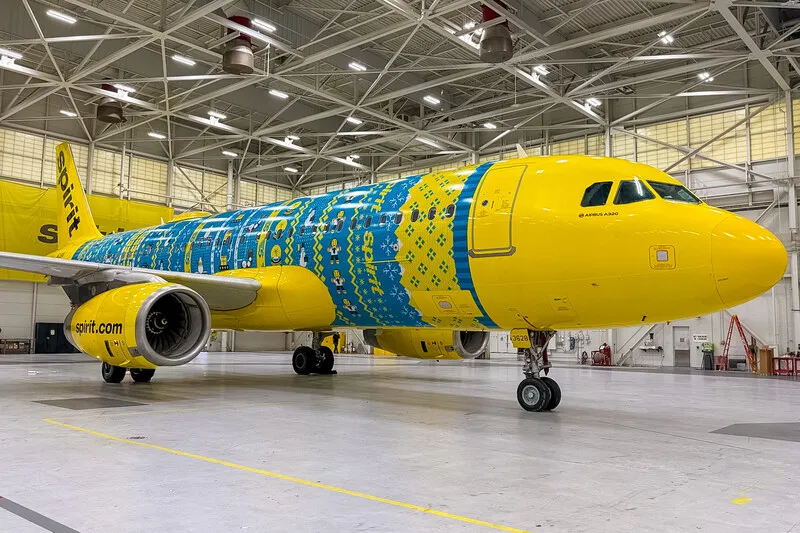
The American airline industry is currently navigating a period of profound uncertainty, characterized by starkly contrasting fortunes for its key players. While Alaska Airlines reported a challenging first quarter marked by soaring fuel costs and strategic capacity adjustments, ultra-low-cost carrier Spirit Airlines faces an existential crisis, with creditors exploring liquidation scenarios and even former President Donald Trump suggesting federal intervention to avert its collapse. These developments, coupled with broader discussions on industry consolidation, underscore the volatile economic environment and the critical decisions facing airlines and policymakers alike.
Spirit Airlines: A Carrier on the Brink
Spirit Airlines, a prominent player in the ultra-low-cost segment, finds itself at a critical juncture, battling severe financial distress that has led its creditors to consider drastic measures, including liquidation. The airline’s precarious position has become a focal point of industry discussion, drawing attention from economic analysts and even political figures.
Deepening Financial Woes
The depth of Spirit’s financial predicament is starkly illustrated by its recent performance. Over the past four years, the airline has accumulated a staggering $2.1 billion in operating losses. The situation appears to have deteriorated further, with 2025 alone witnessing an $896 million operating loss, translating into a negative 24% operating margin. This puts Spirit at the absolute bottom of the global airline industry’s earnings scoreboard, highlighting an unsustainable business trajectory. The significant losses indicate a fundamental challenge in its operational model and cost structure, particularly in a high-inflation environment.
Creditors Explore Liquidation
The severity of Spirit’s situation has prompted its creditors to initiate a "liquidation analysis." This formal process, uncovered from bankruptcy proceedings, evaluates the potential returns from selling off the airline’s assets – including its fleet, real estate, and other valuable components – rather than continuing its operations. While a liquidation analysis does not definitively mean this path will be chosen, its mere existence signals a profound loss of confidence among those who hold Spirit’s debt. Creditors, who effectively control the airline in a bankruptcy scenario, are weighing whether the company is "worth more dead than alive," a sobering assessment that speaks volumes about the perceived long-term viability of the carrier under current conditions.
President Trump’s Intervention and Federal Aid Prospects
Adding an unexpected dimension to the unfolding drama, former President Donald Trump publicly commented on Spirit’s plight during an appearance on CNBC’s Squawk Box. Asked about potential mergers, Trump stated, "I don’t mind mergers. I would love someone to buy Spirit, for example. Spirit’s in trouble. It’s 14,000 jobs. Maybe the federal government should help that one out." This suggestion of federal assistance immediately sparked debate about the role of government in propping up struggling private enterprises, especially one that was facing headwinds even before the most recent economic pressures.
Trump’s comments followed earlier reports suggesting that Spirit, along with several other low-cost carriers, had been seeking government aid to combat the impact of fuel inflation. The context of such a bailout would differ significantly from the widespread federal support provided during the COVID-19 pandemic, which was a systemic crisis affecting the entire industry. This current appeal is more specific, focusing on carriers particularly vulnerable to escalating operational costs. The possibility of Washington acquiring an equity stake in Spirit, akin to the federal government’s past investment in Intel, raises questions about capitalist principles versus strategic industry support.
Historical Context and Failed Turnaround
Spirit Airlines has a history of navigating turbulent financial waters, including previous bankruptcy attempts. Its most recent turnaround plan, developed upon entering bankruptcy, aimed to emulate the successful low-cost, low-utilization models of carriers like Allegiant or Sun Country. This strategy involved significant cost-cutting, contract renegotiations, and debt restructuring. However, a critical flaw in this plan was its reliance on overly optimistic fuel price assumptions, forecasting costs around $2.20 per gallon. With current prices hovering above $4.20 per gallon, the financial viability of this strategy has been severely undermined, leaving creditors with little faith in its execution.
Potential Future Paths
The future of Spirit Airlines appears to hinge on several potential, albeit uncertain, paths:
- Liquidation: As explored by creditors, this would involve selling assets to recoup debts, leading to the cessation of Spirit’s operations.
- Federal Bailout: Government intervention, potentially through a loan, equity stake, or other aid package, as suggested by President Trump, could provide a lifeline. The mechanism and political feasibility of such a move remain unclear.
- Acquisition: Another airline, perhaps one seeking to expand its presence in key leisure markets like Florida (e.g., Fort Lauderdale, Orlando), could acquire Spirit’s assets (planes, pilots, routes) at a reduced price.
- Original Bankruptcy Plan: A less likely scenario, where creditors might still opt to proceed with the existing turnaround plan, hoping for a significant reversal in fuel prices or a substantial improvement in market conditions.
Consumer Confidence and Market Impact
The public discussion surrounding Spirit’s potential demise, particularly high-profile comments from political figures, poses a significant risk to consumer confidence. The fear of an airline ceasing operations can lead to a "self-fulfilling prophecy," where passengers, wary of booking flights that might be canceled, opt for competitors. While Spirit’s official stance, communicated via its restructuring website, is "business as usual," the psychological impact on travelers cannot be underestimated. The human toll on Spirit’s 14,000 employees, whose jobs are now explicitly part of the national discourse, adds another layer of gravity to the situation.
Alaska Airlines Navigates Headwinds in Q1
In contrast to Spirit’s dire situation, Alaska Airlines, operating as the Alaska Air Group, faced a challenging but manageable first quarter, grappling with sector-wide pressures, primarily elevated fuel costs and capacity adjustments. While not facing an existential threat, its Q1 results underscore the difficult operating environment for even financially sound carriers.
Subdued Earnings Report
Alaska Airlines reported a "lousy" first quarter, recording a negative 7.5% operating margin. While disappointing, it’s crucial to contextualize this within the industry. First quarters are typically the weakest for Alaska, and while a good year might see them break even or post a small profit, this performance indicates significant headwinds. The company, which now includes Hawaiian Airlines under its wing, is navigating a period of integration and strategic realignment amidst external pressures.
Soaring Fuel Costs: A Regional Disadvantage
A primary driver of Alaska’s Q1 struggles was disproportionately high fuel costs. The airline paid $2.98 per gallon, significantly more than competitors like Delta, which paid $2.62 per gallon during the same period. This discrepancy stems from Alaska’s specific fuel sourcing strategy and the unique dynamics of regional fuel markets. The Alaska Air Group sources approximately 55% of its fuel from the West Coast, 20% from Singapore, and 25% from other regions, including the Gulf Coast. West Coast refining margins have historically been volatile and among the highest globally. More critically, Singapore, traditionally a low-cost source, saw its jet fuel prices surge by over 400% since early February, turning a past strategic advantage into a substantial liability. This regional vulnerability to fuel price spikes severely impacted Alaska’s bottom line.
Capacity Adjustments and Rising Non-Fuel Costs
The high cost of fuel has also forced Alaska to trim its capacity, particularly in its domestic and North American networks, which includes Hawaii. While growth typically helps airlines lower non-fuel unit costs through economies of scale, the current environment makes expansion uneconomical for many routes. Consequently, Alaska’s non-fuel unit costs are rising, compounding its financial challenges. The company has also suspended its financial guidance for the full year, signaling extreme market volatility and uncertainty beyond the immediate quarter. This cautious approach reflects the difficulty in forecasting revenues and costs in such a dynamic environment.
International Expansion Under Scrutiny
Despite domestic capacity cuts, Alaska is experiencing growth due to its new long-haul international routes to destinations like Rome, London, Iceland, Tokyo, and Seoul. These routes, utilizing long-distance planes with high seat counts, contribute significantly to available seat miles and can help dilute unit costs. However, the profitability of these ventures remains a key unknown. The company reported that international booking trends are "building in line with expectations," a cautious phrase that some analysts interpret as less than overwhelmingly positive. While the Seattle-Narita route was reported as "profitable in March" with load factors above 90%, the exact definition of "profit" (e.g., operating profit, cash costs) and the sustainability of high load factors at potentially lower yields remain subjects of scrutiny. These trans-oceanic routes are inherently high-cost and competitive, carrying significant risk alongside their potential rewards.
Anchors of Strength: Corporate and Loyalty
Despite the headwinds, Alaska Airlines benefits from several strong foundational elements. Its corporate revenues appear to be extremely robust, driven by its strategic presence in Seattle, home to major corporate spenders like Amazon (the world’s top spender on air travel) and Boeing (number eight). The airline continues to capture significant business travel, particularly from the tech, consultancy, and aerospace sectors, which are among the heaviest spenders on air travel globally.
Furthermore, Alaska’s loyalty program, rebranded as Atmos Rewards, is seeing "incredible loyalty growth." The airline boasts a highly lucrative partnership with Bank of America for its credit card program, a significant advantage that generates substantial ancillary revenue. The inclusion of Hawaiian Airlines in its portfolio is also expected to enhance its loyalty offerings and network appeal, providing a strong base of recurring revenue and customer engagement. Premium cabin demand also remains strong, a consistent trend across the industry.
Regional Demand Challenges
Alaska has also faced specific regional demand challenges. Civil unrest in Mexico has reportedly impacted travel to the region, affecting some of its routes. Similarly, natural disasters, including flooding and heavy rains in Hawaii, have deterred some travelers, impacting demand for a crucial market within its expanded portfolio. These localized issues add another layer of complexity to its revenue management efforts.
Broader Industry Implications and Presidential Stance
The concurrent challenges faced by Spirit and Alaska Airlines, alongside broader industry discussions, highlight a period of significant transition for US aviation.
Consolidation Debate
President Trump’s comments also touched upon the broader landscape of airline mergers, where he expressed strong opposition to a potential merger between United and American Airlines. He argued that such consolidation would reduce competition, make the airlines "lazy," and ultimately harm consumers. "American is doing fine, and United is doing very well. I don’t like having them merge. It’s just like those aerospace and defense companies. We still have hundreds of them. Now we have a very small number, and then you get one bid and it makes them lazy." This stance reflects a growing anti-monopoly sentiment that could shape future regulatory decisions regarding airline mergers. American Airlines had previously dismissed rumors of such a mega-merger.
Government Intervention Precedent
The discussion of federal aid for Spirit Airlines brings to the forefront the evolving role of government in the private sector. While the COVID-19 bailouts established a precedent for large-scale federal intervention during national crises, the current situation presents a different calculus. A bailout for a single, struggling carrier, even one employing 14,000 people, could be seen as selective intervention, sparking debate about moral hazard and market efficiency.
Outlook for US Aviation
The US aviation sector is currently experiencing a divergence in performance. While some legacy carriers leverage strong corporate and international demand, others, particularly those with less diversified revenue streams or higher exposure to volatile regional fuel markets, are struggling. Fuel prices remain a dominant factor, influencing capacity decisions, profitability, and strategic direction. The coming weeks and months will be crucial for Spirit Airlines as it faces critical decisions about its future, while Alaska Airlines will continue to adapt its strategy to mitigate high operating costs and maximize its inherent strengths in corporate and loyalty segments. The political and economic responses to these challenges will undoubtedly shape the competitive landscape and regulatory environment of the US airline industry for years to come.


 Anjar Salim
 Dwi Wanna
 Budi Mulyono
 Lukman Taruna Persada Ramadan
 Chandra Hamzah