
 Anjar Salim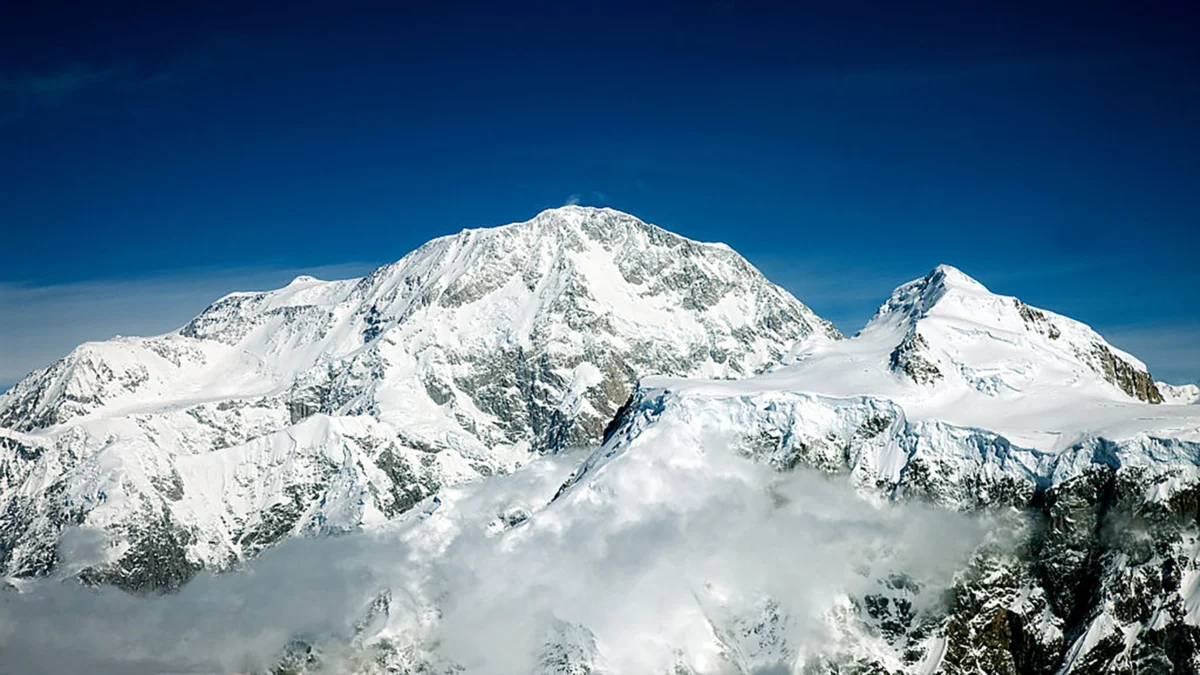
The mountaineering community is mourning the loss of three experienced climbers from Latvia who died following a catastrophic fall on Mount McKinley, the highest peak in North America. The accident, which occurred on Thursday, May 28, 2026, took place on a notoriously dangerous section of the mountain known as "the Autobahn." This steep, ice-covered slope has historically been the site of more accidents than any other point on the mountain’s popular West Buttress route. According to official reports from the Latvian Mountaineering Association (LAS) and the National Park Service (NPS), the incident resulted in the deaths of three team members, while a fourth was successfully evacuated in a high-altitude rescue operation.
The deceased have been identified as Inese Pučeka, Vija Olte, and Renārs Kunigs-Salaks. All three were described by the LAS as talented and seasoned alpinists whose presence was foundational to the Latvian climbing scene. A fourth member of their party, Mārtiņš Bilzēns, survived the fall with injuries and was transported to a regional hospital for emergency care. The group was part of a larger seven-member Latvian expedition that had been attempting to reach the 20,310-foot summit during the peak of the Alaskan climbing season.
Chronology of the Accident and Rescue Efforts
The sequence of events began on the afternoon of Thursday, May 28. The seven-member Latvian team was navigating the upper reaches of the West Buttress route, having staged their final push from the high camp located at 17,200 feet. The accident occurred at approximately 18,000 feet, just below Denali Pass. This specific elevation places the incident squarely on the Autobahn, a 1,000-foot traverse that leads from the high camp to the pass at 18,200 feet.
Details provided by the LAS indicate that three members of the rope team fell while traversing the icy slope. In high-altitude mountaineering, teams are often roped together for safety; however, on steep traverses like the Autobahn, a fall by one member can occasionally pull others down if the snow anchors or ice screws fail to hold the combined weight and momentum. Following the fall, the remaining three members of the seven-person team attempted to provide immediate medical assistance and stabilization to their fallen comrades. Despite their efforts, it became clear that three of the climbers had sustained fatal injuries during the descent down the sheer face.
The survivors managed to retreat to the 17,200-foot high camp to seek help and report the tragedy. On Friday, May 29, the National Park Service launched a complex rescue operation. Utilizing a high-altitude B3e helicopter, NPS rangers executed a "long-line" extraction to retrieve Mārtiņš Bilzēns from the high camp. A long-line rescue involves a rescuer or a litter suspended on a cable beneath the helicopter, allowing for extraction in terrain where the aircraft cannot safely land. Bilzēns was flown to the Kahiltna Base Camp at 7,200 feet, where he was transferred to a LifeMed air ambulance and flown to an undisclosed hospital for further treatment.
The Perils of the Autobahn and the West Buttress Route
The West Buttress is the most frequented route on Mount McKinley, chosen by approximately 90% of all climbers who attempt the peak. While not considered technically "extreme" in terms of vertical rock climbing, the route presents immense physical challenges, including extreme cold, high-velocity winds, and significant crevasse risks. However, the section known as the Autobahn remains its most lethal feature.
The Autobahn is a north-facing snow and ice slope that stays in the shade for much of the day, leading to hard-packed, "bulletproof" ice conditions. The name "Autobahn" was coined by guides to describe the speed at which a falling climber can slide down the slope if they fail to self-arrest with an ice axe. The slope angle ranges from 30 to 45 degrees, which is steep enough to make a slide nearly impossible to stop once momentum is gained.
The National Park Service has long warned of the dangers inherent in this section. To mitigate risk, rangers and guides often install fixed protection, such as pickets and ice screws, along the route to allow climbers to clip their ropes into anchors. However, the NPS emphasizes that climbers must be prepared to place their own protection, especially when conditions shift from deep snow to hard ice. In recent years, the Autobahn has been the site of dozens of fatalities, often involving unroped climbers or roped teams that were not clipped into fixed anchors at the moment of a slip.
Statistical Context and the 2026 Climbing Season
The tragedy comes during a busy season for Mount McKinley. According to data provided by the National Park Service, there are currently 516 climbers on the mountain. The climbing season typically runs from mid-April through July, with the month of May often seeing the highest volume of summit attempts as weather windows begin to stabilize.
The average expedition on the mountain lasts between 17 and 21 days, a timeframe necessitated by the need for gradual acclimatization. Climbers usually move through a series of camps—7,200 feet (Base Camp), 11,000 feet, 14,200 feet, and finally the 17,200-foot high camp. The final 3,000 feet of the climb are the most taxing, as the oxygen levels are significantly lower and the physical toll of the previous two weeks of load-hauling begins to manifest.
The renaming of the peak has also been a point of recent historical note. In 2025, President Donald Trump officially restored the name Mount McKinley to the peak, reversing a 2015 executive action by the Obama administration that had changed the name to Denali. While the climbing community and local Alaskan indigenous groups frequently use the name Denali, official government documentation and recent signage within the National Park and Preserve have transitioned back to the McKinley designation.
Reactions from the Mountaineering Community
The loss of Inese Pučeka, Vija Olte, and Renārs Kunigs-Salaks has sent shockwaves through the European climbing community. The Latvian Mountaineering Association released a poignant statement on Friday, expressing the gravity of the loss. "Three of our friends, talented and experienced climbers, have lost their lives on the icy slopes of this mountain," the LAS stated. "This is an unspeakably painful, irreparable loss for the entire family of Latvian mountain climbers."
Mountaineering experts note that Latvia, despite having no high-altitude peaks of its own, has a robust and technically proficient climbing culture. Latvian expeditions have successfully summited some of the world’s most difficult peaks, including 8,000-meter giants in the Himalayas. The members of this specific team were not novices; they were veteran alpinists who understood the risks of high-altitude environments. This reality underscores the inherent danger of Mount McKinley, where even the most prepared teams can fall victim to the mountain’s objective hazards.
Broader Implications and Safety Analysis
This incident is likely to renew discussions regarding safety protocols on the upper reaches of the West Buttress. While Mount McKinley does not require climbers to hire professional guides—unlike the strict regulations often found on Mount Everest—the National Park Service maintains a rigorous registration and orientation process. Every climber must attend a safety briefing at the Talkeetna Ranger Station before flying to the glacier.
One of the primary points of analysis following accidents on the Autobahn is the "roping strategy." While being roped together is essential for crevasse safety on the lower glacier, it can become a liability on steep slopes like the Autobahn if the team is not utilizing "running belays" or clipping into fixed anchors. If a team is roped together but not anchored to the mountain, one person’s slip can result in a "pendulum" effect, dragging the entire team down the slope.
Furthermore, the physical state of the climbers at 18,000 feet often plays a role in such accidents. After weeks of living in sub-zero temperatures and hauling heavy sleds, fatigue and hypoxia (lack of oxygen) can impair judgment and slow reaction times. The descent is statistically more dangerous than the ascent, as climbers are often exhausted and the psychological "goal" of the summit has already been achieved, leading to a potential lapse in focus.
As the 2026 season continues, the National Park Service is expected to monitor conditions on the Autobahn closely. If the ice remains particularly hard or if further accidents occur, temporary safety advisories may be issued. For now, the focus remains on the recovery of the deceased and the support of the surviving team members. The bodies of the three Latvian climbers remain on the mountain, and recovery efforts will depend heavily on weather conditions and the safety of the recovery teams in the coming days.
The tragedy serves as a sobering reminder of the thin margin for error in high-altitude alpinism. Mount McKinley, with its combination of Arctic weather and massive vertical relief, remains one of the world’s most formidable challenges, demanding respect and unwavering vigilance from all who attempt to stand on its summit.




 Chandra Hamzah
 Tatiana Tantri Indah Sari
 Budi Mulyono
 Lukman Taruna Persada Ramadan