
 Gabriela Annisa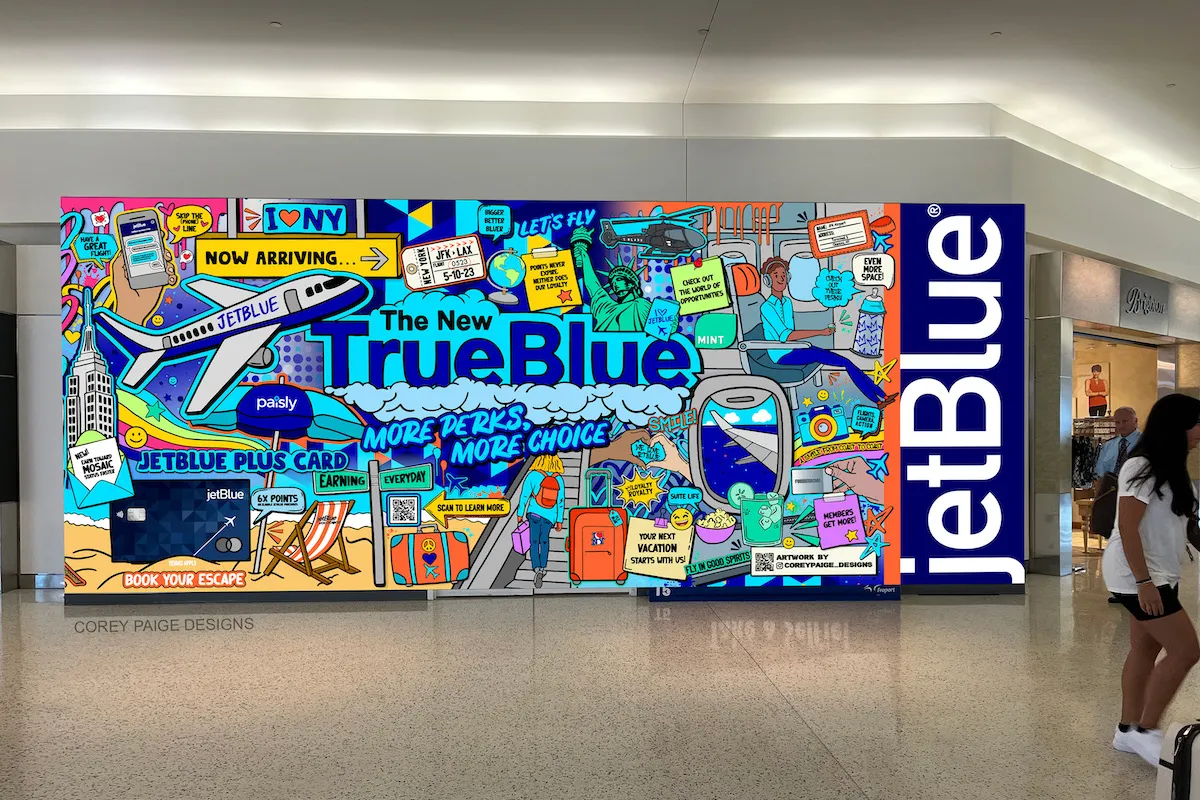
The global aviation sector is currently experiencing a stark divergence in financial performance, with U.S. carrier JetBlue Airways reporting significant first-quarter losses for 2024, extending a streak of unprofitable years, while European airline Norwegian Air Shuttle demonstrated a robust recovery. These contrasting fortunes highlight the varying impacts of fuel price volatility, regional market dynamics, and strategic pivots across the industry.
JetBlue’s Persistent Financial Headwinds in Q1 2024
JetBlue Airways continued its challenging financial trajectory into the first quarter of 2024, recording a negative 10% operating margin. This marks the sixth consecutive year of losses for the airline, prompting significant concern among investors and stakeholders. The airline’s leadership, including CEO Joanna Geraghty, acknowledged the difficult environment, attributing the setbacks to a confluence of factors, many beyond the airline’s immediate control.
The first quarter’s results, which notably included the start of the Easter travel period, were weaker than the negative 8% operating margin reported in the same period last year, despite the seasonal boost typically associated with holiday travel. This underperformance underscores the deep-seated issues JetBlue is currently navigating.
A primary driver of JetBlue’s struggles remains the elevated cost of jet fuel. The airline reported an average fuel price of $2.96 per gallon, significantly higher than many of its U.S. competitors. For comparison, Delta Air Lines paid $2.62, United Airlines $2.78, and Southwest Airlines $2.73. Analysts suggest JetBlue’s exposure to specific markets, particularly on the U.S. West Coast where fuel sourcing from Singapore can inflate prices, and its Northeast-heavy operations contribute to these higher costs. Alaska Airlines, for instance, also faced similar high fuel costs at $2.98 per gallon due to its West Coast concentration.
Beyond fuel, operational disruptions have significantly impacted JetBlue’s bottom line. The first quarter saw uniquely severe weather in the Northeast, a region where JetBlue has a substantial operational footprint. These snowstorms and other events led to considerable flight cancellations and delays, quantified by the airline as approximately four points of pressure on its cost per available seat mile (CASM) excluding fuel, which increased by 6.6% year-over-year. Moreover, broader TSA disruptions also contributed to operational inefficiencies.
Market competition further intensified the pressure. Analysts speculate that Southwest Airlines’ recent reforms, including the introduction of new fare options and premium seating, may have diverted some business from JetBlue, particularly on routes where they overlap, such as between the Northeast and Florida. Additionally, the aggressive low-fare strategy of distressed ultra-low-cost carrier Spirit Airlines in key markets like Florida and Orlando likely put downward pressure on JetBlue’s pricing power.
Strategically, JetBlue also faces inherent disadvantages compared to the "Big Three" U.S. carriers. Its loyalty program, TrueBlue, historically generates less revenue than those of larger rivals, a fact JetBlue management has openly acknowledged. Efforts are underway to enhance TrueBlue’s lucrativeness, including leveraging the new alliance with United Airlines. Furthermore, JetBlue lacks the extensive premium demand that continues to bolster the revenues of major network carriers, a segment of the market that has shown remarkable resilience.
The airline’s ambitious investment in Fort Lauderdale, aimed at establishing a dominant position and potentially pressuring Spirit Airlines, is also a double-edged sword. While JetBlue’s President, Joanna Geraghty (previously Madison George), expressed satisfaction with revenue trends and customer response in Fort Lauderdale, describing it as the sole driver of Q2 capacity growth, this aggressive expansion comes with initial costs. Introducing significant new capacity in a competitive market like Fort Lauderdale is viewed as a long-term investment rather than an immediate boost to the bottom line, with some routes likely operating at a loss initially.
Adding to its strategic constraints, JetBlue is reluctant to significantly cut capacity at its crucial JFK Airport hub. Reducing flights too much risks losing valuable slots, a consequence the airline’s management has explicitly stated they are unwilling to incur. This limits their flexibility to adapt to higher fuel prices by trimming less profitable routes.
Despite these challenges, JetBlue’s leadership remains committed to its "JetForward" transformation program, designed to streamline operations, enhance revenue, and control costs. Initiatives include raising fares where market demand allows, implementing capacity cuts across its network (with the aforementioned exceptions), and doubling down on cost-cutting measures, including a hiring freeze or reduction in hiring plans. However, the external environment continues to present formidable obstacles. The airline’s original business plan for 2024 assumed a Brent oil price of $63 per barrel, significantly lower than the actual $112 per barrel experienced in Q1, illustrating the magnitude of the unexpected cost pressures. Despite these headwinds, strong passenger demand, both domestic and international, offers a glimmer of hope, enabling airlines to implement fare increases.
The Spirit Airlines Conundrum and Government Intervention Debate
The precarious situation of Spirit Airlines casts a long shadow over the U.S. low-cost sector and has broader implications for government policy. Discussions around a potential federal bailout for Spirit have surfaced, with some advocating for government intervention to prevent its collapse, citing the preservation of thousands of jobs. However, such a move would be highly unusual for an airline of Spirit’s relative size and systemic importance to the national economy.
Historically, federal bailouts have been reserved for systemically important companies or entire industries (like the airline sector during COVID-19) whose failure would have catastrophic consequences for the broader economy and workforce. Examples include Lockheed Martin in the 1960s, Chrysler in the 1980s, and the auto industry in the 2000s. A bailout for Spirit, a smaller airline, would set a controversial precedent.
JetBlue, having experienced government intervention that blocked its joint venture with American Airlines and its proposed merger with Spirit, would likely react with strong opposition to any federal rescue package for its rival. United Airlines has also voiced strong objections, calling such a prospect "irate." The sentiment is that bailing out one competitor could distort market dynamics and disadvantage others, including Frontier, Avelo, Allegiant, and Sun Country, which are members of the Association of Value Airlines (AVA) currently negotiating for potential relief from fuel taxes or prices. JetBlue is notably not part of the AVA. The debate over Spirit’s future underscores the complex interplay between market forces, competitive strategy, and government oversight in the highly regulated airline industry.
Norwegian’s Remarkable Recovery and Strategic Success
In stark contrast to JetBlue’s struggles, Norwegian Air Shuttle has emerged as a beacon of recovery, showcasing a remarkable turnaround in its first-quarter 2024 results. The airline reported a negative 7% operating margin, a significant improvement from the negative 13% recorded in the same period last year. This positive trajectory demonstrates the success of its post-bankruptcy strategic pivot.
Norwegian, once an ambitious long-haul low-cost carrier with routes stretching to Oakland, Bangkok, and Argentina, faced bankruptcy during the COVID-19 pandemic. However, it utilized this period to fundamentally restructure, shedding its unprofitable long-haul network and refocusing on its core Nordic and European short-haul markets. This strategic contraction and rigorous cost-cutting during its bankruptcy proceedings laid the groundwork for its current resurgence.
Several factors contributed to Norwegian’s strong performance in Q1 2024. A stronger Norwegian Krone against the U.S. dollar provided a favorable tailwind on the cost side. Furthermore, timely deliveries of Boeing 737 MAX aircraft have allowed the airline to execute its capacity plans efficiently.
Crucially, Norwegian has benefited from capacity cuts by its European rivals. SAS, for instance, canceled approximately 1,000 flights in April alone due to high fuel prices, while Lufthansa announced 20,000 flight reductions over a longer period. This reduction in competitive capacity has allowed Norwegian to gain market share, particularly in its home region. The acquisition of regional airline Widerøe also proved strategic, with Widerøe reporting a positive 2% operating margin in Q1, a turnaround from a negative 1% last year, driven by its less seasonal corporate business. Norwegian’s management highlighted that it is winning corporate travel share from SAS, especially with the enhanced regional network provided by Widerøe.
The airline’s robust hedging strategy for both fuel and currency has also shielded it from some of the volatility impacting unhedged carriers. Demand remains exceptionally strong across its network. Norwegian executives noted a shift in European travel patterns, with customers opting for southern Mediterranean destinations over traditional Middle Eastern spots like Dubai or Tel Aviv, a trend that has bolstered demand on Norwegian’s key routes.
Norwegian’s cost-savings programs and the ongoing integration synergies with Widerøe, which now allows combined itineraries to be booked on its website (with app functionality coming soon), further contribute to its improving financial health. The airline is actively evaluating additional lease extensions for its fleet, indicating confidence in profitable growth opportunities and a positive outlook for market development.
Broader European Aviation Trends and Outlook
Norwegian’s positive results follow encouraging reports from other Nordic carriers, such as Finnair, which also posted strong demand for Asian routes from customers bypassing Gulf hubs. As more European airlines release their Q1 figures, the overall sentiment appears cautiously optimistic. Air France-KLM and Icelandair are among the next major carriers expected to report, providing a clearer picture of regional trends.
Discussions at recent industry events, such as the CAPA Summit in Berlin, revealed a consistent message from European airline executives regarding fuel supply: while prices remain a concern, the availability of jet fuel for European operations is not currently a widespread issue, contrary to some media headlines. Leaders from airlines like Wizz Air, Condor, and Ryanair reiterated that demand remains resilient, and consumers are largely accepting higher fares, which helps offset rising operational costs.
The contrasting performances of JetBlue and Norwegian underscore the complex and multifaceted challenges and opportunities facing the global airline industry in 2024. While U.S. carriers like JetBlue grapple with persistent losses, high fuel costs, and intense domestic competition, European counterparts like Norwegian are demonstrating the power of strategic restructuring and effective risk management to navigate a volatile market and achieve a remarkable turnaround. The coming quarters will reveal whether JetBlue can accelerate its recovery efforts and if Norwegian can sustain its positive momentum amidst ongoing global economic and geopolitical uncertainties.




 Anjar Salim
 Chandra Hamzah
 Tatiana Tantri Indah Sari
 Budi Mulyono
 Lukman Taruna Persada Ramadan
