
 Walid Sujud Trenggono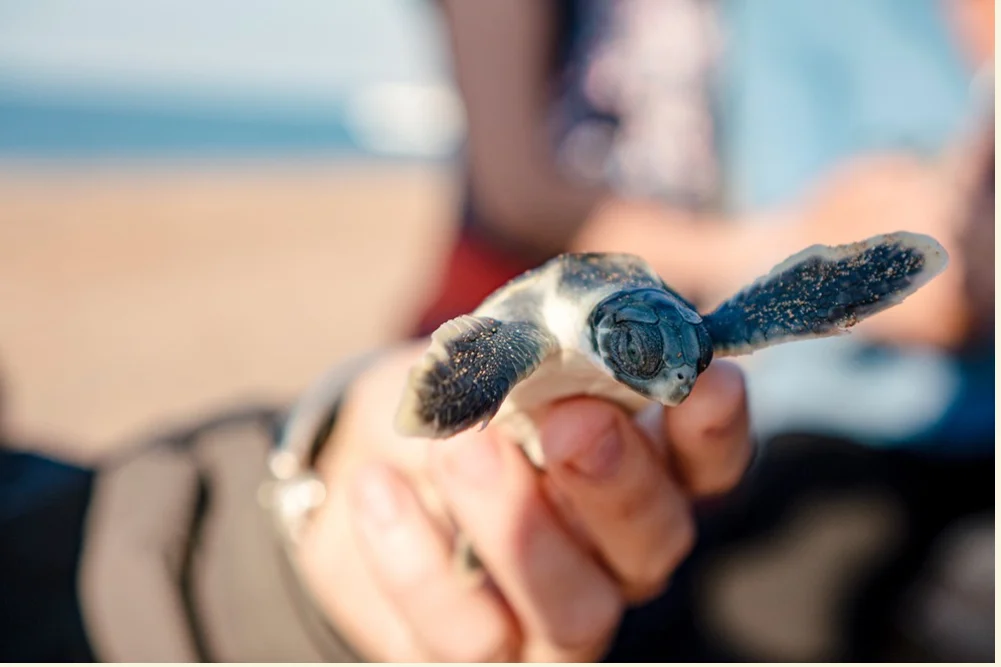
Under the electric canopy of the Milky Way, far from the light pollution of Darwin, a dedicated team of scientists and volunteers patrols the shoreline of Bare Sand Island. This remote outcrop, situated on the edge of the Joseph Bonaparte Gulf, serves as one of the most critical nesting grounds for the flatback turtle (Natator depressus). While the sea remains an inky black, the movement on the sand signals the arrival of a species found nowhere else on Earth. These turtles, endemic strictly to the Australian continental shelf, are the focus of a decades-long research initiative aimed at moving the species from a status of "data deficient" to a position of informed conservation.
The flatback turtle is unique among the world’s seven sea turtle species. Unlike the green or leatherback turtles, which migrate across vast oceanic basins, the flatback remains in the relatively shallow coastal waters of northern Australia and Papua New Guinea. Despite this localized habitat, the species remains a biological enigma. On Bare Sand Island, known as Ngulbitjik by the traditional Kenbi owners, approximately 650 middle-aged females return each winter to lay their eggs. The data gathered here by the all-volunteer organization AusTurtle represents the vanguard of efforts to understand and protect a creature whose survival is increasingly threatened by the shifting climate of the 21st century.
The Biological Profile of Natator depressus
The flatback turtle derives its scientific name, Natator depressus, from its distinctively flattened, low-domed shell. This morphological trait distinguishes it from its more rounded relatives and is believed to be an adaptation to its specific foraging environments. Adult flatbacks can weigh up to 90 kilograms and measure approximately one meter in length.
Perhaps the most significant biological mystery involves the "lost years"—the period between a hatchling entering the surf and its return to the beach 30 years later to nest for the first time. Unlike other sea turtles that spend their youth in the open ocean (pelagic phase), flatbacks are thought to stay within the coastal waters of the continental shelf. However, the exact migratory patterns and developmental habitats during these three decades remain largely unmapped. This lack of comprehensive life-cycle data is the primary reason the International Union for Conservation of Nature (IUCN) and the Northern Territory government classify the species as "data deficient."
Chronology of the Nesting Season and Research Operations
The research season on Bare Sand Island aligns with the Australian winter, typically spanning from May to September. The peak of activity often coincides with the winter solstice, a period historically associated with calm seas and "halcyon days." The nesting process is dictated by the tides, with a four-hour window—two hours on either side of high tide—providing the necessary water depth for the heavy turtles to reach the shore and minimize their arduous trek across the sand.
- The Arrival: As the tide rises, clusters of turtles emerge from the surf. This synchronized landing is a defensive strategy designed to overwhelm potential predators through sheer numbers.
- The Ascent: The turtles lumber into the dunes, searching for a site above the high-water mark. A single female may attempt several "false crawls" or begin multiple excavations before finding a site with the correct sand consistency and temperature.
- The Excavation: Using their hind flippers with surprising dexterity, the turtles dig a deep, bell-shaped chamber.
- The Laying: Flatbacks produce the largest eggs of any sea turtle, though they lay the smallest clutches, averaging around 50 to 55 eggs. During the laying process, the turtle enters a trance-like state, allowing researchers to approach safely.
- Data Collection: The AusTurtle team works rapidly but silently. They measure the carapace, check for existing identification tags, and apply new ones to first-time nesters. Crucially, they record the temperature of the nest, as the heat of the sand determines the sex of the hatchlings.
- The Return: After camouflaging the nest with sand, the exhausted female returns to the sea. The entire process can take several hours.
Environmental Threats and the Impact of Global Warming
The research conducted on Bare Sand Island is not merely academic; it is a race against environmental degradation. The most pressing threat to the flatback turtle is the rising global temperature. Like many reptiles, sea turtles exhibit temperature-dependent sex determination (TSD). In simpler terms, the temperature of the sand during incubation dictates whether a hatchling becomes male or female.
Current climate models suggest a precarious future. As sand temperatures rise, nests are producing an overwhelming majority of female hatchlings. This "feminization" of the population could lead to a demographic collapse if there are not enough males to maintain genetic diversity and reproductive rates. Furthermore, rising sea levels pose a physical threat to the rookeries. Higher tides and increased storm surges can inundate nests, drowning the developing embryos before they have a chance to hatch.
Because the Northern Territory’s flatback populations are already at the northernmost (and warmest) extent of their range, they have little room to migrate further south to cooler beaches. They are, in biological terms, trapped at the top of the continent.
Cultural Context and the Kenbi Land Claim
Bare Sand Island is more than a biological laboratory; it is a site of immense cultural and historical significance. After a legal battle spanning several decades—the longest-running Aboriginal land claim in Australian history—native title over the island was awarded to the Kenbi clan in 2016.
The Kenbi people have a millenary relationship with the island they call Ngulbitjik. Part of this relationship involves the traditional harvesting of turtle eggs, which are a valued source of protein. To an outside observer, the sight of traditional owners digging up nests may seem at odds with conservation efforts. However, senior researchers like Andrew Raith of AusTurtle emphasize the importance of a holistic view of the ecosystem.
Raith argues that Indigenous harvesting has occurred for thousands of years without depleting the population. "Harvesting a few nests gives the turtle nests of this island a value to those people," Raith noted. He suggests that by maintaining a cultural stake in the species, the traditional owners become the ultimate long-term stewards of the land, ensuring that the population remains healthy enough to support future generations.
The Role of Citizen Science and Minimal-Impact Research
The AusTurtle research camp is a model of low-impact scientific study. Located on traditional land, the camp is a "no-frills" operation. There are no permanent structures, no ground fires, and a strict "zero-impact" policy that includes the removal of all waste, including composted material.
The program relies heavily on "citizen scientists"—volunteers who pay for the privilege of working grueling night shifts in sandy, Spartan conditions. These volunteers range from marine biology students to "grey nomads" and international travelers. Their contributions are vital, as the labor-intensive nature of monitoring a remote island 24 hours a day would be financially unfeasible for most government agencies.
One of the most critical tasks for these volunteers is the morning "rescue walk." As nests hatch, some of the smaller or weaker hatchlings become trapped under collapsed sand or debris. Researchers excavate these stragglers and keep them in a cool, dark environment until they can be safely released under the cover of night, reducing their vulnerability to birds and other daytime predators.
Broader Ecological Implications
The flatback turtle is considered an "indicator species." Because they occupy a specific niche within the coastal ecosystem—feeding on soft-bodied prey like jellyfish, sea cucumbers, and soft corals—their health reflects the health of the entire marine environment.
If the flatback population were to collapse, the ripple effects would be felt throughout the Joseph Bonaparte Gulf. "If flatbacks go, you weaken the entire ecosystem," Andrew Raith explained. "It won’t just be the turtles that disappear. It will be the invertebrates, the corals, the algae that sea turtles harvest, and their predators too."
The work on Bare Sand Island serves as a microcosm of the global conservation challenge. It highlights the intersection of traditional land rights, citizen-led scientific inquiry, and the urgent need for climate adaptation strategies. As the "data deficient" label slowly gives way to a more robust understanding of Natator depressus, the hope is that this endemic Australian treasure will continue to return to the shores of Ngulbitjik for millennia to come.
Access and Participation
For those interested in the conservation of the flatback turtle, Bare Sand Island is accessible via specialized programs. AusTurtle holds annual volunteer camps in June and July, requiring a week-long commitment. For those seeking a shorter engagement, Sea Darwin operates guided turtle-watching tours during the nesting season, providing an educational experience that supports the local economy and raises awareness for the species’ plight. Through these avenues, the public can witness firsthand the intersection of ancient natural cycles and modern conservation science.




 Budi Mulyono
 Anjar Salim
 Chandra Hamzah
 Tatiana Tantri Indah Sari

 Lukman Taruna Persada Ramadan