
 Budi Mulyono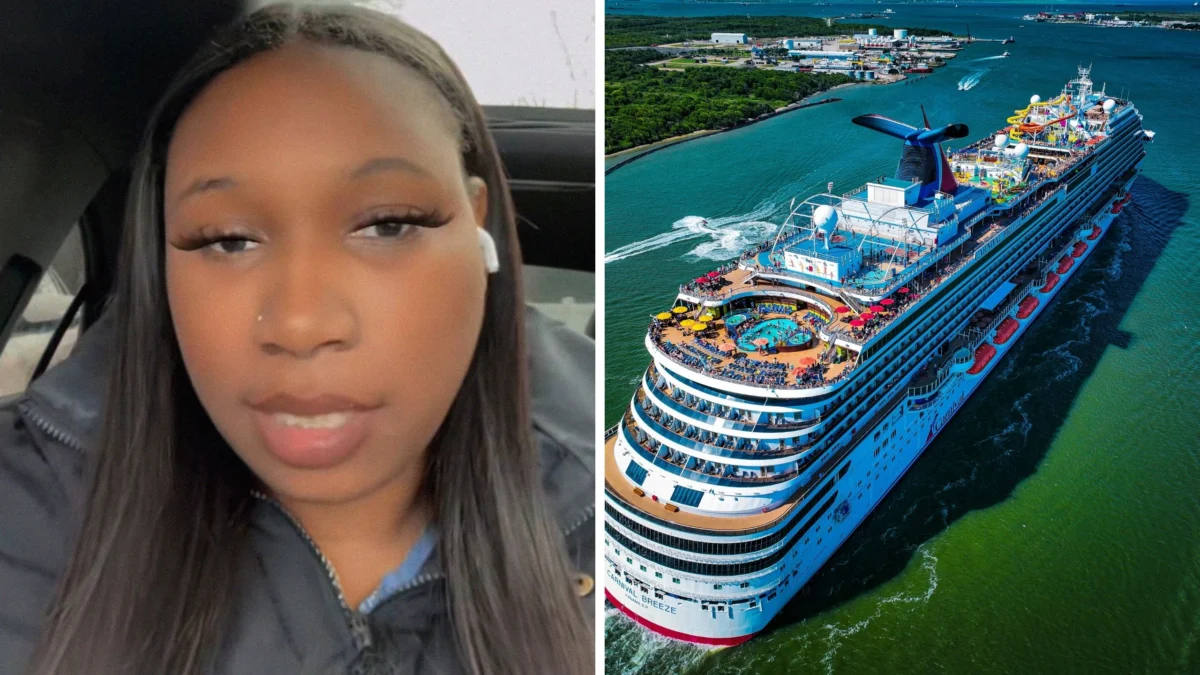
A viral video capturing a male passenger jumping from the Puerta Maya pier in Cozumel, Mexico, into the water alongside the Carnival Breeze has sparked significant debate regarding maritime safety and passenger conduct. The incident, which occurred on May 30, involved an unidentified traveler who bypassed security measures and ignored life-saving equipment before being forcibly retrieved by a rescue boat. As the footage garners millions of views across social media platforms, the event highlights the growing challenges cruise lines face regarding reckless passenger behavior and the stringent legal and financial penalties that follow such actions.
The event was documented by a fellow passenger, an entrepreneur who uses the social media handle Exquisite (@mzvictorious33), while she was returning to the vessel after a day on shore. The four-minute video, which has since surpassed 1.8 million views, provides a detailed look at the chaotic moments leading up to and following the man’s descent into the Caribbean Sea. While the footage was originally intended to capture a celebratory moment of her party returning to the ship on time, it instead became a primary piece of evidence in a high-stakes security breach.
Detailed Chronology of the Incident
The timeline of the event began during the late afternoon hours as the Carnival Breeze prepared for its scheduled departure from Cozumel. According to eyewitness accounts and the video footage, the male passenger, dressed in a red shirt and carrying a backpack, appeared agitated while navigating the pier. Eyewitnesses reported hearing the man express frustration, specifically mentioning a lack of sleep the previous night.
As the man approached the edge of the Puerta Maya pier, a secondary individual—possibly a crew member or a concerned passenger in a teal shirt—attempted to intervene. The man reportedly shrugged off the attempt to restrain him and climbed the pier’s railing. During his jump, he struck a large blue utility pipe attached to the dock before plunging into the water. Despite the potential for significant injury from the impact with the pipe or the fall itself, the man surfaced within seconds.
Once in the water, the individual’s behavior shifted from frantic to seemingly indifferent. As a crowd of onlookers gathered at the ship’s rails and on the pier, Carnival Breeze crew members immediately initiated emergency "man overboard" protocols. Two ring buoys were deployed toward the man to assist in his recovery. However, the footage shows the passenger actively ignoring the life preservers, turning onto his back, and performing a calm backstroke away from the pier and the ship.
The standoff in the water lasted several minutes as security personnel launched a rescue craft. The situation concluded when crew members on the rescue boat used a specialized hook to snag the man’s clothing or person, pulling him aboard against his apparent wishes. He was subsequently transported back to the ship under security escort.
Official Responses and Disciplinary Actions
While Carnival Cruise Line has not issued a formal press statement regarding the specific identity of the individual, the company’s standing policies provide a clear framework for the consequences of such actions. According to the Carnival Cruise Line Code of Conduct, the cruise line maintains a zero-tolerance policy for behavior that compromises the safety of guests or crew.
The code states: “Any guest whose conduct affects the comfort, enjoyment, safety or well-being of other guests or crew will be disembarked at their own expense and banned from sailing on Carnival in the future.”
In this specific case, the passenger faced immediate repercussions. Reports from fellow travelers and replies from the video’s creator indicate that the man was confined to his stateroom for the remainder of the voyage. Security personnel were reportedly stationed outside his door to ensure he did not attempt to leave the cabin or engage in further disruptive behavior.
Beyond the immediate confinement, the passenger is likely facing a $500 fine, which is the standard penalty for serious conduct violations. Furthermore, Carnival’s policy stipulates that the guest is responsible for all expenses related to their detainment and eventual disembarkation. Given the nature of the incident—an intentional jump from a pier—it is highly probable that the individual has been placed on a permanent "no-fly" list for all brands under the Carnival Corporation umbrella, which includes Princess Cruises, Holland America Line, and Costa Cruises.

Contextualizing Overboard Incidents in the Cruise Industry
The Cozumel incident, while dramatic, falls into a specific category of maritime occurrences known as "man overboard" (MOB) events. Data from the Cruise Lines International Association (CLIA) suggests that while these events are rare, they are almost exclusively the result of intentional acts or extreme recklessness.
In 2024, the global cruise industry logged 19 confirmed man-overboard incidents. Considering that the industry carries over 30 million passengers annually, the statistical probability of going overboard is less than one in 1.5 million. CLIA’s 2024 Industry Report emphasizes that modern cruise ships are designed with railings and barriers that exceed international safety standards, making accidental falls nearly impossible for a sober, law-abiding adult.
The incident at the Puerta Maya pier is distinct from mid-ocean overboard events. Jumps from piers or docked ships, while still life-threatening, offer a higher probability of rescue due to the proximity of land-based resources and the lack of the ship’s forward momentum. However, the dangers remain significant. The waters around cruise piers are often subject to "prop wash"—powerful underwater currents generated by the ship’s thrusters and propellers—which can easily pull a swimmer under the hull or into machinery.
Operational and Financial Implications
The financial impact of a man-overboard event is substantial, even when the ship is docked. When a passenger enters the water, the vessel must immediately halt all operations. This includes stopping the movement of elevators, gangways, and sometimes even the ship’s engines if they are engaged for departure.
The deployment of a rescue boat involves the mobilization of specialized crew members who are trained in maritime search and rescue. These operations are not only resource-intensive but also pose a risk to the crew members tasked with the recovery. In the Cozumel case, the man’s refusal to cooperate with the life buoys extended the duration of the emergency, potentially delaying the ship’s departure and incurring additional port fees.
Furthermore, the legal ramifications for the passenger can extend beyond the cruise line’s internal policies. Under Mexican law, unauthorized entry into protected or commercial waters can lead to detention by local authorities. If the individual had been disembarked in Cozumel rather than being allowed to remain on the ship under guard, he would have been required to navigate Mexican legal proceedings and arrange for his own transportation back to his country of origin, often without the assistance of his original travel documents if they remained on the ship.
Public Perception and Social Media Influence
The viral nature of the TikTok video posted by @mzvictorious33 has brought renewed scrutiny to the behavior of "influencer culture" and the "Main Character Syndrome" often observed in modern travel. While the camerawork was criticized by some commenters for being erratic, the uploader defended the footage, noting that the event was entirely unexpected and occurred while her group was simply trying to document their vacation.
The contrast between the man "chilling" on his back in the water and the visible distress of the hundreds of passengers watching from the balconies illustrates the disconnect between a single individual’s reckless choices and the collective anxiety of a travel community. Commenters on the video ranged from those finding humor in the man’s nonchalance to those calling for harsher legal penalties, including jail time, to deter future "stunt-seekers."
Conclusion and Future Outlook
The May 30 incident serves as a stark reminder of the complexities of modern cruise travel. As vessels become larger and more technologically advanced, the human element remains the most unpredictable factor in maritime safety. Carnival Cruise Line’s swift move to confine the passenger and the likely imposition of a lifetime ban reflect an industry-wide trend toward stricter enforcement of passenger conduct codes.
For the cruise industry, the focus remains on education and prevention. Safety briefings, which are mandatory for all passengers, increasingly include warnings about the consequences of "pier jumping" and other intentional overboard acts. As the Carnival Breeze continues its itinerary, the story of the man in the red shirt remains a cautionary tale of how a single moment of frustration or recklessness can result in the permanent loss of travel privileges, heavy financial debt, and a tarnished reputation in the digital age.
Maritime authorities and cruise line executives continue to monitor these trends, evaluating whether additional physical barriers or enhanced surveillance at pier-side locations are necessary to prevent similar breaches in the future. For now, the message from the cruise lines is clear: the safety of the many outweighs the impulsive actions of the few, and those who breach that safety will find themselves permanently excluded from the "fun ships."


 Anjar Salim
 Lukman Taruna Persada Ramadan
 Chandra Hamzah
 Tatiana Tantri Indah Sari