Walid Sujud Trenggono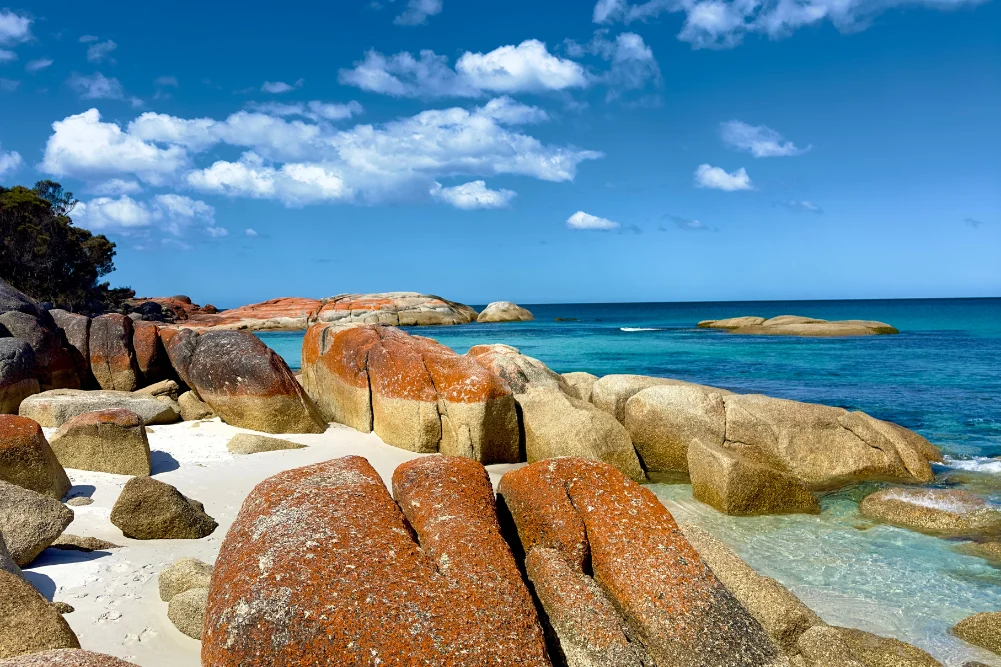
The northeastern coast of Tasmania, long celebrated for its pristine environmental heritage and unique geological formations, has seen a significant surge in interest following the recent designation of the Bay of Fires as Australia’s most beautiful beach for 2025. Central to this regional acclaim is a burgeoning sector of "soft adventure" tourism, exemplified by guided treks that combine rigorous outdoor exploration with high-end hospitality. Intrepid Travel’s three-day expedition through the region, known traditionally as Larapuna, offers a comprehensive look at the intersection of Tasmania’s natural history, Indigenous heritage, and modern conservation efforts.
The Geography and Historical Context of Larapuna
The Bay of Fires extends over 50 kilometers from Binalong Bay in the south to Eddystone Point in the north. The region’s nomenclature dates back to 1773, when Captain Tobias Furneaux, navigating the HMS Adventure, observed numerous fires along the coast. These fires were the result of land management practices by the Palawa people, the traditional custodians of the land. Today, the "fires" are visually represented by the striking orange lichen that coats the massive granite boulders lining the shore. This lichen, a symbiotic relationship between fungi and algae, thrives in the clean air of the Tasman Sea, creating a vibrant contrast against the region’s characteristic white quartz sands and turquoise waters.
The area is ecologically diverse, encompassing coastal heathlands, dry sclerophyll forests, and wetlands. It serves as a critical habitat for various endemic species. The geological foundation of the region is primarily Devonian granite, which was exposed through millions of years of erosion and sea-level fluctuations. This landscape provides the backdrop for a trekking industry that contributes significantly to the Tasmanian economy, which saw a record 1.3 million visitors in the year ending December 2023.
Day One: The Humbug Point Conservation Area
The guided experience typically commences in Launceston, Tasmania’s second-largest city, before transitioning to St Helens, the administrative and commercial hub of the northeast. St Helens serves as the base for the expedition, offering proximity to the Humbug Point Conservation Area. The initial phase of the trek involves the Skeleton Bay Track, leading to Dora Point.
Despite Tasmania’s reputation for unpredictable weather—often described by locals as "four seasons in one day"—the trekking infrastructure is designed to accommodate various conditions. On recent expeditions, hikers have navigated "sneaky rain," a phenomenon where high humidity and light precipitation penetrate standard waterproof gear. The first day’s route emphasizes the botanical diversity of the region, featuring coastal banksia (Banksia integrifolia), flowering paperbarks, and various species of acacia and eucalyptus. This segment serves as an introductory phase, covering moderate distances to acclimate participants to the coastal terrain.
Day Two: Eddystone Point and the Maritime Heritage
The second day represents the logistical and physical peak of the tour, centering on Eddystone Point (Larapuna). The site is dominated by the Eddystone Point Lighthouse, a 35-meter-high tower constructed in 1889 from local pink granite. The lighthouse was established to mitigate the "nautical carnage" caused by the treacherous reefs off the point, which had claimed numerous vessels during the 19th century.
The trekking route follows Eddystone Beach, a six-kilometer stretch characterized by high-velocity winds that frequently exceed 50 kilometers per hour. This segment offers a detailed look at the region’s avian population. Observations include:
- Pacific Gulls: Large, predatory gulls endemic to the Australian coast.
- Pied Oystercatchers: Distinctive black and white birds that forage in the intertidal zones.
- Sandpipers: Migratory waders that utilize the beach for feeding during the austral summer.
A unique feature of this coastline is the presence of "shell coves," where currents deposit vast quantities of bivalve shells, creating deep, crunchy deposits that challenge hikers’ stability. The transition from the beach to inland fire trails reveals a change in microclimate; shielded from the maritime winds, temperatures rise significantly, and the air is perfumed by native wildflowers, including various species of heath and orchid. The second day typically concludes with a total distance of 12 kilometers, averaging approximately 25,000 steps per participant.
Day Three: Mount William National Park and Wildlife Conservation
The final day of the trek focuses on Mount William National Park, a stronghold for Tasmanian wildlife. The park is a vital sanctuary for the Forester kangaroo, the only large kangaroo species found in Tasmania, as well as wombats and echidnas.
Tasmania’s wombat population is estimated at approximately one million, nearly double the human population of the state. While often elusive during daylight hours, their presence is marked by their distinctive cubic scat, a biological adaptation that prevents the droppings from rolling off the granite boulders they use as territorial markers. The Tasmanian echidna (Tachyglossus aculeatus setosus) is also a frequent sight; these monotremes are notably larger and hairier than their mainland counterparts, an evolutionary adaptation to the cooler Tasmanian climate.
The trek concludes with a loop around Stumpy’s Bay, named for the rugged rock formations along the shoreline. This area highlights the successful integration of tourism and conservation, as guided groups are required to follow strict "Leave No Trace" principles to preserve the integrity of the National Park.
Culinary and Economic Impact on St Helens
The "soft adventure" model relies heavily on the local economy of St Helens. Known as the game fishing capital of Tasmania, the town has diversified its economic base to include eco-tourism and high-end gastronomy. The hospitality sector in St Helens utilizes local primary industries, particularly aquaculture.
The region is famous for its Southern Rock Lobster and Pacific Oysters. Oysters harvested from "Lease 65" in Georges Bay are a staple of the trekking experience, providing a direct "farm-to-table" link for visitors. The economic ripple effect of these tours is substantial, supporting local bakeries, hotels like the recently renovated Panorama Hotel, and transport services. The integration of high-quality catering—including chef-prepared meals and locally sourced produce—distinguishes these guided treks from traditional self-supported hiking.
Post-Industrial Tourism: Little Blue Lake and Derby
The return journey to Launceston often includes stops at sites that illustrate Tasmania’s industrial transition. Little Blue Lake, located in the South Mount Cameron region, is a former tin mining hole. Its vivid aqua color is not a natural phenomenon but a result of minerals and white clay particles suspended in the water following the closure of the Endurance Tin Mine, which operated from the 1870s until the 1980s. While aesthetically striking, the lake serves as a reminder of the region’s heavy industrial past.
Similarly, the town of Derby has undergone a radical transformation. Once one of the world’s richest tin-mining centers, it faced economic decline following the mine closures. In recent years, it has been reborn as a premier global destination for mountain biking, hosting international competitions and drawing thousands of adventure tourists annually. This shift from extraction to recreation is a hallmark of the modern Tasmanian economy.
Analysis of the "Soft Adventure" Trend
The demographic profile of participants on the Bay of Fires trek indicates a shift in the adventure travel market. The group often includes a mix of retirees seeking active solitude, such as seasoned "trampers" from New Zealand, and younger professionals using the trek as a training ground for more grueling expeditions like the Kokoda Track.
This "soft center" approach—combining physical challenge with nighttime comfort—addresses a growing demand for accessible wilderness experiences. By removing the burden of heavy packs and providing expert navigation, tour operators have opened Tasmania’s rugged wilderness to a broader audience. This democratization of the outdoors, however, necessitates careful management. The Tasmanian Parks and Wildlife Service (PWS) monitors foot traffic and environmental impact to ensure that the influx of tourists does not degrade the very landscapes they come to see.
Conclusion and Practical Information
The Bay of Fires guided trek represents a sophisticated model of modern tourism that honors historical context while embracing contemporary luxury. As Tasmania continues to position itself as a global leader in eco-tourism, the balance between economic growth and environmental preservation remains paramount.
For travelers, the season for these treks typically runs from October to April, aligning with the more temperate weather of the Tasmanian spring and summer. Accessibility is facilitated by direct flights into Launceston from major Australian hubs including Sydney, Melbourne, and Adelaide. With the Bay of Fires now recognized as a premier global beach destination, the region is poised for sustained interest from international and domestic markets alike, solidifying its status as a cornerstone of the Australian wilderness experience.



 Chandra Hamzah
 Gabriela Annisa
 Tatiana Tantri Indah Sari
 Budi Mulyono
 Anjar Salim