
 Anjar Salim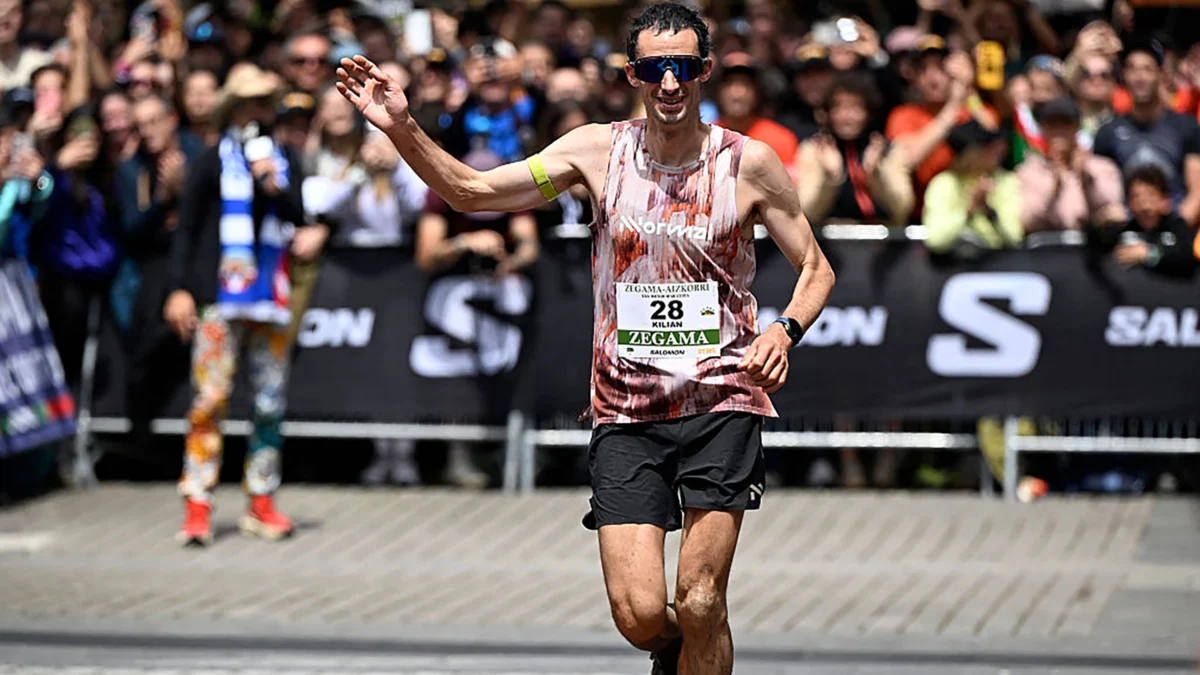
Catalan ultrarunner Kilian Jornet has officially launched a high-profile advocacy campaign dedicated to the protection of United States public lands, a move catalyzed by his recent "States of Elevation" project. The 38-year-old athlete, widely regarded as the greatest mountain runner in history, is leveraging his global platform to address what he describes as an urgent threat to the ecological integrity of the American West. Central to this campaign is Jornet’s participation in the upcoming Western States 100 Endurance Run on June 27, 2026, where he will compete wearing apparel designed to highlight the "Keep Public Lands in Public Hands" movement.
The initiative follows Jornet’s extensive journey through the San Juan Range and other mountainous regions of the contiguous United States. In September 2025, while ascending the 14,021-foot Wilson Peak in Colorado, Jornet encountered an abandoned mining cart—a relic of the region’s industrial past that served as a stark reminder of the long-term impact of resource extraction. This encounter, occurring during his attempt to summit all 67 peaks above 14,000 feet in the lower 48 states, fundamentally shifted his perspective on American land management.
The States of Elevation Project: A Catalyst for Change
The "States of Elevation" project was not merely a feat of athletic endurance; it was a comprehensive survey of the American alpine landscape. Jornet traveled between peaks using only human-powered means, including running and cycling. This slow-motion traverse allowed him to witness the nuances of the terrain, from pristine wilderness to areas heavily scarred by historical and modern industry.
During his time in the San Juan Mountains, Jornet observed a landscape defined by contradictions. While the jagged peaks offer some of the most spectacular scenery in North America, the valleys and slopes are often punctuated by the ruins of the 19th-century mining boom. Weathered gray wooden structures, collapsed ore bins, and rusted machinery remain as permanent fixtures. More concerning to Jornet were the environmental "signatures" of these sites: tailings piles, "gaping mine portals," and the discolored runoff indicative of heavy metal contamination.
"It makes you reflect on all the extraction that has been there," Jornet stated in a recent interview. "You can see that it’s polluted. In a place that’s otherwise very clean, you can see the rubbish, and the pollution in the colors of the waters and in the rocks." For Jornet, these observations led to a definitive conclusion: once industrialization compromises a wild ecosystem, the damage is effectively permanent.
Legislative Shifts and the Rescinding of Environmental Protections
Jornet’s advocacy arrives at a period of significant legislative volatility regarding U.S. land management. In May 2026, the Bureau of Land Management (BLM) rescinded the Conservation and Landscape Health Rule, commonly known as the Public Lands Rule. This regulation had been designed to place conservation on an equal footing with traditional commercial uses such as mining, grazing, and fossil fuel drilling across approximately 245 million acres of public land.
The removal of this rule signifies a return to a "multiple-use" mandate that critics argue heavily favors extractive industries. Furthermore, the current Trump Administration recently signed an executive order opening millions of acres of previously protected public lands to motorized vehicles, including dirt bikes and all-terrain vehicles (ATVs). This policy shift is part of a broader "energy dominance" strategy aimed at streamlining permits for oil, gas, and mineral exploration.
Jornet has expressed specific concern regarding the proposed rescinding of the 2001 Roadless Area Conservation Rule. This Clinton-era policy protects roughly 58.5 million acres of National Forest System lands from road construction and timber harvesting. "People say, ‘Oh, it’s just a road,’" Jornet noted. "But that’s how truly wild places are lost—not all at once, but road by road, lease by lease."
Comparative Perspectives: European Scarcity vs. American Abundance
Born and raised in the Catalan Pyrenees and currently residing in Norway, Jornet provides a unique European perspective on the American concept of wilderness. In Western Europe, the density of human infrastructure makes large, contiguous tracts of undisturbed nature exceedingly rare. Jornet noted that in the Alps or the Pyrenees, it is virtually impossible to travel 50 miles without encountering a road, a village, or industrial infrastructure.
This scarcity has fostered a culture of proactive conservation in Europe. Jornet observed that because Europeans have lost so much of their wild space, there is a unified public front against further corporate encroachment. In contrast, he believes the sheer vastness of the American West can breed a dangerous sense of "complacency" among the public. The assumption that there will always be more wilderness to retreat to may prevent citizens from recognizing the incremental loss of habitat until the damage is irreversible.

Jornet also highlighted the Scandinavian model of allemannsretten, or the "right to roam." In Norway, the law permits individuals to access and camp on uncultivated land, regardless of private ownership, provided they act responsibly. This cultural and legal framework reinforces the idea that nature is a shared heritage rather than a commodity. While Jornet acknowledges that such a system cannot be directly transplanted to the U.S. legal framework, he argues that the underlying philosophy—that the public has a "non-negotiable cost of responsibility" for the land—is universal.
Activism at the Western States 100
The Western States 100 Endurance Run, the world’s oldest 100-mile trail race, will serve as the primary stage for Jornet’s message. On June 27, Jornet will compete wearing a custom "Keep Public Lands in Public Hands" cap produced by NNormal, the outdoor brand he co-founded in 2022. Following the race, the hat will be auctioned to raise funds for conservation organizations.
Beyond the race itself, the Kilian Jornet Foundation has organized a series of community-focused events in Northern California. These include:
- Trail Restoration Projects: Hands-on maintenance of local trail systems to promote sustainable recreation.
- Ecological Information Sessions: Panels featuring local ecologists and land-use experts to educate the running community on the specific threats facing California’s public lands.
- Community Runs: Opportunities for local athletes to engage with the advocacy campaign in a non-competitive environment.
Jornet admitted to initial hesitations about speaking out on American domestic policy as a foreign national. He acknowledged that public lands management is a deeply polarized issue in the United States, often pitting rural economic interests against environmental conservation. However, he concluded that the stakes are too high for silence. "As for my image, well, we all end up in the ground being eaten by worms," he said. "So why preserve an image if it’s better to preserve what we care for?"
Analysis: The Growing Role of the "Athlete-Advocate"
Jornet’s shift toward explicit political and environmental advocacy reflects a growing trend within the outdoor industry. Historically, professional athletes in the "gravity" and endurance sectors avoided partisan issues to maintain broad sponsorship appeal. However, as climate change and land-use conflicts directly impact the "arenas" in which these athletes perform, many are transitioning into roles as environmental stewards.
Industry analysts suggest that Jornet’s move could influence other high-profile athletes to adopt similar stances. The "States of Elevation" project demonstrated that the modern professional athlete can be a source of primary data and observation, using their reach to bring attention to remote ecological issues that might otherwise escape public notice.
The impact of the "energy dominance" push on the outdoor recreation economy is also a factor. According to the Bureau of Economic Analysis, outdoor recreation contributes over $1 trillion to the U.S. GDP annually. The degradation of public lands through mining and drilling represents a direct threat to this economic sector, creating an alliance between environmentalists and business interests in the outdoor industry.
Conclusion: A Vision for the Next Century
In an open letter published on his website on June 18, 2026, Jornet detailed his vision for the future of U.S. public lands. He emphasized that these lands are not merely "stadiums" for athletic achievement but vital "sanctuaries" that provide clean air, water, and emotional refuge for the entire population.
"We are temporary visitors passing through landscapes that have existed for millennia," Jornet wrote. "By stepping up as active stewards today, we ensure that the untamed wilderness remains intact, vibrant, and free for the generations running right behind us."
As Jornet prepares for the start line at Olympic Valley, his focus is split between the grueling 100-mile course ahead and the much longer journey of land preservation. His campaign serves as a reminder that the "privilege of access" to the world’s wild places is inextricably linked to the duty of their protection—a message he hopes will resonate long after the finish line in Auburn.

 Chandra Hamzah
 Gabriela Annisa
 Tatiana Tantri Indah Sari
 Hendra Ismail
 Walid Sujud Trenggono
 Budi Mulyono