Walid Sujud Trenggono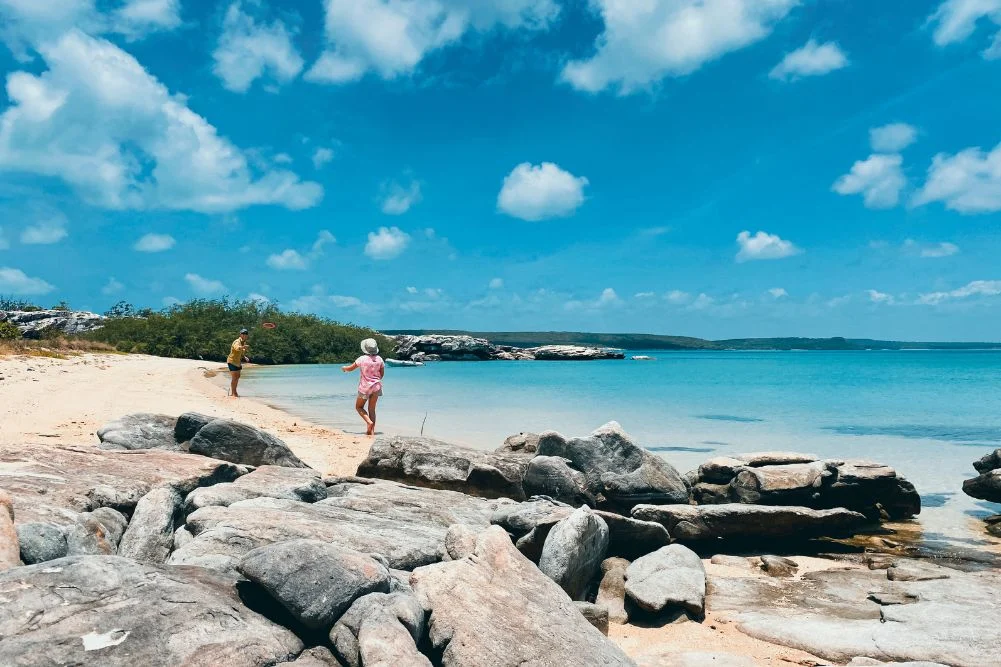
Nhulunbuy, situated on the northeastern tip of the Gove Peninsula in Australia’s Northern Territory, serves as a profound intersection of ancient Indigenous heritage, pre-colonial international commerce, and pristine ecological beauty. For centuries, this remote region of East Arnhem Land has been the ancestral home of the Yolngu people, whose culture remains one of the oldest living traditions on Earth. Unlike many other parts of the Australian coastline where colonial narratives dominate the historical record, Nhulunbuy offers a rare glimpse into a sophisticated era of international relations that predates British settlement by more than a century. The landscape here is not merely a backdrop for tourism but a living document of the Lamamirri (Yolngu) people’s resilience and their historic engagement with the wider world.
The Makassan Connection: A Pre-Colonial Trading Legacy
The historical significance of the Gove Peninsula is anchored in the long-standing relationship between the Yolngu people and the Makassan seafarers from Sulawesi, in modern-day Indonesia. Historical records and archaeological evidence suggest that as early as 1640, and certainly by the mid-1700s, Makassan fleets consisting of up to 60 perahus (traditional wooden sailing vessels) would arrive with the December northwesterly monsoon winds. Their primary objective was the harvest of "trepang," or sea cucumber, a highly prized delicacy in Chinese markets.
This relationship was characterized by mutual respect and structured trade rather than conquest. In exchange for access to the nutrient-rich waters of the Arafura Sea, the Makassans provided the Yolngu with iron tools, tobacco, cloth, and dugout canoes (known as "lippa-lippa"). This exchange fundamentally altered Yolngu hunting and fishing practices, allowing for more efficient harvesting of dugong and turtle. The linguistic and cultural impact of this era remains visible today; many Yolngu words for maritime items and trade are derived from Makassan dialects, and family lineages across the Arafura Sea remain inextricably linked.
The trade continued until 1906, when the newly formed Australian Commonwealth government imposed heavy customs duties and restricted the visits of "foreign" vessels, effectively ending a 250-year era of international cooperation. However, the memory of these encounters is preserved not in books, but in the very soil of the peninsula.
Wurrwurrwuy: The Lithic Archives of Garanhan
At Garanhan, also known as Macassan Beach, the Wurrwurrwuy stone arrangements provide a permanent physical record of this maritime history. These arrangements, believed to have been constructed by Yolngu elders in the late 19th century, function as a pictorial map of the Makassan presence. Using local bauxite stones, the artists meticulously outlined the shapes of Makassan perahus, including details such as rudders, masts, and anchors.
Beyond the ships, the arrangements depict the infrastructure of the trepang industry: stone fireplaces used for boiling and curing the sea cucumbers, fish traps, and even the layout of the Makassan camps. These works were created with the intent of educating future generations of Yolngu about their ancestors’ diplomatic and commercial prowess. In the 1960s, clan leader Mungurrawuy Yunupingu—a seminal figure in the Indigenous land rights movement—emphasized the importance of these sites to historian Campbell Macknight. Mungurrawuy’s father had himself traveled to Makassar, and the stone works served as his family’s "title deeds" to the history of the land and sea.
Chronology of Key Events in the Gove Peninsula
To understand the current cultural landscape of Nhulunbuy, one must examine the timeline of contact and transformation that has shaped the region:
- Circa 1640: Estimated beginning of regular Makassan voyages to Northern Australia.
- 1803: English explorer Matthew Flinders encounters a Makassan fleet commanded by Captain Pobassoo near Gove Harbour, documenting the sophisticated nature of the trepang trade.
- 1906: The Australian government officially bans Makassan trepangers, ending centuries of cross-cultural exchange.
- 1935: The Methodist Overseas Mission establishes a station at Yirrkala, introducing Christianity and western education while simultaneously providing a platform for Yolngu political organization.
- 1962: The creation of the Yirrkala Church Panels, a landmark event where elders used traditional art to assert their sovereignty over the land in the face of encroaching mining interests.
- 1963: The Yolngu people submit the Bark Petitions to the Australian Parliament, the first traditional documents recognized by the Commonwealth, protesting the excision of land for bauxite mining.
- 1988: The Mulka Museum is opened by former Prime Minister Gough Whitlam, serving as a repository for sacred bark paintings and cultural artifacts.
- Present Day: Nhulunbuy transitions from a mining-centric economy to a hub for cultural tourism and Indigenous-led conservation.
Art as Sovereignty: The Buku-Larrnggay Mulka Centre
The Buku-Larrnggay Mulka Centre in Yirrkala, located 19 kilometers from the Nhulunbuy town center, is recognized globally as one of Australia’s premier Indigenous art institutions. The center is more than a gallery; it is a "keeping place" and a production hub where the dual moieties of Yolngu culture—Yirritja and Dhuwa—are expressed through various media.
One of the most significant exhibits within the Mulka Museum is the Yirrkala Church Panels. Painted in 1962 on masonite, these two four-meter-high panels represent the complex law and theology of the Yolngu people. Originally intended for the altar of the local mission church, they were a bold statement of cultural equality, placed there to show the missionaries that the Yolngu already possessed a deep spiritual and legal system. Although they were later discarded by the church, they were rescued by the community and now stand as symbols of the region’s political awakening.
The center also showcases the intricate art of "gunga" (pandanus) weaving. Traditionally used to create "nganiyal" (conical baby mats), the practice has evolved into a sophisticated art form. Artisans use natural pigments derived from roots, bark, and clay to dye the fibers, creating baskets and mats that are sought after by international collectors. This industry provides vital economic autonomy for Yolngu women, blending traditional skill with modern commercial viability.
Ecological Stewardship and the Dhimurru Aboriginal Corporation
The management of the Gove Peninsula’s natural resources is largely overseen by the Dhimurru Aboriginal Corporation. This Indigenous-led organization is responsible for the "Both Ways" management of the land and sea, integrating traditional ecological knowledge with modern western science. Visitors to the region are required to obtain permits through Dhimurru, a system that ensures the protection of sacred sites and the sustainability of the environment.
The peninsula is home to a diverse array of wildlife, much of which is protected under the Dhimurru Indigenous Protected Area (IPA). The region’s beaches are critical nesting grounds for four species of sea turtles: the green, flatback, hawksbill, and olive ridley. Furthermore, the East Bremer Islets, classified as the Higginson Important Bird Area, support globally significant populations of bridled terns, roseate terns, and the Northern Territory’s only breeding site for common noddies.
However, the beauty of the region is balanced by the reality of its apex predators. The Gove Peninsula is "baru" (crocodile) country. The presence of saltwater crocodiles necessitates a cautious approach to water activities, with swimming generally restricted to designated safe areas or offshore islands like Dhambaliya (Bremer Island).
Sustainable Tourism: The Banubanu Beach Retreat
A primary example of the shift toward high-value, low-impact tourism is the Banubanu Beach Retreat on Bremer Island. Managed in partnership with the Yolngu traditional owners, this solar-powered, off-the-grid resort exemplifies the region’s commitment to sustainability. The name "Banubanu" itself is a tribute to the Makassan history, referring to a rock formation that sailors believed resembled a group of women.
The retreat offers a model for how Indigenous communities can leverage their natural and cultural assets to create economic opportunities without compromising environmental integrity. By limiting the number of guests and focusing on cultural immersion, Banubanu provides a blueprint for the future of tourism in Arnhem Land. This move toward luxury eco-tourism is particularly relevant as the region prepares for the eventual closure of the Rio Tinto bauxite mine, which has been the primary economic driver for the area since the 1960s.
Socio-Economic Implications and Future Outlook
The transition of Nhulunbuy from a mining town to a cultural and ecological destination carries significant implications for the Northern Territory’s economy. According to Tourism NT data, Indigenous tourism is one of the fastest-growing sectors in the territory, with travelers increasingly seeking "authentic" and "transformative" experiences. The Gove Peninsula is uniquely positioned to meet this demand.
The legacy of leaders like Mandawuy Yunupingu—lead singer of Yothu Yindi and a former Australian of the Year—continues to influence the region’s development. His work in bridging the gap between Indigenous and non-Indigenous Australians through music and education laid the groundwork for the thriving community markets and festivals that Nhulunbuy hosts today. These events, such as the monthly community markets and the Garma Festival (held nearby), foster social cohesion and provide a platform for local musicians and artisans.
However, challenges remain. The remoteness of the Gove Peninsula results in high costs for transport and infrastructure. Access is primarily through Airnorth or Qantas flights from Darwin, with ticket prices often exceeding $600 return. Furthermore, the permit system, while essential for cultural preservation, requires a level of planning and compliance that differs from standard tourist destinations.
Conclusion
Nhulunbuy and the Gove Peninsula represent a rare success story of cultural preservation and environmental management in a modern context. By honoring the historical narratives of the Makassan trade and the political struggles of the 20th century, the Yolngu people have ensured that their history is not forgotten but is instead the foundation of their future. For the visitor, the region offers more than just a scenic escape; it offers a profound education in the complexity of Australian history and the enduring strength of the world’s oldest living culture. As the sun sets over the Arafura Sea, lighting up the turquoise waters and the ancient stone arrangements of Garanhan, it is clear that Nhulunbuy is not just a place on a map, but a testament to the power of tradition in a changing world.



 Chandra Hamzah
 Gabriela Annisa
 Tatiana Tantri Indah Sari
 Budi Mulyono
 Anjar Salim