
 Budi Mulyono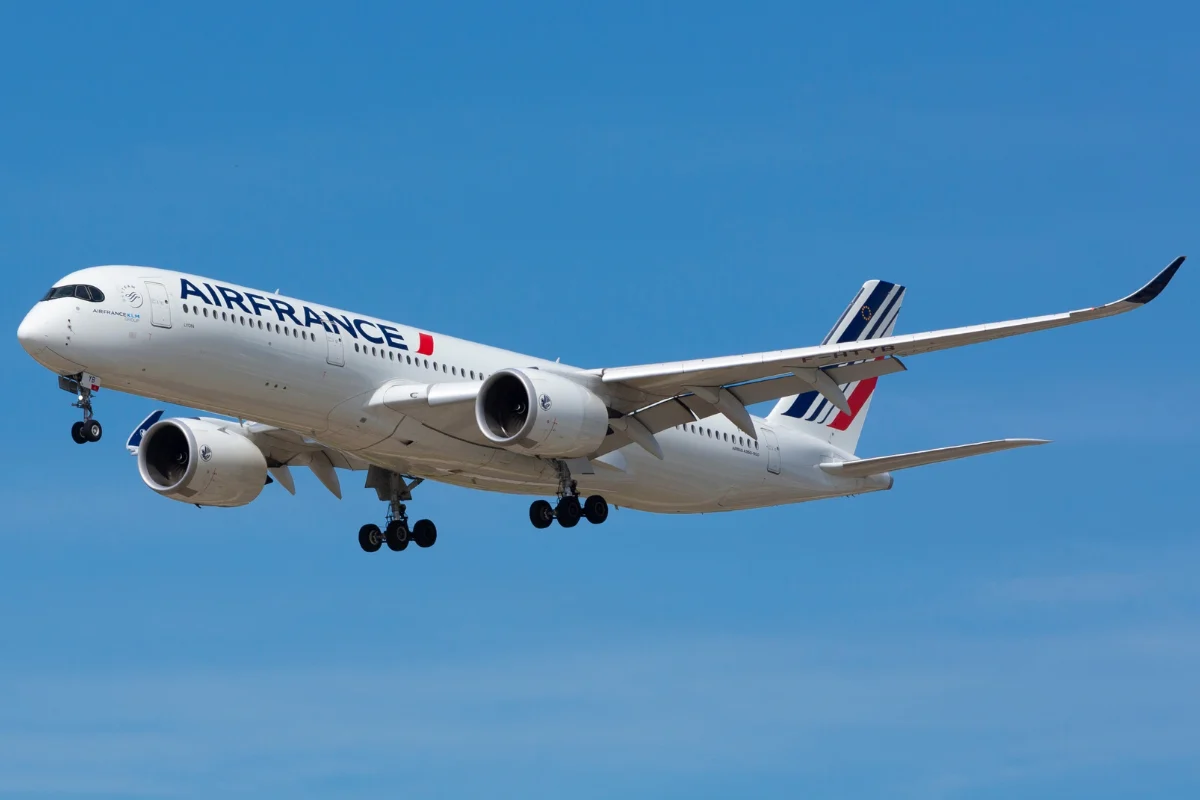
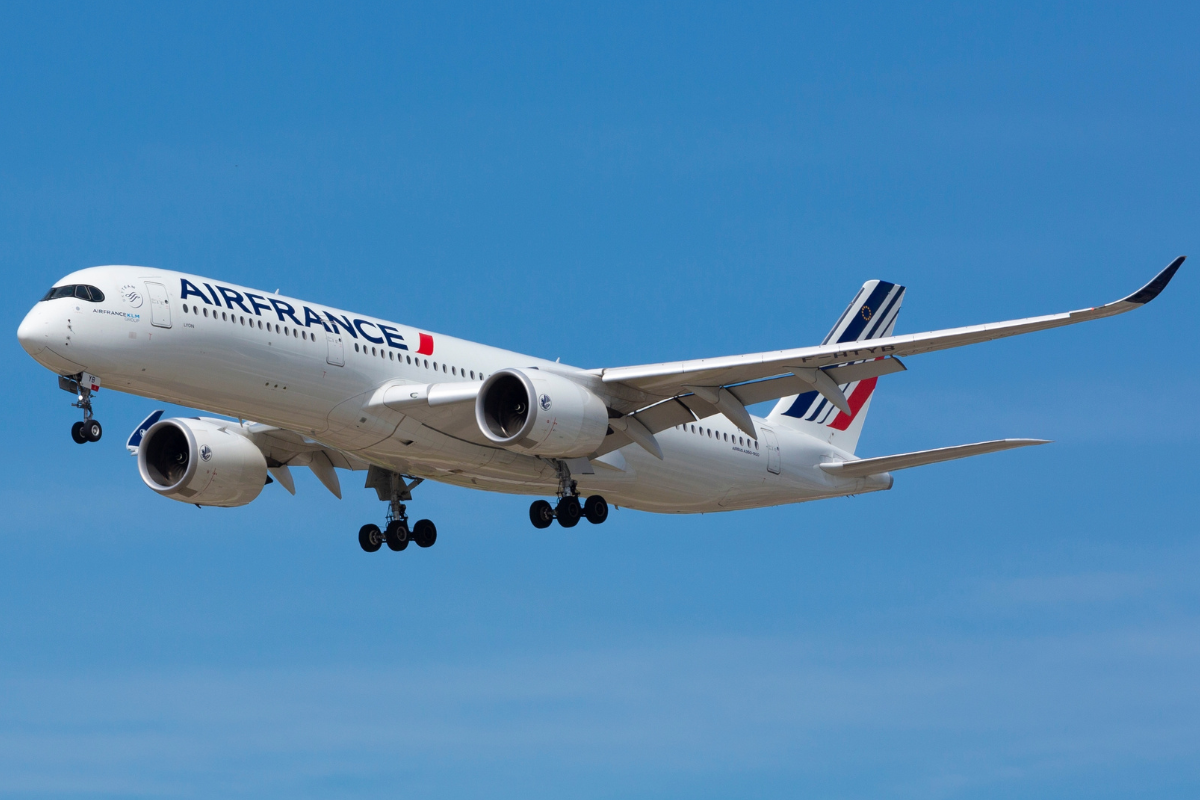
Air France has officially issued a refund and a formal apology to a Washington D.C. traveler after a technical error led the airline to falsely accuse his partner of missing a flight leg, resulting in an immediate €500 penalty. The incident, which highlights growing concerns regarding automated customer service and the complexities of airline IT integrations, saw the passenger forced to pay the fee under the threat of being denied boarding, despite presenting real-time photographic and digital evidence that he had indeed been on the flight in question.
The traveler, Xander Nabavi-Noori, had booked a multi-city itinerary for himself and his partner through Delta Air Lines. The trip involved a journey from New York’s John F. Kennedy International Airport (JFK) to Amsterdam, followed by a return leg from Paris Charles de Gaulle (CDG) to New York. While the outbound flight to Amsterdam was operated by KLM Royal Dutch Airlines and the return leg by Air France, the entire booking was managed under a codeshare agreement via Delta.
The Incident at Paris Charles de Gaulle
The dispute began last week when Nabavi-Noori and his partner arrived at the Air France check-in counter at Paris Charles de Gaulle for their return flight to the United States. Upon attempting to check in, they were informed by ground staff that Nabavi-Noori’s partner had supposedly failed to show up for the initial leg of the trip from New York to Amsterdam.
Under the standard "Conditions of Carriage" for most international carriers, including those in the Air France-KLM Group, tickets must be used in the specific sequence in which they were issued. This "out of sequence" or "no-show" clause dictates that if a passenger misses any segment of their itinerary, all subsequent flights on that ticket are automatically canceled. This policy is primarily designed to prevent "hidden city ticketing," a practice where travelers book a flight with a layover because it is cheaper than a direct flight, intending to exit at the connection point.
In this instance, Air France agents informed the couple that because the partner was marked as a "no-show" on the New York to Amsterdam flight, his return ticket to New York was void. To revalidate the ticket and allow him to board the plane, the airline demanded an immediate payment of €500 (approximately $586 USD).
Nabavi-Noori reported that the situation was handled with significant rigidity. Despite the couple being physically present in Europe—having arrived via the very flight the airline claimed they missed—agents refused to bypass the system’s "no-show" status. Nabavi-Noori stated that they paid the fee "under duress," fearing they would be stranded in Paris if they did not comply with the airline’s demands.
A Failed Digital Defense
The most striking aspect of the confrontation was the airline’s refusal to acknowledge physical and digital proof of travel. During the standoff at the airport, the couple presented several forms of evidence to prove they had been on the KLM flight from New York:
- Time-Stamped Selfies: Photos taken by the couple while seated on the aircraft during the outbound journey.
- Metadata and GPS Coordinates: Nabavi-Noori provided the metadata for the photos, which included the exact date, time, and GPS coordinates of the aircraft at the time the images were captured.
- Network Connectivity Logs: Evidence showing that the partner’s mobile phone had connected to a Dutch cellular tower within minutes of the plane landing at Schiphol Airport in Amsterdam.
Despite the overwhelming nature of this evidence, ground staff at CDG maintained that they were unable to override the system’s status and instructed the passengers to pay the fee and seek a refund through the airline’s customer relations department after returning home.
The Role of Automated Systems and AI
Upon returning to Washington D.C., Nabavi-Noori filed formal claims with both Air France and KLM. However, the frustration continued when both claims were denied almost instantly. Nabavi-Noori observed that the denials arrived within minutes of submission, leading him to believe that no human had actually reviewed the evidence he provided.
"I suspect that my claims were being automatically denied by an AI agent," Nabavi-Noori noted on social media. This reflects a broader trend in the aviation industry where airlines are increasingly relying on automated systems to handle the high volume of customer service queries. While these systems are efficient for routine tasks, they often lack the nuance required to handle "edge cases" or technical anomalies where the airline’s internal data conflicts with external reality.
The failure of the automated system to escalate a claim involving clear photographic evidence points to a significant gap in current airline customer service infrastructure. It was only after Nabavi-Noori took his grievances to X (formerly Twitter) and the story was amplified by the influential travel blog One Mile at a Time that the airline took notice. The social media traction forced a manual intervention by a human representative who could actually evaluate the validity of the claim.
The Technical "Rare Anomaly"
Following a manual investigation, Air France confirmed that the error was not the fault of the passenger but rather a breakdown in the communication between the IT systems of the three partner airlines involved: Delta, KLM, and Air France.
In an official statement and apology to Nabavi-Noori, Air France described the event as a "rare anomaly" in the data exchange. Because the ticket was booked through Delta (the ticketing carrier) but the flights were operated by KLM and Air France (the operating carriers), a synchronization error occurred. Specifically, the data confirming that the passenger had checked in and boarded the Delta-ticketed, KLM-operated flight at JFK failed to transmit correctly to the Air France system used for the return leg.
This type of IT friction is a known vulnerability within global airline alliances like SkyTeam. While codesharing allows for a seamless booking experience for the consumer, the underlying "back-end" systems—often built on legacy software—must constantly communicate across different platforms. When a "handshake" between these systems fails, the passenger often bears the brunt of the error.
Chronology of Events
- Mid-May: Xander Nabavi-Noori books a multi-city trip via Delta Air Lines for himself and his partner.
- Outbound Leg: The pair travels from New York JFK to Amsterdam on a flight operated by KLM.
- The Error: Due to a synchronization failure, Delta’s check-in data does not properly update the partner’s status to "flown" in the shared SkyTeam database.
- Return Leg: The couple arrives at Paris Charles de Gaulle for their Air France flight to New York. Air France’s system flags the partner as a "no-show" for the first leg.
- The Confrontation: Air France demands €500 to "reinstate" the ticket. Despite showing photos and GPS data, the couple is forced to pay.
- Post-Trip: Nabavi-Noori files a refund claim. The claim is rejected by automated systems within minutes.
- Social Media Escalation: Nabavi-Noori posts the experience on X. The story gains thousands of views and is picked up by travel media.
- Resolution: Air France conducts a manual review, identifies the IT glitch, and issues a full refund of the €500 fee along with an apology.
Analysis of Airline Policies and Consumer Protection
This incident sheds light on the controversial nature of "out of sequence" clauses. While airlines argue these policies are necessary to protect their pricing structures, consumer advocacy groups have long criticized them as being overly punitive. In several European jurisdictions, courts have ruled that canceling a return flight because a passenger missed an outbound leg is an unfair contract term, especially if the passenger notified the airline or if the airline cannot prove financial loss.
Furthermore, the "pay now, argue later" approach taken by ground staff at Charles de Gaulle highlights a power imbalance between carriers and passengers. For many travelers, paying a surprise $600 fee is a significant financial burden, yet the alternative—being stranded in a foreign country—is often worse.
The case also underscores the risks of over-reliance on AI in customer service. As airlines move toward "digital-first" strategies, the ability for a customer to reach a human who has the authority to override a system error is becoming increasingly difficult. In this case, the "AI wall" effectively blocked the passenger’s legitimate claim until public PR pressure was applied.
Official Response and Future Implications
In its apology, Air France acknowledged the severity of the situation. "From a customer perspective, being asked to pay a substantial fee in order to board a confirmed return flight remains a very serious matter, regardless of the technical issue," the airline stated.
Industry analysts suggest that as airline alliances become more integrated, the frequency of such "data anomalies" could increase unless there is a significant overhaul of how legacy systems communicate. For passengers, the takeaway from Nabavi-Noori’s experience is the importance of maintaining a digital paper trail—including boarding passes, luggage tags, and even time-stamped photos—to provide "irrefutable" proof of travel in the event of a system failure.
While Air France has rectified this specific error, the incident serves as a cautionary tale for the aviation industry regarding the limitations of automation and the necessity of human oversight in maintaining customer trust. For now, Nabavi-Noori has confirmed receipt of the refund, though he noted that the resolution should not have required a viral social media campaign to achieve.




 Anjar Salim
 Chandra Hamzah
 Tatiana Tantri Indah Sari
 Lukman Taruna Persada Ramadan
