
 Tatiana Tantri Indah Sari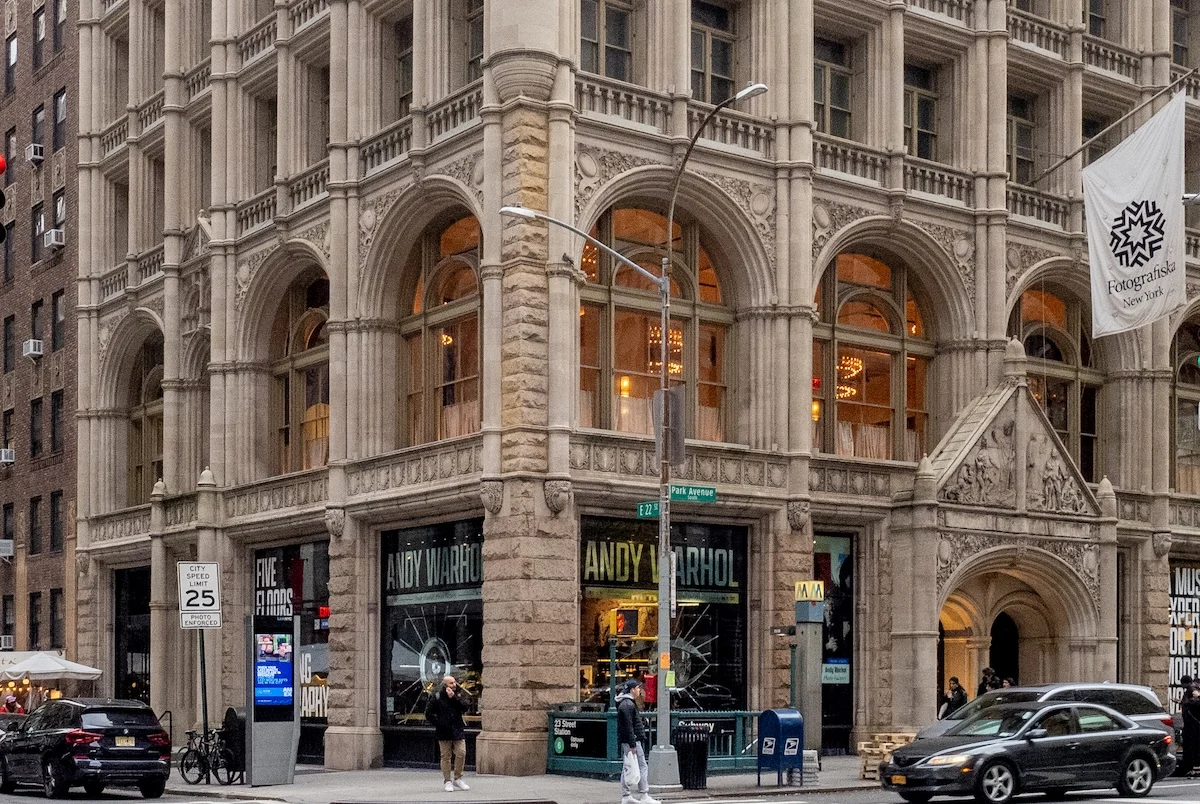
Airbnb, the global short-term rental giant, has made a significant departure from its long-held "asset-light" business model with the acquisition of a six-story building at 281 Park Avenue South in New York City for $81.5 million. This landmark purchase, confirmed by company representatives, marks the first time Airbnb has ever owned a physical building anywhere in the world, signaling a nuanced evolution in its corporate strategy. While the company has clarified that the building will serve as an office space for its New York-based employees and will not be listed on its platform, the move comes at a particularly interesting juncture, especially given New York City’s stringent enforcement of Local Law 18, which has effectively curtailed the vast majority of short-term rentals in the metropolis since 2022.
The Landmark Acquisition and its Context
The property at 281 Park Avenue South, a historic edifice known for its distinctive architecture and a notable connection to popular culture through the Netflix series "Inventing Anna," stands as a tangible commitment from Airbnb to its presence in New York City. Completed in 1894, the building originally served as the headquarters for the German Savings Bank (later Central Savings Bank and then Apple Bank for Savings) and features ornate Beaux-Arts detailing. Its acquisition represents a substantial investment in a city that remains a critical global hub, despite the current operational challenges for Airbnb’s core business. The transaction, which reportedly closed in late 2023 or early 2024, has been viewed by market observers as a strategic anchor for Airbnb’s operations in a key market where its traditional model faces unprecedented regulatory headwinds.
For years, Airbnb has championed an asset-light model, relying on individual property owners to supply inventory rather than owning real estate itself. This strategy allowed for rapid global expansion with minimal capital expenditure on physical assets, distinguishing it from traditional hospitality companies that invest heavily in hotels and resorts. The purchase of 281 Park Avenue South, therefore, represents a significant philosophical shift, even if confined to office space. It suggests a growing corporate maturity and a willingness to invest in fixed assets where strategic long-term benefits outweigh the historical aversion to ownership.
Airbnb’s Asset-Light Philosophy: A Historical Overview
Founded in 2008 by Brian Chesky, Joe Gebbia, and Nathan Blecharczyk, Airbnb rapidly revolutionized the travel and hospitality industry by leveraging the sharing economy. Its core innovation was connecting travelers with hosts offering spare rooms or entire homes, thereby unlocking underutilized assets. This "asset-light" approach was central to its meteoric rise. Unlike hotel chains that require billions in capital to build and maintain properties, Airbnb’s overhead for physical infrastructure was minimal. This allowed the company to scale globally with unprecedented speed, reaching a valuation exceeding $100 billion at its IPO in 2020.
The benefits of this model were manifold: agility, lower capital intensity, and the ability to offer diverse, localized experiences. However, it also brought challenges, primarily related to regulatory scrutiny, safety, and quality control, as the company operated in a largely unregulated space for much of its early history. The shift to owning a physical office building, while not directly impacting its rental business model, signifies a move towards greater stability and control over its corporate infrastructure, perhaps reflecting a broader maturation of the company.
The NYC Regulatory Landscape: Local Law 18 and its Impact
The timing of Airbnb’s acquisition is inextricably linked to the evolving regulatory environment in New York City. The city has long been at the forefront of the battle between short-term rental platforms and local governments grappling with housing affordability and neighborhood quality-of-life issues. Years of escalating tensions culminated in the passage of Local Law 18 in 2022, which came into full effect on September 5, 2023.
Local Law 18 mandates that all short-term rental hosts in New York City register with the Mayor’s Office of Special Enforcement (OSE) and prohibits platforms like Airbnb from processing transactions for unregistered listings. Crucially, the law imposes strict limitations on what constitutes a legal short-term rental, effectively banning most common Airbnb arrangements. Under the law, hosts can only rent out an entire unshared apartment for fewer than 30 days if a permanent resident is also present throughout the guest’s stay. Moreover, hosts are limited to renting to no more than two guests at a time. These restrictions render nearly all typical vacation rentals illegal, severely impacting Airbnb’s supply in one of its most lucrative global markets.
Prior to the full implementation of Local Law 18, New York City was consistently one of Airbnb’s largest markets, boasting tens of thousands of listings. Following the law’s enforcement, the number of active short-term rental listings plummeted dramatically. Reports from analytics firms indicated a drop from over 20,000 active listings to just a few thousand legitimate ones within weeks, with many hosts either delisting their properties or attempting to pivot to long-term rentals. This regulatory crackdown has been a significant blow to Airbnb’s revenue potential in the city and has served as a cautionary tale for other global cities considering similar restrictions.
Strategic Rationale: Beyond the "Asset-Light" Model
Given the severe restrictions on its core business in New York City, Airbnb’s decision to purchase a building for $81.5 million warrants deeper analysis. Several strategic rationales can be inferred:
- Commitment to a Global Hub: Despite regulatory challenges, New York City remains an indispensable global center for finance, culture, and technology. Maintaining a robust physical presence is crucial for talent acquisition, client relations, and overall brand perception. Owning a building signals a long-term commitment to the city, regardless of the immediate profitability of its short-term rental operations there.
- Stability and Cost Control: In a volatile commercial real estate market, particularly post-pandemic, owning rather than leasing can offer long-term stability and potentially better cost control. While the initial outlay is significant, it eliminates fluctuating rental costs and provides a tangible asset. This move could be seen as an inflation hedge or a strategic allocation of capital, particularly for a company with substantial cash reserves (Airbnb reported cash, cash equivalents, and marketable securities of approximately $9.8 billion as of Q3 2023).
- Employee Experience and Culture: The COVID-19 pandemic reshaped corporate attitudes towards office spaces. While many companies embraced remote or hybrid work models, a growing number are investing in high-quality, engaging office environments to foster collaboration, innovation, and company culture. Owning a building allows Airbnb complete control over its office design, amenities, and overall employee experience, aligning with its brand identity which emphasizes unique and comfortable spaces.
- Symbolic Statement: The acquisition can be interpreted as a symbolic declaration. By investing in a prominent New York City building, Airbnb might be subtly communicating its enduring presence and influence, even as its primary business model faces legislative hurdles. It underscores that Airbnb is more than just a platform; it is a global company with diverse interests and a long-term vision.
- Diversification of Assets: While a single office building doesn’t fundamentally change Airbnb’s asset-light business model, it does represent a minor diversification of its balance sheet. For a company that has primarily relied on digital assets and network effects, a physical asset, particularly in a prime location, could be seen as a strategic, albeit small, step.
Implications for Airbnb’s Future and Corporate Culture
The acquisition has several implications for Airbnb’s corporate trajectory. Firstly, it suggests a pragmatic approach to managing its global footprint. While the core "asset-light" philosophy remains fundamental to its operational model for short-term rentals, the company is demonstrating flexibility in its corporate infrastructure strategy. This is not an abandonment of its core identity but rather a maturation that recognizes the need for strategic physical investments in key markets.
Secondly, for its employees, particularly those based in New York City, the new office provides a stable and potentially enhanced work environment. In an era where companies are vying for top talent, investing in a state-of-the-art office can be a significant draw. It reinforces a sense of permanence and belonging, potentially boosting morale and productivity. The design of the new space will likely reflect Airbnb’s emphasis on community, comfort, and unique experiences, translating its brand values into its corporate workspace.
Thirdly, this move might signal a broader trend for tech companies. As they mature and accumulate significant capital, some may choose to invest in owned real estate for their corporate headquarters or major regional offices, moving away from perpetual leasing models. This could be seen as a move towards greater financial independence and brand embodiment.
The Broader Commercial Real Estate Market in NYC
Airbnb’s acquisition also plays into the evolving dynamics of New York City’s commercial real estate market. The city’s office market has faced significant headwinds since the pandemic, with high vacancy rates and uncertainty surrounding the future of office work. Many companies have downsized their footprints or opted for hybrid models, leading to a surplus of available office space, particularly in older buildings.
However, there has also been a flight to quality, with premium, well-located, and amenity-rich properties still attracting strong interest. Airbnb’s choice of 281 Park Avenue South, a historic building in a desirable location, aligns with this trend. It suggests that while the overall market may be soft, prime assets continue to command significant value, especially when purchased by financially robust entities for long-term strategic use. The transaction provides a positive data point for the city’s commercial real estate sector, indicating continued investment confidence from major corporations.
Reactions and Expert Analysis
While Airbnb has publicly stated the building will serve as an office and there are "no plans to ‘Airbnb’ it," real estate analysts and industry observers have weighed in on the broader implications.
"This is a fascinating move for a company that built its empire on not owning anything," commented Sarah Chen, a senior analyst at a leading real estate consultancy. "It speaks volumes about their long-term commitment to New York, irrespective of the current regulatory climate for their core business. It’s an anchor, a statement of intent."
Some urban planning experts suggest that such corporate investments, even for office space, contribute to the economic vitality of the city. "When a major tech player like Airbnb puts down roots with a significant property acquisition, it signals confidence in the city’s future," noted Dr. Michael Thompson, an urban economist. "It creates jobs, contributes to the local tax base, and helps stabilize the commercial real estate market, which has been under pressure."
From the perspective of New York City officials, the acquisition, while not directly addressing the short-term rental debate, could be viewed positively as a sign of continued corporate investment in the city. The Mayor’s Office of Special Enforcement (OSE) remains focused on the rigorous application of Local Law 18, which it maintains is crucial for preserving housing stock and protecting residential neighborhoods. The acquisition of an office building does not alter the enforcement landscape for short-term rentals.
Looking Ahead
The purchase of 281 Park Avenue South represents a notable chapter in Airbnb’s corporate history. It underscores the company’s evolving strategy, adapting to a dynamic global landscape characterized by increasingly complex regulatory environments and changing workforce expectations. While the "asset-light" model remains foundational to its short-term rental platform, this strategic real estate acquisition signals a pragmatic willingness to invest in physical assets where long-term strategic value and corporate stability are paramount. As Airbnb continues to navigate global regulations and market shifts, its New York City office building stands as a tangible symbol of its enduring presence and sophisticated approach to corporate growth in a constantly changing world.




 Anjar Salim
 Chandra Hamzah
 Budi Mulyono
 Lukman Taruna Persada Ramadan
