
 Hendra Ismail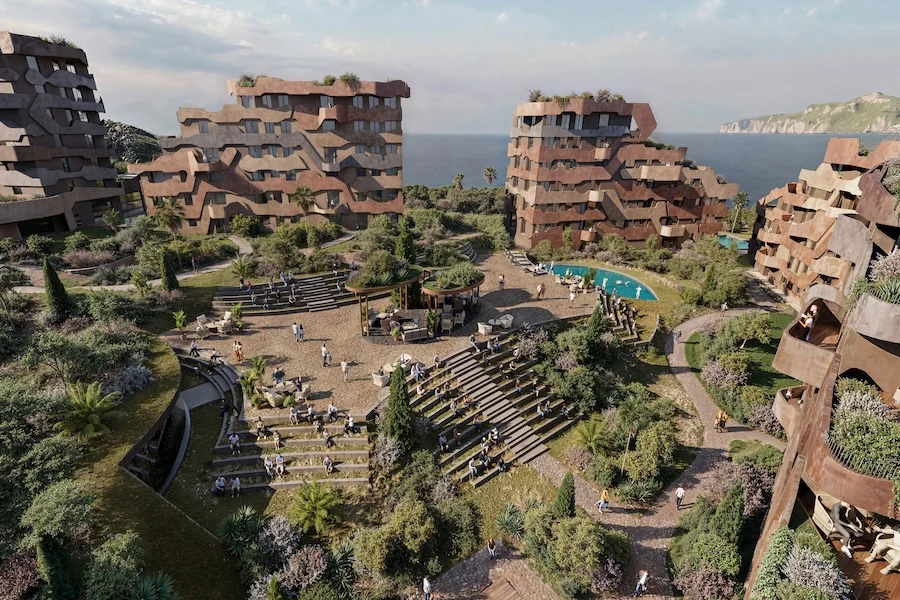
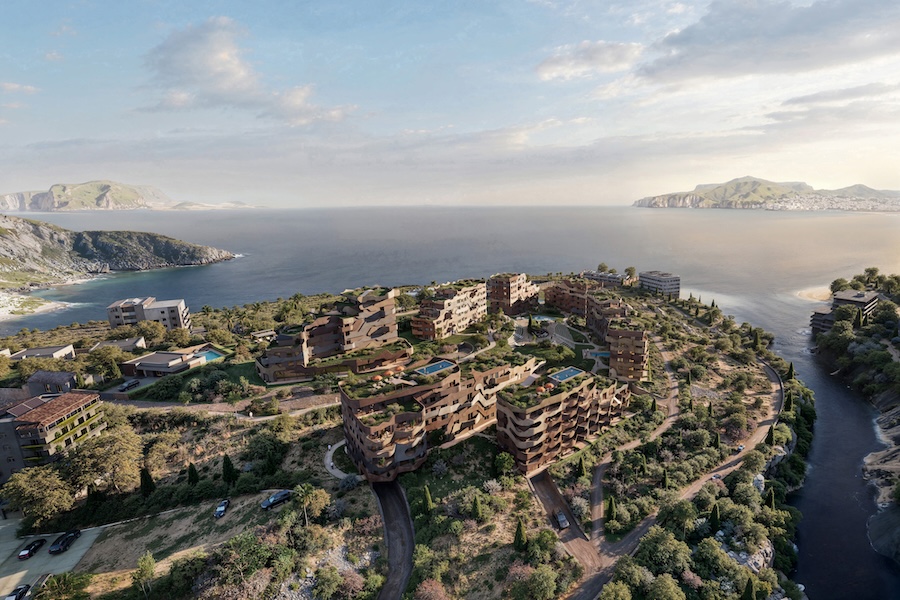
The dramatic coastal landscape of southern Albania is poised to welcome Berdenesh Hills, a significant new development designed by NOA, which aims to redefine contemporary architecture through a harmonious integration of sea, light, and terrain. This ambitious project, spanning nearly 280,000 square feet, will comprise approximately 250 residential apartments and a boutique hotel, translating the region’s unique identity into an amphitheater-like composition of terraced volumes rendered in warm, earthy tones. The journey to the site itself, a transition from the urban density of Tirana to a serene rural landscape dotted with scrub-covered hills, served as a profound source of inspiration for the design team, guiding their vision towards a structure that speaks to its environment.
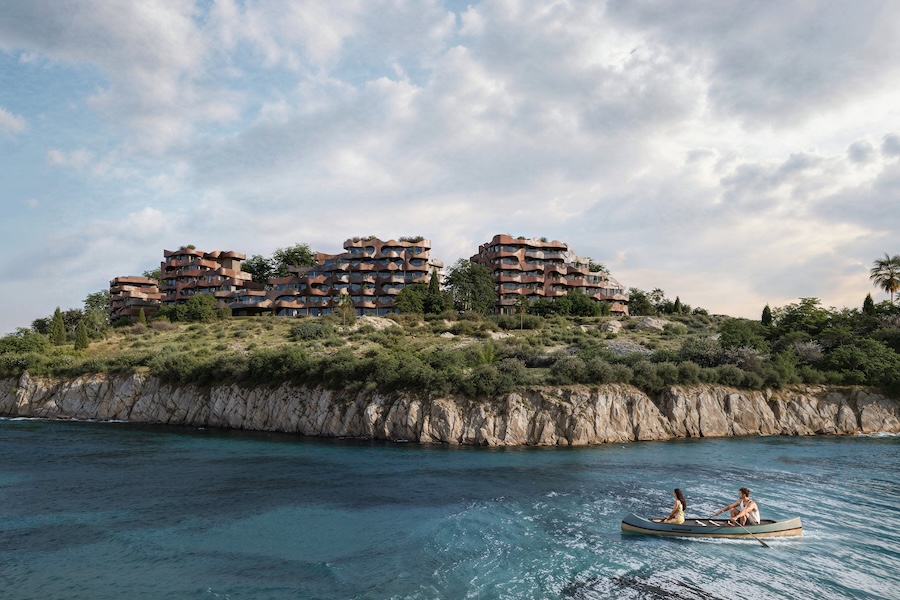
Lukas Rungger, NOA founder and project architect, articulated the firm’s deep connection with the locale. "We were deeply impressed by the coastline of this region," Rungger stated. "It unfolds as an inward-turning spline, marked by continuous inlets, large bays, and small coves, all framed by the silhouette of Corfu on the horizon." This natural curvature and the embrace of the Ionian Sea have been meticulously translated into the architectural language of Berdenesh Hills, ensuring a visual dialogue between the built environment and its breathtaking natural surroundings.
Reimagining the Citadel for a Modern Age
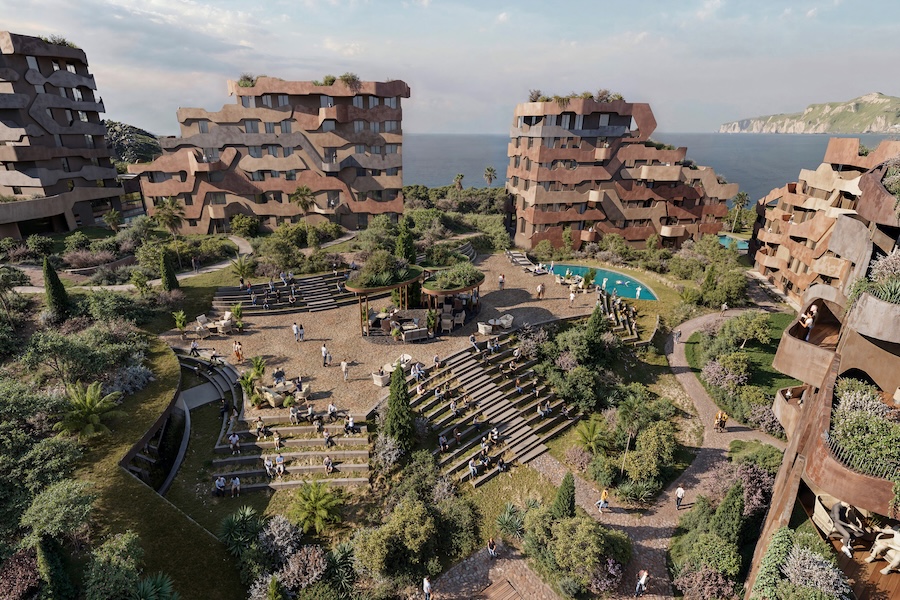
In contrast to the prevalent tower typologies that currently characterize the skyline of nearby Saranda, NOA deliberately looked to historical architectural precedents for inspiration, opting for a reimagined citadel concept. Andrea Dal Negro, an architect at NOA, explained the underlying philosophy: "We envisioned the creation of a new small neighborhood in the form of a citadel. Like its historical counterparts, this contemporary citadel develops around a focal point: the central piazza. However, unlike ancient Greek, Roman, or medieval fortresses—the most famous Albanian example being Gjirokastër—its perimeter walls, formed by a variety of buildings, open outward in a continuous search for connection with the surrounding environment." This approach eschews the defensive, inward-looking nature of traditional citadels, instead embracing an outward-facing, community-oriented design that fosters interaction with the landscape and its inhabitants.
The architectural strategy employed at Berdenesh Hills is characterized by its dynamic, layered profile. Rooflines meticulously rise and fall to echo the natural topography of the site, creating a visually engaging, terraced composition that culminates in a central, vibrant public space. This tiered arrangement, spread across five distinct levels, not only respects the undulating terrain but also strategically frames the panoramic views of the Ionian Sea. Complementing the built structures, a Mediterranean park, thoughtfully designed with lush indigenous vegetation, threads through the development, further enhancing the project’s seamless integration with the natural environment and contributing to its overall ecological sustainability.
Materiality and Form: A Dialogue with the Albanian Coast
The selection of materials and the meticulous attention to form are pivotal to Berdenesh Hills’ success in blending the architecture with its context. Bands of raw plaster, finished in warm, earthy hues, elegantly wrap each façade. This deliberate choice serves to translate the site’s inherent geological textures directly into the built environment, creating a tactile and visually resonant connection to the land. The design deliberately avoids rigid floor plates by employing organic profiles and recessed planes. This subtle yet significant detail distances the architecture from the often monotonous, rectilinear forms of typical multi-story structures found in Saranda, imbuing Berdenesh Hills with a more fluid and natural aesthetic.

Each building volume within the development rises to a maximum of six stories and strategically tapers at its shorter sides. This architectural decision is instrumental in creating expansive, stepped terraces that offer uninterrupted, breathtaking vistas of the Ionian coastline. The result is a constant visual reminder of the region’s natural splendor, ensuring that the sea remains an ever-present and integral element of the resident and visitor experience. The tapering also contributes to the overall sculptural quality of the development, preventing any sense of monolithic imposition on the landscape.
A Project Timeline and Progress
The conceptualization of Berdenesh Hills began with extensive site analysis and a deep immersion into the cultural and environmental fabric of southern Albania. Following the initial design phases, NOA engaged with local planning authorities and stakeholders to ensure the project aligned with regional development goals and environmental regulations. Preliminary design approval was a significant milestone, paving the way for detailed development and engineering plans. This phase involved rigorous architectural, structural, and environmental impact assessments.
The project has now advanced into the detailed development stage, with construction slated to commence within the current year. This commencement marks a crucial step forward, transitioning the architectural vision into a tangible reality. The construction process is expected to adhere to stringent quality control measures and sustainable building practices, reflecting NOA’s commitment to responsible development. The completion of Berdenesh Hills is anticipated to significantly contribute to the region’s growing tourism and residential sectors, offering a unique proposition that blends modern living with an authentic connection to the Albanian Riviera.
Economic and Cultural Implications for the Region
The development of Berdenesh Hills carries significant potential implications for the economic and cultural landscape of southern Albania. The project represents a substantial investment in the region, estimated to be in the tens of millions of euros, creating employment opportunities during the construction phase and ongoing employment within the hospitality and residential management sectors upon completion. This influx of investment is expected to stimulate local economies, supporting ancillary businesses and services.
Furthermore, Berdenesh Hills aims to elevate the architectural standards and tourism offerings in the area. By providing a high-quality, aesthetically distinct development, it has the potential to attract a discerning demographic of tourists and residents, thereby contributing to a more diversified and sophisticated tourism market. This could, in turn, encourage further investment in high-quality infrastructure and amenities throughout the region.
The project’s emphasis on integrating with the natural landscape and drawing inspiration from historical architectural forms also holds cultural significance. It offers a counter-narrative to generic development, promoting a design ethos that respects and celebrates local identity. This approach could serve as a model for future developments in Albania, encouraging a more thoughtful and context-sensitive approach to urban and rural planning. The success of Berdenesh Hills may well influence perceptions of Albania as a destination for sophisticated, environmentally conscious development.
Expert Reactions and Community Engagement
While specific public statements from local officials or community groups regarding Berdenesh Hills are not yet widely publicized, the initial design approval suggests a positive reception from planning authorities. Architects and urban planners specializing in coastal development have often highlighted the challenges of balancing rapid growth with the preservation of unique natural and cultural heritage. Projects like Berdenesh Hills, which consciously attempt this balance, are frequently viewed as critical for sustainable development.
Lukas Rungger’s emphasis on the "continuous search for connection with the surrounding environment" resonates with contemporary architectural discourse that prioritizes contextuality and sustainability. The project’s departure from the prevalent "tower typology" in Saranda could be interpreted as a strategic move to differentiate the offering and avoid contributing to a potentially undifferentiated urban sprawl. Such a move often garners appreciation from urban design critics who advocate for diversity and character in urban development.
The project’s timeline, with construction slated to begin imminently, indicates a strong forward momentum. The coming months will likely see increased community engagement as construction progresses, providing opportunities for local businesses and residents to benefit from the project. The success of Berdenesh Hills will ultimately be measured not only by its architectural merit and economic impact but also by its ability to foster a sense of place and belonging for its future inhabitants and contribute positively to the overall charm of the Albanian Riviera.


 Anjar Salim
 Chandra Hamzah
 Tatiana Tantri Indah Sari
 Budi Mulyono
 Lukman Taruna Persada Ramadan
