
 Budi Mulyono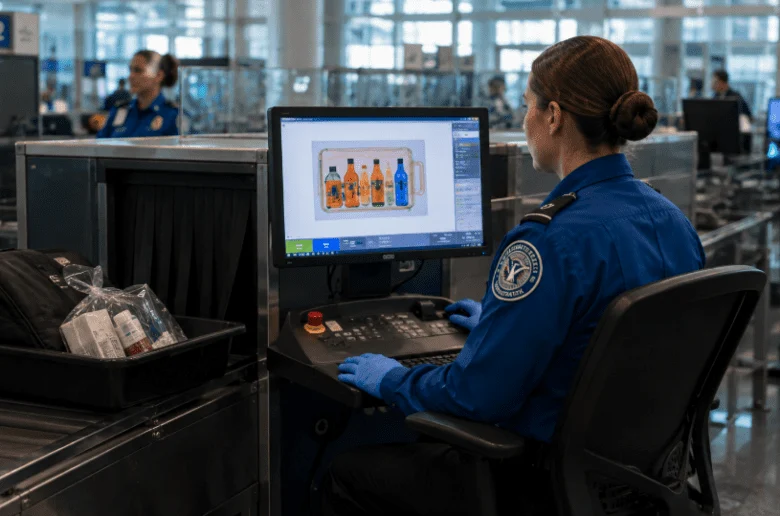
The Transportation Security Administration (TSA) maintains rigorous standards for the transport of liquids, aerosols, and gels through airport security checkpoints, yet a significant number of travelers remain unaware of the specific exemptions that permit larger volumes of these substances in carry-on luggage. While the "3-1-1" rule—limiting containers to 3.4 ounces (100 milliliters) within a single quart-sized bag—is the baseline for the general public, federal regulations provide critical carve-outs for medical necessities, childcare, and specific biological or commercial items. Understanding these nuances is essential for navigating the complex landscape of modern aviation security, particularly as the TSA integrates advanced Computed Tomography (CT) technology into its screening processes.
The Historical Context and Evolution of the 3-1-1 Rule
The current restrictions on liquids in the United States and globally have their origins in a thwarted terrorist plot in August 2006. British authorities intercepted a plan to detonate liquid explosives, disguised as soft drinks, on multiple transatlantic flights bound for North America. This event led to an immediate, total ban on all liquids in aircraft cabins. By September 2006, the TSA transitioned from a total ban to the 3-1-1 rule, a compromise designed to mitigate the risk of improvised liquid explosives while allowing passengers to carry essential toiletries.
Over the nearly two decades since its implementation, the rule has remained a cornerstone of aviation security. However, as the TSA screens approximately 2.5 to 3 million passengers daily across the United States, the agency has refined its protocols to accommodate items that are deemed medically or biologically necessary. These exceptions are not loopholes, but rather regulated pathways that require specific declaration and screening procedures.
Categorical Exemptions: Beyond the Standard 3.4 Ounce Limit
The TSA recognizes nine primary categories of items that are exempt from the 3.4-ounce restriction. These items must still be presented for inspection and may undergo additional screening to ensure safety.
1. Medically Necessary Liquids and Gels
The most broad and vital exemption applies to medically necessary liquids, gels, and aerosols. This category includes prescription medications in liquid form, saline solution for contact lenses, and over-the-counter medications such as cough syrup or eye drops, provided they are required for the duration of the flight. Passengers are not required to place these items in a quart-sized bag but must declare them to a TSA officer at the beginning of the screening process. Supporting documentation, such as a doctor’s note or a prescription label, is not strictly required by TSA policy but is highly recommended to facilitate a smoother inspection.
2. Infant and Toddler Nourishment
Parents and guardians traveling with infants or toddlers are permitted to carry quantities of breast milk, formula, and baby food that exceed the 3.4-ounce limit. These items are classified as medically necessary liquids. Notably, the child does not need to be present for a traveler to carry breast milk or formula through security. This provision recognizes the logistical needs of nursing mothers and caregivers who may be transporting milk for later use.
3. Cooling Accessories for Medical and Nutritional Items
To support the transport of temperature-sensitive medications and infant nourishment, the TSA allows ice packs, freezer packs, and gel packs in carry-on bags. These items are exempt from the liquid rule regardless of whether they are frozen solid, slushy, or completely melted, provided they are being used to cool medically necessary liquids or baby food.
4. Frozen Liquids and Solids
The physical state of a substance dictates its classification under TSA rules. If a liquid—such as a beverage, soup, or sauce—is frozen solid at the time it passes through the X-ray machine, it is treated as a solid and is not subject to the 3.4-ounce limit. However, if the item is partially melted or contains any liquid or slush, it must adhere to the 3-1-1 rule or be surrendered. This distinction relies on the physics of X-ray imaging, where solids and liquids present different densities and signatures.
5. Live Biological Specimens (Aquatic Life)
The TSA permits the transport of live fish in water through security checkpoints. The fish must be in a clear, transparent container and must be inspected by an officer. While the TSA allows this, individual airline policies vary significantly. For instance, many domestic carriers restrict the types of animals allowed in the cabin, often limiting them to small dogs and cats in approved carriers. Travelers are advised to reconcile TSA security clearance with their airline’s contract of carriage.
6. Liquid-Filled Teethers
Infant teethers filled with liquid or gel are permitted in carry-on luggage beyond the standard volume limits. Like other infant-related items, these are subject to separate screening. Officers may use various methods to verify the contents, including Explosive Trace Detection (ETD) or Bottle Liquid Scanners (BLS).
7. Disinfecting and Sanitizing Wipes
While liquid disinfectants are subject to the 3-1-1 rule, disinfecting wipes are classified as solids. This applies to jumbo-sized tubs of wipes used for surface cleaning. Because the liquid is absorbed into a substrate, it does not pose the same risk profile as free-flowing liquids, allowing passengers to carry large quantities for hygiene purposes without including them in their liquids bag.
8. Duty-Free Liquids in Secure Packaging
Liquids purchased at duty-free shops, often exceeding 3.4 ounces (such as alcohol or perfumes), are permitted in carry-on bags under specific conditions. These items must be packed in a Secure Tamper-Evident Bag (STEB). For the exemption to apply, the items must have been purchased within the last 48 hours, the STEB must remain sealed, and the passenger must provide a receipt as proof of purchase. These items are still subject to screening, and if the contents cannot be verified, they may be prohibited.
9. Prosthetics and Specialized Apparel
Gel-filled bras or silicone inserts worn on the body are permitted through security checkpoints. If these items trigger an alarm during Advanced Imaging Technology (AIT) screening, a pat-down or additional inspection may be required. The TSA maintains that these items are acceptable as they are considered part of the passenger’s attire or prosthetic needs.
Technical Screening Procedures and Official Protocols
The process of clearing exempt liquids involves more than a simple visual inspection. TSA officers utilize several technological layers to verify that exempted liquids do not contain hazardous components.
- Explosive Trace Detection (ETD): This involves swabbing the outside of a container or the hands of the passenger to check for microscopic traces of explosive residue.
- Bottle Liquid Scanners (BLS): These devices use laser or electromagnetic technology to analyze the chemical composition of a liquid through its container without requiring the bottle to be opened.
- Vapor Analysis: In some cases, an officer may ask to open a container to perform a vapor test, which detects the presence of volatile organic compounds associated with explosives.
The TSA explicitly states that screening procedures will never involve placing any foreign substance into a medically necessary liquid or infant formula. However, if a liquid cannot be cleared through these non-invasive or minimally invasive means, it will not be allowed past the checkpoint.
Impact of New Technology: The Transition to CT Scanners
The future of the 3-1-1 rule is currently being shaped by the rollout of Computed Tomography (CT) scanners at airports nationwide. Unlike traditional 2D X-ray machines, CT scanners create a 3D image of a bag’s contents, allowing officers to rotate the image and use sophisticated algorithms to detect explosives.
In lanes equipped with CT scanners, the TSA has begun to allow passengers to leave their 3-1-1 liquids—and in some cases, larger electronics—inside their carry-on bags. While the 3.4-ounce volume limit remains in effect for standard items, the enhanced detection capabilities of CT technology may eventually lead to a relaxation of liquid restrictions, similar to changes seen in several international airports in the United Kingdom and Europe.
Broader Implications for Travelers and Security Infrastructure
The existence of these exemptions reflects a balancing act between rigorous security and the practical needs of the traveling public. According to TSA data, the most common reason for delays at security checkpoints is the presence of prohibited items or improperly packed liquids. By understanding the specific rules for exemptions, travelers can reduce the likelihood of "bag pulls," which require manual inspections and slow the throughput of the entire checkpoint.
Furthermore, the "medically necessary" designation is a critical protection for passengers with disabilities or chronic health conditions. Organizations like the American Diabetes Association and the Crohn’s & Colitis Foundation emphasize the importance of these rules for ensuring that patients have access to life-saving medications and hydration during air travel.
Conclusion and Official Guidance
The TSA encourages travelers to use the "What Can I Bring?" tool on its official website or mobile app to verify the status of specific items. The agency also provides the "TSA Cares" helpline for passengers with disabilities or medical conditions who may require assistance through the screening process.
As aviation security continues to evolve through technological advancement and intelligence-based risk assessment, the 3-1-1 rule remains a fundamental, if flexible, component of the passenger experience. For the millions who fly annually, the ability to transport larger volumes of essential liquids—provided they adhere to federal declaration and inspection protocols—remains a vital aspect of safe and accessible travel. In the current security environment, preparation and transparency at the checkpoint are the most effective tools for a seamless journey.




 Anjar Salim
 Chandra Hamzah
 Tatiana Tantri Indah Sari
 Lukman Taruna Persada Ramadan
