
 Walid Sujud Trenggono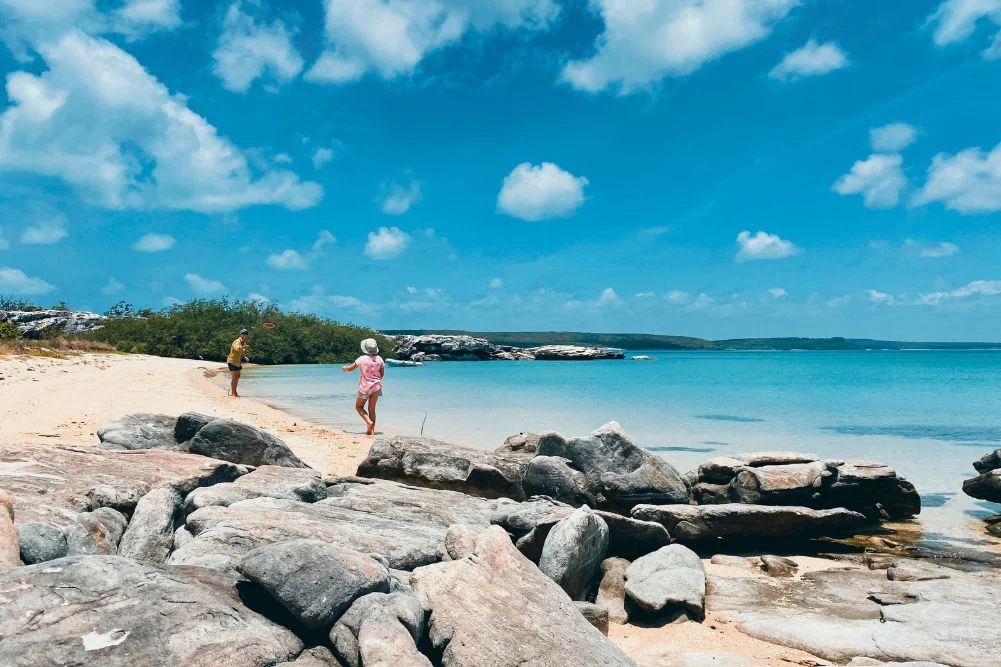
The remote township of Nhulunbuy, situated on the Gove Peninsula in the Northern Territory, serves as a profound intersection of ancient Indigenous heritage, pre-colonial international trade, and contemporary ecological preservation. While often recognized for its industrial history rooted in bauxite mining, the region is increasingly viewed through the lens of its deep cultural significance and the enduring legacy of the Yolngu people. From the intricate Wurrwurrwuy stone arrangements to the world-renowned Buku-Larrnggay Mulka Art Centre, Nhulunbuy offers a unique perspective on Australian history that predates British settlement by centuries.
The Wurrwurrwuy Stone Arrangements: A Testament to Pre-Colonial Diplomacy
Located at Garanhan, approximately 38 kilometers southeast of Nhulunbuy, the Wurrwurrwuy stone arrangements stand as a permanent record of Australia’s earliest international relations. These pictorial stories, crafted from local stones, delineate a sophisticated history of trade between the Yolngu people and Makassan seafarers from the island of Sulawesi, in modern-day Indonesia.
Historical records and oral traditions suggest that these encounters began as early as the mid-17th century, potentially around 1640. The Makassans arrived annually, carried by the northwesterly monsoonal winds, in search of trepang (sea cucumber), a delicacy highly valued in Chinese markets. The Wurrwurrwuy site features detailed stone outlines of Makassan perahu (sailing vessels), dugout canoes, fish traps, and the specialized stone fireplaces used to process the trepang.
This was not a relationship of exploitation but one of mutual exchange. In return for the right to fish in Yolngu waters, the Makassans provided stone knives, axes, cloth, tobacco, and metal fish hooks. This exchange fundamentally altered the hunting and fishing capabilities of the local Lamamirri and Yolngu clans. The archaeological record, including coastal shell middens filled with dugong and turtle bones, confirms a shift in dietary and harvesting patterns during this period.
A Chronology of the Makassan Trade and Its Cessation
The timeline of the Makassan-Yolngu relationship represents one of the longest sustained periods of international contact in Australian history:
- Circa 1640: Initial contact is established as Makassan fleets begin seasonal voyages to northern Australia, which they referred to as "Marege’."
- 1803: English explorer Matthew Flinders, during his circumnavigation of the continent, encountered a fleet of six Makassan vessels near Cape Wilberforce. He interviewed the fleet’s commander, Pobassoo, who noted that Yolngu men frequently traveled back to Makassar with the fleet, some remaining there for years.
- Late 19th Century: The Wurrwurrwuy stone arrangements are believed to have been formally constructed or reinforced by Yolngu elders to preserve the history of the trade for future generations.
- 1906: The South Australian government, which then administered the Northern Territory, imposed heavy duties and restricted licenses on Makassan fishers. This policy effectively ended the centuries-old trade route in favor of domestic industry and white-centric "White Australia" border policies.
- 1960s: Historian Campbell Macknight documented the oral histories of clan leaders like Mungurrawuy Yunupingu, ensuring the nuances of the Makassan influence were recorded in academic and public spheres.
The legacy of this contact remains visible today in the tamarind trees that line the coast—originally planted by Makassans—and in the Yolngu language, which incorporates numerous Makassan loanwords.
Artistic Sovereignty: The Buku-Larrnggay Mulka Art Centre
Nineteen kilometers from the Nhulunbuy town center lies Yirrkala, home to the Buku-Larrnggay Mulka Art Centre. This institution is more than a gallery; it is a vital repository of Yolngu law, language, and history. The center is renowned for its preservation of bark paintings and its innovative "Mulka Project," which utilizes digital archiving to protect cultural knowledge.
A central feature of the center’s collection is the Yirrkala Church Panels, painted in 1962. These two four-meter-high panels represent the two moieties of Yolngu society: the Dhuwa and the Yirritja. Originally placed on either side of the altar in the local Methodist church, these works were a profound statement of Indigenous land ownership and spiritual authority at a time when the Australian government was beginning to grant mining leases on ancestral lands without local consent.
The artistic output of Yirrkala is also famous for its connection to the 1963 Bark Petitions. These petitions, which utilized traditional bark painting to frame a formal legal grievance to the Australian House of Representatives, were the first traditional Native Title documents recognized by the Australian Parliament. This set the stage for the landmark Milirrpum v Nabalco Pty Ltd case and the eventual passage of the Aboriginal Land Rights (Northern Territory) Act 1976.
Ecological Significance of the Gove Peninsula and Bremer Island
The environmental landscape of East Arnhem Land is as diverse as its history. The region is managed by the Dhimurru Aboriginal Corporation, an Indigenous-led organization that balances conservation with sustainable tourism.
Bremer Island, known locally as Dhambaliya, is a primary example of this balance. Located a short boat ride from Gove Harbour, the island is home to the Banubanu Beach Retreat, an eco-friendly destination that operates entirely off-the-grid using solar power. The island serves as a critical nesting ground for four species of sea turtles:
- Green Turtle (Chelonia mydas)
- Flatback Turtle (Natator depressus)
- Hawksbill Turtle (Eretmochelys imbricata)
- Olive Ridley Turtle (Lepidochelys olivacea)
Furthermore, the East Bremer Islets are designated as the Higginson Important Bird Area (IBA). This site supports globally significant populations of Roseate Terns and Bridled Terns. It is also documented as the only breeding site for Common Noddies in the Northern Territory. The protection of these habitats is a priority for Yolngu rangers, who combine traditional ecological knowledge with modern western science to monitor biodiversity.
Economic and Administrative Framework
The modern economy of Nhulunbuy is in a state of transition. Historically dependent on the Rio Tinto bauxite mine and alumina refinery, the region is diversifying into tourism, maritime services, and Indigenous-led enterprises.
Access to the region is strictly regulated through a permit system managed by the Dhimurru Aboriginal Corporation. These permits are a requirement for visitors wishing to access recreational areas, ensuring that the influx of tourists does not degrade the environment or infringe upon sacred sites.
Travel and Logistics Data:
- Access: Air North and Qantas provide regular flights from Darwin and Cairns to Gove Airport.
- Permit Requirements: A Dhimurru General Access Permit is mandatory for all non-Yolngu visitors accessing designated recreation areas.
- Climate: The region experiences a tropical savanna climate. The "Dry Season" (May to September) is the primary window for tourism, characterized by lower humidity and temperatures ranging from 17°C to 30°C.
- Alcohol Regulations: Nhulunbuy operates under strict liquor licensing laws. Visitors must apply for a temporary liquor permit to purchase takeaway alcohol, a measure implemented to mitigate social harm in remote communities.
Implications and Broader Impact
The story of Nhulunbuy and its surrounding lands challenges the traditional Eurocentric narrative of Australian history. The existence of the Wurrwurrwuy stone arrangements proves that Australia was part of a globalized trade network long before the arrival of the First Fleet.
From a legal and social perspective, the activism originating in Yirrkala remains a cornerstone of the national Land Rights movement. The ability of the Yolngu people to maintain their language, moiety systems, and land management practices despite decades of industrial pressure serves as a model for Indigenous self-determination.
As the region moves toward a post-mining future, the emphasis on cultural tourism and environmental stewardship highlights a sustainable path forward. The integration of ancient history with modern conservation efforts ensures that Nhulunbuy remains not just a point on a map, but a living testament to the resilience and sophistication of Australia’s First Nations people. The continued success of institutions like Buku-Larrnggay Mulka and the Banubanu Beach Retreat suggests that the future of East Arnhem Land lies in its ability to share its unique "Both Ways" philosophy—honoring both Indigenous tradition and contemporary global engagement.




 Anjar Salim
 Chandra Hamzah
 Tatiana Tantri Indah Sari
 Budi Mulyono
 Lukman Taruna Persada Ramadan
