
 Walid Sujud Trenggono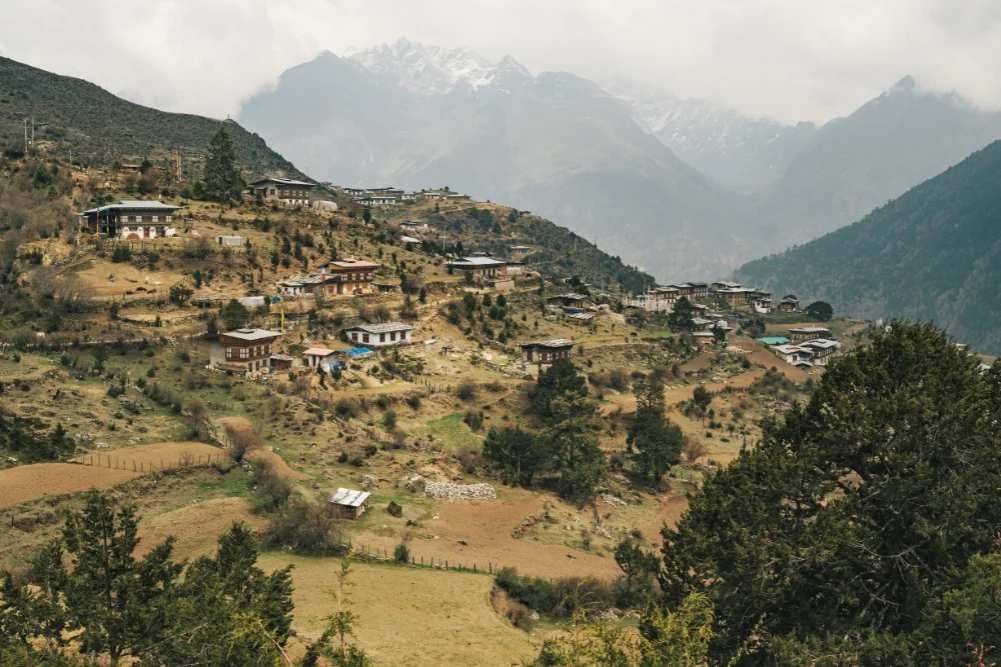
In an era defined by digital saturation and escalating rates of professional burnout, the Kingdom of Bhutan has emerged as a global case study for an alternative model of societal success. While most modern nations measure progress through Gross Domestic Product (GDP), Bhutan remains the only country in the world to officially prioritize Gross National Happiness (GNH). This Himalayan kingdom, nestled between the geopolitical giants of India and China, offers a stark contrast to the fast-paced, consumption-driven lifestyles of the West. For many international observers and visitors, the country represents a living experiment in whether a nation can modernize without losing its soul, balancing economic needs with environmental stewardship and spiritual preservation.
The Foundations of the Gross National Happiness Framework
The concept of Gross National Happiness was first proposed in 1972 by the fourth King of Bhutan, Jigme Singye Wangchuck. He famously declared that "Gross National Happiness is more important than Gross Domestic Product." This was not merely a poetic sentiment but a policy directive that has since been codified into the nation’s constitution. The GNH framework is built upon four primary pillars: sustainable and equitable socio-economic development, environmental conservation, preservation and promotion of culture, and good governance.
To operationalize these pillars, the Bhutanese government utilizes a GNH Index, which tracks nine domains of wellbeing, including psychological wellbeing, health, time use, education, cultural diversity, and ecological resilience. According to the 2022 GNH Index results, approximately 48.1% of the population reported being "extensively" or "deeply" happy, marking a steady increase in national contentment despite global economic fluctuations. This data-driven approach to happiness ensures that every new piece of legislation or infrastructure project is vetted through a "GNH lens." If a proposed policy is deemed harmful to the environment or community cohesion, it is systematically rejected or revised.
Environmental Leadership and Carbon Neutrality
Bhutan’s commitment to the environment is perhaps its most tangible achievement on the global stage. It is the world’s first carbon-neutral country, and in practice, it is often carbon-negative. This is largely due to the nation’s constitutional mandate, which requires that at least 60% of the land remains under forest cover for all time. Currently, forests cover more than 70% of the kingdom, acting as a massive carbon sink that absorbs more carbon dioxide than the country emits.
The absence of global franchises, such as McDonald’s or Starbucks, and the lack of commercial billboards are intentional choices designed to mitigate the psychological pressures of consumerism. Furthermore, the kingdom only introduced television and the internet in 1999, making it one of the last nations in the world to join the digital age. This delayed entry has allowed Bhutan to maintain a unique cultural landscape, where traditional dress—the Gho for men and the Kira for women—remains the standard attire for school, work, and official functions.
The Logistics of High-Value, Low-Volume Tourism
For the international traveler, entering Bhutan is a deliberate and regulated process. The country employs a "High Value, Low Volume" tourism policy to prevent the environmental and cultural degradation seen in other Himalayan regions. Central to this policy is the Sustainable Development Fee (SDF), a daily levy paid by tourists that funds free healthcare and education for Bhutanese citizens, as well as conservation efforts.
The journey often begins at Paro International Airport, widely regarded as one of the most challenging landings in the world. Situated at an elevation of 7,300 feet and surrounded by 18,000-foot Himalayan peaks, the runway is accessible to only a small number of certified pilots. The immediate experience upon arrival is one of sensory shift; the absence of traffic lights—even in the capital city of Thimphu—and the quietude of the mountain air signal a departure from the "bullet-train tempo" of modern urban life.
Spiritual Infrastructure: The Role of Monasteries and Tradition
Bhutanese society is deeply rooted in Vajrayana Buddhism, which permeates every aspect of daily life. The country is dotted with "dzongs" (fortress-monasteries) and smaller meditation centers like the Dodedrak Monastery. These sites are not merely historical monuments but active centers of community life. For visitors and locals alike, these spaces offer a psychological reset. The practice of lighting butter lamps and the rhythmic chanting of ancient scriptures are viewed as essential tools for maintaining mental equilibrium.
One of the more profound aspects of Bhutanese philosophy is the cultural approach to mortality. In Bhutan, citizens are encouraged to contemplate death five times a day. Far from being morbid, this practice is intended to foster a sense of impermanence, which in turn encourages individuals to live more virtuously and remain present in the moment. This perspective on death as a natural part of the lifecycle is credited with reducing the anxiety and "fear of missing out" (FOMO) that plagues more competitive societies.
Case Study: The Remote Community of Laya
To understand the practical application of Bhutanese values, one must look toward its most remote settlements. Laya, situated at 3,800 meters, is one of the highest inhabited villages in the world. Reachable only by foot or pack animal, Laya is home to the Layap people, an indigenous community with distinct Tibetan roots. The village serves as a microcosm of Bhutanese social cohesion.
In Laya, the concept of "enough-ness" is a lived reality. During the biennial Bumkor Festival, the community gathers to carry sacred texts through the village fields, a ritual intended to ensure a prosperous harvest. The social fabric is maintained through mutual aid; when a family constructs a home, the entire village participates in the labor. This collective care model stands in contrast to the individualistic, transaction-based social structures of the West. Interactions with residents, such as the village elder Am Pem, reveal a philosophy where happiness is measured by the availability of basic necessities—like a bowl of rice—rather than the accumulation of luxury goods.
Public Health and the Gasa Hot Springs
The Bhutanese approach to wellbeing also integrates traditional medicine with modern healthcare. The Gasa hot springs (Gasa Tsachus) are a primary example of this. These springs are considered sacred and are believed to have been blessed by 13th-century saints. Unlike the commercialized luxury spas of Europe or North America, these springs are public facilities where locals from all walks of life—from students to farmers—bathe side-by-side.
This egalitarian approach to health is a cornerstone of the Bhutanese state. Healthcare is provided free of charge to all citizens, emphasizing the government’s belief that wellbeing is a fundamental right rather than a privilege. The integration of "Sowa Rigpa" (traditional Himalayan medicine) alongside Western medical practices allows for a holistic approach to public health that addresses both physical ailments and spiritual imbalances.
Economic Analysis and Global Implications
Critics of the GNH model often point to Bhutan’s economic challenges, including a high youth unemployment rate and a developing infrastructure. However, Bhutanese officials argue that the GNH lens prevents the country from falling into the trap of "growth at any cost." By prioritizing environmental and cultural preservation, Bhutan is betting on long-term sustainability over short-term financial gains.
The implications of this model are increasingly relevant as global discourse shifts toward "wellbeing economies." Nations like New Zealand, Iceland, and Scotland have begun to explore similar frameworks, acknowledging that GDP is an insufficient metric for human flourishing. Bhutan’s experience suggests that while a slower pace of life and a focus on community may result in lower industrial output, the trade-off is a more resilient and content population.
Conclusion: The Enduring Lesson of the Middle Path
As the world grapples with the dual crises of mental health and climate change, Bhutan provides a compelling argument for the "Middle Path"—a Buddhist concept of moderation. The kingdom’s success is not defined by the absence of hardship, but by the presence of a framework to handle it. The 2022 GNH data and the lived experiences of those within its borders suggest that a society can maintain its traditions while embracing the benefits of the 21st century.
For the modern professional, the lesson of Bhutan is found in the shift from "more" to "enough." The kingdom serves as a reminder that the nervous system can be reset through nature, that community is the ultimate safety net, and that happiness is a collective practice rather than an individual pursuit. As Bhutan continues to navigate its path between tradition and modernization, it remains a beacon for those seeking a more balanced and compassionate way of living.



 Anjar Salim
 Chandra Hamzah
 Tatiana Tantri Indah Sari
 Budi Mulyono
 Lukman Taruna Persada Ramadan
