
 Budi Mulyono
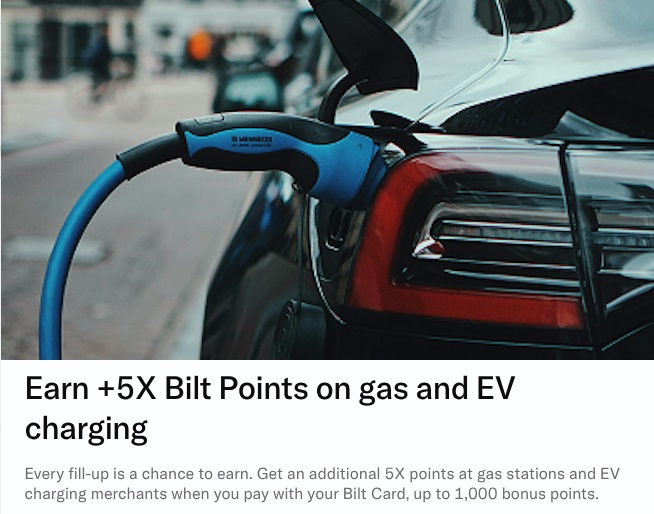
In a strategic move to increase cardholder engagement and maintain "top-of-wallet" status, Bilt Rewards has initiated a new targeted spending promotion for select Bilt Mastercard holders. This latest incentive offers an additional five points per dollar spent on gasoline and electric vehicle (EV) charging, effectively elevating the earning potential for these categories to as high as seven points per dollar. The promotion reflects a growing trend among credit card issuers to diversify reward structures to include sustainable energy options while simultaneously incentivizing traditional fuel purchases.
The offer is being distributed via email and mobile app notifications to a specific segment of the Bilt user base. For those who receive the offer, the additional five points are stacked on top of the standard earning rates associated with the Bilt Mastercard. Under the current program structure, the Bilt Mastercard typically earns one point per dollar on non-category spending. However, some legacy cardholders or those under specific promotional periods may see variations. Consequently, the net earning rate during this promotion will generally sit at 6X or 7X points per dollar, representing one of the highest available return rates for the gas and EV charging categories in the current rewards market.
Technical Specifications and Limitation Analysis
While the 5X bonus presents a high-value opportunity, the promotion includes a strictly defined ceiling. The bonus is capped at 1,000 points, meaning the additional earning rate only applies to the first $200 of qualifying expenditures. Once a cardholder reaches this $200 threshold, the earning rate reverts to the card’s standard baseline.
From a consumer behavior perspective, this cap suggests the promotion is designed to capture routine commuting costs rather than large-scale expenditures. For example, a typical consumer filling a 15-gallon tank twice a month at an average price of $3.50 per gallon would spend approximately $105, comfortably staying within the $200 limit while maximizing the 1,000-point bonus. Conversely, the cap significantly limits the "gaming" of the offer through the purchase of third-party gift cards at gas station convenience stores—a common tactic in the points and miles community. By limiting the upside to $200 in spend, Bilt effectively encourages organic use of the card for its intended purpose.
Evolution of the Bilt Rewards Ecosystem
To understand the significance of this targeted offer, it is necessary to examine the rapid evolution of Bilt Rewards since its inception. Launched as a platform to allow renters to earn points on their largest monthly expense without transaction fees, Bilt has aggressively expanded its footprint in the financial services sector. Through its partnership with Wells Fargo, the Bilt Mastercard has become a cornerstone of the program, offering points on dining, travel, and rent.
The introduction of gas and EV charging as a bonus category is a departure from Bilt’s primary focus on urban living and lifestyle expenditures. Historically, the program has leaned heavily into "Rent Day" promotions, where earning rates are doubled on the first of every month. By introducing mid-month targeted offers for essential categories like transportation, Bilt is attempting to smooth out the spending curve, ensuring that cardholders utilize the card throughout the entire billing cycle rather than exclusively on Rent Day.
The Strategic Inclusion of EV Charging
The inclusion of EV charging in this promotion highlights a broader shift within the credit card industry to acknowledge the transition toward renewable energy. As electric vehicle adoption increases globally, major issuers such as American Express, Chase, and now Bilt are updating their "gas station" definitions to include EV charging stations like Tesla Superchargers, Electrify America, and ChargePoint.
Industry data suggests that EV owners represent a high-value demographic for credit card issuers. According to recent market research, EV early adopters often have higher-than-average household incomes and higher overall credit card spend. By offering a 5X bonus on EV charging, Bilt is positioning itself as a viable option for modern, environmentally conscious consumers who may have previously felt overlooked by traditional "gas-only" bonus categories.
Comparative Market Valuation
The true value of this promotion lies in the valuation of Bilt Rewards points. Unlike many "cash back" cards where a point is worth a fixed one cent, Bilt points are highly regarded in the loyalty industry due to their versatility. Bilt maintains a robust network of transfer partners, including Hyatt, Alaska Airlines, United Airlines, and Air France-KLM Flying Blue.
Financial analysts and loyalty experts often value Bilt points at approximately 1.8 to 2.1 cents each when redeemed for high-value travel. Under this valuation, earning 7X points on gas or EV charging is equivalent to a nearly 13% to 14.7% return on spend. In comparison, the American Express Gold Card offers 4X points on gas (at U.S. stations), and the Chase Freedom Flex frequently offers 5X points on gas as a rotating quarterly category. Bilt’s targeted 7X rate temporarily surpasses these industry leaders, albeit within the constraints of the $200 spend cap.
Chronology of Recent Bilt Incentives
The gas and EV charging offer follows a series of targeted and public promotions aimed at diversifying the Bilt user base. Over the past twelve months, Bilt has implemented several key changes and offers:
- Introduction of the Rent Day Double Points: Establishing the first of the month as a high-activity day for the ecosystem.
- Expansion of Transfer Partners: The addition of Alaska Airlines as a transfer partner in early 2024 significantly boosted the program’s prestige.
- Neighborhood Dining Program: The launch of Bilt Dining allowed users to earn points at local restaurants regardless of which card they used, provided the card was linked to the Bilt app.
- Tiered Status Challenges: Bilt has periodically offered "fast tracks" to elite status for users who meet certain spending or rent-payment milestones.
- Targeted Category Bonuses: Recent months have seen a rise in targeted emails offering bonuses for grocery stores, pharmacies, and now, gas stations.
This timeline suggests a move toward a more sophisticated, data-driven marketing strategy where Bilt analyzes individual spending patterns to offer personalized incentives.
Consumer and Industry Reaction
While Bilt has not issued a formal press release regarding this specific targeted offer, the reaction within the "fintech" and "travel hacking" communities has been largely positive. Users on platforms such as Reddit and various loyalty forums have noted that while the 1,000-point cap is modest, the high multiplier makes it an "easy win" for those already spending in the category.
However, some industry observers point out the potential for "targeted offer fatigue." As more issuers move toward personalized promotions rather than universal benefits, consumers may find it increasingly difficult to track which card provides the best value at any given moment. Nevertheless, for a relatively young program like Bilt, these targeted strikes are an effective way to test new permanent category bonuses without committing to the long-term liability of a universal 5X gas category.
Broader Economic Implications and Loyalty Trends
The timing of this promotion coincides with a period of fluctuating energy prices and heightened consumer sensitivity to inflation. By subsidizing the cost of transportation through high-value rewards, Bilt is addressing a primary pain point for the American consumer.
Furthermore, this promotion illustrates the intensifying competition in the "no-annual-fee" credit card market. The Bilt Mastercard is unique in that it offers premium transfer partners—usually reserved for cards with $95 to $695 annual fees—on a card with no annual cost. To sustain this model, Bilt must ensure high levels of non-rent spending to generate interchange revenue. Targeted bonuses on high-frequency categories like gas and EV charging are a proven method for driving that necessary volume.
Conclusion and Outlook
The targeted 5X bonus on gas and EV charging spend represents a tactical maneuver by Bilt Rewards to capture a larger share of daily consumer expenditures. While the $200 spending cap limits the total financial impact for the issuer, the high multiplier serves as a powerful psychological incentive for cardholders to keep the Bilt Mastercard in their wallets.
As the program continues to mature, industry experts expect Bilt to further refine its targeted marketing capabilities. Whether these temporary bonuses eventually transition into permanent category features remains to be seen. For now, targeted cardholders are encouraged to activate the offer and utilize their Bilt Mastercard for their next few trips to the pump or charging station to maximize their return in one of the market’s most valuable loyalty currencies. For those not targeted, the move serves as a reminder of the increasing importance of monitoring app notifications and promotional emails in an era of personalized financial incentives.




 Anjar Salim
 Chandra Hamzah
 Tatiana Tantri Indah Sari
 Lukman Taruna Persada Ramadan