
 Walid Sujud Trenggono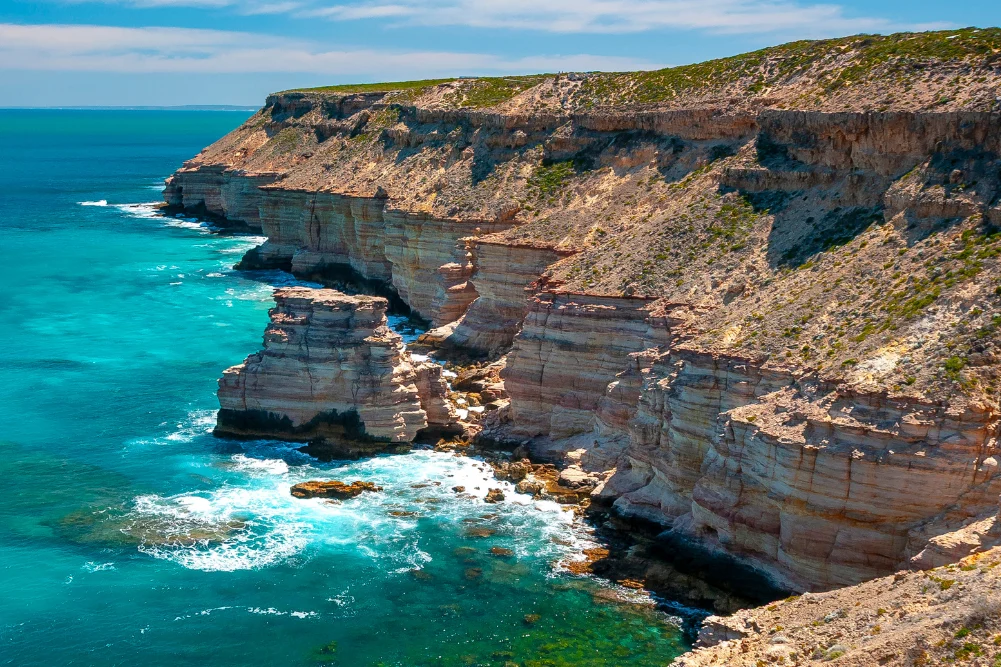
Western Australia’s Coral Coast, a region defined by its stark geological contrasts and biological diversity, has entered its peak seasonal window, drawing significant international and domestic interest. Stretching from the northern fringes of Perth to the rugged gorges of Kalbarri, the Indian Ocean Drive serves as the primary artery for a 600-kilometer journey through some of the continent’s most significant natural landmarks. This corridor, which underwent a major infrastructure upgrade completed in 2010, has transformed from a series of disconnected coastal tracks into a world-class touring route. The current season, spanning from July to October, marks a critical period for the local economy as the "wildflower gold rush" coincides with the migration of humpback whales and the breeding cycles of rare Australian sea lions.
The Gateway to the Coral Coast: Lancelin and the Yued Heritage
The expedition begins approximately 127 kilometers north of Perth in Lancelin, known traditionally to the Yued Indigenous people as Wangaree, meaning "fish." This coastal township serves as a vital hub for the Western Rock Lobster industry, an export-heavy sector that contributes hundreds of millions of dollars annually to the Western Australian economy. Beyond its industrial significance, Lancelin is geologically notable for its massive parabolic sand dunes. These shifting white peaks, some rising over 20 meters, represent a dynamic coastal system where wind-driven sand encroaches upon the scrubland.
From a tourism perspective, Lancelin functions as a premier destination for adventure sports. The Lancelin Island Nature Reserve, situated 700 meters offshore, provides a sanctuary for diverse avian species and a small population of Australian sea lions. The surrounding waters are a graveyard for maritime history, containing the remains of at least 14 shipwrecks. These wrecks have since integrated into the limestone reef system, creating a complex habitat for snapper, dhufish, and yellowtail kingfish, and forming a specialized dive trail that attracts marine archaeologists and recreational divers alike.
Geological Evolution: The Pinnacles of Nambung National Park
Continuing north into the Nambung National Park, the landscape shifts toward the Swan Coastal Plain, home to the Pinnacles Desert. These thousands of weathered limestone spires are the result of millions of years of geological activity. Scientists suggest the structures formed from the remains of sea shells (calcium carbonate) that were broken down into lime-rich sands, which then leached into the soil during periods of high rainfall. Over time, vegetation stabilized the dunes, and acidic groundwater carved the limestone into the distinct pillars visible today.
For the Yued people, the Pinnacles hold deep cultural significance, often associated with the Wagyl, the creative serpent of Noongar Dreaming. Historically, early maritime explorers, including Dutch sailors in the 17th century, mistakenly identified these formations as the ruins of an ancient city. Today, the Pinnacles Desert Loop Drive and the adjacent Discovery Centre provide educational context on the fragile desert ecosystem. Recent data from the Department of Biodiversity, Conservation and Attractions (DBCA) indicates that Nambung National Park remains one of the most visited natural sites in the state, necessitating strict management of visitor foot traffic to preserve the integrity of the limestone structures.
Marine Conservation and Biodiversity in Jurien Bay
The town of Jurien Bay represents a significant intersection of commercial interests and environmental conservation. The Jurien Bay Marine Park, established in 2003, covers approximately 82,375 hectares and protects a unique temperate-tropical overlap zone. This area is one of the few places globally where visitors can interact with the Australian sea lion (Neophoca cinerea), one of the rarest seal species in the world. Breeding colonies on Buller Island and North Fisherman Island are strictly monitored by conservationists to ensure that human interaction does not disrupt the pup-rearing process.
The marine park also supports a vast seagrass meadow system, which acts as a primary nursery for the Western Rock Lobster (Panulirus cygnus). Local tour operators have increasingly shifted toward "eco-educational" models, offering snorkeling expeditions that emphasize the importance of artificial reefs and the preservation of coral "bommies" located near Town Beach. This shift reflects a broader trend in Western Australian tourism toward sustainable practices that prioritize the long-term health of the Indian Ocean ecosystem.
Hidden Geography: Green Head and the Stockyard Gully Caves
Further north, the coastal geography becomes increasingly rugged at Green Head. The town is home to Dynamite Bay, a natural amphitheater of rock that gained its modern name from 1960s-era treasure hunters. These individuals utilized explosives to navigate the treacherous reefs in search of the Vergulde Draeck (Gilt Dragon), a Dutch East India Company ship that sank in 1656. While the "Gilt Dragon" remains one of the state’s most famous maritime mysteries, the focus has shifted from treasure hunting to the preservation of the site as a protected historic wreck.
Inland from Green Head lies the Stockyard Gully Reserve, a 4WD-only destination that highlights the region’s subterranean geography. The Stockyard Gully Cave is a 250-meter-long limestone tunnel formed by an ancient river system. The cave served as a natural stockyard for drovers moving cattle between Perth and Geraldton in the 19th century. Today, it offers a glimpse into the karst topography of the region. The surrounding gully is a botanical hotspot, featuring zamia palms and various species of banksia that support the elusive honey possum, a tiny marsupial endemic to Southwest Australia.
Maritime History and the "HMAS Sydney II" Memorial
As the Indian Ocean Drive merges into the Brand Highway, the regional center of Geraldton provides a historical and logistical anchor for the Mid West. Geraldton’s identity is inextricably linked to the sea, both as a major grain and mineral port and as a site of profound maritime tragedy. The Museum of Geraldton houses artifacts from the Batavia, a Dutch vessel that met a gruesome end on the nearby Abrolhos Islands in 1629, involving a mutiny and subsequent massacre that remains one of the darkest chapters in maritime history.
On a contemporary level, Geraldton serves as the site for the HMAS Sydney II Memorial. The memorial commemorates the 645 crew members lost in November 1941 when the Australian light cruiser was sunk by the German auxiliary cruiser Kormoran during World War II. The location of the wreck remained a mystery for 66 years until it was discovered in 2008 at a depth of 2,468 meters. The memorial, featuring a dome of 645 stainless steel gulls, serves as a focal point for national remembrance and a reminder of the treacherous nature of the Western Australian coastline.
The Floral Phenomenon of the Chapman Valley
The region surrounding Northampton and the Chapman Valley is globally recognized for its botanical diversity. Western Australia is home to over 12,000 species of wildflowers, approximately 60% of which are found nowhere else on Earth. The Chapman Valley Scenic Drive becomes a primary attraction during the late winter and early spring as carpets of everlasting daisies (Rhodanthe chlorocephala) and the rare Wreath Flower (Lechenaultia macrantha) bloom.
Agricultural analysts note that the wildflower season provides a vital secondary income stream for local farmers, who often open their gates to "flower hunters." The synchronization of the bloom depends heavily on the timing and volume of the winter rains. This year, consistent rainfall followed by warm sunny intervals has resulted in what botanists describe as a "riotous" bloom, particularly among the acacias and banksias that dominate the sandy soils of the coastal plains.
Atmospheric Science and the Pink Waters of Hutt Lagoon
One of the most visually striking features of the Coral Coast is Hutt Lagoon, a salt lake spanning 14 kilometers near the town of Gregory. The lagoon’s vivid pink coloration is not a result of chemical pollution but a biological phenomenon. The water contains a high concentration of the carotenoid-producing algae Dunaliella salina. This microalga is a source of beta-carotene, used extensively as a food coloring agent and a source of Vitamin A.
The lagoon is home to the world’s largest microalgae production plant, where the algae are harvested for commercial use. The intensity of the pink hue fluctuates based on the time of day, cloud cover, and salinity levels. Tourism WA has identified Hutt Lagoon as one of the most photographed natural sites in Australia, citing its "Instagrammable" qualities as a major driver for younger demographic travel to the region.
The Murchison River and the Kalbarri Skywalk
The journey concludes in Kalbarri, where the Murchison River meets the Indian Ocean. The Kalbarri National Park, encompassing over 183,000 hectares, features dramatic red sandstone cliffs and deep river gorges. In 2020, the state government invested $24 million in the Kalbarri Skywalk, two cantilevered walkways that project 25 and 17 meters over the Murchison Gorge. This infrastructure project was designed to increase accessibility while minimizing the environmental footprint on the fragile rim of the gorge.
The geological formations here, such as Nature’s Window and the Z Bend, provide evidence of the Tumblagooda Sandstone, which dates back approximately 400 million years. These rocks contain "skolithos"—fossilized burrows of ancient worm-like creatures—offering a window into the Silurian period. The park’s management emphasizes a "leave no trace" policy, particularly in the river gorge where hikers and pack-rafters navigate the tannin-stained waters of the Murchison.
Analysis of Economic and Environmental Implications
The continued development of the Indian Ocean Drive and its associated attractions represents a delicate balance between economic growth and environmental stewardship. The Coral Coast region relies heavily on "nature-based tourism," a sector that is increasingly vulnerable to climate variability. Changes in rainfall patterns directly affect the wildflower season, while rising sea temperatures pose a threat to the kelp forests and coral reefs that support the rock lobster industry.
Local government authorities and the DBCA have responded by implementing more robust conservation frameworks, including the expansion of marine park boundaries and the introduction of "reef-friendly" tourism guidelines. The success of businesses like Finlay’s in Kalbarri, which has transitioned from a rustic BBQ joint to a micro-brewery focused on local seafood, illustrates the potential for regional businesses to evolve alongside changing consumer preferences for authentic, sustainable experiences.
As Western Australia continues to position itself as a premier destination for "slow travel," the Indian Ocean Drive stands as a testament to the state’s ability to market its geological isolation as a luxury asset. The 600-kilometer route is more than a scenic drive; it is a complex corridor of history, industry, and world-class biodiversity that requires ongoing protection and strategic management to ensure its viability for future generations.




 Anjar Salim
 Chandra Hamzah
 Tatiana Tantri Indah Sari
 Budi Mulyono
 Lukman Taruna Persada Ramadan
