Walid Sujud Trenggono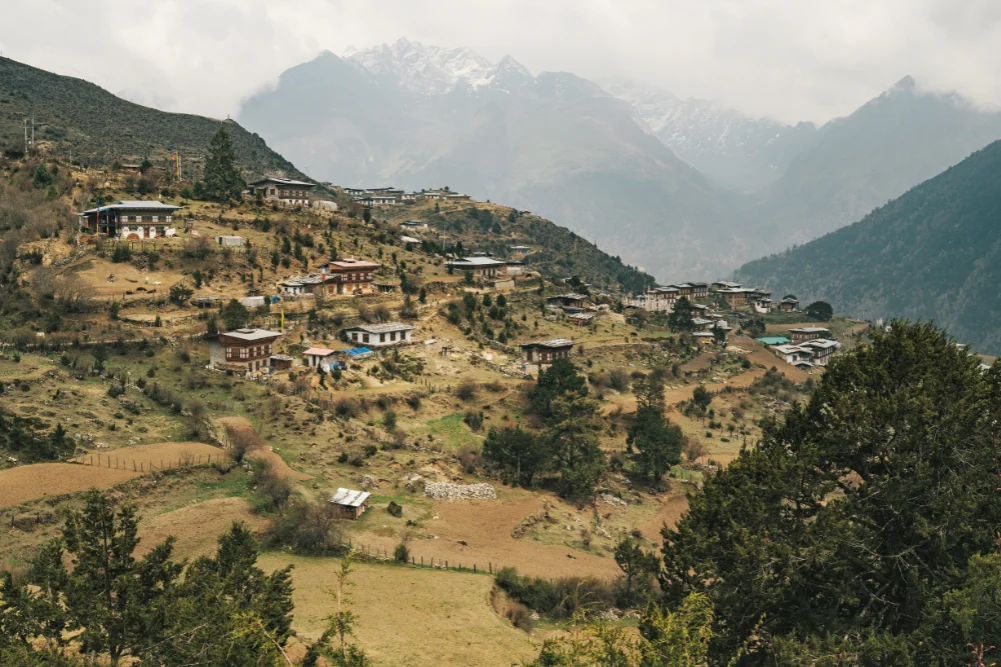
The Kingdom of Bhutan, a landlocked nation situated between the geopolitical giants of China and India, has increasingly become a focal point for international discussions regarding mental health, environmental sustainability, and alternative metrics of national success. For many individuals operating within the high-pressure environments of Western economies, the country represents more than a tourist destination; it serves as a case study in "slow living" and a sanctuary from the pervasive "digital zombie" state characterized by chronic overstimulation and burnout. Recent reports from travelers and sociologists alike suggest that Bhutan’s unique approach to governance, centered on Gross National Happiness (GNH) rather than Gross Domestic Product (GDP), provides a transformative framework for those seeking to recalibrate their psychological well-being.
The Landscape of Modern Burnout and the Bhutanese Alternative
In contemporary society, the phenomenon of burnout has reached what many health professionals describe as epidemic proportions. Characterized by emotional exhaustion, depersonalization, and a diminished sense of personal accomplishment, burnout is often the result of "stretched thin" lifestyles—balancing professional ventures, solo parenting, and the care of aging relatives. This state of being is frequently exacerbated by the constant connectivity of the digital age, where the "familiar refrain" of family members pleading for undivided attention is often ignored in favor of overflowing inboxes and social media scrolling.
Bhutan offers a stark contrast to this hyper-accelerated reality. As the world’s first carbon-neutral—and indeed, carbon-negative—country, Bhutan’s commitment to environmental and spiritual preservation is codified in its constitution, which mandates that at least 60% of the land remain under forest cover in perpetuity. The absence of global franchises like McDonald’s, the lack of commercial billboards, and the refusal to install traffic lights even in the capital city of Thimphu are deliberate choices intended to protect the nation’s cultural integrity and the mental clarity of its 760,000 citizens.
Chronology of a Transformative Journey: From Paro to Laya
The journey into the heart of Bhutanese philosophy often begins with a flight into Paro International Airport, widely considered one of the most challenging landings in the world due to its location 7,364 feet above sea level and the surrounding 18,000-foot Himalayan peaks. This arrival serves as an immediate sensory disruption. Unlike the typical "baggage claim dash" seen in international hubs, visitors are frequently observed standing in silence on the tarmac, overwhelmed by the immediate transition from the frantic pace of global travel to the majestic stillness of the Himalayas.
Phase I: Monastic Integration at Dodedrak
A critical component of the Bhutanese reset involves immersion in the country’s deep-seated Buddhist traditions. Many visitors begin their journey with a stay at the Dodedrak Monastery, a 12th-century institution perched high above the valley floor. Reaching the monastery requires a rigorous hike—a task that locals complete in an hour but which often takes unconditioned visitors significantly longer, particularly when navigating the unpredictable mountain thunderstorms.
The experience at Dodedrak is designed to settle the nervous system. The evening prayers, featuring dozens of monks in burgundy robes chanting ancient scriptures, create a rhythmic vibration that many describe as a physical catalyst for relaxation. The use of butter lamps and the scent of traditional incense provide a sensory environment that encourages the "dropping of shoulders" and the slowing of breath, marking the first stage of recovery from a digital, high-stress lifestyle.
Phase II: The Remote Frontier of Laya
To truly understand the Bhutanese concept of "enough," travelers often venture to Laya, one of the most remote inhabited villages on Earth. Located at an altitude of 3,800 meters, Laya is inaccessible by road, requiring a multi-day trek through terrain populated only by yaks and ponies. The village is home to the Layap people, an indigenous community with Tibetan roots that resides in stone houses beneath the sacred Tiger’s Peak.
Hospitality in Laya is not a commercial service but a communal duty. Visitors are often housed in local homes, such as that of Am Pem, a village elder whose life reflects the Bhutanese acceptance of impermanence and communal support. In Laya, the rhythm of life is dictated by the seasons and religious festivals rather than the clock. The Bumkor Festival, held every two years, involves a grand procession of sacred texts and traditional dances, where the community moves as a single unit—a stark contrast to the isolation often felt in Western urban centers.
Supporting Data: The Pillars of Gross National Happiness
The experiences of individual travelers are supported by the institutional framework of Gross National Happiness. Established by the Fourth King of Bhutan, Jigme Singye Wangchuck, in the 1970s, GNH is built upon four primary pillars:
- Sustainable and Equitable Socio-Economic Development: Ensuring that economic growth does not come at the cost of social inequality.
- Environmental Conservation: Protecting the natural world as a fundamental source of well-being.
- Preservation and Promotion of Culture: Maintaining the traditions that provide a sense of belonging and identity.
- Good Governance: Ensuring that the government acts in the best interests of the people’s happiness.
According to the 2022 GNH Index, nearly half of the Bhutanese population describes themselves as "happy" or "extremely happy," a metric that the government uses to vet every proposed policy. If a project—whether a new road or a trade agreement—is deemed to cause harm to the environment or community cohesion, it is legally barred from proceeding.
Health as a Communal Practice: The Gasa Hot Springs
Well-being in Bhutan is treated as a daily practice rather than a luxury lifestyle brand. This is most evident in the communal use of the Gasa hot springs (Gasa Tsachu). Unlike the "lush spas" of the West, these springs consist of plain, large baths where locals of all ages and social standings soak together.
The springs are steeped in legend, believed to have been blessed by a 13th-century saint who scattered 128 medicines into the waters. For the Bhutanese, the act of soaking is both a physical treatment for the "aches and pains" of mountain life and a social ritual. This communal approach to health reinforces the "glue" of a society where the question "How can I help my community?" is taught from early childhood.
The Sociological Impact of Impermanence
A unique aspect of the Bhutanese psyche is the daily contemplation of death. Citizens are encouraged to think about their own mortality five times a day. While Western cultures often view such practices as morbid, in Bhutan, this awareness of impermanence is considered a productivity tool and a source of joy. By acknowledging that life is fleeting, individuals are more likely to let go of trivial stresses, forgive grievances, and focus on "what matters."
This cultural acceptance of death acts as a psychological buffer against the "doom-scrolling" and "endless wanting" that characterize the consumerist mindset. When happiness is measured by a "bowl of rice" and the quality of one’s relationships rather than the accumulation of goods, the threshold for contentment becomes much lower and more attainable.
Analysis of Implications: The Long-Term Reset
The lasting impact of the Bhutanese experience on foreign visitors is often profound. Upon returning to high-intensity environments, many report a "shifted gear." While the external pressures of work, parenting, and digital noise remain, the internal response to these pressures is altered.
Analysis suggests that the "Bhutanese reset" works by providing a vivid counter-narrative to the "more is better" philosophy. The memory of fluttering prayer flags, the low chants of the monastery, and the simple contentment of the Layap people serve as mental anchors. These anchors allow individuals to navigate "overscheduled delirium" with a newfound sense of "enough."
Conclusion: A Necessary Awakening
Bhutan’s role in the 21st century extends beyond its borders as a "Himalayan kingdom" or a "Shangri-La." It stands as a living laboratory for a different way of being. For the burnt-out professional or the overwhelmed parent, the country offers more than a brief escape; it provides a necessary awakening to the reality that human well-being is inextricably linked to the health of the community and the environment.
As global rates of anxiety and depression continue to rise, the Bhutanese model of placing "human well-being above economic growth" offers a compelling alternative. While not every individual can trek to the remote heights of Laya, the lessons of the kingdom—slowing down, choosing community over consumption, and embracing the present moment—remain universally applicable. Bhutan serves as a reminder that in the race for more, we often lose sight of the fact that we already have enough.



 Anjar Salim
 Chandra Hamzah
 Tatiana Tantri Indah Sari
 Budi Mulyono
 Lukman Taruna Persada Ramadan