
 Walid Sujud Trenggono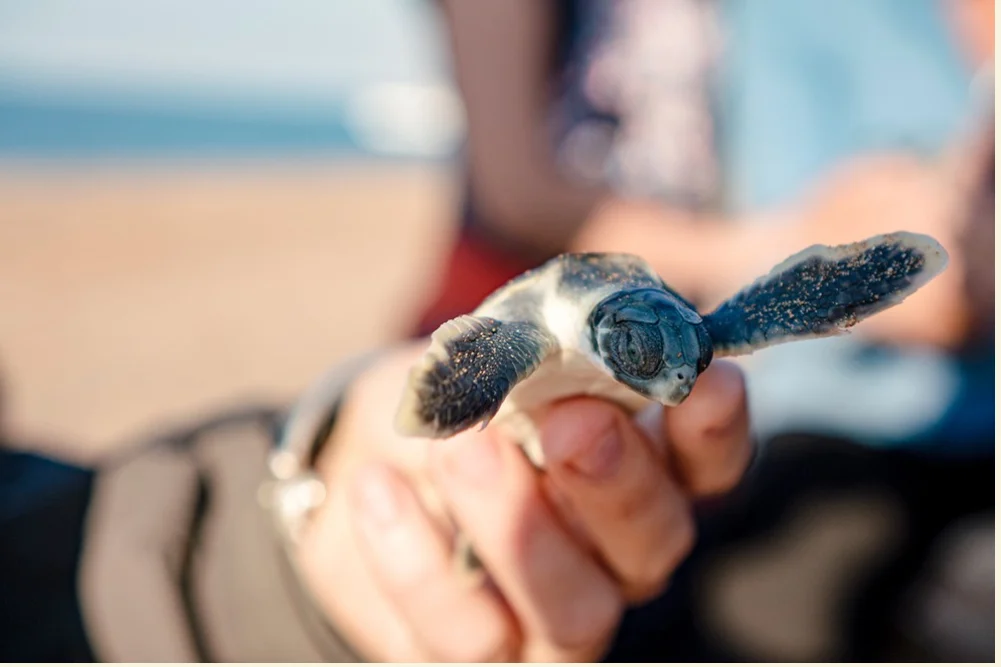
Under the electric canopy of the Milky Way, far removed from the artificial glow of Darwin’s urban sprawl, a critical conservation effort unfolds on the shores of Bare Sand Island. This remote outcrop, situated on the edge of the Joseph Bonaparte Gulf, serves as one of the primary nesting grounds for the flatback turtle (Natator depressus), the only sea turtle species endemic to the continental shelf of Australia. Every winter, as the solstice approaches and the "halcyon days" bring calm seas, hundreds of these marine reptiles emerge from the inky depths of the Timor Sea to continue a biological cycle that has persisted for millennia. Despite their long history, the flatback remains one of the most mysterious marine species in the world, currently classified as "data deficient" by both the Northern Territory government and the International Union for Conservation of Nature (IUCN) Red List.
The research conducted on Bare Sand Island, known to its traditional owners as Ngulbitjik, is spearheaded by AusTurtle, an all-volunteer organization that has maintained a presence on the island for over three decades. The work is grueling, requiring researchers and volunteers to operate in a window dictated by the tides, typically two hours on either side of high water. During these midnight shifts, the team monitors the arrival of approximately 650 middle-aged female turtles that return to this specific rookery each season. The primary objective is to move the species out of its "data deficient" status by gathering empirical evidence on nesting habits, population health, and the environmental factors affecting their survival.
Biological Profile: The Unique Nature of Natator Depressus
The flatback turtle is distinct among sea turtles for several reasons. Named for its characteristically flattened carapace, which lacks the high-domed profile of the green or hawksbill turtle, the flatback reaches an average weight of 90 kilograms. Unlike other sea turtles that migrate across vast oceanic basins, flatbacks are known to stay within the relatively shallow waters of the Australian continental shelf, rarely venturing into the deep ocean.
Their reproductive strategy also sets them apart. While other sea turtles lay hundreds of small eggs, the flatback lays a smaller clutch—typically around 50 eggs—but these eggs are the largest of any sea turtle species. This evolutionary trade-off is thought to produce larger, more robust hatchlings that are better equipped to handle the high-predation environment of the Australian coastline. However, the survival rate remains precariously low, with scientists estimating that only one in 1,000 hatchlings will reach the 30-year maturity required to return to their natal beach and nest.
The "lost years"—the three decades between a turtle hatching and its first nesting event—remain the greatest mystery in the species’ life cycle. Researchers on Bare Sand Island are working to bridge this knowledge gap by tagging nesting females with identification markers and, in some cases, satellite trackers. By recording the measurements of each turtle’s carapace and removing barnacles, the team monitors the health and growth rates of the returning population.
The Research Protocol: A Week in the Life of a Volunteer
The AusTurtle research camp on Bare Sand Island is a testament to low-impact scientific study. Located on traditional Kenbi land, the site is entirely temporary, consisting of tents and tarps that are removed at the end of the season. There are no permanent structures, no running water, and a strict "zero impact" policy that includes the removal of all waste, including composted material. This Spartan environment reflects the dedication of the volunteers, which include marine biology students, retirees known as "grey nomads," and international travelers, all of whom pay for the privilege of working through the night.
The nightly routine is a synchronized effort of data collection. As turtles lumber up the beach, researchers use red-light headlamps—which are less disruptive to the turtles’ vision than white light—to track their movements. The process involves a "turtle queue" system where tracks are timestamped in the sand to ensure no nesting female is overlooked. Once a turtle begins the laborious process of digging an egg chamber with her hind flippers, the team moves in.
The data points collected are extensive. Temperature probes are placed in the nests to record the thermal environment of the developing embryos. This is a critical metric, as sea turtles exhibit temperature-dependent sex determination (TSD). In higher temperatures, the nest produces a higher percentage of females, while cooler temperatures yield more males. With global temperatures rising, the data collected on Bare Sand Island provides a baseline for predicting how climate change will affect the future gender balance of the population.
Chronology of a Nesting Night and Hatchling Rescue
A typical night of research begins as the sun sets over the Joseph Bonaparte Gulf. By 10:00 PM, the first clusters of turtles often appear, utilizing a "safety in numbers" strategy to minimize the risk from predators, such as the resident three-legged saltwater crocodile nicknamed "Graham." The nesting process can take several hours, as a female may dig multiple "trial" holes before finding a site with the correct moisture and temperature profile.
By 2:00 AM, the beach is often a hive of activity. On peak nights, up to 18 or 20 turtles may be on the sand simultaneously. The researchers must work quickly but silently, measuring the 90-kilogram animals and checking for existing tags. If a turtle is a newcomer, a new tag is secured to her flipper, a permanent ID that will allow researchers to track her return in future years.
As dawn approaches, the focus shifts from the nesting adults to the hatchlings. The team conducts a final sweep of the island to locate nests that hatched overnight. Often, several hatchlings become trapped beneath the sand when the nest chamber collapses. These "stragglers" are collected and kept in a cool, dark environment until the following night, when they are released during the high tide. This manual intervention, though small in scale, aims to bolster the survival numbers of a species facing significant odds.
Cultural Context: The Kenbi Land Claim and Traditional Harvesting
The history of Bare Sand Island is inextricably linked to the Kenbi people. In 2016, after the longest-running Aboriginal land claim in Australian history, native title over the island—which they call Ngulbitjik—was formally awarded to the Kenbi clan. The island is considered sacred, particularly to the Kenbi women, who believe the seasonal monsoonal pools on the island are spiritually connected to waterholes on the mainland.
A point of intersection between traditional culture and modern conservation is the practice of egg harvesting. The Kenbi people visit the island regularly during the winter to harvest turtle eggs, a traditional food source. To an outside observer, the removal of eggs from an endangered species’ nesting ground can seem contradictory to conservation goals. However, veteran researchers like Andrew Raith argue that the practice is sustainable and vital for the species’ long-term protection.
"These people have been living and using this resource for millennia, and these sea turtles are still here," Raith notes. He emphasizes that by harvesting a small percentage of the nests, the Kenbi people maintain a direct stake in the health of the turtle population. This "value-based conservation" ensures that the traditional owners act as guardians of the island, preventing over-harvesting and protecting the habitat from external threats. The 2016 land claim transition has fostered a collaborative environment where scientific data and traditional ecological knowledge (TEK) coexist.
Environmental Threats and Ecosystem Implications
The future of the flatback turtle is shadowed by the broader implications of global warming. Because flatbacks nest across northern Australia—from Broome in Western Australia to Brisbane in Queensland—the Northern Territory population is particularly vulnerable. Unlike species that can migrate to cooler southern latitudes as temperatures rise, the NT flatbacks are already at the northernmost limit of their range. They have "nowhere to go" to escape the heat.
The threat is twofold: rising sea levels and rising nest temperatures. Increased sea levels threaten to inundate low-lying nesting beaches like Bare Sand Island, effectively drowning the eggs before they can hatch. Simultaneously, the feminization of the population due to hotter nests could lead to a "reproductive dead end" where there are simply not enough males to sustain the population.
The loss of the flatback turtle would have a catastrophic "bottom-up" effect on the marine ecosystem. As an indicator species, the health of the flatback population reflects the health of the entire coastal environment. They play a vital role in maintaining the balance of seagrass beds and coral reefs by predating on invertebrates, algae, and jellyfish. "If flatbacks go, you weaken the entire ecosystem," Raith explains. "It won’t just be the turtles that disappear. It will be the invertebrates, the corals, the algae… and their predators too."
Conclusion and Future Outlook
The work on Bare Sand Island is a race against time to gather the data necessary to implement effective conservation strategies. By transforming the "data deficient" status into a comprehensive biological profile, AusTurtle and the Kenbi traditional owners hope to secure federal and international protections for the species.
For the public, the island remains a site of both education and eco-tourism. Guided tours from Darwin allow visitors to witness the nesting process, providing a platform for public awareness about the fragility of Australia’s marine endemic species. As the sun rises over the white dunes of Ngulbitjik, the sight of a 43-gram hatchling scampering toward the surf serves as a poignant reminder of the stakes involved. The survival of the flatback turtle is not merely a matter of protecting a single species; it is an essential effort to preserve the integrity of the Australian marine wilderness for future generations.




 Anjar Salim
 Chandra Hamzah
 Tatiana Tantri Indah Sari
 Budi Mulyono
 Lukman Taruna Persada Ramadan
