
 Budi Mulyono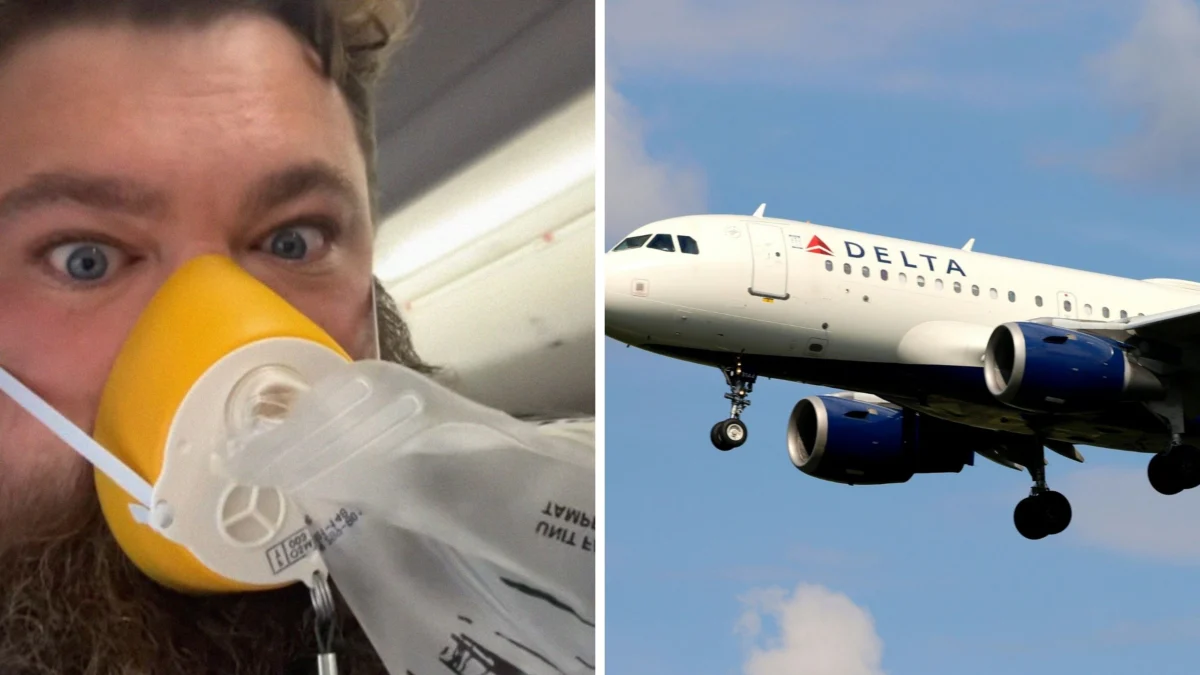
Passenger aviation relies on multiple layers of redundancy, mechanical reliability, and rigorous crew training to ensure the safety of travelers navigating the skies. However, rare technical anomalies can still disrupt routine operations, testing the composure of flight crews and passengers alike. This reality was underscored when a scheduled domestic flight operated by Delta Air Lines experienced a sudden loss of cabin pressure at cruising altitude, forcing an emergency descent and an unscheduled diversion to Las Vegas.
The incident involving Flight 2311 drew widespread public attention after a passenger shared brief, dramatic footage of the cabin environment on social media. While viral videos often lack necessary context, subsequent flight records, aviation tracking data, and official statements have provided a comprehensive picture of the event. The emergency response demonstrated how standard aviation safety protocols are executed under high-pressure conditions, reinforcing both the inherent risks of high-altitude flight and the effectiveness of modern commercial aviation safety standards.
Incident Overview and Main Facts
Delta Air Lines Flight 2311 was operating as a scheduled commercial service from Los Angeles International Airport (LAX) to Salt Lake City International Airport (SLC) on September 6. The aircraft involved was a Boeing 737-900ER bearing the registration N934DZ. At the time of the incident, the flight was carrying 181 passengers and a complement of flight and cabin crew members.
While cruising at approximately 35,000 feet over the Mojave Desert, the aircraft experienced an unexpected loss of cabin pressurization. In accordance with standard emergency procedures for high-altitude decompression, the aircraft’s automated drop-down oxygen masks deployed, and the flight crew initiated an immediate rapid descent to a safer, lower altitude.
Air traffic control communications captured the calm and calculated response of the pilot, who notified controllers of the rapid descent without hesitation, requesting clearance down to 9,000 feet. The aircraft descended roughly 27,000 feet over a span of approximately ten minutes before successfully diverting to Harry Reid International Airport (LAS) in Las Vegas. All 181 passengers and crew members exited the aircraft safely upon arrival, with no reported injuries sustained during the rapid descent or the subsequent landing. Delta Air Lines subsequently arranged alternative transportation to ensure travelers could complete their journeys to Salt Lake City.
Chronology of the Emergency
The sequence of events unfolded rapidly once the pressurization anomaly occurred at cruising altitude. Publicly available flight tracking data and passenger accounts establish a clear timeline of the emergency diversion.
The aircraft departed LAX at 4:54 p.m. Pacific Time, following a standard climb profile toward its designated cruising altitude of 35,000 feet. Approximately midway through the flight route over the arid landscape of the Mojave Desert, the cabin pressure control system suffered a failure, triggering warning systems in the flight deck and releasing the passenger oxygen masks from the cabin ceiling.
Recognizing the critical need to restore an ambient oxygen environment for all occupants, the flight crew executed an emergency descent protocol. The Boeing 737-900ER descended from 35,000 feet to approximately 8,000 to 9,000 feet within a compressed timeframe, taking roughly ten minutes to complete the steep downward trajectory. This maneuver brought the aircraft below the threshold where supplemental oxygen is continuously required.
Having stabilized the aircraft at a lower altitude, the flight crew communicated with air traffic control to declare an emergency and coordinated a diversion to the nearest suitable large commercial airport. The jet touched down safely at Harry Reid International Airport in Las Vegas approximately 82 minutes after its initial departure from Los Angeles. Ground personnel met the aircraft upon arrival to assist passengers, while maintenance technicians initiated preliminary inspections to determine the root cause of the pressurization failure.
Understanding the Mechanics of Rapid Descents
The dramatic nature of a rapid descent frequently causes alarm among passengers who are unaccustomed to steep aircraft maneuvers. However, aviation experts and federal regulatory standards dictate that a rapid drop in altitude is a mandatory procedural response to a loss of cabin pressure, rather than a sign of an uncontrolled aircraft.
At cruising altitudes typically utilized by commercial jetliners—often between 30,000 and 40,000 feet—the atmospheric pressure is insufficient to sustain human consciousness for more than a brief period without artificial support. This condition, known as hypoxia, can rapidly impair cognitive function and physical coordination. To counteract this risk, commercial aircraft are equipped with emergency oxygen systems.
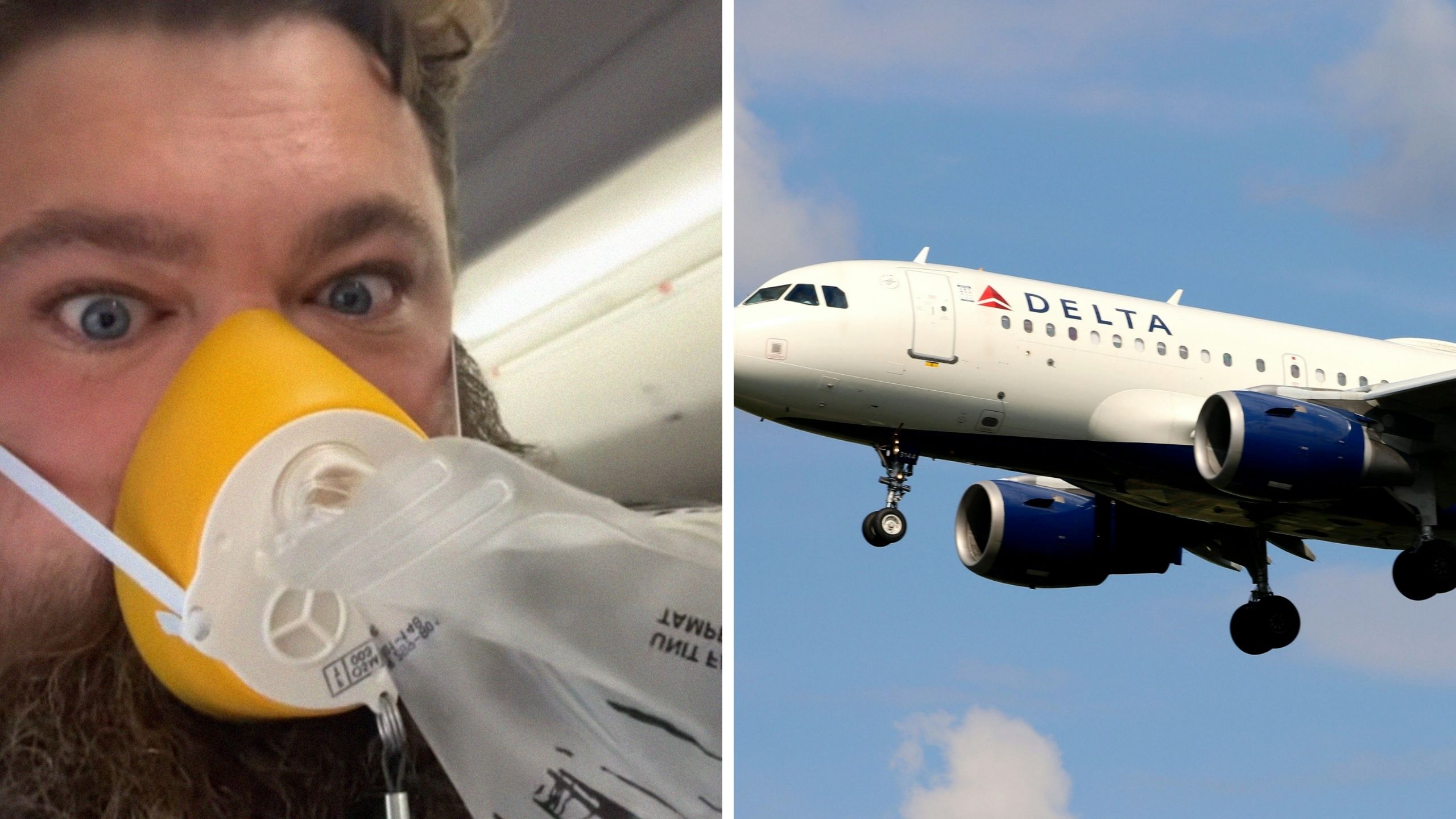
However, drop-down passenger oxygen masks do not draw from heavy, centralized pressurized gas cylinders. Instead, most commercial airline passenger oxygen systems rely on chemical oxygen generators installed above each row of seats. When a passenger pulls down on a mask, it triggers a chemical reaction that generates oxygen for a limited duration, typically lasting between 10 and 15 minutes.
Because the chemical oxygen supply is strictly finite, federal aviation regulations require flight crews to descend to 10,000 feet or lower within that exact timeframe. At or below 10,000 feet, the ambient atmospheric pressure and oxygen concentration are sufficient for human respiration without supplemental equipment. Consequently, the steep and rapid descent executed by the crew of Flight 2311 was a textbook application of regulatory safety mandates designed to preserve human life during a system failure.
Official Responses and Airline Statement
In the wake of the incident, Delta Air Lines issued a formal statement addressing the mechanical failure and commending the actions of the flight crew. The airline emphasized that safety remains its paramount operational priority.
According to the statement released by the carrier, the flight crew of Delta Flight 2311 adhered strictly to their established training protocols and operating procedures. The airline noted that these measures allowed the pilots to bring the aircraft to an optimal altitude safely following the unexpected pressurization issue. Delta expressed sincere apologies to the affected passengers for the disruption to their travel plans and formally thanked the flight crew for their professionalism and composure throughout the emergency.
Despite the comprehensive internal reviews typically conducted following such incidents, neither Delta Air Lines nor federal regulatory bodies have publicly released a definitive finding regarding the specific mechanical trigger behind the pressurization failure. Speculation within the aviation community has centered on potential malfunctions involving the aircraft’s outflow valves, pressure controllers, or pneumatic supply systems, but official investigative conclusions remain pending.
Passenger Reactions and Public Discourse
The incident gained widespread traction online after passenger Jord Maynard documented the immediate aftermath on TikTok, sharing a 12-second video clip that captured the yellow oxygen masks deployed inside the cabin. The post quickly amassed over 142,000 views, sparking substantial discussion across social media platforms regarding air travel safety, passenger anxiety, and the conduct of flight crews.
Commenters on the platform overwhelmingly praised the composure of the flight crew and the calm demeanor reflected in air traffic control audio recordings. Many aviation enthusiasts and frequent flyers in the comment threads sought to demystify the event, explaining the engineering and regulatory rationales behind the rapid descent to reassure anxious travelers.
At the same time, the footage elicited apprehension from individuals with upcoming flights, highlighting the psychological impact that viral aviation content can have on public perception. Industry analysts note that while pressurization incidents receive significant media coverage due to their dramatic visual elements—such as deployed oxygen masks—such occurrences are statistically rare within the broader context of commercial aviation operations.
Broader Industry Implications and Safety Statistics
The safe outcome of Delta Flight 2311 serves as a testament to the robust safety margins engineered into modern commercial air transport. Decompression events, while serious, are accounted for comprehensively in aircraft design, pilot training programs, and regulatory oversight.
Historical data compiled by aviation authorities demonstrates that high-altitude decompression events requiring the deployment of supplemental oxygen are infrequent. Federal Aviation Administration advisory studies tracking decades of high-altitude operations indicate that such occurrences happen on a sporadic basis across hundreds of millions of commercial flights worldwide. Modern twin-engine airliners like the Boeing 737-900ER feature redundant systems designed to manage pressurization anomalies and provide crews with the tools necessary to mitigate risk effectively.
The successful diversion to Las Vegas underscores the resilience of the commercial aviation network. With multiple diversion airports available along major domestic corridors, flight crews can rapidly pivot from their original flight plans to ensure passenger safety when unexpected technical challenges arise. As investigations into the root cause of the Delta 2311 pressurization failure continue, the incident remains a clear example of how rigorous training, regulatory frameworks, and disciplined execution converge to protect the traveling public.




 Anjar Salim
 Chandra Hamzah
 Tatiana Tantri Indah Sari
 Lukman Taruna Persada Ramadan
