Lukman Taruna Persada Ramadan
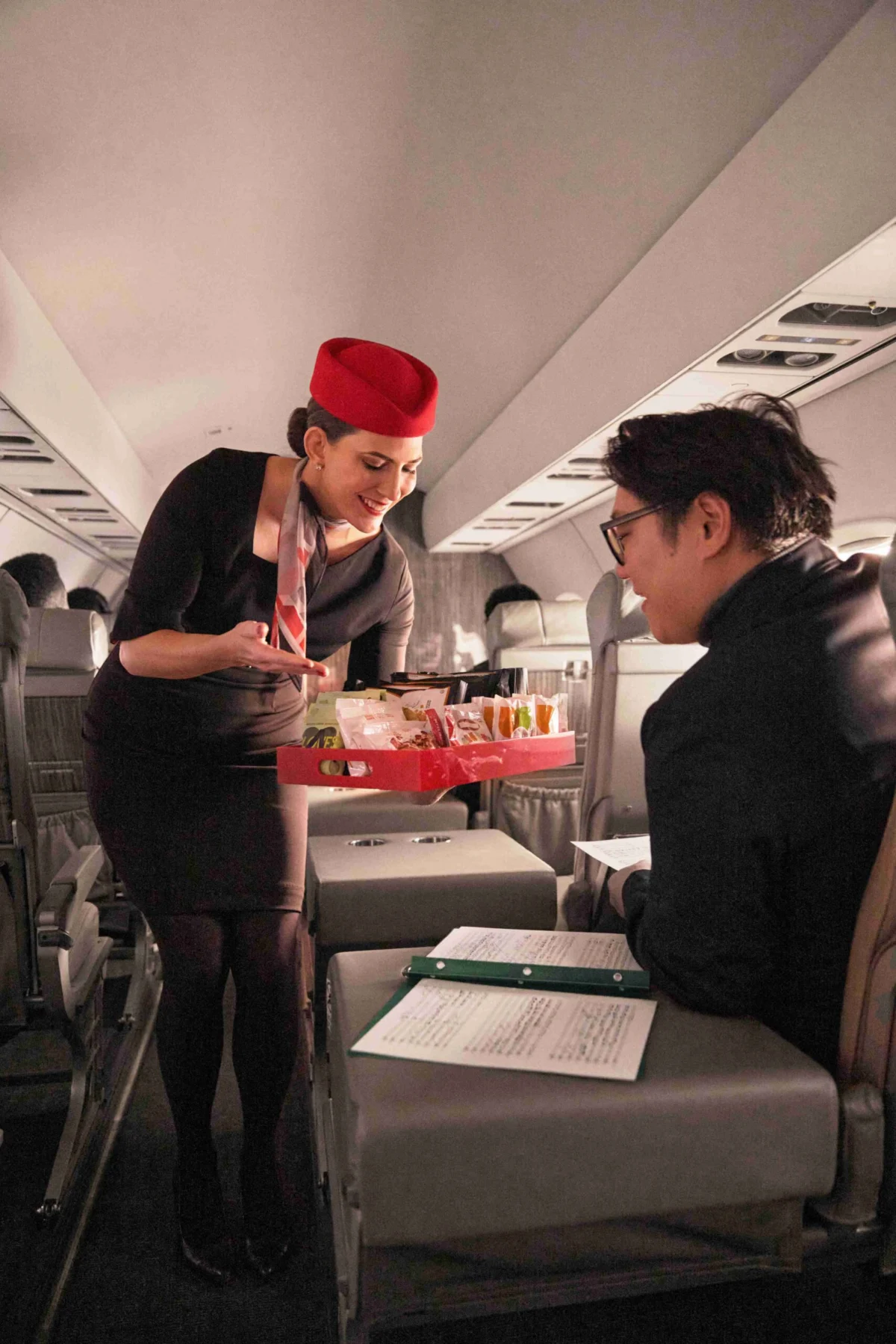
The landscape of commercial aviation has undergone a profound structural evolution over the past several decades, shifting from an era of exclusive luxury to mass democratization. During the mid-20th century, frequently characterized as the Golden Age of Air Travel throughout the 1950s and 1960s, boarding an aircraft was treated as a formal and ceremonial occasion. Passengers routinely wore their finest attire to match the upscale environment, while airlines offered lavish multi-course dining experiences within spacious cabins. This paradigm shifted dramatically in the 1970s and 1980s as commercial air travel became widely accessible to the general public. The transition was accelerated significantly in the United States by the passage of the Airline Deregulation Act of 1978, which introduced open market competition, lowered fare costs, and transformed flying into a high-volume, utilitarian mode of transportation. Consequently, true luxury was largely compressed into dedicated business- and first-class cabins. Over the last 30 years, the proliferation of low-cost carriers has prompted major commercial airlines to continually redesign their premium offerings and airport lounges to capture shifting consumer demands.
Amidst these widespread commercial changes, the private jet and charter aviation sectors have maintained a distinct reputation built on a platinum standard of personalized service. Historically perceived by the general public as an exclusive domain restricted to celebrities, heads of state, and top corporate executives, the private aviation industry is currently undergoing a pragmatic transformation. Today’s owners, operators, and managers within the private and charter subsets are redefining their core value propositions. While plush perks and lavish onboard amenities continue to serve as key differentiators, the industry’s modern expansion is increasingly anchored in fundamental operational efficiencies, time-saving capabilities, and curated experiential travel.
The Evolution of Commercial Flight and the Rise of Time-Saving Travel
To understand the current trajectory of private aviation, industry experts point to a fundamental shift in consumer psychology. According to David Drabinsky, president of semi-private carrier JSX, and Doug Gollan, editor-in-chief of the data-driven buyers guide Private Jet Card Comparisons, the single most significant selling point for contemporary upscale flyers is the acquisition of time. Despite extensive marketing campaigns highlighting lifestyle partnerships, VIP terminal access, celebrity chefs, and in-flight wellness treatments, private aviation functions primarily as a time-saving mechanism.
Recent industry data underscores this trend. While mainstream airports may appear convenient for first-class passengers traveling non-stop with minimal luggage and trusted traveler credentials such as TSA PreCheck or Clear, approximately 50 percent of private jet clients report that poor commercial airline and airport experiences served as the primary catalyst for transitioning to private aviation.

Gollan notes that research conducted by his publication reveals a symbiotic relationship between the two modes of transportation. Approximately 90 percent of private aviation users continue to utilize commercial airlines when practical. However, an identical 90 percent cite time savings as their core motivation for booking private flights. This operational advantage stems from several key factors, including access to a vastly expanded network of approximately 5,000 regional and municipal airfields across the United States, compared to fewer than 500 major market airports serviced by scheduled commercial carriers. Additional drivers include the ability to fly point-to-point without layovers, avoidance of heavily congested terminal security checkpoints, and the flexibility to operate on schedules tailored precisely to the traveler’s itinerary rather than rigid airline timetables. Furthermore, the capacity to travel seamlessly with pets and bypass checked baggage claim processes remains a decisive factor for frequent flyers.
Chronology and Structural Shifts in Private and Charter Aviation
The modern private and charter aviation market is built upon a foundation of structural milestones that have democratized access without sacrificing efficiency. The timeline below highlights key developments shaping the sector:
- 1978: The U.S. Airline Deregulation Act passes, lowering fares and initiating the democratization of commercial air travel, which eventually concentrates luxury into specialized business and first-class cabins.
- 2016: JSX is founded, introducing a semi-private flight model designed to bridge the gap between expensive whole-aircraft charters and congested commercial airlines by utilizing regional airports and competitive per-seat pricing.
- Recent Years: Major private jet providers—including NetJets, Flexjet, and FlyExclusive—accelerate fleet upgrades by integrating high-speed, low-latency satellite internet services such as Starlink to meet the rising connectivity demands of corporate and leisure passengers.
- Recent Months: Emerging operators like StellaExperiences launch operations, offering access to expansive global networks of thousands of aircraft operators, while established semi-private providers like Aero expand their route maps to high-demand destinations including New York City and Maui.
Expanding Fleets and Aircraft Innovations
Industry leaders continue to refine their fleet architectures to maximize both passenger comfort and operational reach. JSX, for instance, maintains the core operational model it established at its inception in 2016, prioritizing the pragmatic delivery of time-saving transit over extravagant terminal lounges. By keeping ground infrastructure understated, the carrier maintains competitive per-seat pricing for groups of up to 30 passengers, thereby broadening the accessibility of semi-private travel.
To further extend its footprint, JSX recently introduced the ATR 42 turboprop aircraft into its active fleet. While maintaining a 30-passenger seating configuration consistent with the company’s existing aircraft, the ATR 42 features an enlarged cabin envelope. With an interior height ranging from 6 feet 3 inches to 6 feet 4 inches—compared to 6 feet 1 inch on previous models—and upgraded interior dampening materials, the aircraft delivers a noticeably quieter and more spacious cabin environment, while also enabling access to shorter runways and additional regional airports.
Concurrently, regional operators like PlaneSense utilize specialized turboparks and light jets, such as the Pilatus PC-12 and PC-24, which are engineered specifically for short-field performance and optimized baggage configurations. Industry analysts compare this fleet diversification to maintaining both an agile sports car and a utility vehicle in a private garage, allowing flyers to match the specific aircraft capabilities to the precise requirements of each journey.

Connectivity and the Digital Office at Altitude
In-flight connectivity has transitioned from a luxury amenity to a mandatory operational requirement for modern private aviation clients. According to both Gollan and Drabinsky, high-speed, reliable internet access is now a dominant trend across all segments of charter and private jet travel.
Major fleet operators, including NetJets, Flexjet, and FlyExclusive, have formally announced fleet-wide integrations of advanced satellite constellations like Starlink, supplementing competitive legacy offerings from providers such as Gogo. Subscription data indicates that the percentage of private aviation users demanding continuous broadband access increases annually. While high-speed connectivity remains critical for long-haul corporate travelers operating on larger aircraft, consumer demand has expanded rapidly to include shorter regional flights. Industry experts advise consumers to review contract terms carefully prior to booking, as connectivity pricing models vary significantly across operators; some carriers incorporate unlimited data into standard charter or jet card rates, while others assess additional usage-based fees.
Curated Experiences and Strategic Hospitality Partnerships
Beyond mere transportation efficiency, the private aviation sector is increasingly intertwined with high-end hospitality and experiential tourism. Ben Klein, CEO of Los Angeles-based semi-private carrier Aero, notes that contemporary travelers are actively seeking meticulously curated, end-to-end travel experiences. For a significant portion of frequent flyers—including roughly 40 percent of Aero’s clientele, who occasionally fly their own aircraft or book full private charters—purchasing individual seats on scheduled semi-private routes represents a cost-effective and streamlined alternative for recurring trips to second homes or regional vacation destinations.
Aero’s route map encompasses key leisure markets such as Las Vegas, Salt Lake City, Napa Valley, Palm Springs, Aspen, Sun Valley, and Los Cabos, with recent additions including New York City and Maui. To distinguish its onboard service, the carrier partners with prominent culinary brands, sourcing refreshments from high-end purveyors like Los Angeles organic grocer Erewhon and Champagne house Veuve Clicquot. Furthermore, Aero collaborates with renowned culinary figures, such as chef Nancy Silverton, to design specialized tasting menus for events like the Food & Wine Classic in Aspen, while equipping passengers with altitude-appropriate wellness amenities like Theramask Infrared devices.
Strategic alliances with luxury hospitality brands have similarly expanded. Rather than offering basic promotional discounts, carriers like Aero maintain integrated relationships with premier properties such as the Aman New York and Waldorf Astoria Beverly Hills. These partnerships unlock exclusive benefits including guaranteed room upgrades, resort credits, and coordinated concierge scheduling that manages both flight itineraries and hotel reservations as a unified package.
Other major market participants have similarly elevated their bespoke offerings. Flexjet features specialized LXi cabin configurations developed through design collaborations with luxury automotive and marine brands such as Bentley and Riva, complemented by formal tableside dining services on larger airframes. VistaJet continues to offer customized children’s programming—such as live interactive themed events—alongside high-end in-flight beauty treatments and culinary partnerships with internationally acclaimed restaurants. Meanwhile, newly launched market entrants like StellaExperiences provide on-demand access to a vast global network comprising 7,000 certified aircraft operators, catering to high-profile events such as championship sporting fixtures.
Broader Implications and Expert Guidance for Travelers
As the private aviation market continues to mature, industry stakeholders emphasize the importance of methodical planning and rigorous operator vetting. When engaging charter brokers or selecting membership cards, consumer advocates recommend prioritizing safety ratings, operational transparency, and provider reliability over superficial marketing claims.
Gollan stresses the importance of selecting aircraft configurations that comfortably accommodate the total passenger count and baggage volume without requiring fuel stops. Furthermore, he recommends utilizing experienced charter brokers and opting for aircraft featuring stand-up cabins when traveling with larger groups, as restricted headroom on smaller light jets can limit movement and compromise onboard comfort during extended flights.
Ultimately, the convergence of technological upgrades, expanded regional infrastructure, and sophisticated hospitality integrations signals a permanent maturation of the private aviation sector. By aligning services directly with the modern consumer’s demand for time efficiency, operational reliability, and meaningful experiential travel, private and charter operators have successfully transitioned from an era of exclusive mystique into a highly pragmatic, indispensable component of contemporary global mobility.




 Tatiana Tantri Indah Sari

 Anjar Salim

 Budi Mulyono