
 Walid Sujud Trenggono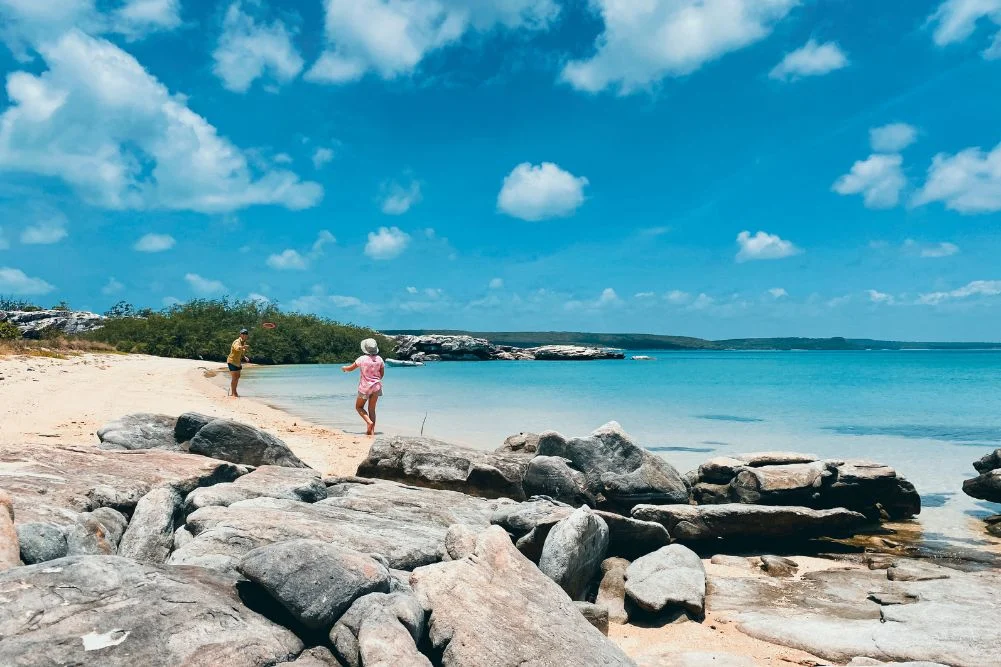
The Gove Peninsula, situated on the northeastern tip of the Northern Territory, serves as a profound repository of Australia’s pre-colonial history, characterized by centuries of international commerce and cultural exchange that predates European settlement. At the heart of this narrative are the Wurrwurrwuy stone arrangements at Garanhan, near Nhulunbuy. These archaeological sites provide tangible evidence of a sophisticated trading relationship between the Yolngu people and Makassan voyagers from present-day Indonesia. This historical intersection has shaped the linguistic, social, and artistic landscape of Arnhem Land, offering a counter-narrative to traditional colonial histories and highlighting a period of harmonious maritime diplomacy that began as early as the mid-17th century.
The Makassan-Yolngu Trade: A Foundation of Diplomacy
The history of the Gove Peninsula is inextricably linked to the seasonal arrival of the Makassan fishing fleet. Driven by the northwesterly monsoon winds, these seafarers traveled approximately 1,600 kilometers across the Arafura Sea to harvest trepang, or sea cucumber, which was highly valued in Chinese markets for its medicinal and culinary properties. Historical records and carbon dating suggest this trade was established by at least 1640 and continued annually until 1906.
The relationship was defined by mutual benefit rather than conquest. In exchange for access to the nutrient-rich waters and permission to establish seasonal camps, the Makassans provided the Yolngu with iron tools, tobacco, cloth, and dugout canoes (known as lipa-lipa). This exchange fundamentally altered Yolngu hunting and fishing practices. The introduction of metal axes and knives allowed for more efficient woodcraft, while the dugout canoes expanded the range of maritime activities, enabling the Yolngu to hunt larger marine animals such as dugongs and sea turtles more effectively.
Chronology of Cultural and Historical Milestones
To understand the depth of this cross-cultural engagement, one must look at the timeline of documented interactions and the subsequent efforts to preserve this history:
- 1640s: Earliest estimated commencement of regular Makassan voyages to Northern Australia.
- 1700s – 1800s: The peak of the trepang trade. At its height, the fleet comprised up to 60 perahus (traditional sailing vessels) and carried over 1,000 crew members.
- 1803: English explorer Matthew Flinders encounters a Makassan fleet led by Captain Pobassoo at Cape Wilberforce. Flinders records that the Yolngu were frequently aboard the Makassan vessels, some even traveling back to Makassar.
- Late 19th Century: Yolngu elders construct the Wurrwurrwuy stone arrangements. These pictorial records were created to ensure that future generations would understand the history of the trade and the specific technologies introduced by the visitors.
- 1906: The South Australian government, then administering the Northern Territory, imposes heavy customs duties and restricts licenses to non-British subjects, effectively ending the Makassan voyages.
- 1960s: Clan leader Mungurrawuy Yunupingu collaborates with historian Campbell Macknight to document the oral histories associated with the stone arrangements, reinforcing the site’s status as a primary historical record.
- 1988: The Mulka Museum is established at Yirrkala, providing a dedicated space for the preservation of Yolngu artifacts, bark paintings, and digital archives.
The Wurrwurrwuy Stone Arrangements: A Coded History
The stone arrangements at Garanhan are more than mere artistic expressions; they are sophisticated blueprints of a bygone era. Unlike many Indigenous stone arrangements used for ceremonial or spiritual purposes, the Wurrwurrwuy site is primarily secular and documentary. The stones are meticulously laid out to depict the physical infrastructure of the Makassan presence.
Visitors to the site can identify the outlines of perahus with their distinct tri-masted rigging, stone fireplaces (tula-tula) used for boiling trepang, and the drainage systems of the processing camps. There are also representations of the houses and warehouses the Makassans built on stilts. This site serves as a permanent archive, etched into the bauxite landscape, proving that the Yolngu were active participants in a global trade network long before the arrival of the First Fleet in Sydney Cove.
Artistic Evolution and Political Sovereignty at Yirrkala
The cultural legacy of these interactions is perhaps most visible in the vibrant art scene of Yirrkala, located 19 kilometers from Nhulunbuy. The Buku-Larrnggay Mulka Centre has become one of Australia’s most prestigious Indigenous art hubs, where the fusion of traditional techniques and historical narratives continues to flourish.
A significant aspect of Yolngu art is its role in land rights and political advocacy. In 1962, the community produced the famous "Church Panels"—two large-scale works of ochre on masonite. These panels were originally placed in the local Methodist church to represent the Dhuwa and Yirritja moieties (the two fundamental halves of Yolngu society). However, their significance grew as they became symbols of the Yolngu’s inherent right to their land during the burgeoning mining boom of the 1960s. This artistic tradition eventually led to the 1963 Yirrkala Bark Petitions, the first traditional documents prepared by Indigenous Australians that were recognized by the Australian Parliament.
Beyond painting, the region is renowned for its weaving. Utilizing gunga (pandanus leaves), Yolngu women create intricate mats and baskets. Traditionally, these were utilitarian items—such as the nganiyal, a conical baby shelter—but they have evolved into high-art forms sought after by international galleries. The use of natural dyes derived from roots and bark maintains a link to the environment that has sustained the community for millennia.
Environmental Stewardship and Eco-Tourism on Bremer Island
As the region transitions from an economy heavily reliant on bauxite mining toward sustainable tourism, sites like Bremer Island (Dhambaliya) have become central to the Yolngu-led economic model. The Banubanu Beach Retreat, an eco-friendly resort, exemplifies this shift. Managed in partnership with traditional owners, the retreat operates entirely off-the-grid, utilizing solar power and minimal-impact infrastructure.
The environmental significance of the region is a critical component of its appeal and its preservation needs. The East Bremer Islets, for instance, are recognized as the Higginson Important Bird Area. This site supports globally significant breeding populations of:
- Crested Terns: Vital for the marine ecosystem’s balance.
- Common Noddies: The islets represent the only known breeding site for this species in the Northern Territory.
- Roseate and Bridled Terns: Migratory species that rely on the undisturbed nature of these granite outcrops.
Furthermore, the beaches of Bremer Island serve as critical nesting grounds for four species of sea turtles: the Green, Flatback, Hawksbill, and Olive Ridley. The management of these areas by the Dhimurru Aboriginal Corporation ensures that tourism does not infringe upon these delicate biological processes.
Broader Implications and Socio-Economic Impact
The preservation of the Makassan-Yolngu history has profound implications for Australian identity. It challenges the concept of terra nullius by demonstrating that Northern Australia was a site of international commerce and sophisticated maritime law centuries ago. The linguistic impact is still felt today; many Yolngu words, such as rupiah (money) and balanda (white person/foreigner), are derived from Makassan and Malay languages.
From an economic perspective, the rise of Indigenous-led tourism in Arnhem Land provides a pathway for self-determination. By controlling the permit systems—such as those managed by the Dhimurru Aboriginal Corporation—the Yolngu people ensure that visitors respect sacred sites and environmental boundaries while generating revenue that stays within the community.
The monthly markets in Nhulunbuy and the activities at the Gove Boat Club further illustrate the contemporary social fabric of the region. These gatherings facilitate a unique blend of local Indigenous culture and the "frontier" lifestyle of the non-Indigenous residents, often centered around music, art, and the shared bounty of the Arafura Sea.
Conclusion: A Legacy Set in Stone
The Gove Peninsula stands as a testament to the resilience and adaptability of the Yolngu people. From the stone arrangements at Wurrwurrwuy to the digital archives of the Mulka Museum, the region offers a masterclass in cultural preservation. As the sun sets over the turquoise waters of Melville Bay, the legacy of the Makassan voyagers remains visible not just in the tamarind trees they planted or the stones the Yolngu laid, but in the enduring spirit of a community that has successfully navigated the complexities of trade, colonization, and modern industry while keeping its soul intact. For the modern traveler, Nhulunbuy is not merely a destination for fishing or recreation; it is a gateway into a deep, multicultural history that continues to resonate across the Arafura Sea.




 Anjar Salim
 Chandra Hamzah
 Tatiana Tantri Indah Sari
 Budi Mulyono
 Lukman Taruna Persada Ramadan
