
 Gabriela Annisa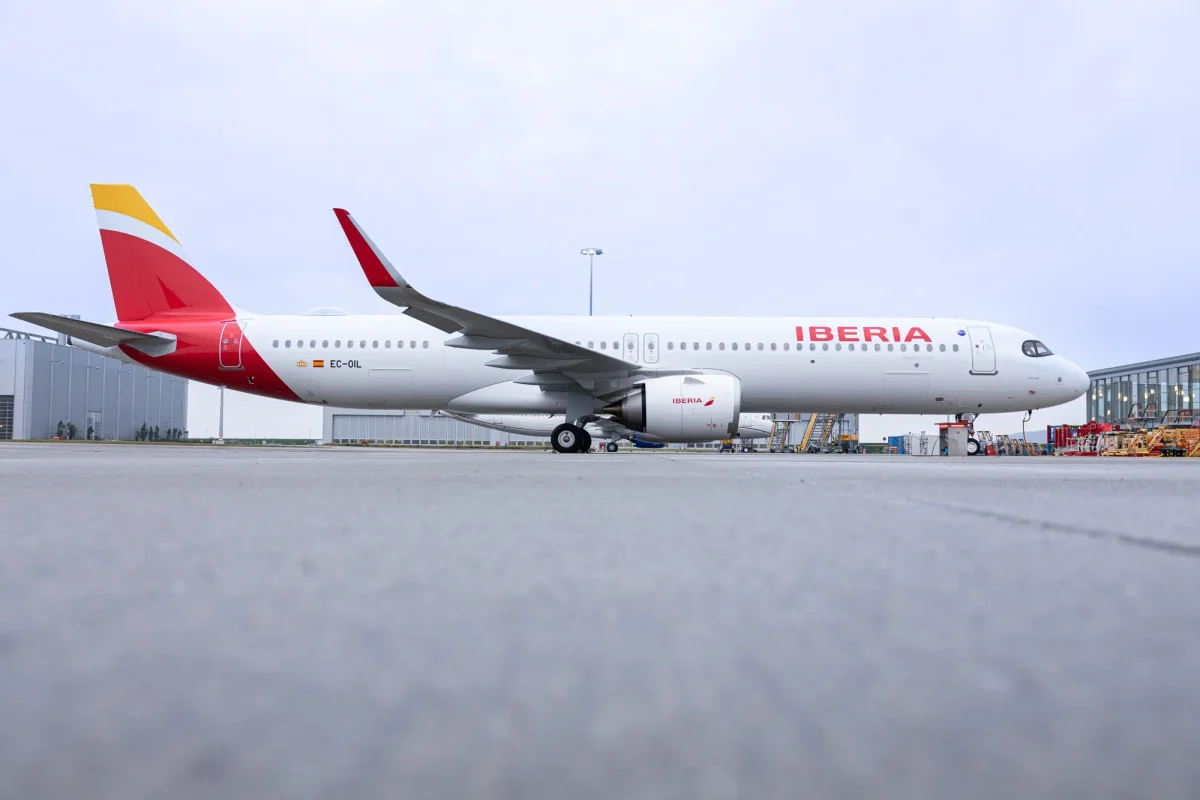
In a striking testament to strategic restructuring and market adaptation, Iberia has emerged as one of the world’s most profitable airlines, achieving an impressive 16.4% operating margin that now rivals the industry-leading efficiency of low-cost giant Ryanair, which posted 16.7%. This remarkable turnaround marks the culmination of a decade-plus journey from a state of near-Alitalia-level dysfunction to a powerhouse within the International Airlines Group (IAG). Concurrently, while Singapore Airlines (SIA) demonstrated robust performance in its own January-March quarter with a 15% operating margin, its ambitious 25% stake in India’s flag carrier, Air India, continues to exert a significant drag on its net results, highlighting the complex and often unpredictable nature of international airline investments.
Iberia’s Phoenix-Like Resurgence: A Deep Dive into Strategic Transformation
Iberia’s journey from a beleaguered national carrier to a profitability leader is a compelling narrative of corporate renewal against a backdrop of severe economic headwinds and intense competition. Fifteen years ago, at the time of its merger with British Airways in 2011 to form IAG, Iberia was in a precarious state. Spain was at the epicentre of a crippling European housing bust, plunging the national economy into disarray. Iberia itself was characterized by deeply entrenched inefficiencies: an overstaffed workforce, antiquated IT systems, and an aging, fuel-inefficient fleet heavily reliant on four-engine Airbus A340s. Its high operating costs made it a prime target for aggressive low-cost carriers like Ryanair, which relentlessly expanded its presence in Spain, systematically eroding Iberia’s market share on short-haul routes. The airline was frequently cited alongside other historically troubled carriers such as Alitalia and Aerolíneas Argentinas, a far cry from its current standing.
The Gallego Revolution: A Blueprint for Cost Reduction and Modernization
The catalyst for Iberia’s transformation was the appointment of Luis Gallego as CEO. Gallego, who would later ascend to the helm of IAG, initiated a series of aggressive and often contentious reforms. His mandate was clear: drastically cut costs, rationalize routes, and modernize every aspect of the airline’s operations. This period was marked by fierce battles with unions, leading to strikes and widespread unrest, as the airline pushed through significant changes to working conditions and headcount.
A critical component of Gallego’s strategy was fleet modernization. The gas-guzzling A340s were progressively phased out, replaced by more fuel-efficient wide-body aircraft such as the Airbus A350s and A330s, dramatically improving operational economics. Furthermore, Iberia launched Iberia Express, a low-cost subsidiary designed to compete more effectively on short and medium-haul routes within Spain and Europe, complementing IAG’s later acquisition of Vueling. These internal overhauls, combined with a meticulous focus on sales and distribution channels and a complete overhaul of its outdated IT infrastructure, laid the groundwork for recovery.
Financial Trajectory: From Red Ink to Industry Benchmark
The financial progression of Iberia vividly illustrates the success of these reforms. In 2012, just a year after the IAG merger, Iberia posted a devastating negative 7% operating margin. The airline returned to profitability by 2014, a crucial milestone. From there, margins steadily climbed, reaching 9% by 2019, a respectable figure that already positioned it as a successful turnaround story prior to the global pandemic.
However, Iberia’s post-pandemic performance has been nothing short of spectacular. While the aviation industry grappled with recovery, Iberia surged ahead, achieving a 14% operating margin in both 2023 and 2024. The peak came in 2025, when its 16.4% operating margin placed it shoulder-to-shoulder with Ryanair. This exceptional performance extended into the first quarter of 2025, traditionally an off-peak winter period in Europe, where Iberia recorded a remarkable 9% margin, an achievement almost unheard of for a network carrier in the region.
Strategic Advantages and Favorable Macroeconomic Winds
Several factors, both internal and external, have contributed to Iberia’s sustained profitability. One of the most significant is the strategic advantage of its Madrid hub. Madrid-Barajas Airport (MAD) is unique among major Western European hubs in offering substantial room for growth and expansion, a stark contrast to capacity-constrained rivals like London Heathrow, which was a primary motivator for British Airways’ interest in merging with Iberia. This capacity allows Iberia to expand its network and frequencies without the bottlenecks faced by competitors.
Furthermore, Spain’s robust economic performance has provided a significant tailwind. While much of Europe has experienced sluggish growth, Spain’s economy has consistently outperformed the European average, growing at roughly 2.5-3% last year compared to a 1% average across the continent. This growth is largely fueled by a booming tourism sector, attracting millions of visitors, particularly from the United States, who are increasingly spending their disposable income on European travel. Madrid serves as a critical gateway, channeling tourists not only to Spain’s mainland and islands but also as a connecting point for onward travel across Southern Europe. The recent geopolitical tensions in the Middle East have further diverted some tourist traffic back to Western Europe, benefiting destinations like Spain. The extension of the shoulder season, driven by retirees and empty-nesters with flexible travel schedules, has also allowed Iberia to command strong yields outside of the traditional summer peak.
A key pillar of Iberia’s network strategy is its dominance in Latin America. The airline commands approximately 20% of the market share between Europe and Latin America, a region that has proven to be an incredibly strong and consistent performer for Iberia. Despite the inherent economic volatility of certain South American nations, the region’s strong cultural and linguistic ties with Spain, coupled with significant immigration flows, generate substantial VFR (Visiting Friends and Relatives) traffic. IAG has even branded Madrid as "the new Miami," underscoring its role as a critical hub for Latin American connections. Iberia’s shrewd aircraft configurations, with densely packed economy cabins balancing against highly monetized premium classes, allow it to cater to this diverse traffic mix efficiently.
The airline’s fleet strategy continues to evolve, with the introduction of Airbus A321XLRs enabling expansion into new transatlantic routes on the U.S. Eastern Seaboard, including Boston, Washington, and recently Newark. These narrow-body, long-range aircraft also open opportunities in the Northeast of Brazil, allowing Iberia to directly compete with TAP Air Portugal for lucrative Brazilian traffic. Beyond passenger operations, Iberia benefits from a booming aircraft maintenance, repair, and overhaul (MRO) business, an industry currently experiencing high demand and tight supply. The competitive landscape has also eased somewhat, with rival Air Europa facing significant challenges and IAG’s attempts to acquire it being blocked by competition authorities. Iberia consistently ranks high in on-time performance metrics, further enhancing its operational efficiency and customer appeal.
Luis Gallego’s successful leadership at Iberia propelled him to the CEO position of IAG, demonstrating the replicability and strategic value of his turnaround blueprint. The current CEO of Iberia, Marco Sansavini, has continued to build on this legacy, maintaining the airline’s high performance standards.
Singapore Airlines: Balancing Core Strength with Strategic Ambition
In contrast to Iberia’s internally driven turnaround, Singapore Airlines presents a dual narrative of robust core operations coupled with the complexities of large-scale strategic investments. SIA’s own performance in the January-March quarter of 2025 was exceptionally strong, with its operating margin soaring from 6% in the previous year to 15%. This impressive gain was partly attributed to disruptions in Middle Eastern airspace, which diverted long-haul traffic away from major Gulf hubs like Dubai and Doha, benefiting SIA’s strategically located Singapore hub. The airline also continues to capitalize on the sustained, strong demand for premium long-haul travel, a segment in which SIA is a recognized global leader.
However, SIA’s ambitious pursuit of diversification beyond its single-hub model has encountered significant headwinds, particularly with its 25% stake in Air India. Air India reported a substantial loss of approximately $2.6 billion, directly impacting SIA’s net results and raising questions about its long-term investment strategy.
The Air India Conundrum: A History of Challenged Diversification
SIA’s interest in Air India, and indeed its broader strategy of acquiring stakes in foreign carriers, stems from a deep-seated "structural anxiety" about its reliance on a single hub with no domestic market. This vulnerability to external competition and geopolitical shifts has historically driven SIA to seek diversification through equity investments. However, this strategy has often led to regrettable outcomes, including past investments in Virgin Atlantic (later sold to Delta), Ansett Australia, and Air New Zealand, as well as previously explored deals in China.
The current Air India saga began with a more successful venture: Vistara, a joint venture with India’s Tata Group, established as a modern, full-service carrier in the Indian market. Vistara garnered positive reviews for its new fleet and service standards. However, when the Indian government finally privatized Air India in 2022, SIA, in partnership with Tata, decided to merge Vistara into the larger, newly acquired Air India. This consolidation also brought in Air India Express and Air Asia India, creating a formidable task of integrating four distinct airlines into a single entity.
The transformation program, dubbed Vihaan.AI, led by former Scoot (SIA’s budget subsidiary) CEO Campbell Wilson, aimed to modernize Air India’s fleet, IT systems, and operational procedures. Despite significant investment in repainting aircraft, upgrading technology, and reforming operations, Air India has faced immense challenges. The complexity of merging multiple airlines, navigating entrenched union issues, and potential political interference have compounded operational difficulties. External shocks, such as geopolitical tensions leading to airspace closures over Pakistan and Iran, fuel price spikes, and a tragic accident, have further hindered progress. Campbell Wilson’s recent departure underscores the immense leadership challenge inherent in this ambitious undertaking.
Despite these substantial setbacks, Singapore Airlines officially maintains its commitment to the investment. The airline expressed last week that it does not regret the Air India stake, believing it will ultimately be "strategically accretive" in the long run, even if the timeline for returns is longer than initially anticipated. This stance reflects SIA’s enduring strategic imperative to gain a foothold in large, growing markets, despite the high-risk nature of such ventures.
Broader Industry Implications: Divergent Paths to Prosperity
The contrasting fortunes of Iberia and Singapore Airlines offer valuable insights into the contemporary aviation landscape. Iberia’s success provides a compelling model for legacy carriers to achieve remarkable profitability through aggressive internal restructuring, leveraging geographical advantages, and adapting fleet strategies to market demands. Its ability to capitalize on Spain’s booming tourism and its strong historical ties to Latin America demonstrates the power of a well-executed regional specialization.
Conversely, Singapore Airlines’ experience with Air India highlights the inherent complexities and risks associated with strategic expansion into large, emerging markets, even for financially robust and operationally excellent carriers. It underscores that while a strong core business is vital, successful international diversification requires navigating a labyrinth of regulatory hurdles, cultural differences, integration challenges, and geopolitical uncertainties. The cases illustrate that while external market conditions can provide tailwinds, internal agility, decisive leadership, and a clear, unwavering strategy remain paramount for sustainable success in the highly competitive global aviation industry.




 Anjar Salim
 Chandra Hamzah
 Tatiana Tantri Indah Sari
 Budi Mulyono
 Lukman Taruna Persada Ramadan
