
 Walid Sujud Trenggono
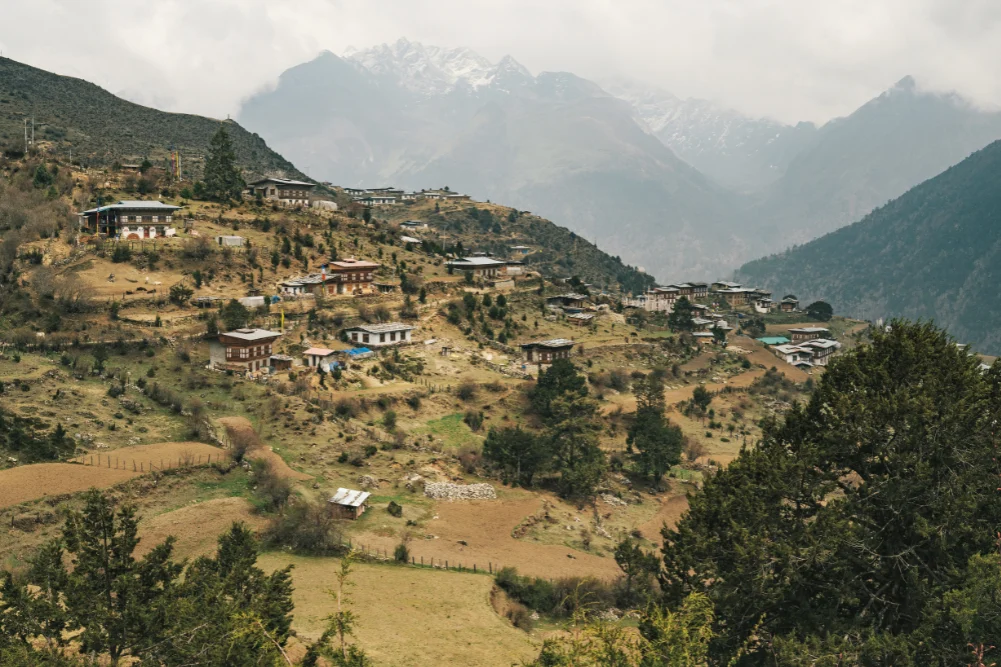
In an era defined by hyper-connectivity and the relentless pursuit of professional productivity, the intersection of burnout and modern lifestyle pressures has reached a critical threshold. For one solo-parent entrepreneur managing dual businesses, aging parents, and the relentless demands of digital communication, a pivotal breaking point arrived in the form of a familiar household plea: "Mummy, you’re not listening. Put your phone away." This moment of parental reckoning catalyzed a three-week expedition to the Himalayan Kingdom of Bhutan, serving as a profound case study in the modern necessity of digital detox, psychological re-centering, and systemic alternatives to Western socioeconomic metrics.
Main Facts and Sociological Context
Bhutan, a landlocked sovereign state nestled between the geopolitical and economic powerhouses of China and India, presents a unique demographic and structural model to the global community. Spanning a rugged terrain with a population of approximately 760,000, Bhutan remains the world’s only carbon-negative nation, preserving dense forests that cover over 70 percent of its landmass.
Unlike its rapidly urbanizing neighbors, Bhutan maintains strict regulatory frameworks regarding modernization. Commercial advertising billboards are banned, traffic lights are absent in the capital city of Thimphu, and television and internet services were introduced as recently as 1999, following decades of isolationism where foreign tourism was strictly regulated starting in the 1970s.
At the core of Bhutan’s governance is the philosophy of Gross National Happiness (GNH), pioneered in the 1970s by the fourth King of Bhutan, Jigme Singye Wangchuck. GNH explicitly supersedes Gross Domestic Product (GDP) as the primary metric of national progress. The policy framework evaluates all legislative proposals and development projects through four specific pillars: sustainable and equitable socio-economic development, environmental conservation, preservation and promotion of culture, and good governance. According to Bhutan’s 2022 GNH Index survey, nearly half of the population reported a high level of contentment, demonstrating the tangible psychosocial outcomes of a society prioritizing holistic community welfare over hyper-capitalist accumulation.
Chronology of the Himalayan Expedition
The investigative and restorative journey commenced with an arrival at Paro International Airport, widely regarded as one of the most challenging commercial aviation approaches globally due to the surrounding 18,000-foot Himalayan peaks, which restricts landings to a select group of certified pilots.
Phase one of the immersion began at the 12th-century Dodedrak Monastery, perched high above a steep mountain ascent. Traversing adverse weather conditions—including high-altitude rain and rugged terrain—the physical journey contrasted sharply with the subsequent psychological decompression. Participation in evening prayers alongside resident monks reciting ancient scriptures underscored the physiological impact of acoustic and spiritual stillness on the human nervous system, effectively lowering cortisol levels and mitigating chronic stress symptoms commonly associated with corporate burnout.
The second phase involved a trek to Laya, one of the highest permanently inhabited settlements on Earth, situated at an altitude of 3,800 meters. Accessible exclusively via foot, horseback, or yak, Laya is home to approximately 1,600 Layap people—an indigenous community of Tibetan descent. The traveller resided within the household of local matriarch Am Pem, whose recent bereavement highlighted the community-centric grieving process inherent to traditional Bhutanese culture.
The chronology culminated during the biennial Bumkor Festival, a communal gathering featuring traditional processions of sacred texts, synchronized folk dances, and communal dining. This cultural immersion provided direct comparative data regarding social cohesion versus the acute isolation frequently documented in post-industrialized Western societies.
Supporting Data and Psychological Implications
The implications of the Bhutanese model on mental health are increasingly corroborated by contemporary psychological and environmental research. Clinical studies consistently demonstrate that prolonged exposure to natural landscapes—such as the alpine forests and glacial river systems navigated during the expedition—significantly reduces sympathetic nervous system activity, lowers blood pressure, and ameliorates clinical indicators of anxiety and depression.
Furthermore, the Bhutanese cultural normalization of mortality—where citizens are culturally encouraged to contemplate impermanence multiple times daily—contrasts sharply with Western mortality denial. Psychological analyses suggest that integrating an awareness of finite existence can enhance cognitive productivity, reduce existential dread, and foster psychological resilience against acute stressors.
Economic and healthcare data further validate the GNH philosophy. Bhutan provides universal free healthcare and education to its citizens. The institutionalized emphasis on communal reciprocity—encapsulated by the cultural ethos of collective mutual aid during infrastructure development and social crisis—fosters high social capital, which public health experts link to increased longevity and subjective life satisfaction.
Institutional and Expert Perspectives
Local community leaders and cultural guides emphasize that the nation’s resilience stems from intentional preservation rather than accidental isolation. Pema Wangchuk, a local Bhutanese mountain guide, notes that the philosophy of mutual assistance is foundational to community survival in high-altitude environments. "Every guest is welcomed, and when a family builds a house, the whole village comes to help, knowing that kindness will always be returned," Wangchuk observes, illustrating the systemic operationalization of empathy.
Public health analysts studying the GNH framework suggest that while direct replication of Bhutan’s model in major industrialized economies is structurally improbable due to scale and geopolitical differences, key elements offer vital lessons. The intentional restriction of digital stimuli, the enforcement of slower commercial tempos—such as municipal speed limits capped at 20 kilometers per hour in urban centers—and the legal safeguarding of ecological resources present actionable frameworks for mitigating global burnout epidemics.
Broader Impact and Long-Term Outcomes
The overarching impact of the journey extended far beyond the immediate travel period, manifesting as a six-month post-expedition behavioral shift. Despite returning to an environment characterized by heavy professional workloads, logistical friction, and digital saturation, the subject reported a heightened psychological capacity to process acute stress without reverting to chronic panic or complete depletion.
The integration of mindfulness anchors—such as recalling the auditory resonance of monastery chants, the visual rhythm of the Bumkor Festival, and the minimalist contentment articulated by rural matriarchs—serves as a cognitive defense mechanism against systemic overcommitting. Ultimately, the immersion into the Kingdom of Bhutan functions not merely as a localized travel narrative, but as a macro-level critique of modern productivity culture, providing empirical evidence that sustainable human flourishing requires systemic boundaries, ecological integration, and a cultural commitment to enoughness over endless accumulation.




 Gabriela Annisa

 Lukman Taruna Persada Ramadan

 Tatiana Tantri Indah Sari

 Anjar Salim


 Dwi Wanna
