Walid Sujud Trenggono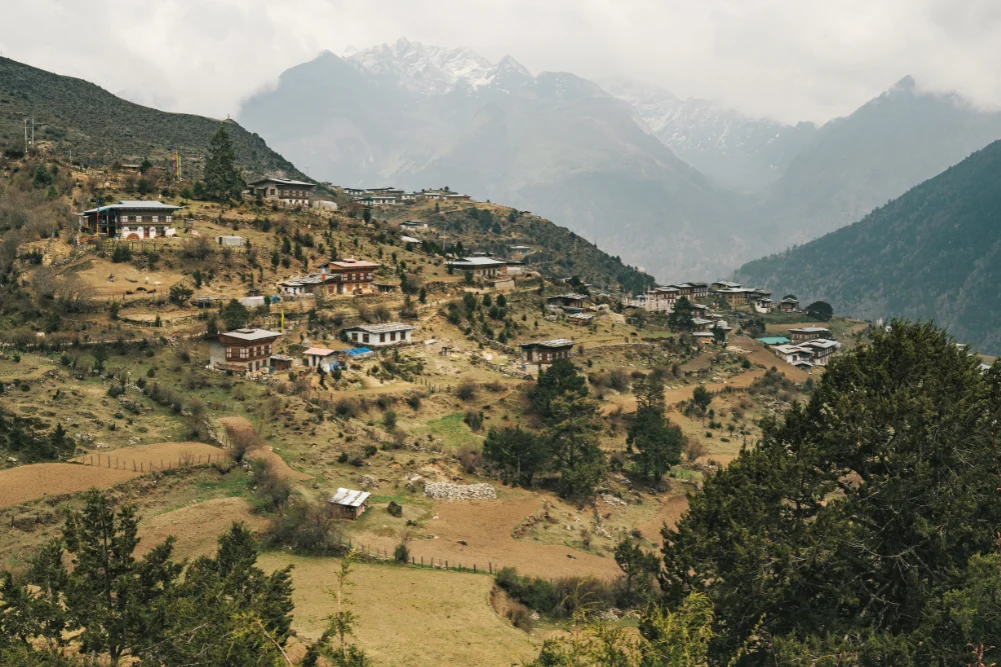
The Kingdom of Bhutan, a landlocked nation nestled in the Eastern Himalayas, has long maintained a reputation as one of the world’s most enigmatic and spiritually grounded societies. For modern travelers grappling with the psychological toll of hyper-connectivity and professional burnout, the country offers a radical alternative to Western "wellness" trends. This shift from a profit-driven existence to a purpose-driven one is not merely a cultural nuance but a national policy. As global rates of stress and digital fatigue reach unprecedented levels, Bhutan’s unique socio-economic model—Gross National Happiness (GNH)—provides a case study in how a nation can prioritize collective wellbeing over industrial output.
The Philosophical Foundation: Gross National Happiness
Bhutan’s approach to governance is rooted in the philosophy of Gross National Happiness, a term coined by the Fourth King, Jigme Singye Wangchuck, in 1972. Unlike the Global North’s reliance on Gross Domestic Product (GDP) to measure success, GNH is built upon four primary pillars: sustainable and equitable socio-economic development, environmental conservation, preservation and promotion of culture, and good governance.
According to the 2022 GNH Index, approximately 48.1% of the Bhutanese population is classified as "deeply" or "extensively" happy, while the remainder falls into the "narrowly happy" category. The government utilizes 33 indicators across nine domains—including psychological wellbeing, health, time use, and community vitality—to screen all proposed legislation. If a project or policy is deemed detrimental to the collective happiness or the environment, it is rejected. This rigorous framework explains the absence of multinational fast-food chains, billboards, and traffic lights within the kingdom, ensuring that the visual and social landscape remains focused on heritage rather than consumption.
The Gateway to the Himalayas: Environmental and Cultural Context
Geopolitically situated between India and China, Bhutan supports a population of approximately 727,000 to 760,000 people. It remains the world’s first carbon-neutral country, with a constitution that mandates at least 60% of the land remain under forest cover in perpetuity. Currently, forests cover more than 70% of the nation, acting as a massive carbon sink.
The entry point for most international visitors is Paro International Airport, widely considered one of the most challenging landings in the world due to the surrounding 18,000-foot Himalayan peaks. This physical isolation served as a natural barrier for centuries; Bhutan was never colonized and only opened its borders to foreign tourists in the 1970s. Television and internet services were not introduced until 1999, making Bhutan one of the last nations to enter the digital age. This delayed modernization has allowed the kingdom to maintain a "High Value, Low Volume" tourism policy, currently enforced by a Sustainable Development Fee (SDF) of $100 per adult per night for most international tourists, intended to fund free education, healthcare, and infrastructure.
Case Study in Rejuvenation: The Monastic Experience
For those seeking a "midlife reset," the Bhutanese experience often begins with a departure from modern comforts. A primary example of this is the Dodedrak Monastery, a 12th-century institution located on a steep mountain ridge overlooking the Thimphu valley. Reaching the monastery requires a rigorous hike, emphasizing the Bhutanese belief that spiritual rewards are earned through physical effort.
The monastic lifestyle offers a stark contrast to the "zombie state" of digital dependency. Visitors often participate in evening prayers, where dozens of monks, clad in traditional burgundy robes, chant ancient scriptures. The sensory environment—defined by the scent of incense and the flicker of traditional butter lamps—is designed to induce a state of mindfulness. Research into such environments suggests that the rhythmic chanting and lack of digital stimulation can significantly lower cortisol levels and reset the nervous system, providing a form of "mental hygiene" rarely found in urban centers.
The Remote Frontier: Laya and the Bumkor Festival
To understand the depth of Bhutanese community life, one must look toward its most remote settlements. Laya, situated at an altitude of 3,800 meters (approximately 12,467 feet), remains one of the highest permanent settlements on Earth. It is inaccessible by vehicle; the only routes in are via multi-day treks or by pack animals like yaks and ponies.
Laya is home to the Layap people, an indigenous community with distinct Tibetan roots. The economy here is largely pastoral, supplemented by the harvest of Ophiocordyceps sinensis, a rare medicinal fungus known as "Himalayan Gold." Despite the harsh climate and physical isolation, the community exhibits a high degree of social cohesion. This is most visible during the Bumkor Festival, a biennial event where sacred texts are carried in a grand procession through the village to bless the fields.
The festival serves as a communal ritual where the village moves as a single unit, singing and dancing in traditional yak-wool attire. For the outside observer, the Bumkor Festival highlights a significant disparity between Western individualism and Bhutanese collectivism. While Western societies often struggle with loneliness and "belongingness deficits," the Layap people prioritize hospitality and mutual aid. In Laya, when a family constructs a home, the entire village assists in the labor, operating on a system of reciprocal kindness rather than financial transaction.
Traditional Medicine and the Gasa Hot Springs
The Bhutanese approach to health is holistic, blending modern medicine with Sowa Rigpa, the traditional Himalayan "science of healing." Healthcare is a constitutional right in Bhutan, provided free of charge to both citizens and visitors in emergency cases.
A cornerstone of local wellbeing is the Gasa Tsachu (hot springs). Unlike the luxury spas of the West, these springs are public facilities where locals from all walks of life—from medical students to yak farmers—gather to soak in mineral-rich waters. The Gasa springs hold a sacred status, with local lore attributing healing powers to a 13th-century saint. From a physiological perspective, the high mineral content and temperature of the springs are effective in treating joint pain and skin conditions. However, the social aspect of the springs—sitting shoulder-to-shoulder with strangers—is equally vital, fostering a sense of egalitarianism and shared humanity.
Facing the Impermanence: Death as a Tool for Living
Perhaps the most counter-intuitive aspect of Bhutanese culture for Westerners is the daily contemplation of death. Bhutanese citizens are encouraged to think about death five times a day. In Western psychology, such a practice might be labeled as morbid or depressive. However, in the Bhutanese Buddhist context, acknowledging impermanence is a strategy to reduce anxiety and foster gratitude.
By accepting that life is fleeting, individuals are pressured less by the "hustle culture" of accumulating wealth and more by the desire to be present. This perspective influences the national pace of life. For instance, the maximum speed limit in many parts of the country remains a modest 20km/h, and the general tempo of daily operations is intentionally slow. This "bullet-train tempo" of the West is viewed not as a sign of progress, but as a barrier to contentment.
Socio-Economic Implications and Modern Challenges
While Bhutan presents a compelling model for wellbeing, it is not without modern challenges. The nation currently faces a "brain drain" as younger generations seek economic opportunities in countries like Australia and Canada. The 2022 GNH results indicated that while happiness remains high, there are growing concerns regarding youth unemployment and the rising cost of living.
Furthermore, the "High Value, Low Volume" tourism model is a double-edged sword. While it protects the environment from the ravages of over-tourism seen in neighboring Nepal, it limits the economic influx that could fund further development. The government continues to calibrate the Sustainable Development Fee to strike a balance between preserving the kingdom’s soul and ensuring its economic viability.
Conclusion: The "Enough" Philosophy
The journey through Bhutan often leads to a singular realization: the distinction between "want" and "need." In a world where consumerism is driven by a perpetual sense of lack, the Bhutanese philosophy of "enough-ness" offers a sustainable path forward. As noted by village elders in Laya, happiness is not found in the accumulation of variety—such as having four types of milk in a refrigerator—but in the appreciation of essentials, like a bowl of rice or a warm fire.
Six months after visiting the kingdom, many travelers report a lasting shift in their cognitive habits. While the stressors of modern life—overscheduling, digital distractions, and professional demands—inevitably return, the Bhutanese experience provides a mental "anchor." The memory of prayer flags fluttering in the Himalayan wind and the slow, rhythmic pace of monastic life serves as a reminder that wellbeing is not a destination to be reached, but a practice of being present in the "enough." Bhutan remains a vital global reminder that the health of a nation should be measured by the smiles of its people rather than the growth of its markets.



 Chandra Hamzah
 Gabriela Annisa
 Tatiana Tantri Indah Sari
 Budi Mulyono
 Anjar Salim