
 Budi Mulyono
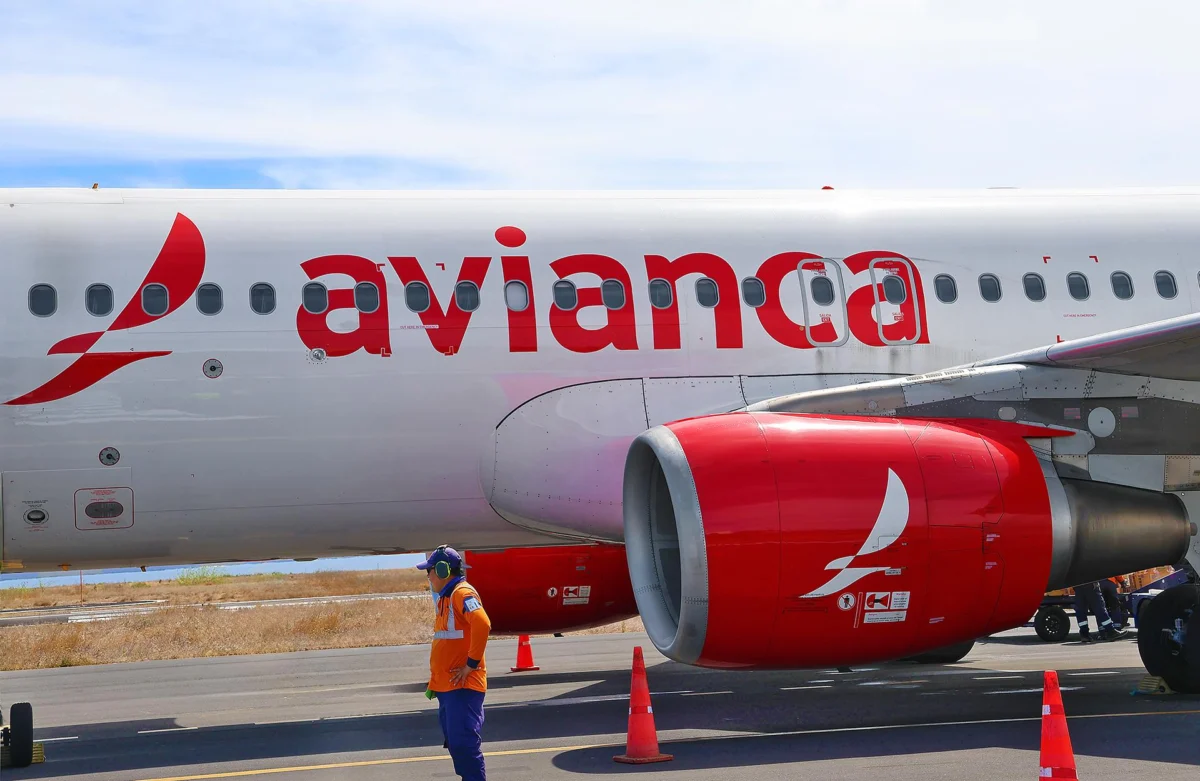
The modern aviation landscape across South America continues to undergo rapid transformation, characterized by the steady expansion of major carriers and the structural evolution of traditional service tiers. For passengers navigating the diverse topography of Ecuador, regional connectivity often relies on a network of domestic routes that bridge remote ecological preserves with high-altitude urban economic centers. A recent 824-mile nonstop domestic journey aboard an Airbus A320 operated by Avianca—running from Baltra Island in the Galapagos archipelago to Mariscal Sucre International Airport in Quito—provides a detailed case study in contemporary regional air transit. This assignment marked a first-time experience with Colombia’s flag carrier in the economy cabin, shedding light on the operational realities, fare structures, and logistical challenges associated with flying South America’s second-largest airline.

Background and Corporate Context of Avianca
Established on December 5, 1919, Avianca (Aerovías del Continente Americano S.A.) holds the distinction of being the oldest continuously operating airline in the Western Hemisphere and the second-oldest in the world following KLM. Headquartered in Bogotá, Colombia, the carrier serves as the primary flag carrier of the nation and commands a significant market share throughout Latin America. Over its century-long operational history, the airline has navigated numerous economic shifts, industry consolidations, and strategic transitions, eventually restructuring into a hybrid business model that incorporates elements of traditional network carriers alongside ultra-low-cost operational efficiencies.
In recent years, Avianca has modernized its narrowbody fleet, predominantly utilizing Airbus A320 family aircraft for regional and domestic trunk routes. This strategic pivot aims to maximize seating density, reduce fuel consumption, and standardize maintenance protocols across its vast international network. However, this transition has also coincided with the unbundling of passenger fares, a practice standard among global carriers but one that frequently redefines consumer expectations regarding baggage allowances, seat selection, and complimentary onboard amenities.

Pre-Departure Logistics and Terminal Operations
The journey commenced at Aeropuerto Ecológico Galápagos Seymour (GPS), widely recognized as the world’s first ecological airport, located on Baltra Island. Operating within an environmentally sensitive UNESCO World Heritage site imposes unique infrastructural constraints on local aviation operations. Unlike major metropolitan hubs equipped with multi-level terminal concourses and automated jet bridges, regional facilities in the Galapagos rely on apron boarding via portable stairways positioned at both the forward and aft doors of the aircraft.
Observations during the boarding sequence revealed a process that, while lacking the automated efficiency of larger international hubs, remained orderly and compliant with safety protocols. Passengers boarded via ground-level stairs, utilizing both the front and rear aircraft doors to expedite the loading of the 108-economy-configured Airbus A320. Ample overhead storage space mitigated the common regional transit anxiety regarding carry-on baggage capacity, although the underlying economics of the passenger’s ticket heavily influenced baggage privileges prior to boarding.

The traveler secured a "Basic" fare tier, priced at a total of $161.09 for the one-way domestic segment. Under Avianca’s unbundled fare structure, this entry-level price point excluded advance seat selection and required an additional surcharge of $15.00 for carry-on luggage permissions. Consequently, seat assignment was managed automatically at check-in, resulting in a placement in the final row of the cabin adjacent to a solid cabin bulkhead rather than a standard window alignment.
Cabin Environment, Seating Configuration, and Amenities
Upon boarding the Airbus A320, the interior configuration reflected standard high-density regional layouts. The cabin featured 108 economy seats arranged in a conventional 3-3 configuration. A notable anomaly was observed in the alphanumeric seat labeling system: seats on the left side of the aircraft were designated as A, B, and C, while the right side utilized D, E, and K. While unusual for travelers accustomed to standardized row lettering, this convention ensures that window seats consistently retain the designations A and K across varying fleet typologies within the airline’s broader inventory.

Official fleet specifications published by Avianca do not explicitly disclose seat pitch—the measurement of distance between a given point on one seat and the same point on the seat behind it. Nevertheless, physical assessment during the two-hour and five-minute flight indicated adequate legroom and comfort for the duration of the journey, preventing any acute sense of spatial confinement.
In-flight amenities reflected the carrier’s cost-optimized service model. The seat pockets contained standard safety information cards printed in both Spanish and English, an inflight purchasing menu, and a sanitary waste bag. Each seat featured a small side pin, traditionally utilized as a garment hook. Notably absent from the cabin architecture were personal in-flight entertainment (IFE) screens, a feature increasingly omitted in favor of bring-your-own-device digital ecosystems, though broadband Wi-Fi access was unavailable throughout the duration of this specific flight.

Technological inclusions, however, included dual Universal Serial Bus (USB) ports—incorporating both USB Type-A and USB Type-C standards—situated beneath the forward seat structures, ensuring power availability for electronic devices. Overhead climate control panels provided adjustable individual air vents, though activating personal reading lights required manual manipulation of overhead consoles.
In-Flight Service and Catering Policies
The standard of service on domestic routes of moderate duration remains a subject of frequent consumer debate within the aviation sector. The flight from Baltra to Quito spanned approximately 824 miles and lasted two hours and five minutes. Despite the regional duration, Avianca maintained a buy-on-board policy for all food and beverage items, providing no complimentary refreshments—not even packaged water—within the standard economy cabin.

This policy underscores the evolution of regional carriers toward ancillary revenue generation. While ultra-low-cost carriers explicitly structure their baseline pricing around bare-transportation models, legacy flag carriers operating hybrid models often navigate a complex perceptual divide. Consumer expectations on mid-range domestic routes frequently anticipate basic hydration services at no additional cost. The absence of complimentary water on a flight originating from a remote island environment highlighted the strict operational margins maintained by the airline.
Meteorological Challenges and Operational Delays
The operational climax of the journey occurred during the approach into Mariscal Sucre International Airport (UIO), serving Quito. Situated at an elevation of approximately 2,850 meters (9,350 feet) above sea level in a Andean valley, Quito’s airport is notoriously susceptible to complex meteorological phenomena, including rapid cloud formations, wind shear, and severe turbulence.

Approximately 30 minutes prior to the scheduled arrival, the flight deck crew issued a warning regarding anticipated severe turbulence and challenging landing conditions. As the aircraft descended through dense cloud cover, passengers experienced significant atmospheric disruption. Compounding the psychological impact for passengers seated in bulkhead or window-obstructed rows—such as the rear-row seat adjacent to the solid cabin wall—was a complete lack of visual reference to the external environment, preventing real-time assessment of proximity to the runway or cloud density.
Due to the severity of the inclement weather and unstable wind patterns, the initial approach resulted in an aborted landing. The aircraft executed a go-around, circling in turbulent airspace while flight crew coordinated with air traffic control. A subsequent second landing attempt proved successful, bringing the aircraft safely onto the tarmac.

However, the meteorological disruption triggered secondary operational bottlenecks. Following the successful landing, terminal gate availability and ground safety protocols in adverse weather conditions resulted in a mandatory 45-minute holding period on the airport apron before the aircraft could taxi to the gate. Consequently, the cumulative delay directly impacted subsequent ground travel plans, including a 90-minute delay in retrieving a reserved rental vehicle at the terminal.
Industry Implications and Broader Context
The operational experience aboard Avianca’s Airbus A320 highlights several broader trends within the South American commercial aviation market. As legacy airlines compete directly with low-cost entrants, passenger experiences have become increasingly modular. Consumers must weigh trade-offs between base ticket affordability, baggage fees, and onboard service standards.

For domestic routes within Ecuador, particularly those connecting ecologically sensitive regions like the Galapagos Islands with high-altitude hubs like Quito, weather-related disruptions remain an inherent operational risk. The competence of Avianca’s flight deck crew in executing a safe go-around during severe Andean weather underscores the rigorous training standards maintained by major regional carriers, even as passenger comfort amenities are systematically streamlined.
Ultimately, consumer evaluations of Avianca point toward a transactional, utility-driven travel product. While the physical aircraft infrastructure—including modern USB charging ports and adequate seat dimensions—satisfies basic functional requirements, the absence of complimentary basic hydration on two-hour flights and the rigid constraints of unbundled fare tiers mean that future patronage by discerning travelers will likely be governed strictly by price competitiveness rather than brand loyalty.



 Gabriela Annisa

 Lukman Taruna Persada Ramadan

 Tatiana Tantri Indah Sari

 Anjar Salim


 Dwi Wanna
