Budi Mulyono
Recent leaks and industry disclosures originating from high-level internal corporate communications have provided a comprehensive look into Delta Air Lines’ multi-year strategic roadmap, shedding light on upcoming long-haul network expansions, widebody fleet allocations, and premium cabin reconfigurations. Emerging reports from recent employee town hall meetings and aviation industry insiders detail the carrier’s aggressive plans to re-establish and grow its footprint in the Asia-Pacific region, deploy next-generation aircraft to critical global hubs, and refine the passenger experience across both mainline and regional networks. Simultaneously, concurrent technological developments in artificial intelligence and e-commerce—highlighted by recent announcements from industry leaders regarding automated purchasing systems—are signaling broader shifts in how consumers may soon interact with digital marketplaces.
These developments, gathered from a series of verified insider reports and public executive statements, paint a detailed portrait of an airline navigating structural fleet updates, intense international competition, and evolving passenger expectations. As carriers worldwide continue to adapt to post-pandemic travel demand, supply chain constraints for new aircraft manufacturing, and fluctuating fuel costs, Delta’s strategic maneuvers offer significant insight into the future of transatlantic and transpacific commercial aviation.
Strategic Asia-Pacific Expansion: Singapore in the Crosshairs
According to leaks emerging from a recent Delta Air Lines internal earnings town hall meeting, the carrier is actively preparing to announce the resumption or launch of direct service to Singapore (SIN). For years, Delta has relied heavily on its partnership with SkyTeam alliance member and joint-venture partner Korean Air, as well as its own transpacific gateways, to funnel passengers into Southeast Asia. However, the airline’s leadership has reportedly identified several key Asian markets as critical targets for direct capacity deployment.
During the internal briefing, executives outlined four primary markets targeted for near- and medium-term expansion: Taipei (TPE), Hong Kong (HKG), Manila (MNL), and Singapore (SIN). While Singapore appears to be the frontrunner with an official announcement anticipated in the near future, leadership also referenced longer-term exploratory possibilities for additional Southeast Asian markets, specifically highlighting Thailand and Vietnam. However, industry analysts note that while Thailand and Vietnam hold immense long-term tourism and business potential, regulatory hurdles, bilateral air service agreement limitations, and aircraft availability mean that any concrete route announcements for those nations remain distant.
The focus on Singapore and other major Asian financial and leisure hubs marks a strategic recalibration for Delta. Historically, U.S. legacy carriers have faced fierce competition from formidable Asian carriers such as Singapore Airlines, Cathay Pacific, and EVA Air, all of which boast industry-leading service standards and extensive regional feed networks. By introducing direct metal to these high-yield markets, Delta aims to capture a larger share of corporate travel spending and lucrative premium leisure traffic, reducing its reliance on foreign connecting partners for final-leg journeys across Southeast Asia and East Asia.
Fleet Allocations and Premium Cabin Enhancements: A Look at the A350-1000 and High-J A330neo
Complementing the carrier’s network expansion plans are significant updates regarding Delta’s widebody fleet deployment strategy. Industry trackers and internal sources have detailed forthcoming assignments for the airline’s flagship Airbus A350-1000 aircraft and specialized, high-density premium configuration (high-J) Airbus A330-900neo airframes.
According to unconfirmed reports circulating among aviation insiders, Delta’s incoming Airbus A350-1000 aircraft are slated to inaugurate service from its primary midwestern and southern hubs—Detroit Metropolitan Airport (DTW) and Hartsfield-Jackson Atlanta International Airport (ATL)—to Seoul Incheon International Airport (ICN). Seoul serves as the primary transpacific hub for Delta’s vital joint-venture partner, Korean Air. Deploying the state-of-the-art A350-1000 on these routes will significantly boost passenger and cargo capacity while offering travelers Delta’s latest generation of onboard hard products, including upgraded Delta One suites, Premium Select, and enhanced Comfort+ and Main Cabin seating.
Furthermore, detailed fleet plans indicate that Delta’s specialized "high-J" A330neo aircraft—characterized by an increased proportion of premium seating relative to standard configurations—are designated for key European business markets. Specifically, these premium-heavy jets are scheduled to service routes connecting major U.S. gateways to London Heathrow (LHR), Frankfurt Airport (FRA), and Zurich Airport (ZRH). While initial leaks suggested an aggressive timeline, subsequent verifications have confirmed that the deployment of the high-J A330neo fleet to these European financial capitals is officially slated for 2026 and 2029 rollout phases, aligning with the delivery schedule of modified airframes and broader long-haul fleet harmonization efforts.
The intentional heavy weighting toward premium seating reflects a broader, highly lucrative industry trend. Over the past several years, U.S. carriers have consistently reported that premium cabin demand significantly outpaces economy class growth. By engineering aircraft with a higher percentage of premium seats—often referred to in the industry as "High-J" layouts—Delta is positioning itself to maximize revenue per available seat mile (RPASM) on heavily contested transatlantic and transpacific corridors where corporate travelers are willing to pay a substantial premium for lie-flat beds, dedicated check-in, and lounge access.
Regional Upgrades: Envoy Air Introduces Next-Generation Economy Seating
While mainline carriers grab headlines with widebody network expansions and luxury cabin configurations, significant improvements are also quietly rolling out across the regional aviation sector. Recent reports from regional airline operations indicate that Envoy Air, a wholly-owned regional subsidiary of American Airlines operating under the American Eagle brand, has begun taking delivery of its newest Embraer E175 aircraft, featuring a thoroughly modernized economy class product.
The newly minted regional jets—reportedly bearing configuration designations associated with interior variant 359MH—feature completely redesigned economy seats. Industry observers and early flight crews have noted that these seats share the exact same model design and ergonomic features as the newly installed economy seating found aboard LATAM Airlines’ modern fleet of Embraer E195-E2 aircraft. Among the most notable passenger-facing improvements are integrated personal device holders, which allow travelers to comfortably mount tablets and smartphones for inflight entertainment streaming, and fully adjustable multi-position headrests designed to enhance ergonomic comfort on short-to-medium-haul regional hops.
For regional passengers accustomed to the tighter configurations and more austere amenities historically associated with smaller regional aircraft, the introduction of personal device holders and modern ergonomic seating represents a substantial quality-of-life improvement. As regional flying continues to form the backbone of domestic connectivity in the United States—serving smaller communities and funneling regional traffic into major hub airports—upgrading the onboard product helps bridge the gap between regional operations and mainline mainline fleet standards.
Technological Intersections: AI-Driven E-Commerce and Automated Shopping
Beyond the immediate scope of commercial aviation, concurrent developments in artificial intelligence are beginning to intersect with consumer lifestyle habits, hinting at how travelers may soon book and manage lifestyle purchases, travel gear, and other retail goods. In recent public disclosures, tech industry leadership detailed revolutionary integration concepts centered around conversational artificial intelligence assistants.
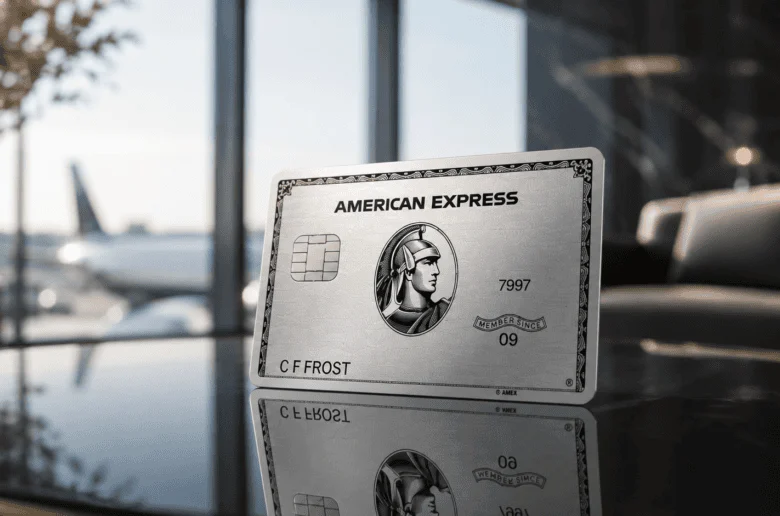
According to platform announcements from artificial intelligence entrepreneur and tech executive Elon Musk, upcoming capabilities within advanced AI chatbots—specifically utilizing models such as Grok—will allow users to streamline online retail transactions drastically. Under the proposed system architecture, a consumer can simply capture a photograph of their credit card, drop the image directly into an active chat interface alongside a product request, and instruct the AI bot to scour the global internet for the best available pricing, automatically executing the purchase on the user’s behalf.
While the security, privacy, and regulatory implications of transmitting payment card images directly through conversational AI interfaces remain subjects of intense debate among cybersecurity experts and financial regulators, the announcement underscores the rapid velocity at which artificial intelligence is expanding from information retrieval into active transactional commerce. For the travel industry, which has long experimented with AI-powered booking assistants, concierge chat services, and automated itinerary management, the advent of seamless, intent-driven purchasing agents could profoundly alter how consumers research, shop for, and book complex travel itineraries, vacation packages, and ancillaries in the years to come.
Chronology of Events and Strategic Rollout Timeline
To better understand how these disparate developments fit into the broader commercial and technological landscape, a review of the operational timeline reveals a structured approach by the respective corporations involved:
- October 9, 2026: Internal leaks from Delta Air Lines’ employee earnings town hall reveal strategic intentions to prioritize Singapore (SIN), Taipei (TPE), Hong Kong (HKG), and Manila (MNL) for upcoming Asian network expansion.
- October 10, 2026: Unconfirmed operational reports surface indicating that Delta plans to deploy incoming Airbus A350-1000 aircraft onto routes connecting Detroit (DTW) and Atlanta (ATL) to Seoul Incheon (ICN).
- October 10, 2026: Subsequent industry confirmations clarify that Delta’s high-density premium (high-J) Airbus A330neo aircraft are scheduled for deployment to London Heathrow (LHR), Frankfurt (FRA), and Zurich (ZRH), with implementation schedules extending toward 2029.
- October 10, 2026: Technological updates in artificial intelligence highlight automated shopping concepts allowing users to execute online retail purchases through conversational AI chat prompts using image-based payment inputs.
- October 11, 2026: Reports from regional aviation circles confirm that Envoy Air’s newest Embraer E175 aircraft features modern economy seating equipped with personal device holders and adjustable headrests, mirroring LATAM’s E195-E2 cabin standards.
Broader Industry Implications and Future Outlook
The convergence of network expansions, fleet modernizations, regional product refreshes, and disruptive AI commerce tools illustrates an aviation and transport sector in a state of continuous, rapid evolution.
For Delta Air Lines, the aggressive pursuit of Asian markets like Singapore, combined with the strategic deployment of the A350-1000 and high-J A330neos, demonstrates a clear commitment to capturing high-margin international traffic. By reinforcing its long-haul capabilities while simultaneously benefiting from industry-wide trends favoring premium cabin monetization, Delta is strengthening its competitive moat against domestic rivals and international flag carriers alike.
Simultaneously, the subtle yet meaningful upgrades occurring in regional aviation—such as Envoy Air’s adoption of modern, tech-friendly economy seating on its E175 fleet—prove that passenger comfort is no longer exclusively prioritized on widebody international flagships. As regional carriers struggle with pilot labor dynamics and capacity limitations, investing in a superior onboard hard product remains an effective tool for maintaining passenger satisfaction.
Finally, as artificial intelligence continues to mature, bridging the gap between conversational chat interfaces and secure transactional e-commerce, the entire travel and retail ecosystem must prepare for a paradigm shift in consumer behavior. Whether passengers will soon be utilizing AI shopping agents to book multi-city flights, secure hotel accommodations, or purchase travel accessories directly via chat interfaces remains to be seen. However, the foundational technology is developing at an unprecedented pace, promising a future where friction in both air travel and digital commerce is systematically minimized.


 Lukman Taruna Persada Ramadan

 Tatiana Tantri Indah Sari

 Anjar Salim