Budi Mulyono
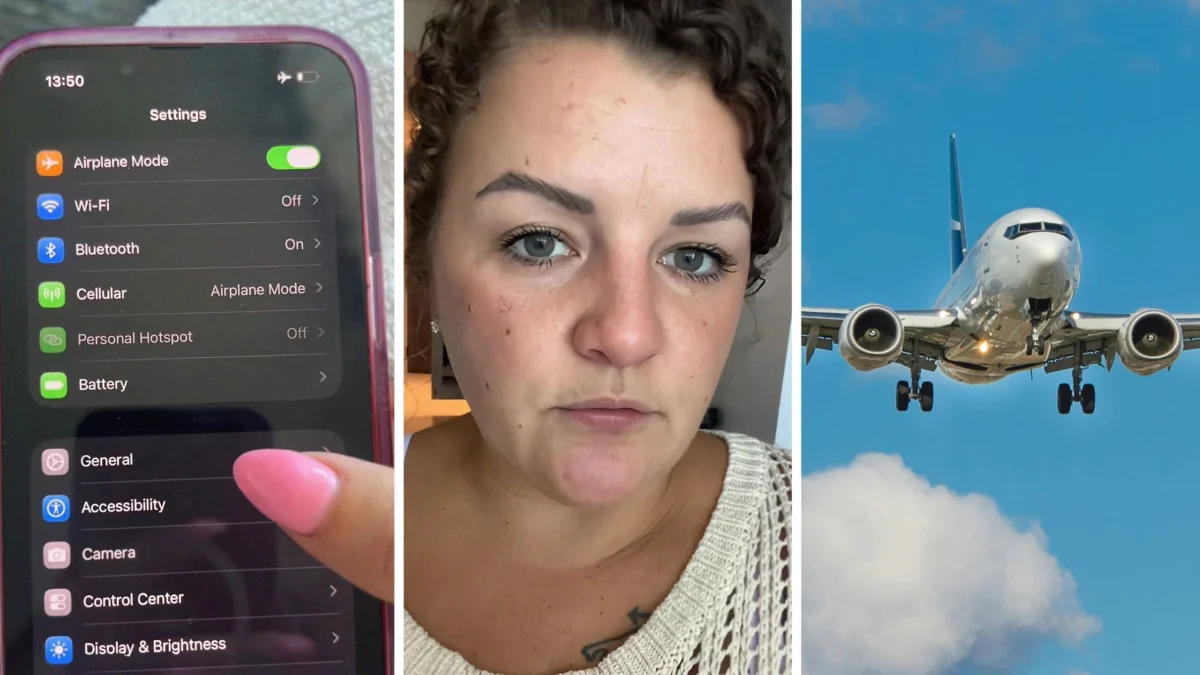
While air travel is often associated with the excitement of exploration and the convenience of global connectivity, it frequently introduces a significant level of physical discomfort for a substantial portion of the population. Among the various maladies that plague travelers, motion sickness stands out as a particularly debilitating condition, turning routine flights and car rides into exhausting ordeals. For decades, sufferers have relied on a patchwork of traditional remedies—ranging from over-the-counter pharmaceuticals and ginger supplements to acupressure bands and strategic seating choices—with varying degrees of success. However, a modern technological solution hidden within the operating systems of modern smartphones has recently captured public attention, thanks to viral social media content shared by a commercial flight attendant.
The phenomenon gained widespread traction following a one-minute video posted on TikTok by Savannah, a flight attendant known online as @savannah0191. In her widely viewed post, which quickly amassed more than 169,000 views, Savannah addressed passengers who suffer from severe motion sickness or nausea when looking at screens while traveling. Directing her audience toward a built-in accessibility setting on Apple devices, she demonstrated how a simple software toggle could potentially alleviate the sensory mismatch responsible for travel-related nausea. As digital devices increasingly become our primary companions during transit, this intersection of consumer technology and travel wellness offers a fresh approach to a centuries-old physiological problem.
Navigating the Settings: How the Feature Works
For iPhone users experiencing motion sickness, accessing the feature requires navigating through the device’s standard configuration menus. Users must open the Settings application, select Accessibility, and then tap on Motion. Within this menu lies a specific toggle labeled “Vehicle Motion Cues.”
According to the official system description provided within iOS, activating this setting causes a series of animated dots to appear near the edges of the iPhone screen. These visual elements dynamically follow the movement of the vehicle, shifting in real time to mirror acceleration, deceleration, and turns. Apple provides users with the option to set this function to turn on automatically whenever the device detects that the user is riding in a vehicle. Alternatively, users can manually configure the feature to remain permanently active or toggle it on directly from the iOS Control Center.
The customization options do not stop at mere activation. The system menu allows users to modify the pattern, color, size, and quantity of the visual cues to suit their personal preferences and visual sensitivities. By providing these subtle reference points on the periphery of the display, the technology attempts to bridge the gap between what the user’s eyes perceive and what their inner ear experiences during transit.
The Scientific Basis Behind Sensory Conflict
To fully understand why these moving dots can alleviate motion sickness, one must examine the neurological mechanics of the condition itself. The Centers for Disease Control and Prevention (CDC), through its authoritative travel medicine reference publication known as the Yellow Book, identifies sensory conflict as the most widely accepted scientific explanation for motion sickness.
This sensory mismatch occurs when there is a fundamental contradiction among the signals sent to the brain by the body’s sensory systems—specifically the vestibular system in the inner ear, the eyes, and the proprioceptive receptors in the muscles and joints. When a passenger sits inside a moving aircraft cabin or an automobile, their vestibular system registers motion, acceleration, and gravitational shifts. However, if that same passenger focuses their gaze entirely on a stationary object, such as a book, a movie screen, or a smartphone, their eyes send a conflicting signal to the brain indicating that they are completely stationary.
This profound disagreement between the visual cortex and the balance centers of the inner ear triggers a stress response in the central nervous system, frequently leading to symptoms such as cold sweats, dizziness, pallor, fatigue, and eventual nausea or vomiting. The premise behind the visual motion cues on modern smartphones is to trick or reassure the brain by introducing synchronized peripheral movement, thereby reducing the magnitude of the sensory conflict while the user interacts with their screen.
The Evolution of Anti-Motion Sickness Technology
While Apple formally announced and rolled out the Vehicle Motion Cues feature as part of its broader suite of accessibility enhancements in May 2024, the underlying concept is far from an overnight technological breakthrough. Researchers and engineers have explored similar visual interventions for years.
Chronologically, academic interest in screen-based mitigation strategies dates back at least to 2019. During that year, a team of researchers at the University of Salzburg in Austria developed a prototype smartphone application designed to float sensor-driven bubbles along the margins of the screen. Their subsequent small-scale study, which involved ten participants reading text while riding in a moving automobile, demonstrated measurable mitigating effects on the onset and severity of motion sickness symptoms.
Following these academic proofs of concept, major technology corporations began integrating these software-based solutions directly into their mobile operating systems. Apple introduced its system-wide integration in 2024, and competitors quickly followed suit. Android users, who previously lacked a native equivalent in older software iterations, now have access to a comparable tool known as Motion Assist, introduced in later versions of the Android operating system. Google’s implementation similarly utilizes small, subtle visual bubbles that react dynamically to vehicle turns, speed adjustments, and braking maneuvers, though Google notes that hardware sensor detection can occasionally vary depending on the device model and OS version.
Real-World Application and Flight Deck Perspectives
Despite the official technical documentation from Apple framing the feature primarily for passengers in cars and on-road vehicles, travelers have rapidly adapted the tool for use in commercial aviation. Online communities and travel forums quickly filled with testimonials from frequent flyers and aviation professionals who tested the feature at 30,000 feet.
Several flight attendants and seasoned travelers chimed in on social media to confirm its efficacy in the air. One flight attendant, posting under the username taytaytaytaytaytay888, noted that she routinely utilizes the feature on her corporate device during flights, adding that curious passengers frequently inquire about the dancing dots on her screen. Another traveler, identified as dogmom101814, enthusiastically confirmed that the trick successfully translates from automobiles to commercial aircraft cabins.
However, the severity of motion sickness in the aviation industry extends beyond mere passenger discomfort; it can profoundly impact careers. Savannah noted during comment exchanges on her viral video that motion sickness is a genuine vocational hazard. Reflecting on her own training cohort, she recounted an instance where a newly recruited flight attendant experienced severe airsickness during her very first week of flight training and ultimately chose to resign from the profession entirely. For individuals with extreme vestibular sensitivity, the demands of working in a dynamic cabin environment can prove insurmountable without reliable coping mechanisms.
Comparing Traditional Remedies and Medical Guidance
The widespread discussion sparked by the viral TikTok video also prompted travelers to compare the new digital fix against a long-standing arsenal of traditional motion sickness remedies. While social media users enthusiastically traded advice, medical authorities emphasize that not all popular remedies share an equal evidentiary foundation.
Sitting over the wings of an aircraft remains one of the most enduring recommendations for minimizing turbulence-induced motion sickness. The CDC’s Yellow Book explicitly advises passengers prone to airsickness to select seats near the wings, where the physical motion of the aircraft fuselage is minimized compared to the tail or nose sections.
Other traditional methods yield mixed medical consensus. Acupressure wristbands, which apply targeted pressure to the Neiguan point on the inner wrist, have been a staple for travelers seeking drug-free relief. Controlled clinical trials, however, have historically demonstrated that such bands perform statistically no better than a placebo in rigorous laboratory settings. Nevertheless, medical literature generally acknowledges that if an individual experiences a psychological or genuine psychosomatic benefit from wearing them, they remain a harmless addition to a travel kit.
Conversely, some popular combinations carry significant medical warnings. Certain travelers advocate for a mixture of over-the-counter motion sickness medications, such as dimenhydrinate (Dramamine), paired with a glass of wine or an alcoholic beverage to induce relaxation. Public health agencies strongly caution against this practice. The CDC explicitly warns that alcohol consumption during travel actively exacerbates the neurological mechanisms of motion sickness, increases dehydration, and should be strictly avoided by passengers susceptible to vestibular distress.
Broader Implications and Future Outlook
The sudden popularity of the Vehicle Motion Cues feature highlights a broader shift in how consumers utilize software accessibility tools. Originally conceptualized and engineered primarily to assist users with specific motor, sensory, or cognitive conditions, accessibility features are increasingly being adopted by the general public to solve everyday inconveniences.
As mobile operating systems continue to evolve, the integration of health and wellness monitoring into standard device settings is expected to accelerate. While technology companies design these tools based on established biomechanical research, real-world user feedback remains the ultimate test of their practical utility. For every traveler who finds immediate relief from a simple software toggle, developers gain invaluable data on user behavior and preference configurations.
Ultimately, while the digital dots on an iPhone screen cannot alter the laws of physics or completely eliminate severe physiological conditions, they represent a valuable, zero-cost addition to the modern traveler’s toolkit. As air travel continues to rebound and expand globally, innovations that make transit more comfortable for millions of passengers demonstrate the profound, unexpected ways that software engineering can intersect with everyday human well-being.



 Gabriela Annisa

 Lukman Taruna Persada Ramadan

 Tatiana Tantri Indah Sari
 Anjar Salim