
 Budi Mulyono
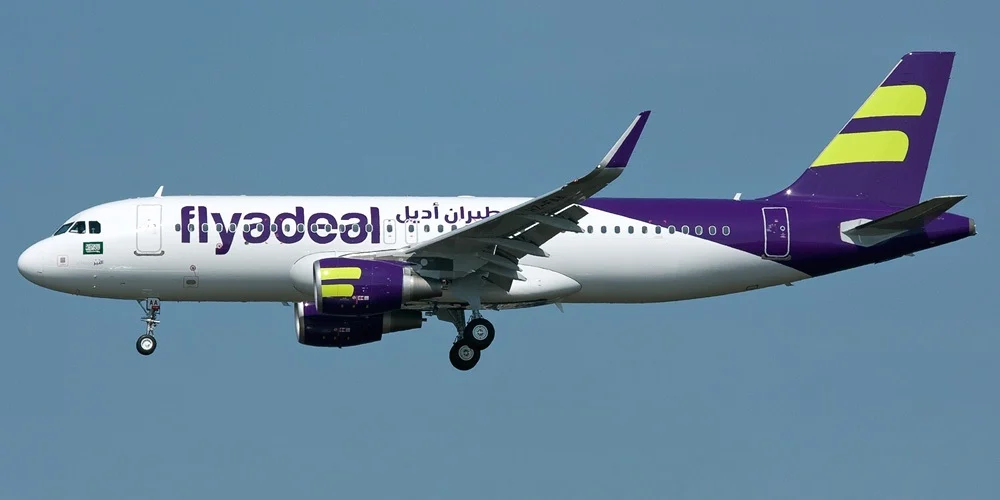
flyadeal, the low-cost subsidiary of the Saudia Group, has officially inaugurated its second destination in India, launching a non-stop service connecting Mumbai to Riyadh. Operating five times weekly, the new route introduces over 7,400 monthly seats into a high-demand travel corridor, reinforcing bilateral connectivity between India and Saudi Arabia. This expansion comes closely on the heels of the airline’s maiden entry into the Indian market earlier in the year, signaling aggressive international growth strategies aligned with the Kingdom’s Vision 2030 framework.
The inaugural flight touched down following its departure from Mumbai, establishing a vital aviation link for business executives, leisure travelers, family visitors, and religious pilgrims. Utilizing its modern, all-Economy Airbus A320neo aircraft, flyadeal aims to capture a significant share of price-conscious travelers while challenging established legacy carriers on the subcontinental trunk routes.
Strategic Network Integration and Flight Schedules
The newly established Mumbai-Riyadh route has been engineered not merely as a point-to-point connector, but as a comprehensive international gateway into flyadeal’s extensive domestic infrastructure within Saudi Arabia. Flight schedules have been meticulously timed to facilitate smooth transit experiences. The westbound service departs Mumbai during the morning hours, ensuring a mid-morning arrival in Riyadh. Conversely, the eastbound leg departs Riyadh late at night, landing in India’s financial capital early the following morning.
Passengers utilizing this route benefit from integrated single-ticket bookings, which allow through-check-in of baggage and seamless onward connections to key domestic and regional destinations. These include prominent Saudi cities such as Dammam, Jeddah, Madinah, and Abha. The flight operations run five days a week, operating daily except on Mondays and Fridays. This frequency complements flyadeal’s existing Indian operations out of Hyderabad, which was launched on July 3, 2026, and currently operates on a robust weekly schedule with designated days off for operational maintenance.
Fleet Efficiency and Cabin Configuration

To maintain a competitive low-cost operational model, flyadeal has deployed its standardized Airbus A320neo fleet on the Mumbai-Riyadh sector. Each aircraft is configured in a dense, single-class layout accommodating 186 passengers. Despite the high-density arrangement, passenger comfort has been prioritized through the integration of Airbus’s Airspace cabin interior.
The cabins feature enlarged overhead baggage compartments, modern mood lighting designed to reduce fatigue, and modern conveniences such as USB-A and USB-C charging ports embedded in every seat row. The adoption of the A320neo allows flyadeal to leverage advanced engine technology, significantly lowering fuel burn and reducing carbon emissions per seat-mile. This technological edge is crucial for maintaining low operational expenditures, enabling the airline to offer aggressive pricing models in an increasingly competitive marketplace.
Executive Insights and Market Rationale
Speaking on the strategic importance of the expansion, Sanjiv Kapoor, acting Chief Executive Officer of flyadeal and Executive Vice President of Strategies at the Saudia Group, emphasized that India remains a primary cornerstone of the airline’s international development roadmap. Kapoor noted that Saudi Arabia has firmly established itself as one of India’s top three international travel markets, driven by robust economic ties, surging tourism, and heavy demand for religious travel, including the Umrah pilgrimage.
Mumbai was chosen for its unparalleled economic gravity and the massive volume of cross-border traffic it generates. Furthermore, operational logistics at both ends of the route have been streamlined to maximize passenger convenience. In Riyadh, flyadeal operates out of Terminal 4, offering fluid domestic transfers, while its operations at Jeddah’s Terminal 1 connect directly to high-speed rail networks leading to the holy sites of Makkah and Madinah, presenting a distinct logistical advantage for religious travelers originating from western India.
Chronology of Growth and Future Expansion Roadmap
Established in 2017 under the umbrella of the Saudia Group, flyadeal has experienced a meteoric rise within the Middle Eastern low-cost carrier segment. Operating primarily from bases in Riyadh, Jeddah, Madinah, and Dammam, the airline currently boasts a fleet of 47 Airbus A320-family aircraft, serving a network of over 40 seasonal and year-round destinations spanning the Middle East, Europe, North Africa, and South Asia.

The airline’s trajectory is set to steepen dramatically over the remainder of the decade. In alignment with Saudi Arabia’s Vision 2030—a national blueprint aimed at diversifying the Kingdom’s economy and boosting tourism’s contribution to GDP—flyadeal has committed to more than doubling its operational footprint. By 2030, the airline projects a fleet and network expansion exceeding 100 aircraft and 100 destinations, respectively.
This aggressive scaling strategy is underpinned by significant recent procurement milestones. In May 2024, flyadeal placed a firm order for 51 narrowbody aircraft, comprising 12 additional A320neos and 39 larger A321neos, with deliveries slated to commence in 2027. Additionally, as part of a broader Saudia Group widebody acquisition finalized in 2025, flyadeal is preparing to enter the long-haul market through the introduction of Airbus A330-900neo aircraft. This diverse fleet renewal and expansion program will provide the necessary capacity to explore further secondary and tertiary cities across the Indian subcontinent.
Broader Implications for the India-Saudi Arabia Aviation Market
The introduction of flyadeal’s Mumbai service marks a structural shift in the aviation dynamics between India and Saudi Arabia. Historically, the corridor has been dominated by full-service legacy carriers, including Saudia and Air India, alongside regional Gulf operators. The entry of a dedicated low-cost carrier introduces price discovery mechanisms that typically stimulate latent demand, encouraging greater leisure and visiting-friends-and-relatives (VFR) travel.
As bilateral trade and cultural exchanges continue to intensify, the availability of low-cost, high-frequency connectivity is expected to alter travel habits across western India. Industry analysts suggest that if the initial performance of the Hyderabad and Mumbai routes meets financial expectations, flyadeal will likely accelerate its timeline for penetrating additional Indian metropolitan hubs. Ultimately, the successful deployment of the Mumbai-Riyadh route underscores flyadeal’s maturation into a major regional player capable of executing complex international expansion strategies amidst fierce global competition.



 Gabriela Annisa

 Lukman Taruna Persada Ramadan

 Tatiana Tantri Indah Sari

 Anjar Salim


 Dwi Wanna
