
 Budi Mulyono
The traditional boundaries of economy class travel are being redefined by creative passengers seeking to balance fiscal responsibility with personal comfort. In a recent social media development that has captured the attention of millions, a traveler identified as Jake Boly opted for an unconventional logistical strategy during a long-haul flight to Hong Kong. By purchasing a third seat in an economy row, Boly transformed a standard three-seat configuration into a makeshift private workstation, specifically designed to facilitate a marathon session of the classic massively multiplayer online role-playing game (MMORPG), RuneScape.
The incident gained widespread visibility after Boly’s partner, Katy Koval, a fitness professional and frequent traveler, documented the experience on the social media platform TikTok. The video, posted under the handle @__k80, has amassed over two million views, sparking a broader conversation regarding the escalating costs of premium air travel and the lengths to which passengers will go to secure additional personal space. The footage depicts Boly settled into a window seat, utilizing the lowered tray table of the adjacent, empty middle seat as a dedicated surface for his computer mouse—a critical peripheral for the precision clicking required in high-level RuneScape gameplay.
Technical and Logistical Execution of the Extra Seat Strategy
The decision to purchase an additional seat is often perceived by the general public as a luxury reserved for the affluent or a necessity for "passengers of size." However, for Boly and Koval, the move was a calculated tactical decision intended to mitigate the physical constraints of a 14-hour transpacific journey. According to Koval’s social media interactions, the couple secured the entire row to ensure they would not be interrupted by a third party, thereby granting Boly the "elbow room" necessary to operate his gaming setup without encroaching on his partner or a stranger.
Securing an extra seat is not as simple as purchasing a third ticket online. Koval clarified the logistical hurdles involved in ensuring the seat remained unoccupied. "When he called them to purchase the extra ticket, they said you have to pay for the seat, then you have to physically go up to the gate when you get there and ask them for the extra boarding pass," Koval explained to her followers. This detail is crucial, as airline algorithms are programmed to identify "no-show" passengers. If a seat is paid for but the associated boarding pass is not scanned at the gate, airline staff frequently reassign that seat to standby passengers or those seeking upgrades, particularly on overbooked international routes. By checking in both his primary seat and the secondary "comfort seat" at the gate, Boly ensured the airline’s manifest reflected the seat as occupied.
The Financial Rationale: Economy vs. Business Class
The primary driver behind this unconventional seating arrangement was the staggering price disparity between economy and business class. When questioned by social media users as to why they did not simply upgrade to a more spacious cabin, Boly provided a transparent breakdown of the costs involved. A single business class seat for the specific flight to Hong Kong was priced at approximately $7,499. For a couple, the total would have exceeded $15,000—a figure Boly described as unattainable for the average traveler.
In contrast, the cost of the additional economy seat was $750. By spending a total of $1,500 for two people to have three seats, the couple achieved a significant increase in horizontal space for a fraction of the cost of a single business class ticket. This "DIY Premium Economy" approach highlights a growing trend among savvy travelers who are increasingly priced out of traditional luxury cabins but remain unwilling to endure the cramped conditions of a fully booked economy section.
Data from 2025 and early 2026 indicates that the cost of business class travel has surged globally. A 2025 wealth report noted that business class fares rose by an average of 18.2% in USD terms compared to the previous year. The increase was even more pronounced in the Americas, where prices saw a 39.3% year-on-year jump. Industry analysts attribute these hikes to several factors, including the high cost of maintaining exclusive airport lounges, the increased "real estate" occupied by modern lie-flat pods—which can take up the space of three to six economy seats—and a post-pandemic shift in corporate travel budgets.
The Cultural Context of RuneScape and Gaming in Transit
The specific choice of entertainment—RuneScape—added a layer of nostalgia and humor to the viral story. Developed by Andrew, Paul, and Ian Gower and launched in 2001, RuneScape is one of the world’s most enduring MMORPGs. For many viewers, the sight of a grown man "questing" on a 14-hour flight was a relatable throwback to their youth, while for others, it represented a masterclass in time management.
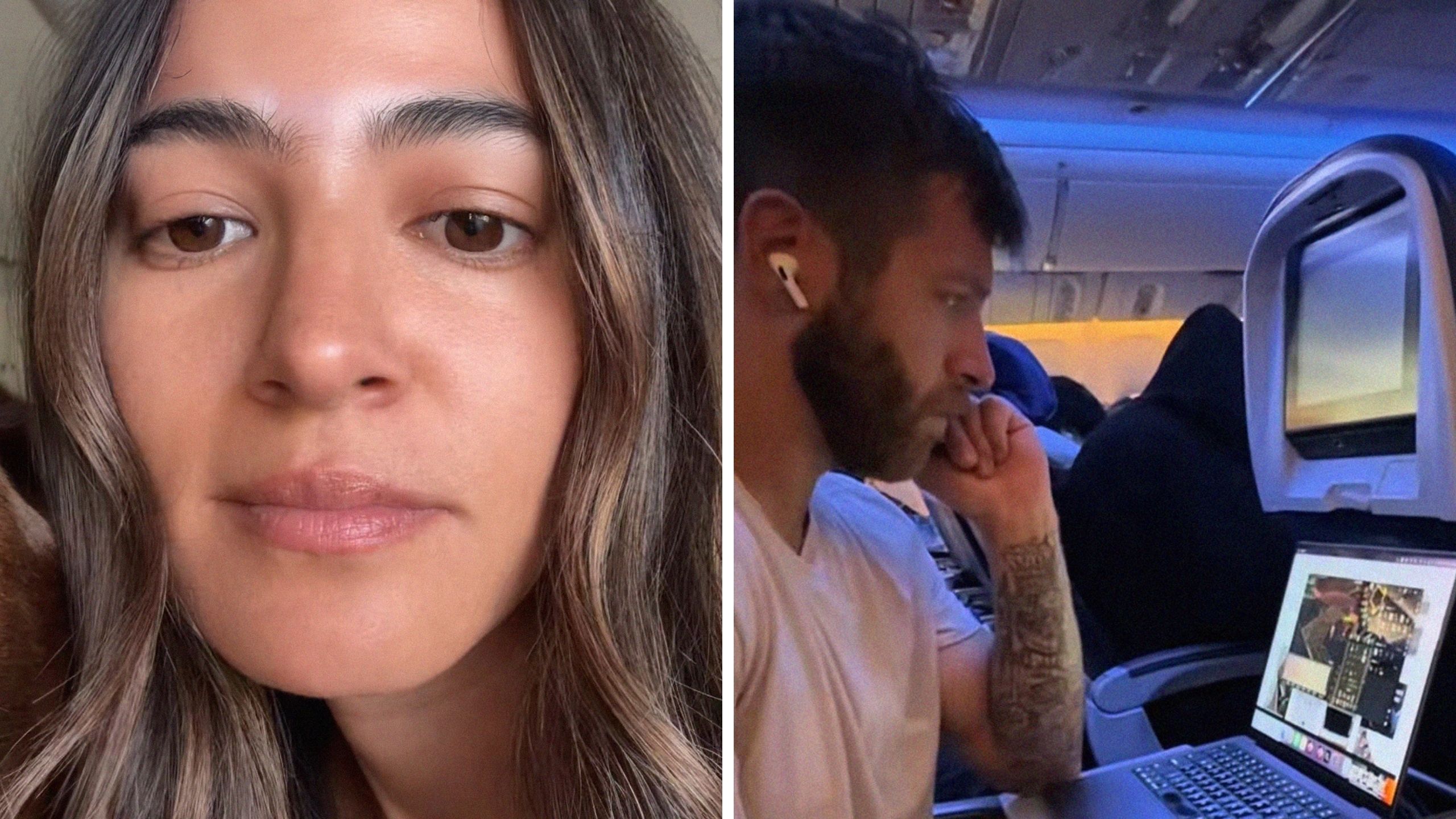
Gaming during long-haul flights has become more feasible with the advent of high-capacity portable power banks and improved in-flight Wi-Fi, though the latter remains a bottleneck for online gaming. RuneScape, known for its "point-and-click" mechanics, is particularly demanding of mouse space. Commenters on the TikTok video were quick to notice the physical demands of the game, with one user pointing out the "workout" Boly’s spacebar was receiving.
The mention of "hyper-fixation" in the original context of the video also touches on a psychological aspect of modern travel. For individuals with ADHD or similar neurodivergent traits, long periods of enforced inactivity—such as a 14-hour flight—can be distressing. Engaging in a familiar, high-engagement activity like RuneScape provides a cognitive anchor, transforming a potentially grueling experience into a productive "marathon" session.
Airline Industry Implications and the Future of the "Middle Seat"
This incident underscores a tension within the airline industry regarding seat utilization and revenue management. While airlines are generally happy to sell an extra seat, the operational complexity of managing "extra seat for comfort" (EXST) passengers remains high. Most major carriers have specific codes for these bookings to prevent the system from automatically canceling the "duplicate" name.
Furthermore, as geopolitical conflicts in 2026 continue to influence fuel prices and flight paths, airlines are under pressure to maximize every square inch of the cabin. The fact that a passenger found it more economical to buy an entire extra seat than to upgrade suggests a widening gap in the market. There is a growing demand for a middle-tier experience that offers more than basic economy but remains well below the $7,000+ price point of business class.
Industry experts suggest that if more travelers adopt Boly’s "third seat" strategy, airlines may respond by tightening regulations on how extra seats are purchased or by increasing the price of "comfort seats" to match the lost revenue from potential upgrades. Currently, however, the strategy remains a legal and effective "travel hack" for those who do their homework regarding gate check-in procedures.
Broader Societal Reactions
The reaction to Koval and Boly’s flight has been largely positive, with many praising Boly’s ingenuity. The comments section of the viral video became a forum for travelers to share their own experiences with "extra seat" purchases. While some reported success, others shared cautionary tales of airlines attempting to give away their paid-for extra seats to standby passengers, reinforcing the importance of Koval’s advice regarding the physical boarding pass.
The story also resonated with the gaming community, which has long advocated for better ergonomics in public spaces. The image of a tray table being repurposed as a mousepad is a testament to the adaptability of the modern gamer.
As international travel continues to recover and evolve in 2026, the priorities of passengers are shifting. While "discovering other cultures" remains a primary goal for 50% of global travelers, the journey itself is increasingly viewed as a space that must be managed and optimized. Whether it is through "bio-hacking" sleep schedules or "space-hacking" an economy row for an MMORPG marathon, the modern traveler is no longer a passive participant in the flight experience.
In the end, Jake Boly’s 14-hour quest in the virtual world of Gielinor served as a practical solution to a very real-world problem. By navigating the complexities of airline ticketing and gate protocols, he managed to secure a level of comfort and entertainment that turned a grueling transpacific flight into a highlight of his trip. As airfares continue to fluctuate and cabins remain crowded, the "extra seat" strategy may move from a viral curiosity to a standard operating procedure for those seeking to reclaim their personal space in the skies.




 Anjar Salim
 Chandra Hamzah
 Tatiana Tantri Indah Sari
 Lukman Taruna Persada Ramadan