
 Walid Sujud Trenggono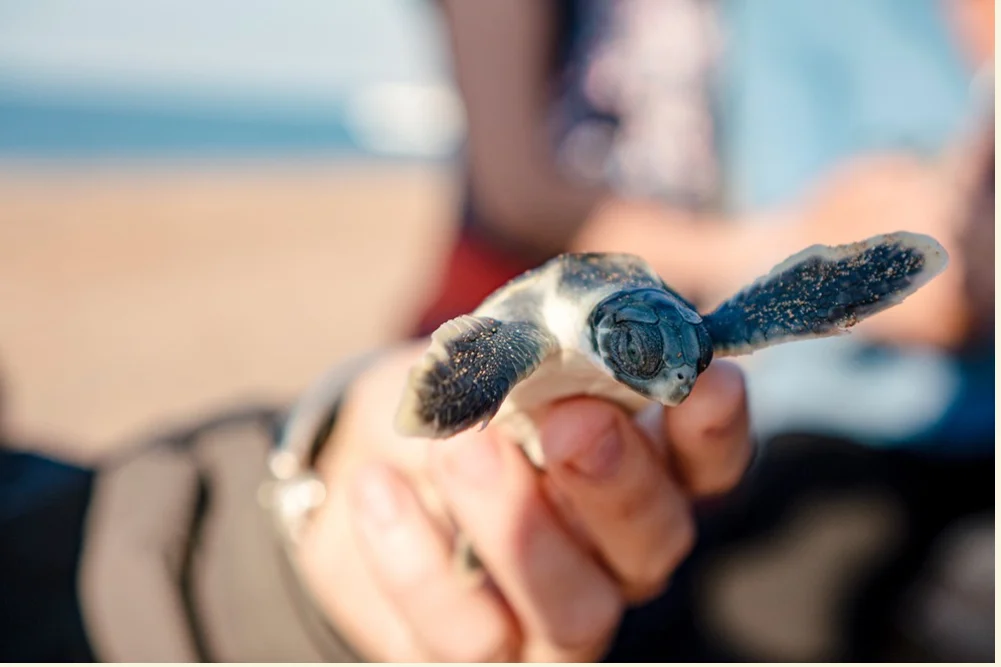
Beneath the sprawling, star-studded canopy of the Milky Way, far beyond the artificial luminescence of coastal cityscapes, the midnight shoreline of Bare Sand Island remains a place of ancient rhythms. Here, on a remote slip of sand and reef situated on the edge of the Joseph Bonaparte Gulf in Australia’s Northern Territory, a fragile ritual plays out with precise biological clockwork. As the tide reaches its peak, heavy bodies emerge from the inky blackness of the sea. These are the flatback turtles (Natator depressus), Australia’s only endemic sea turtle species, returning to the precise sands of their birth to perpetuate a life cycle that has endured for millennia.
Yet, this timeless migration is increasingly shadowed by modern existential threats. For over thirty years, an insomniac collective of scientists, marine biology students, and dedicated volunteers operating under the banner of AusTurtle has maintained a continuous vigil on this remote isle. Working through the biting winds of the southern winter solstice—historically known as the halcyon days—these researchers brave spartan conditions to measure, tag, and monitor the roughly 650 middle-aged female flatbacks that arrive each season. Their mission is both urgent and foundational: to pull the flatback turtle out of a precarious conservation status and secure its future against the accelerating pressures of global climate change.
The Enigma of Natator Depressus
Named for its distinctively flat, horizontal carapace, the flatback turtle remains one of the least understood marine reptiles on the planet. While other sea turtle species undertake vast, trans-oceanic migrations traversing entire ocean basins, the flatback’s lifecycle is largely confined to the continental shelf of northern Australia, stretching from Broome in Western Australia to Brisbane in Queensland. Despite this narrower geographic footprint, massive gaps persist in the scientific community’s understanding of the species.
Biologists routinely estimate a bleak one-in-one-thousand survival rate for hatchlings navigating the perilous journey from nest to sea. However, the exact population trajectories of Natator depressus remain obscured by a profound lack of baseline data. Consequently, both the Northern Territory government and the International Union for Conservation of Nature (IUCN) Red List classify the flatback turtle as "data deficient."
Compounding this mystery is the "lost decade" phenomenon: scientists still lack empirical data detailing how flatbacks spend the initial thirty years of their lives between hatching and their first return to nest on their natal beaches. It is this informational void that the AusTurtle volunteer camp aims to fill. By systematically recording biometric data—such as carapace dimensions, egg chamber depths, and internal nest temperatures—the ongoing research provides vital metrics needed to transition the flatback from obscurity to actionable conservation frameworks.
Chronology of a Midnight Operation
The fieldwork on Bare Sand Island operates on a strict, tide-dependent chronology dictated by the biology of the nesting females.
As the tide recedes, leaving a four-hour window for safe navigation across the intertidal reef flats, the first clusters of turtles make landfall. Operating on a "safety in numbers" evolutionary strategy to confuse coastal predators, up to two dozen 90-kilogram females may labor up the steep sand dunes in a single night.
- The Approach and Assessment (Midnight to 2:00 AM): As each turtle hoists her heavy frame above the high-tide mark, researchers record her track and temporarily mark the sand, establishing a chronological "turtle queue." The females spend considerable time evaluating the dune landscape, often abandoning and restarting nesting sites until thermal and structural conditions meet their exacting standards.
- Excavation and Oviposition (2:00 AM to 3:30 AM): Once a suitable location is selected, the female uses her rear flippers with slow, dexterous precision to dig a deep, flask-shaped egg chamber. She then deposits a clutch of approximately 50 large white eggs—the largest relative egg size among all marine turtle species.
- Data Collection and Tagging (Post-Oviposition): Only after the laying process begins do researchers approach the animal. Operating under dim red headlamps to avoid startling the reptile, the team measures the carapace, checks for existing flipper tags, affixes new identification markers to newcomers, and removes encrusting barnacles. Thermistors are inserted into select nests to monitor thermal baselines.
- Dawn Rescue Operations (5:00 AM to 7:00 AM): As daylight breaks, the research team sweeps the island for previously laid nests that may have hatched overnight. Due to structural collapse within the sand column, some hatchlings fail to reach the surface independently. Researchers carefully excavate these trapped stragglers, holding them safely until the next nocturnal high tide allows for a secure release.
Cultural Heritage and Indigenous Land Management
Bare Sand Island, known traditionally as Ngulbitjik, carries profound cultural significance for its Traditional Owners, the Kenbi clan. Following the longest-running Aboriginal land claim in Australian history, native title over the island was officially recognized and awarded to the Kenbi people in 2016.
The island’s history, however, is layered with complex transitions. Scattered military gunnery shells across the landscape bear silent witness to an era when the Australian defense forces utilized the uninhabited isle as a firing range. Today, the landscape is managed with a delicate balance between modern scientific conservation and ancient Indigenous stewardship.
During the winter nesting months, Kenbi elders and families regularly travel from Darwin to visit the island. In keeping with generational traditions, elders occasionally excavate fresh turtle nests to harvest eggs for consumption. For visiting researchers and citizen scientists, witnessing this traditional harvest can initially present a philosophical paradox, juxtaposing the intensive nocturnal effort expended to protect nesting females with the immediate collection of their progeny.
However, seasoned researchers emphasize the vital role of Indigenous land management in the broader conservation matrix. Andrew Raith, a senior researcher with a two-decade association with AusTurtle, argues that traditional harvesting exerts negligible pressure on the overall population stability.
"These people have been living and using this resource for millennia, and these sea turtles are still here," Raith notes. "So there’s the proof that they’re doing nothing to affect this population. Harvesting a few nests gives the turtle nests of this island a value to those people, who will not over-harvest because it’s not in their interest to stop further generations getting access to the eggs and their protein."
This perspective underscores a growing recognition within modern conservation biology that sustainable Indigenous practices, rooted in long-term ecological stewardship, often align harmoniously with the goals of contemporary science.
The Gathering Storm: Climate Change and Ecosystem Implications
While historical pressures such as Indigenous harvesting and marine predation are well-understood, contemporary climate change presents an unprecedented and systemic threat to the survival of the flatback turtle.
Data collected across successive research seasons indicate that the flatbacks exhibit high fidelity to their nesting sites, with tagged pairs frequently returning to the same beaches year after year. This suggests sophisticated navigation and social communication at sea—traits that reflect remarkable evolutionary specialization. However, the velocity of modern climatic shifts threatens to outpace the species’ capacity for evolutionary adaptation.
Scientists have identified two primary climatic vectors endangering marine turtles globally:
- Sea-Level Rise: As polar ice melts and thermal expansion drives ocean levels upward, high-tide storm surges increasingly inundate low-lying nesting beaches, effectively drowning incubating egg clutches before embryonic development can complete.
- Temperature-Dependent Sex Determination: Unlike mammals, sea turtles do not possess genetic sex chromosomes. Instead, the sex of developing embryos is determined by the thermal threshold of the sand surrounding the nest. Cooler incubation temperatures produce male hatchlings, while warmer temperatures yield females.
Mathematical models projecting global temperature increases warn of a catastrophic skew in sex ratios. Chronically elevated sand temperatures threaten to produce an overwhelmingly female population, severely restricting reproductive viability within a few generations. Furthermore, because Northern Territory flatbacks nest at the northern extremity of their geographic range, they face a severe physiological constraint: they cannot simply migrate to cooler, higher-latitude coastlines to escape rising temperatures.
Experts stress that the implications of a flatback population collapse extend far beyond the loss of a single charismatic species. As Raith points out, marine turtles function globally as critical indicator species.
"If flatbacks go, you weaken the entire ecosystem and it won’t just be the turtles that disappear," Raith cautions. "It will be the invertebrates, the corals, the algae that sea turtles harvest and their predators too."
The loss of these mega-herbivores and ecosystem engineers would trigger cascading trophic failures, degrading reef health and destabilizing marine food webs that support both regional biodiversity and human economies. In this context, the grueling midnight shifts on the windswept sands of Bare Sand Island transcend local biology. They represent a frontline defense in understanding and preserving the structural integrity of northern Australia’s marine ecosystems before the tipping point is reached.


 Cholid Fahmi Thalib
 Diana Nuri Rohmawati
 Budi Mulyono
 Lukman Taruna Persada Ramadan
 Anjar Salim