
 Walid Sujud Trenggono
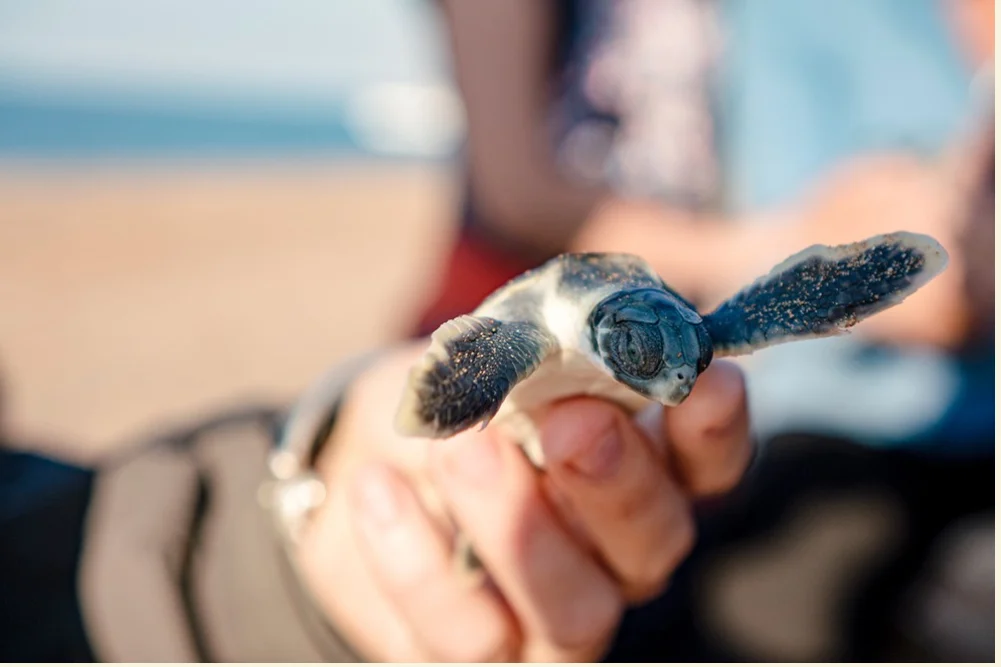
Beneath the glittering canopy of the Milky Way, far removed from the ambient light pollution of mainland Australian cities, the midnight shoreline of Bare Sand Island comes alive with a quiet, ancient rhythm. Here, amidst the gentle wash of the Joseph Bonaparte Gulf, a specialized cadre of researchers and exhausted volunteers gather during the southern winter solstice. Their mission is straightforward yet daunting: to document, measure, and protect the flatback turtle (Natator depressus), Australia’s only endemic sea turtle species. As the tide reaches its peak, these massive reptiles emerge from the inky black sea, navigating a critical four-hour window of opportunity to haul their 90-kilogram frames across the cold, damp sand and secure the next generation.
Bare Sand Island, known traditionally as Ngulbitjik to the Kenbi clan, serves as a vital winter rookery where approximately 500 to 650 mature flatback turtles return annually. Despite decades of intermittent observation, much of the species’ biology remains shrouded in mystery, categorizing the flatback as "data deficient" on both the International Union for Conservation of Nature (IUCN) Red List and territorial government registers. To bridge this knowledge gap, the all-volunteer organization AusTurtle has maintained a pop-up research presence on the island for over thirty years. This dedicated initiative relies on citizen science, bringing together marine biology students, Indigenous custodians, independent researchers, and enthusiastic members of the public who surrender a week of uninterrupted sleep to monitor the vulnerable rookery.
A Chronology of Conservation and Indigenous Heritage
The history of Ngulbitjik is as complex as it is ancient. Long before modern marine biologists tracked carapaces and recorded egg temperatures under the crimson glow of headlamps, the island held immense cultural significance for the Kenbi people. The island lacks permanent freshwater, yet traditional custodians have maintained a generational connection to the land, utilizing seasonal monsoonal pools and harvesting resources sustainably. Following the longest-running Aboriginal land claim in Australian history, native title over Bare Sand Island was officially restored to the Kenbi clan in 2016. Today, traditional owners visit the island regularly during the winter nesting season, maintaining their cultural practices by harvesting select clutches of turtle eggs for traditional consumption.
This interaction occasionally presents a complex ethical juxtaposition for external conservationists. While modern researchers measure, tag, and protect nests to maximize hatching success, traditional owners gather eggs for protein. However, seasoned researchers like Andrew Raith, who boasts a two-decade involvement with AusTurtle, emphasize that Indigenous harvesting poses no existential threat to the species. Anthropological and ecological assessments indicate that sustainable harvesting practices over millennia have coexisted stably with the flatback population. Furthermore, this cultural continuity grants the island’s nests an intrinsic socio-economic and cultural value to the traditional owners, disincentivizing over-exploitation and ensuring a vested interest in the long-term preservation of the local ecosystem.
Biological Significance and Ecological Challenges
Scientifically classified as Natator depressus, the flatback turtle is immediately distinguishable by its smooth, horizontally flattened carapace covered in a thick layer of skin. Unlike other marine turtle species that spend portions of their lifecycle migrating across vast oceanic trenches, flatbacks are largely restricted to the continental shelf of northern Australia, extending into Indonesian and Papua New Guinean waters. Despite this localized lifestyle, the critical 30-year developmental gap between a hatchling leaving an Australian beach and returning as a mature adult to nest remains largely undocumented.
Current scientific consensus estimates a sobering one-in-one-thousand survival rate for sea turtle hatchlings from birth to sexual maturity. These odds are further exacerbated by contemporary anthropogenic pressures, chief among them being global climate change. Marine biologists working on Bare Sand Island emphasize that flatback turtles in the Northern Territory face severe geographical constraints. Unlike populations that nest across broader latitudes from Broome to Brisbane, the Northern Territory flatbacks are situated at the absolute upper limit of their geographic and climatic range. Consequently, they cannot simply migrate southward to cooler coastlines to escape rising temperatures.
Data Analysis and Implications of Global Warming
The long-term viability of Natator depressus is increasingly threatened by climatic shifts that directly impact incubation environments. Field data collected by AusTurtle researchers—recording nest temperatures and monitoring tidal shifts—reveal alarming trends regarding global warming. Scientific modeling indicates that rising sea levels threaten to permanently inundate low-lying coastal rookeries, while escalating ambient air temperatures drive up sand temperatures within the egg chambers.
This thermal increase triggers a biological phenomenon known as temperature-dependent sex determination, wherein warmer incubation temperatures produce overwhelmingly female hatchlings. Over time, a severe skew in the sex ratio threatens to render regional populations functionally unviable. Furthermore, marine scientists warn that sea turtles function as critical "indicator species" for tropical marine environments. As apex grazers and ecosystem engineers, flatbacks help regulate populations of benthic invertebrates, seagrasses, and soft corals. The extinction or severe decline of the flatback turtle would initiate a cascading trophic collapse, destabilizing the intricate marine food webs of northern Australian waters and impacting commercial fisheries, apex predators, and coral reef health alike.
Research Operations and Minimal-Impact Logistics
The operational hub on Bare Sand Island reflects a rigorous commitment to environmental stewardship. Operating as a strict zero-impact, no-frills site during the peak winter nesting months of June and July, the pop-up camp utilizes basic tent accommodations and taut tarpaulins without permanent infrastructure. Environmental protocols are uncompromising: ground fires are strictly prohibited, tent pegs are engineered to minimize soil disruption, and all waste—including composted organic matter—is systematically removed from the island upon the conclusion of each weekly shift.
Participants engage in meticulous nocturnal fieldwork. When the flatbacks ascend the beach, researchers record timestamped tracks, monitor nesting attempts, and wait patiently until the 90-kilogram females begin laying clutches of approximately 50 oversized white eggs. Only once oviposition has commenced do researchers approach to minimize disturbance, recording biological metrics, reading existing Inconel flippers tags, applying new identifiers to unmarked individuals, and removing parasitic barnacles. At dawn, the focus shifts from data collection to rescue operations. Researchers patrol the beach to locate collapsed nests where newly emerged hatchlings remain trapped beneath the dense sand, gently extracting the stragglers and holding them securely for a safe, nocturnal release during the subsequent high tide.
Future Outlook and Conservation Integration
As government agencies and international conservation bodies review ongoing field data to transition the flatback turtle from its current "data deficient" classification, the contributions of grassroots organizations like AusTurtle remain indispensable. By combining rigorous scientific monitoring with the generational wisdom and sovereign management of the Kenbi traditional owners, Bare Sand Island exemplifies a collaborative model of contemporary conservation. Ensuring the survival of Natator depressus requires recognizing that human communities—both Indigenous custodians and modern researchers—are inextricably linked to the marine ecosystems they seek to protect. Without continued vigilance, robust international cooperation, and aggressive global climate mitigation strategies, the ancient midnight march of the flatback turtle across the shores of northern Australia risks becoming a relic of ecological history.
Visitor Information and Access
For individuals interested in contributing directly to the preservation of Australia’s endemic sea turtles, structured opportunities are available through regulated channels.
- Volunteer Research Placements: AusTurtle operates weekly volunteer research camps on Bare Sand Island from June to July. Placements cost approximately $800 per person, which covers round-trip boat transfers from Darwin, tent accommodations, and all provisions. Detailed application procedures are available via the official AusTurtle website (austurtle.org).
- Eco-Tourism Excursions: For travelers seeking a non-invasive encounter, commercial operators such as Sea Darwin offer guided turtle-watching day tours departing from Darwin at 4:00 PM. These excursions include a 90-minute transit to the island, educational briefings on flatback biology, guided nocturnal viewing of nesting activities, and catered dining under the stars, returning to the mainland by midnight (seadarwin.com).


 Gabriela Annisa

 Lukman Taruna Persada Ramadan

 Tatiana Tantri Indah Sari

 Anjar Salim


 Dwi Wanna
