
 Walid Sujud Trenggono
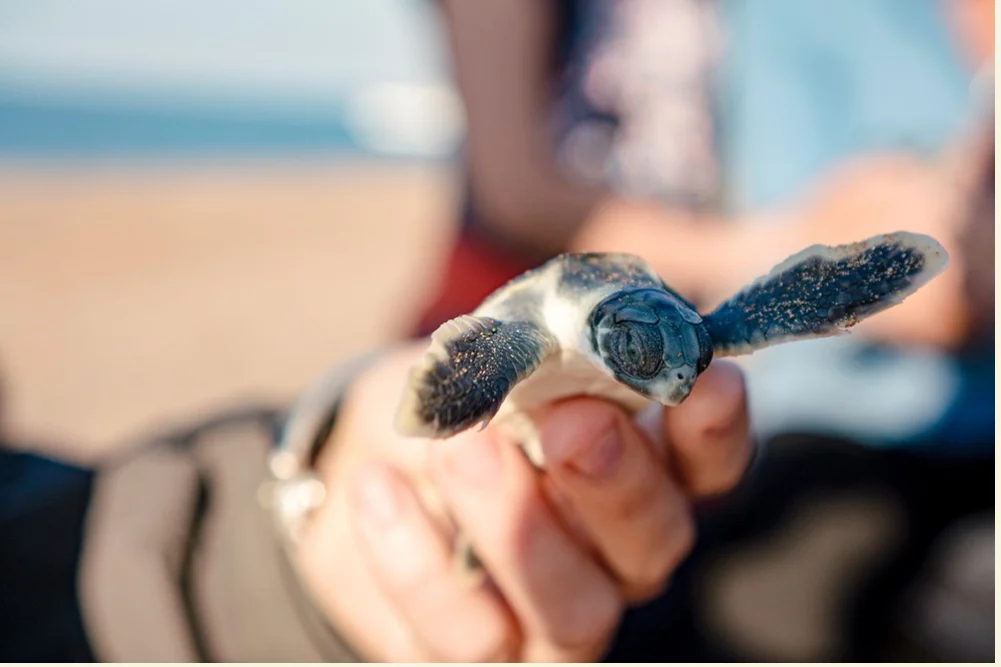
Bare Sand Island, Northern Territory — Underneath an electric canopy of stars far removed from the ambient light pollution of urban centers, a gentle sea breeze sweeps across the inky, subtropical waters of the Joseph Bonaparte Gulf. As the tide reaches its peak, an ancient ritual unfolds along the remote shoreline. Weighing in at approximately 90 kilograms, the Australian flatback sea turtle (Natator depressus) emerges from the surf, utilizing a precise four-hour nocturnal window to navigate the damp, sloping sands. Here, on a tiny, uninhabited outcrop off the coast of Darwin, a dedicated cadre of insomniac researchers, volunteers, and traditional owners converge each winter to study and protect one of the country’s most elusive marine species.
Operating under the auspices of AusTurtle, a non-profit volunteer organization, these citizen scientists dedicate weeks of interrupted sleep to gather vital empirical data. Armed with red-filtered headlamps to avoid disorienting the nesting females, the teams patrol the shoreline to measure carapaces, scan for identification tags, record nest temperatures, and document laying patterns. This ongoing field research is designed to address a critical scientific blind spot: shifting the flatback turtle’s current conservation classification from "data deficient" to a thoroughly understood baseline capable of driving effective environmental policy.
Main Facts and Ecological Profile
Endemic entirely to the continental shelf of Australia, the flatback turtle is distinguished from other marine turtle species by its unique, smooth, and noticeably flattened horizontal shell—hence its scientific name, Natator depressus. Unlike green or loggerhead turtles that undertake vast transoceanic migrations, flatbacks generally remain within the continental waters of Australia, ranging from Broome in Western Australia across the tropical north to Bundaberg in Queensland.
Despite this relatively localized distribution, profound gaps persist in understanding their lifecycle. Scientists estimate a daunting one-in-one-thousand survival rate for hatchlings, yet the precise whereabouts of juvenile flatbacks during the estimated 30-year maturation period between hatching and their first return to nesting beaches remain largely unknown. On Bare Sand Island, a vital winter rookery hosts approximately 650 mature female flatbacks each season. These females exhibit remarkable fidelity to their natal grounds, returning in structured pulses that researchers monitor to gauge population health.
During a typical nesting event, a female flatback labors ashore, systematically testing potential nest sites before excavating a deep chamber with her dexterous hind flippers. She deposits a clutch of roughly 50 eggs—the largest individual egg size among all sea turtle species—before carefully camouflaging the site and lumbering back to the safety of the ocean.
Chronology of Conservation and Research Operations
The research framework on Bare Sand Island represents a unique convergence of modern marine biology, grassroots volunteering, and Indigenous custodianship.
- Pre-2016: For decades, Bare Sand Island served as an unmonitored sanctuary exposed to historical pressures, including its past utilization as a military firing range during World War II, evidenced by scattered gunnery shells embedded in the dunes. Concurrently, AusTurtle established a foundational presence, slowly building a multi-decade dataset on flatback nesting habits.
- 2016 (Native Title Determination): Following the longest-running Aboriginal land claim in Australian history, native title over Bare Sand Island—known traditionally as Ngulbitjik—was formally awarded to the Kenbi clan. This landmark legal recognition solidified the traditional owners’ rights to access the island and manage its biological resources.
- Annual Winter Season (May to September): Operations commence as cooler winter temperatures usher in the peak nesting window. Pop-up research camps are established using zero-impact protocols. Volunteers arrive weekly, participating in night patrols, morning hatchling rescue operations, and data logging.
- Contemporary Operations: Today, the camp operates under strict environmental guidelines established in cooperation with the Kenbi traditional owners. Researchers document recurring nesting pairs, analyzing behavioral traits that suggest complex inter-nesting communication among females at sea.
Supporting Data and Environmental Vulnerabilities
The urgency of the AusTurtle research program is underscored by mounting climatological pressures. Global climate change poses an existential threat to the flatback population, driven primarily by two interconnected mechanisms: rising sea levels and escalating ambient temperatures.
Rising sea levels threaten to inundate low-lying coastal rookeries, effectively drowning incubating egg clutches before they can develop. Concurrently, warmer sand temperatures skew the sex ratios of developing embryos. Sea turtle sex determination is temperature-dependent; warmer nests produce predominantly female hatchlings, while cooler temperatures yield higher proportions of males. As global temperatures rise, severely skewed sex ratios threaten the long-term reproductive viability of northern Australian flatback populations.
Furthermore, unlike species capable of migrating toward cooler polar latitudes, Northern Territory flatbacks nest at the northern extremity of their thermal and geographic range. They cannot simply shift their nesting grounds further south to escape warming equatorial waters.
Scientists emphasize that the implications of flatback population decline extend far beyond the species itself. Marine turtles function as critical indicator species within tropical marine ecosystems. Their foraging habits regulate benthic communities, including invertebrates, corals, and algae. The loss of flatbacks could trigger cascading trophic failures, destabilizing the entire coastal food web.
Traditional Ownership and Cultural Harvesting
The management of Bare Sand Island involves complex socio-ecological dynamics, highlighted by the intersection of modern scientific conservation and ancient Indigenous traditions. The island is considered sacred by the Kenbi clan, who traditionally visit during the winter months to harvest sea turtle eggs for subsistence and cultural connection.
While conventional conservation perspectives occasionally express concern over the collection of wild clutches, long-term researchers argue that these traditional practices do not threaten the population. Andrew Raith, a senior researcher with a two-decade tenure at AusTurtle, offers a pragmatic perspective on the harvest:
"These people have been living and using this resource for millennia, and these sea turtles are still here. So there’s the proof that they’re doing nothing to affect this population. Harvesting a few nests gives the turtle nests of this island a value to those people, who will not over-harvest because it’s not in their interest to stop further generations getting access to the eggs and their protein."
Raith notes that integrating traditional owners into active resource management fosters sustainable stewardship, aligning indigenous cultural values with the broader objectives of ecological preservation. By viewing humans as an intrinsic component of the local ecosystem rather than an external disruption, conservationists and traditional custodians work toward shared stewardship goals.
Broader Impact and Implications
The collaborative efforts on Bare Sand Island offer a microcosm of modern wildlife management: balancing rigorous scientific inquiry, logistical austerity, and deep-seated cultural heritage in remote wilderness settings. The pop-up research camp operates under a strict zero-impact philosophy. Tents utilize no ground pegs, open fires are prohibited, and all waste—including composted organic matter—is systematically removed from the island.
This austere environment contrasts sharply with the ecological high stakes at play. By transforming volunteers, students, and travelers into active participants, AusTurtle bridges the gap between academic marine biology and public engagement. Each tagged flipper, recorded nest temperature, and rescued hatchling extracted from collapsed sand chambers contributes incremental data toward a comprehensive understanding of Natator depressus.
As anthropogenic pressures continue to mount across the globe, the survival of Australia’s endemic flatback turtle remains inextricably linked to the dedication of those willing to trade their comfort for midnight patrols along remote shores. Whether these remarkable marine reptiles can adapt rapidly enough to outpace the accelerating impacts of climate change remains one of the defining ecological questions of the twenty-first century. For now, the guardians of Bare Sand Island stand watch, dedicated to securing a future where the flatback’s ancient journey to the sea endures.



 Gabriela Annisa

 Lukman Taruna Persada Ramadan

 Tatiana Tantri Indah Sari

 Anjar Salim


 Dwi Wanna
