
 Anjar Salim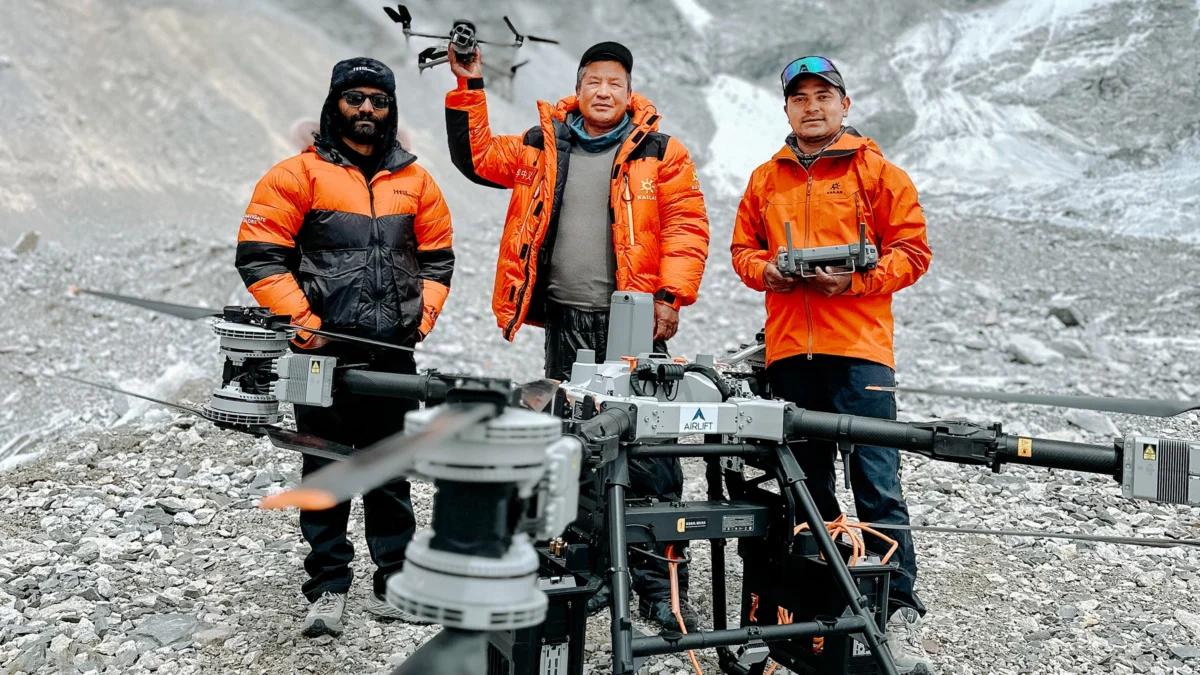
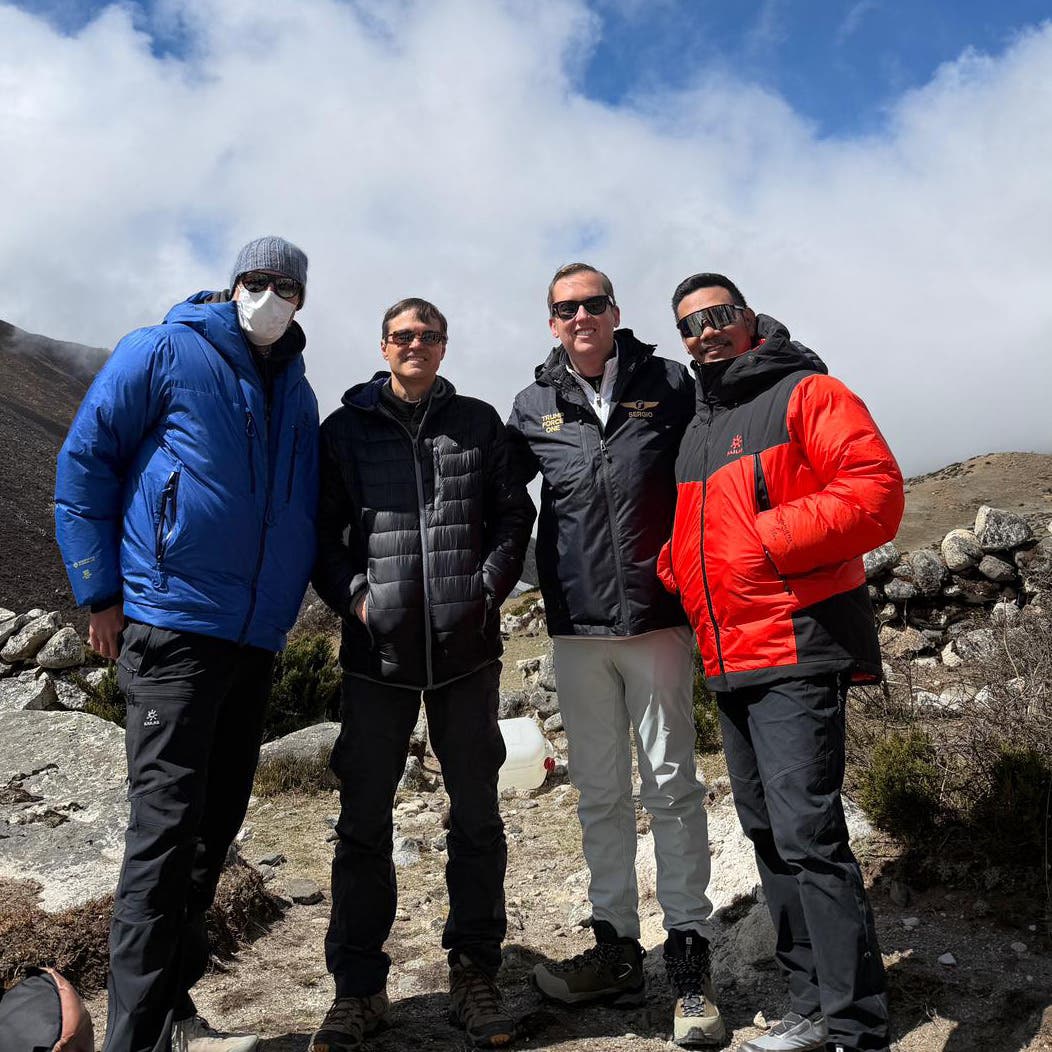
On May 1, 2026, a helicopter touched down on the Seven Summit Treks helipad at Mount Everest Base Camp, carrying a high-level American delegation. Among the dignitaries was Sergio Gor, the 39-year-old U.S. Ambassador to India and Special Envoy for South and Central Asian Affairs. Stepping into the thin air at 17,500 feet, Gor’s mission was ostensibly technical and commercial: to promote American-made drone technology as a revolutionary solution for high-altitude logistics. However, the visit quickly became a flashpoint for geopolitical sensitivities and regulatory hurdles, resulting in a temporary ban on unmanned aerial vehicle (UAV) operations that sent shockwaves through the 2026 Everest climbing season.
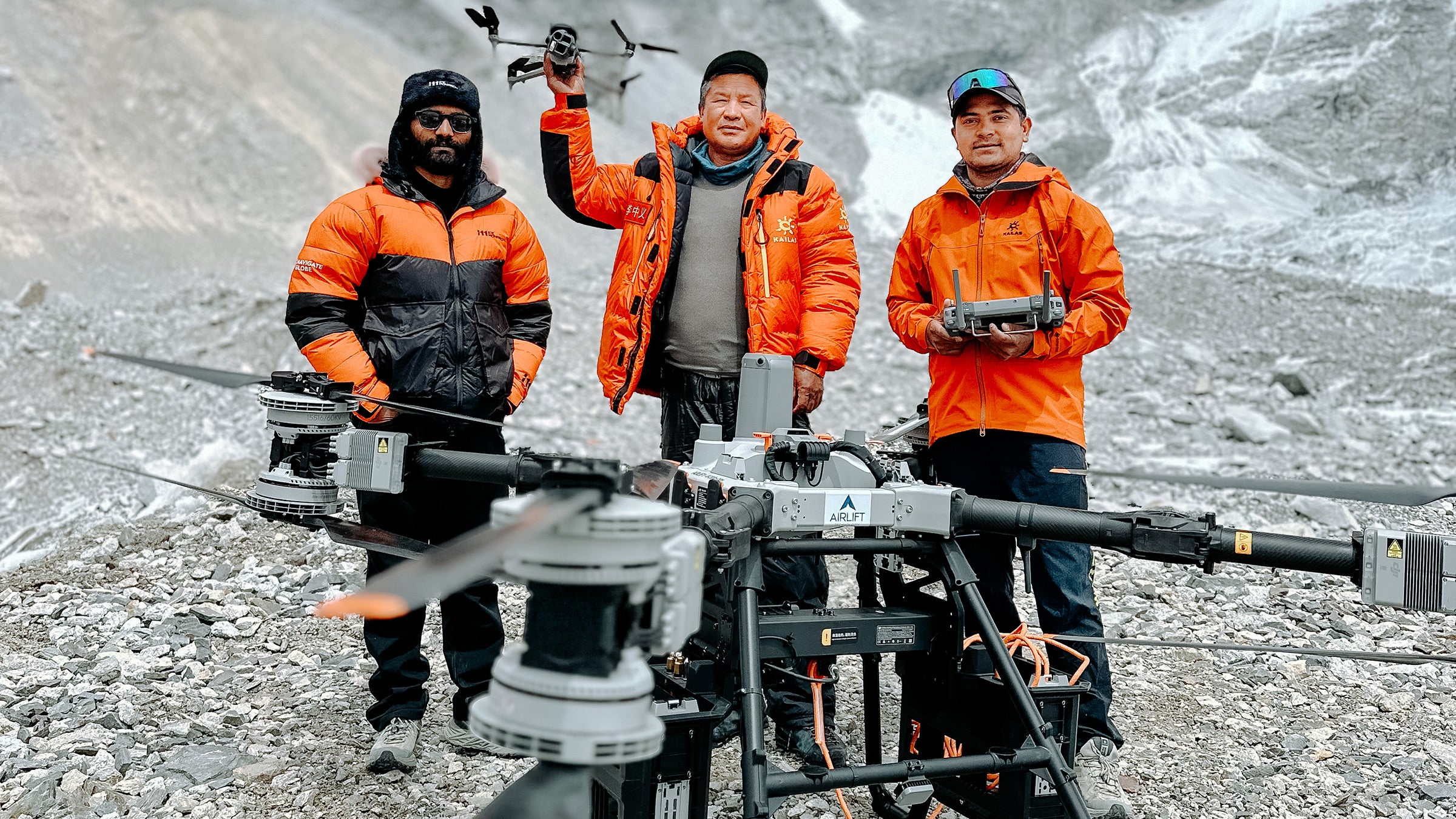
The diplomatic visit was a cornerstone of the current U.S. administration’s “Trade Not Aid” policy. Following the dissolution of traditional foreign aid programs like USAID, the U.S. Embassy has pivoted toward private-sector partnerships to foster economic ties. In Nepal, this manifested as a collaboration with Airlift Technology, a domestic drone service provider, to deploy the Alta X Gen 2 drone—a sophisticated UAV manufactured by the Washington-based firm Freefly Systems. The goal was to demonstrate how American hardware could replace human-led supply chains in the world’s most treacherous terrain, turning a multi-day, high-risk trek into a flight of mere minutes.
The Sudden Grounding and Regulatory Confusion
Despite the high-profile nature of the demonstration, the mission faced an immediate setback. Just hours before Ambassador Gor’s arrival, Nepal’s Home Ministry issued a directive to Airlift Technology to scrap the scheduled flights. The official statement cited “security sensitivity issues,” a vague term that often signals deeper concerns regarding border security, surveillance, or international relations.
The repercussions were not limited to the demonstration flight; the Nepali government simultaneously revoked Airlift Technology’s broader clearance to operate cargo-carrying aircraft on Mount Everest. This move effectively decapitated a logistical lifeline that many expedition teams had already integrated into their 2026 strategies. Milan Pandey, the director of Airlift Technology, expressed confusion over the timing and nature of the order, noting that the decision was communicated late at night with no prior warning or detailed explanation.
The forced grounding left hundreds of kilograms of equipment stranded at Base Camp and halted a critical mapping project intended to improve the safety of the Khumbu Icefall. For several days, the future of drone technology on the world’s highest peak remained in bureaucratic limbo, highlighting the precarious balance between technological progress and sovereign security concerns.
A Decade of Aerial Evolution on Everest
To understand the weight of this grounding, one must look at the rapid evolution of UAVs in the Himalayas. For the past decade, drones were primarily used for cinematography and search-and-rescue reconnaissance. In 2022, the Chinese firm 8KRAW achieved the first successful summit-overflight, providing unprecedented 8K footage of the peak.
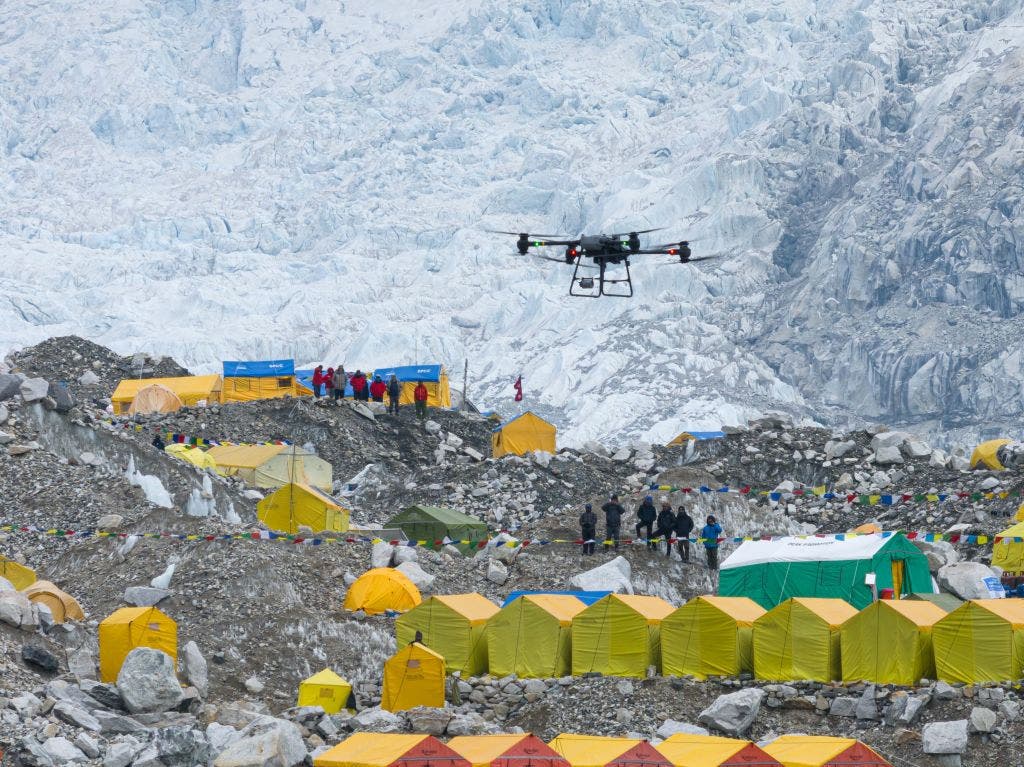
By 2024, the focus shifted from imagery to utility. Airlift Technology conducted landmark tests using the DJI FlyCart 30, a heavy-lift drone capable of carrying a 33-pound payload at lower altitudes. During these trials, the craft successfully shuttled oxygen canisters from Base Camp (17,500 feet) to Camp I (19,900 feet) and returned with bags of refuse. These tests proved that drones could navigate the thinning atmosphere and erratic wind currents of the Khumbu region, setting the stage for the commercial cargo services that launched in early 2026.
The technical challenges, however, remain formidable. Everest is characterized by “micro-climates” where wind speeds can double in seconds. Furthermore, the massive granite walls of the mountain can interfere with radio frequencies and GPS signals. To mitigate this, Airlift Technology employs a dual-pilot system: one operator manages the takeoff from Base Camp, while a second pilot at Camp I takes control once the craft clears the top of the Khumbu Icefall. Even with these precautions, the environment is unforgiving. In 2025, a sudden gust triggered an emergency parachute deployment on a DJI drone, resulting in a crash within the icefall.
The Case for Drones: Safety and Waste Management
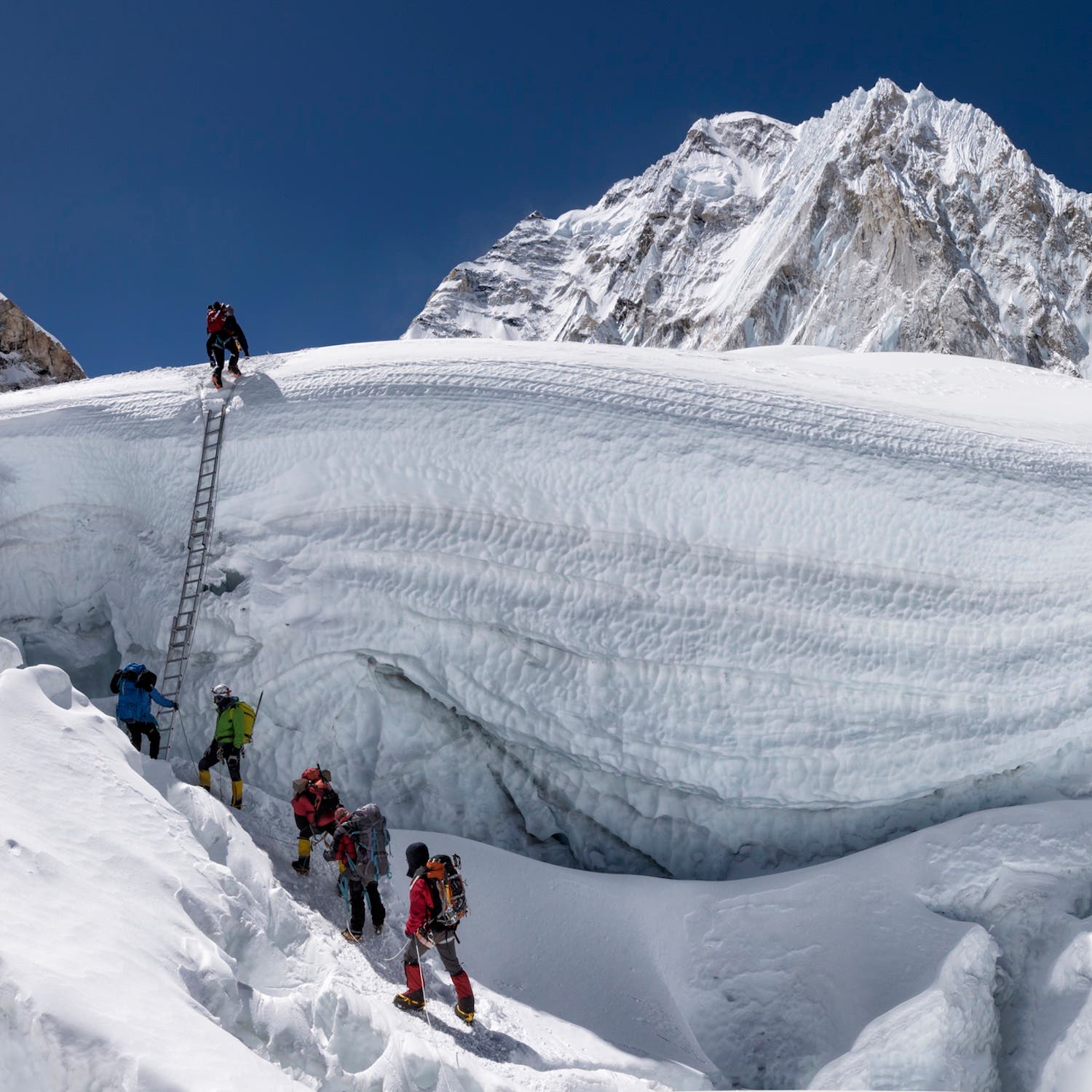
The primary argument for integrating drones into Everest logistics is the preservation of human life. The Khumbu Icefall is widely considered the most dangerous section of the South Col route. It is a shifting river of ice where massive seracs (ice towers) can collapse without warning. While a commercial climber may pass through the icefall two to four times during an expedition, high-altitude workers—mostly ethnic Sherpas—may traverse it 30 to 40 times a season to ferry tents, food, and oxygen.
Statistics from the Himalayan Database indicate that a significant percentage of Everest fatalities occur in the icefall. In 2023 alone, three Sherpa workers were killed when a serac collapsed. Proponents of UAV technology argue that drones can assume the burden of these "load-carrying" trips, reducing the number of times workers must expose themselves to the icefall’s hazards.
Beyond safety, environmental stewardship is a driving factor. The Sagarmatha Pollution Control Committee (SPCC) has partnered with drone operators to address the "world’s highest graveyard and garbage dump." Drones are uniquely suited to bringing down waste from high-altitude camps, which is otherwise left to rot or requires dangerous human retrieval. In 2026, Airlift Technology had already begun charging a subsidized rate of approximately 1,000 Nepal Rupees ($6.50) per kilogram to encourage operators to fly trash down to Base Camp.
Geopolitical Implications and the “Trade Not Aid” Framework
The involvement of a high-ranking U.S. diplomat like Sergio Gor underscores the geopolitical dimensions of drone flight in Nepal. The transition from USAID-funded projects to the "Trade Not Aid" model represents a shift toward using American technology as a tool of soft power. By promoting Freefly Systems’ Alta X Gen 2, the U.S. is positioning itself as a direct competitor to Chinese drone dominance, specifically the market share held by DJI.
However, Everest sits on the border between Nepal and the Tibet Autonomous Region of China. The deployment of advanced UAVs equipped with high-resolution cameras and 3D-mapping sensors inevitably draws scrutiny from security agencies. Analysts suggest that the Home Ministry’s “security sensitivity” concerns may have been prompted by the proximity of the drone flights to the Chinese border or by pressure from regional neighbors wary of American surveillance capabilities in the Himalayas.
The 2026 Season: A Timeline of Crisis and Resolution
The 2026 season was already fraught with difficulty before the drone ban. A dangerous serac in the Khumbu Icefall had delayed the route-fixing process by nearly three weeks, compressing the climbing window and increasing the pressure on logistics.
- May 1: U.S. Ambassador Sergio Gor arrives at Base Camp. The Home Ministry abruptly cancels all drone flights and revokes Airlift Technology’s permits.
- May 2-4: Expedition operators, including Himalayan Sherpa Adventure, report logistical chaos. Mingma Wongchu Sherpa notes that his team’s strategy for a British Army expedition was entirely dependent on drone support for 1,500 kilograms of cargo.
- May 5 (Morning): A major ice collapse occurs in the Khumbu Icefall. Two climbers are trapped, and a high-risk helicopter rescue is initiated. Drone operators watch from the sidelines, unable to use their 3D-mapping tech to scout for stable landing zones or identify further weaknesses in the ice.
- May 5 (Evening): Following intense lobbying and media coverage, the Home Ministry reinstates Airlift Technology’s permission to operate, provided they complete additional bureaucratic paperwork.
- May 6: Drone operators remain at Base Camp, awaiting final clearance to resume flights while the climbing season enters its most critical phase.
The Human and Commercial Cost of the Ban
The five-day ban had immediate consequences for the safety of mountain workers. Mingma Wongchu Sherpa told journalists that the lack of drone service forced his staff to plan an additional eight to nine trips each through the icefall to move essential gear. “Every evening when they leave, it’s emotional for me,” he said, emphasizing that the technology is not just about efficiency, but about the moral obligation to protect his guides.
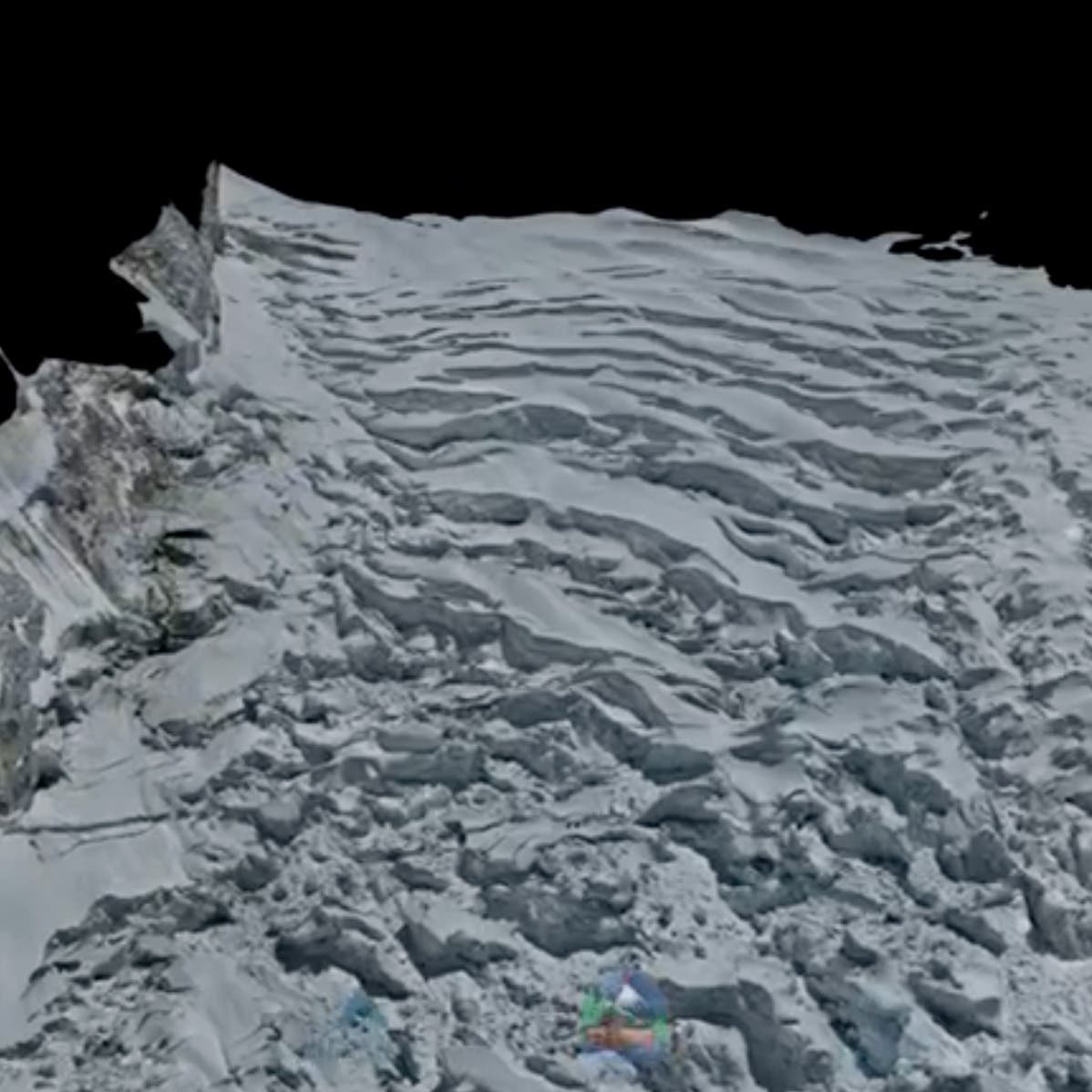
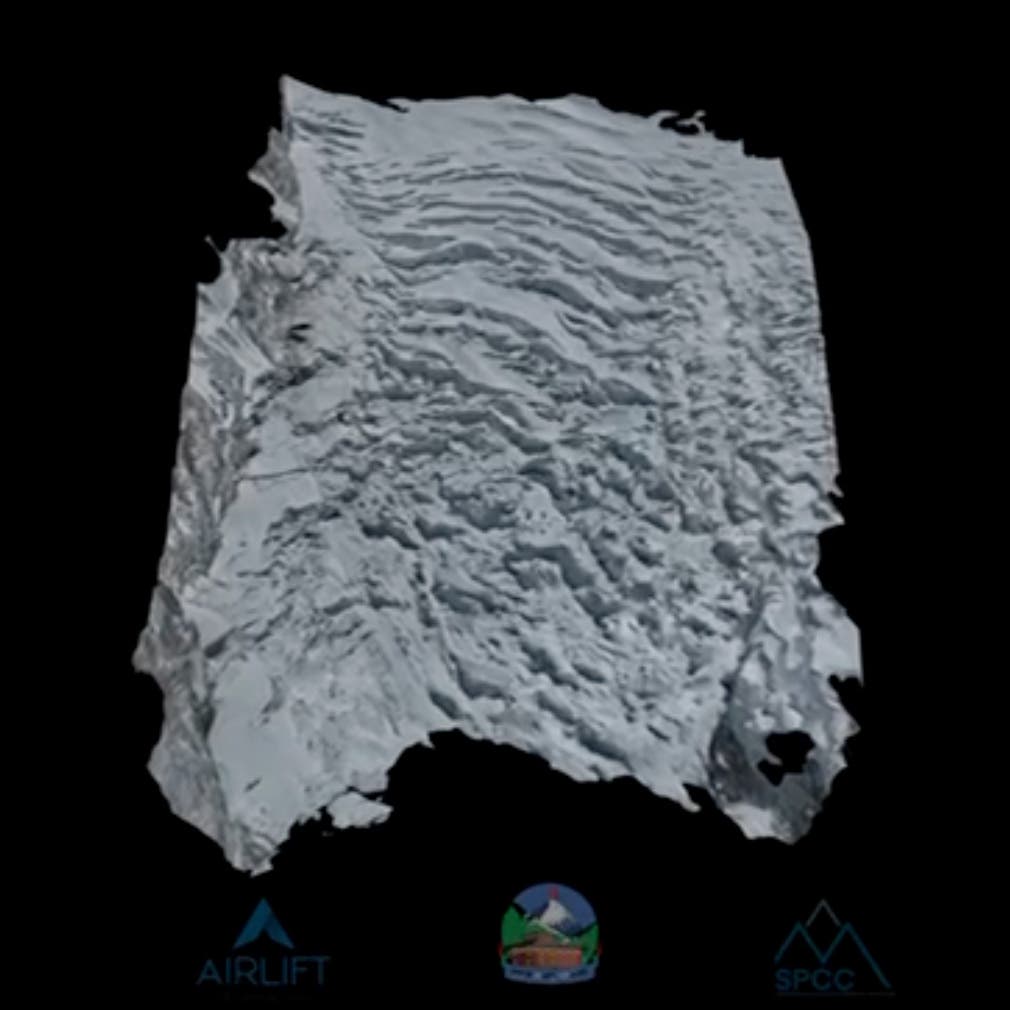
Furthermore, the interruption of the 3D-mapping project was a missed opportunity for disaster prevention. Airlift Technology had intended to map the icefall every five days to track movement and identify potential collapse zones. The collapse on May 5 occurred in an area that could have been surveyed had the drones been airborne.
Conclusion: A Precarious Future for Himalayan Tech
The reinstatement of drone permits on May 5 suggests that the Nepali government recognizes the utility of the technology, even as it remains wary of the political baggage it carries. The 2026 incident serves as a case study in the challenges of implementing "Trade Not Aid" policies in sensitive border regions.
As of May 6, 2026, the drones at Everest Base Camp sit with quiet rotors, ready to resume the task of ferrying oxygen and trash. The successful integration of these machines could redefine Himalayan mountaineering, making it cleaner and significantly safer for the local workers who sustain the industry. However, the events of early May have made one thing clear: on the world’s highest peak, the wind and the weather are no longer the only forces that can ground a flight; the complexities of international diplomacy are just as unpredictable.




 Chandra Hamzah
 Tatiana Tantri Indah Sari
 Budi Mulyono
 Lukman Taruna Persada Ramadan