
 Tatiana Tantri Indah Sari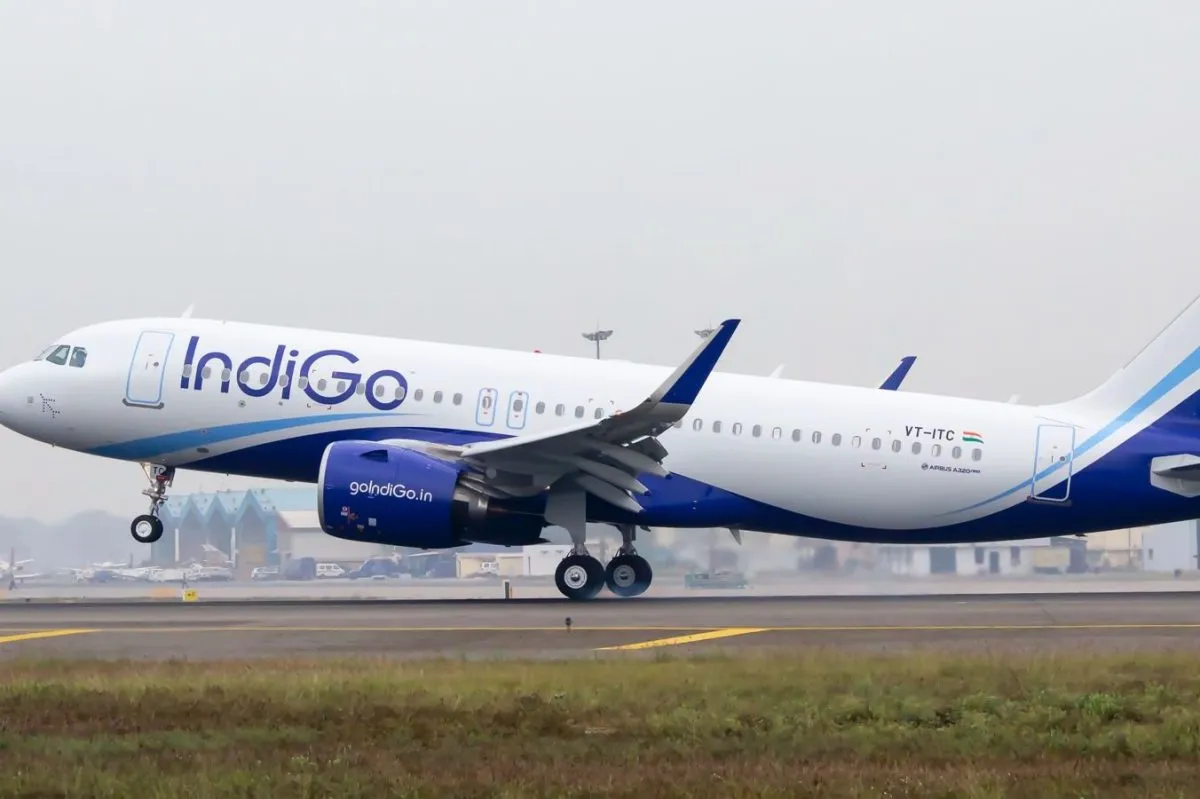
As IndiGo, India’s largest airline by market share, prepares for a significant leadership transition with the arrival of Willie Walsh as its new Chief Executive Officer in early August, the strategic direction of the carrier has been unequivocally reinforced by its founder and promoter, Rahul Bhatia. Despite Walsh’s distinguished career predominantly spent at the helm of prominent full-service airlines, Bhatia has made it clear that IndiGo’s foundational low-cost, single-aisle operational model will remain the undisputed core of its business strategy. This declaration provides critical clarity on the airline’s future trajectory, signalling a steadfast adherence to the playbook that has propelled it to market dominance within the highly competitive Indian aviation landscape.
The announcement, made during a recent earnings call, aimed to quell any speculation regarding a potential strategic pivot under the new leadership, given Walsh’s background. Rahul Bhatia, who has been serving as the interim CEO following the departure of Pieter Elbers, stated with conviction, “Our single-aisle program with the A320s and the A321s is going to be always central to the future of this company. That’s the very heart of this business.” This statement underscores a deep-rooted commitment to the operational efficiency, cost control, and high-frequency model enabled by a standardized narrow-body fleet – principles that have been the bedrock of IndiGo’s success since its inception.
The Genesis of IndiGo and its Low-Cost Ethos
InterGlobe Aviation Ltd., operating as IndiGo, commenced operations in August 2006, entering an Indian aviation market that was ripe for disruption. Founded by Rahul Bhatia of InterGlobe Enterprises and Rakesh Gangwal, the airline was built on a simple yet powerful premise: to offer affordable air travel through an uncompromising focus on the low-cost carrier (LCC) model. This involved a relentless pursuit of efficiency, rapid turnaround times, high aircraft utilization, a single aircraft type (initially the Airbus A320 family), and a no-frills service philosophy.
From its very first flight, IndiGo differentiated itself by emphasizing on-time performance, a key metric often overlooked by competitors. This operational discipline, combined with competitive pricing, quickly resonated with the burgeoning Indian middle class. The airline strategically placed large, firm orders for Airbus A320 family aircraft, leveraging economies of scale in procurement, maintenance, and pilot training. Its first major order for 100 Airbus A320s in 2005 set the stage for aggressive expansion. Subsequent orders, including 180 A320s in 2011, 250 A320neos in 2015, and 300 A320neo family aircraft in 2019, have cemented its position as one of Airbus’s largest customers globally and a dominant force in Indian aviation. As of early 2024, IndiGo operates a fleet exceeding 350 aircraft, primarily comprising A320neos and A321neos, and has an order book for hundreds more, ensuring its growth trajectory for the next decade.
A Market Leader in a Dynamic Landscape
IndiGo’s market share has consistently hovered around the 60% mark in the Indian domestic market, a testament to its operational prowess and brand appeal. This dominance is particularly significant in a country where domestic air travel has seen exponential growth, driven by increasing disposable incomes and improved regional connectivity. India is projected to become the third-largest aviation market globally by 2024, presenting immense opportunities but also fierce competition.
The Indian aviation sector is characterized by intense price sensitivity among consumers. The LCC model, with its inherent cost advantages translated into lower fares, is exceptionally well-suited to this market dynamic. IndiGo’s ability to maintain high load factors (often exceeding 85%) and robust profitability even amidst volatile fuel prices and currency fluctuations highlights the resilience of its business model. Its operational structure minimizes complexity, reduces training costs, and optimizes spare parts management, all contributing to a lower unit cost (CASK – Cost per Available Seat Kilometre) compared to full-service carriers.
The Leadership Transition: A Chronology
The recent leadership changes at IndiGo have been a focal point for industry observers.
- October 2019: Ronojoy Dutta, a veteran of United Airlines and Air Sahara, assumes the role of CEO, succeeding the interim CEO, Wolfgang Prock-Schauer. Dutta’s tenure focused on stabilizing the airline amidst internal conflicts and charting a path for international expansion.
- May 2022: IndiGo announces the appointment of Pieter Elbers, formerly President and CEO of KLM Royal Dutch Airlines, as its new CEO. Elbers, with his extensive experience in network airlines and alliances, was expected to bring a fresh perspective, particularly in enhancing international connectivity.
- September 2022: Pieter Elbers officially takes over as CEO, signaling a period of strategic evolution for IndiGo, with an emphasis on expanding its international footprint and exploring new avenues for growth, while still operating within the LCC framework.
- April 2024: IndiGo announces Pieter Elbers’ decision not to seek reappointment after the conclusion of his current term in January 2025. This unexpected announcement led to a global search for a successor.
- May 2024: IndiGo names Willie Walsh, the former CEO of International Airlines Group (IAG) and British Airways, as its new CEO, effective early August 2024. Rahul Bhatia, the airline’s founder, steps in as interim CEO until Walsh assumes his role.
- June 2024: Rahul Bhatia, as interim CEO, publicly reaffirms IndiGo’s unwavering commitment to its low-cost, single-aisle core strategy during an earnings call, setting the strategic parameters for Walsh’s tenure even before his arrival.
Willie Walsh: A Full-Service Architect for an LCC Giant
The appointment of Willie Walsh, often dubbed "Slasher Walsh" for his reputation as a cost-cutter and a no-nonsense leader, has generated considerable interest. His career trajectory has been almost exclusively within the realm of full-service carriers.
- Aer Lingus: Walsh began his career as a pilot with Aer Lingus, eventually rising to become its CEO. He is credited with turning around the struggling Irish flag carrier, making it profitable by implementing stringent cost controls and operational efficiencies, often in the face of significant industrial relations challenges.
- British Airways: He joined British Airways as CEO in 2005, where he continued his focus on cost reduction and operational streamlining.
- International Airlines Group (IAG): Walsh was instrumental in the creation of IAG in 2011, formed through the merger of British Airways and Iberia. As the founding CEO of IAG, he oversaw the expansion of the group to include Vueling, Aer Lingus (which IAG acquired in 2015), and LEVEL. Under his leadership, IAG became one of Europe’s largest and most profitable airline groups, known for its disciplined financial management and aggressive pursuit of synergies.
- IATA: After stepping down from IAG in 2020, Walsh served as the Director General of the International Air Transport Association (IATA), advocating for the global airline industry during the unprecedented challenges of the COVID-19 pandemic.
Walsh’s experience is undeniably extensive, marked by a consistent ability to improve airline profitability through rigorous cost management and strategic growth. However, his expertise lies predominantly in managing complex, multi-brand, full-service networks, often involving wide-body aircraft, premium cabins, and global alliances – elements largely distinct from IndiGo’s pure LCC model. This juxtaposition naturally led to questions about how his vast experience would align with IndiGo’s established strategy.
Strategic Implications and Analyst Perspectives
Industry analysts largely concur with Rahul Bhatia’s directive, emphasizing that IndiGo’s continued success hinges on its steadfast commitment to the low-cost model. Kapil Kaul, CEO & Director at CAPA India, a leading aviation consultancy, notes, “Any deviation from the core LCC strategy in the Indian market would be fraught with significant risks. IndiGo’s competitive advantage is its cost structure and operational efficiency, which allows it to offer highly competitive fares.”
The Indian market’s unique characteristics further validate this approach:
- Price Sensitivity: A vast majority of Indian air travellers prioritize fare over ancillary services.
- Domestic Dominance: While international travel is growing, domestic routes remain the backbone, ideally suited for high-frequency, point-to-point narrow-body operations.
- Competition: The market is fiercely competitive, with the recent re-emergence of a strong Air India under Tata Sons, the growth of Vistara (a full-service carrier), and the successful entry of new LCCs like Akasa Air. Maintaining a cost advantage is paramount.
However, Walsh’s appointment is not seen as merely maintaining the status quo. While the core LCC model is non-negotiable, his expertise can be leveraged in several strategic areas within this framework:
- Operational Excellence: Walsh’s track record in optimizing operations and driving efficiency will be invaluable. IndiGo, despite its strengths, can always enhance aspects like fuel efficiency, maintenance schedules, and ground handling to further reduce costs.
- Network Optimization: While focusing on narrow-bodies, IndiGo is expanding its international footprint, particularly with the A321XLR aircraft. Walsh’s experience in network planning and route profitability from his IAG days can guide IndiGo in identifying lucrative international narrow-body routes and maximizing yields.
- Ancillary Revenue: LCCs derive a significant portion of their revenue from ancillaries. Walsh’s understanding of customer segmentation and revenue management can help IndiGo innovate and expand its ancillary offerings effectively, without compromising its low-fare appeal.
- Fleet Management and Negotiations: With a massive order book, IndiGo’s future profitability depends heavily on favorable terms with manufacturers and lessors. Walsh’s extensive experience in large-scale fleet procurement and his reputation as a tough negotiator will be a significant asset.
- Digital Transformation: Modern airlines rely heavily on technology for customer experience, operational efficiency, and revenue generation. Walsh can accelerate IndiGo’s digital initiatives, drawing lessons from global best practices.
- Talent Development: As IndiGo continues to grow, attracting and retaining top talent across various functions will be crucial. Walsh’s leadership can foster a culture of high performance and strategic thinking.
The Future: Continuity with Enhanced Precision
Rahul Bhatia’s clear articulation of IndiGo’s strategic perimeter serves as a foundational brief for Willie Walsh. It ensures that while Walsh brings his formidable experience to the table, he will do so with a deep understanding of the core principles that have made IndiGo successful. The airline is not seeking a radical transformation into a full-service carrier, but rather an enhancement of its existing, highly effective LCC model.
The challenge for Walsh will be to apply his strategic acumen and operational rigor to an LCC context, identifying opportunities for growth and efficiency that align with IndiGo’s established identity. This will involve meticulously optimizing every aspect of the business, from flight scheduling and crew rostering to supply chain management and customer service, all while adhering to the stringent cost controls inherent in the low-cost model.
In essence, IndiGo’s leadership transition is less about a change in strategic direction and more about injecting world-class operational and financial discipline into an already successful model. The focus remains on leveraging the unparalleled efficiency of its single-aisle fleet to connect more cities, carry more passengers, and deliver consistent profitability in India’s dynamic and price-sensitive aviation market. With Rahul Bhatia’s clear mandate, Willie Walsh is poised to lead IndiGo not into uncharted strategic territory, but into a new era of refined excellence within its proven low-cost framework.



 Anjar Salim
 Chandra Hamzah
 Budi Mulyono
 Lukman Taruna Persada Ramadan
