
 Cholid Fahmi Thalib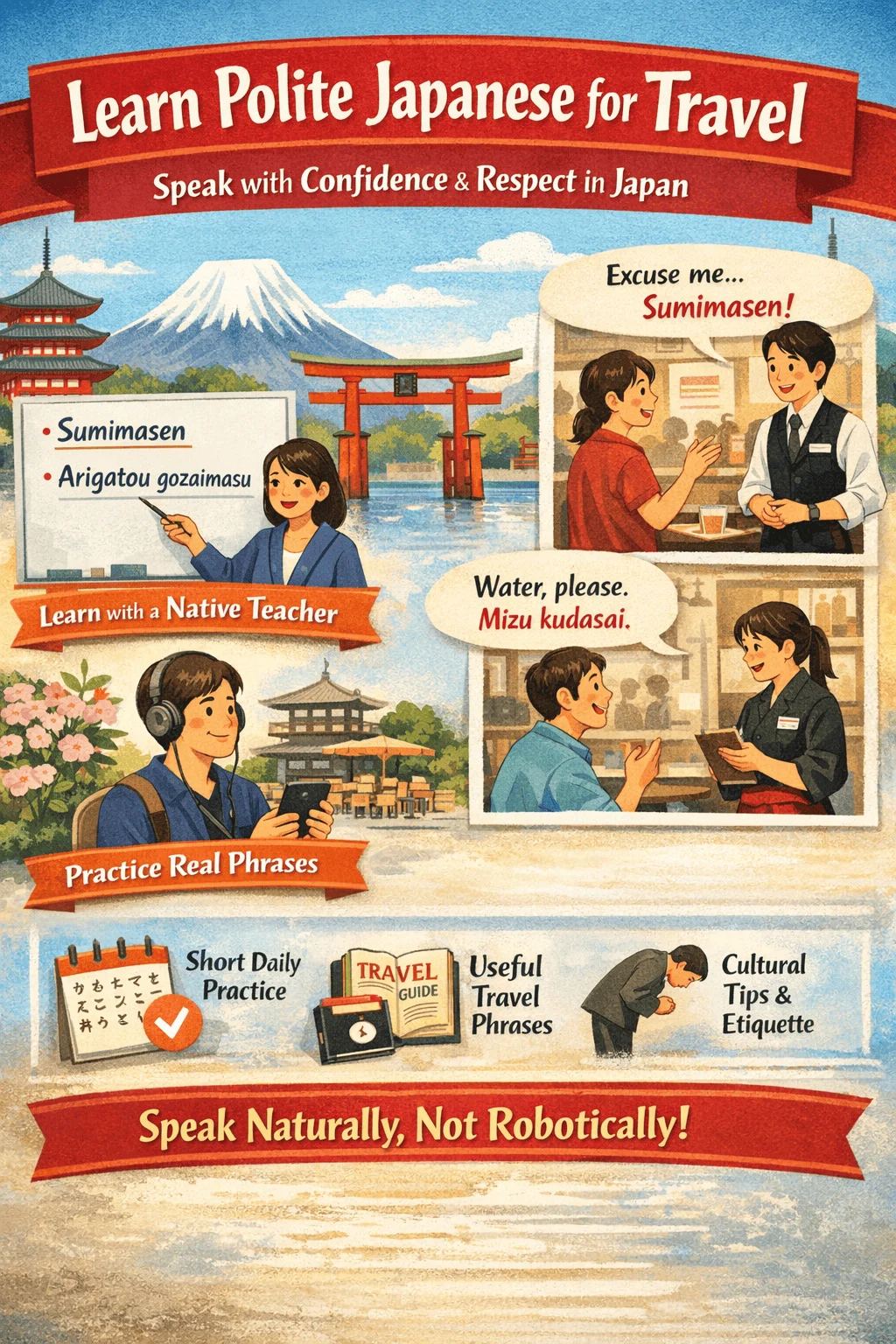
Traveling in Japan offers an immersive cultural experience, and enhancing that journey with the ability to communicate respectfully can significantly elevate interactions. While the Japanese language boasts intricate politeness levels, acquiring functional, polite Japanese for travel does not necessitate the exhaustive memorization of extensive phrasebooks. Instead, a strategic focus on practical conversations, contextually relevant phrases, and understanding the nuances of everyday politeness can empower travelers to engage more authentically and confidently. This approach moves beyond rote memorization, fostering a natural flow of communication and a deeper appreciation for the cultural significance of respectful speech in Japan.
The effectiveness of language acquisition for travelers is often amplified by exposure to authentic language use in real-world scenarios. Many tourists find that relying solely on guidebooks or brief audio courses can leave them unprepared for the subtle but crucial aspects of Japanese etiquette and tone. Engaging with experienced language instructors specializing in travel preparation, for instance, can provide invaluable insights into common travel situations—from ordering meals at local eateries to checking into accommodations—and clarify the appropriate linguistic and behavioral responses. This targeted guidance ensures that learning efforts are directed toward immediately applicable skills, rather than potentially unused vocabulary. The benefits of consistent, short bursts of practice, integrated with real-time exposure, are well-documented in language learning research, demonstrating superior retention compared to intensive, isolated study sessions. By internalizing polite phrases within their intended contexts, learners begin to absorb the natural rhythm and structure of the language, enabling them to respond spontaneously rather than relying on rehearsed lines.
Key Takeaways for Traveler-Focused Japanese Acquisition
- Contextual Learning: Prioritize understanding phrases within real-life scenarios over memorizing isolated words.
- Practical Application: Focus on essential phrases for common travel needs like greetings, requests, and apologies.
- Cultural Nuance: Recognize the importance of tone, timing, and non-verbal cues in conveying politeness.
- Consistent Practice: Short, daily exposure and practice yield better results than infrequent, lengthy study sessions.
- Technology Integration: Utilize language learning apps and tools for pronunciation and comprehension enhancement.
Strategic Pathways to Essential Polite Japanese for Travelers
Developing practical conversational skills in polite Japanese for travel purposes can be efficiently achieved by concentrating on core courtesy phrases, fundamental greeting patterns, and concise expressions suitable for unexpected or sensitive situations. This focused approach equips travelers with the confidence needed to navigate daily life in Japan, bypassing the daunting task of memorizing extensive linguistic repertoires.
Understanding and Utilizing High-Frequency Courtesy Phrases
Certain polite expressions are ubiquitous in Japanese interactions, serving as the bedrock of respectful communication. The term "Sumimasen" is a prime example, functioning as a versatile phrase that translates to "excuse me" or "sorry." Its application extends to politely gaining someone’s attention or offering an apology for minor inconvenconveniences. Complementing this is "Kudasai," which translates to "please" and is integral to formulating respectful requests. For instance, the simple phrase mizu kudasai translates to "water, please," demonstrating a direct yet polite way to ask for a basic necessity.
Beyond these, expressions like "Arigatou gozaimasu" (thank you very much) and "Onegaishimasu" (please, in a more formal or earnest sense) are crucial for conveying gratitude and politeness. The utility of each phrase lies in its specific function, which aids memorization through application rather than abstract recall. The natural delivery of these phrases often involves a subtle tone and appropriate timing. In commercial settings such as shops and restaurants, the consistent, natural repetition of simple travel phrases like sumimasen or arigatou throughout the day reinforces their usage and builds comfort with fundamental Japanese interactions. These habits contribute significantly to a traveler’s ease and confidence in navigating basic exchanges.
Adapting Greetings to Context and Time
Japanese greetings are finely tuned to signal respect and an awareness of the temporal and social context. The standard greetings include "Ohayou gozaimasu" for the morning, "Konnichiwa" for the afternoon, and "Konbanwa" for the evening. Acknowledging these temporal distinctions allows travelers to align their greetings with local customs seamlessly.
While "Sayonara" is widely recognized as "goodbye," it can sometimes carry a sense of finality. Among friends or in more casual settings, locals often opt for shorter farewells such as jaa ne or mata ne. For polite departures in public or professional environments, "Shitsurei shimasu" (excuse me for leaving) or "Dewa mata" (see you later, formally) are more appropriate. Understanding these contextual applications prevents the traveler from appearing either overly formal or inappropriately casual. The practice of omotenashi, or Japanese hospitality, is often reflected in these greetings. Returning a greeting with sincerity, accompanied by a small smile or nod, demonstrates respect for the culture and can foster positive interactions, even when language fluency is limited.
Essential Phrases for Urgent Situations and Apologies
In moments of unexpected difficulty, a few concise expressions can be critical. The urgent plea for assistance, "Tasukete!" translates to "help!" Similarly, for navigation or seeking immediate assistance, knowing byouin wa doko desu ka? ("where is the hospital?") can be vital. These short, direct phrases are designed for critical moments.
When faced with errors or causing inconvenience, the use of "Sumimasen" or the more emphatic "Gomen nasai" signals acknowledgment of responsibility without requiring elaborate explanations. Keeping a curated list of such emergency expressions readily accessible before embarking on a trip ensures that travelers can respond clearly and respectfully under pressure, upholding the courtesy that is highly valued in Japanese language and culture.
Innovative Learning Methodologies for the Discerning Traveler
Acquiring functional, polite Japanese for travel need not be an arduous undertaking involving extensive study hours. By prioritizing practical expressions, real-world application, and the integration of simple, habitual learning practices, travelers can achieve remarkable results. A keen observation of natural speech patterns and an understanding of cultural context are instrumental in developing a respectful and confident demeanor.
Embracing Memorization-Free Techniques for Accelerated Proficiency
The most effective approach to language acquisition for travelers often involves bypassing lengthy vocabulary lists in favor of learning through immersion and context. Engaging with short, authentic dialogues—whether it’s asking for directions or ordering food—provides a practical framework for understanding and retaining useful phrases. The repeated exposure to these concise, relevant expressions facilitates faster memory encoding compared to rote memorization. This method naturally teaches learners how polite language integrates into fluid, everyday conversations.
Breaking down learning objectives into manageable, bite-sized goals can also enhance efficiency. For instance, dedicating a short period to mastering polite greetings, followed by another session on basic requests, can make the learning process less overwhelming and more rewarding.
The technique of "shadowing," which involves actively repeating short audio clips from native speakers, is highly effective for improving accent and intonation. This practice allows learners to internalize the natural cadence of the language without the cognitive load of conscious memorization, gradually attuning their ear to recognize polite and casual speech forms.
Harnessing the Power of Japanese Writing Systems for Enhanced Politeness Recognition
A foundational understanding of the Japanese writing systems—Hiragana, Katakana, and Kanji—can significantly aid in recognizing politeness cues. Beginning with Hiragana is advisable, as it forms the basis of polite verb endings and many common expressions. Subsequently, familiarizing oneself with Katakana is beneficial for deciphering foreign loanwords that appear frequently on signage and menus. Advanced learners can then focus on everyday Kanji such as 日 (day), 食 (eat), or 行 (go).
Each writing style offers clues about the tone and formality of the text. Kanji, in particular, often appears in more formal contexts like shops and transportation hubs. By recognizing these characters in their written form, travelers can infer the level of politeness being employed, thereby reinforcing contextual learning rather than relying solely on memorization. Maintaining a small notebook or digital note of encountered symbols and phrases helps forge a connection between visual memory and real-world application.
Leveraging Technological Tools and Cultural Insights for Holistic Learning
Modern language learning is significantly enhanced by digital tools and applications. Speech recognition software, for example, allows for immediate practice and correction of pronunciation. Translation tools like Google Translate can be useful for checking grammar and nuances of tone, but it is crucial to practice phrases aloud to ascertain their natural flow.
Audio-based learning resources that offer slow playback speeds are invaluable for improving listening comprehension. Pairing these with short, simulated role-play exercises—such as asking for assistance at a train station or ordering tea—can solidify learning.
Beyond linguistic tools, an appreciation for cultural practices is paramount. Subtle gestures like a slight bow, the use of honorifics such as "-san," and demonstrating patience are integral to polite communication in Japan. Integrating these small cultural courtesies with basic Japanese phrases creates a more harmonious and respectful interaction, demonstrating genuine effort and consideration.
In conclusion, mastering polite Japanese for travel is an achievable goal that prioritizes practical application over exhaustive memorization. By focusing on phrases that directly address everyday travel needs, such as greetings and requests, and utilizing them in authentic situations, travelers can embed these expressions into their memory naturally. Consistent practice, even in small increments, such as repeatedly using "Arigatou" (thank you) or "Sumimasen" (excuse me), fosters respect and builds confidence rapidly. Local residents often value the effort more than absolute perfection. Observing native speakers, paying attention to their tone and gestures, provides invaluable insights into natural communication. Over time, these practices evolve into habits, making polite speech an integral part of the travel experience. Ultimately, learning through application, focusing on meaningful phrases, engaging in real interactions, and maintaining patience are the cornerstones of gaining both comfort and respect while exploring Japan.



 Anjar Salim
 Dwi Wanna
 Budi Mulyono
 Lukman Taruna Persada Ramadan
 Chandra Hamzah
 Gabriela Annisa