
 Budi Mulyono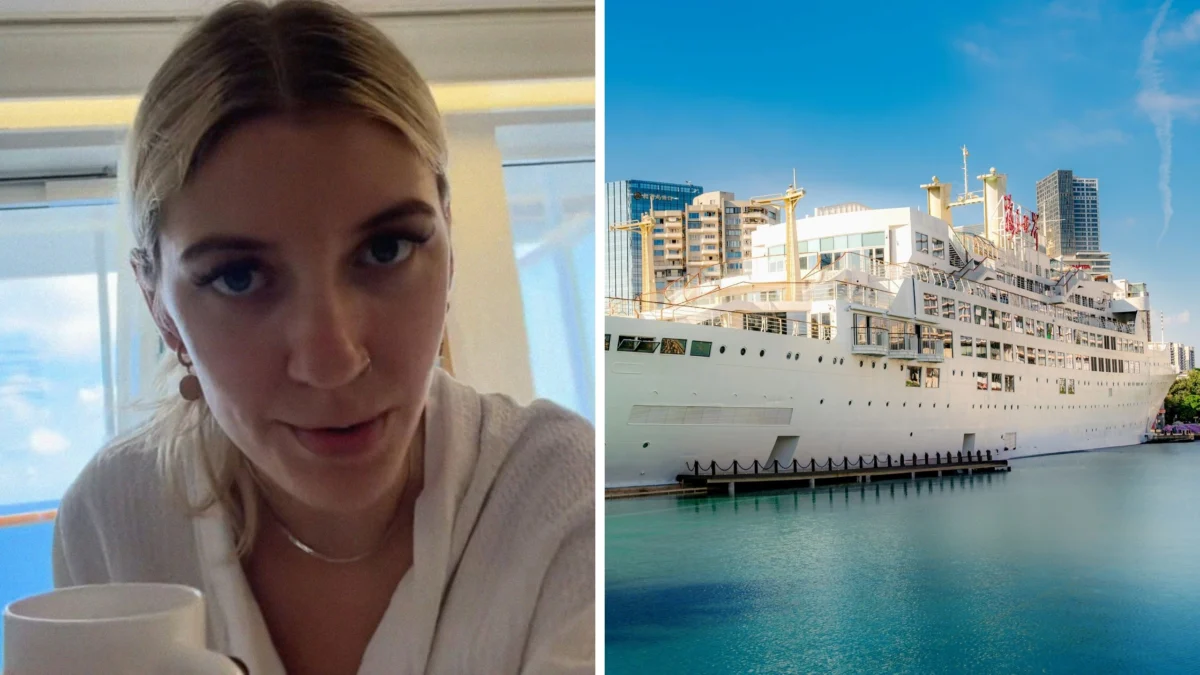
The global cruise industry, valued at over $7 billion, has long been associated with family vacations, luxury retreats, and retiree excursions. However, a growing segment of the market is pivoting toward highly specialized, niche experiences that cater to specific lifestyles. A recent viral encounter shared by a travel content creator has brought renewed public attention to the world of "lifestyle cruises"—chartered voyages designed specifically for couples interested in clothing-optional environments and ethical non-monogamy. This intersection of mainstream maritime logistics and adult-oriented social subcultures highlights a significant, yet often misunderstood, sector of the travel economy.
The discourse began when Kassidy, a travel influencer operating under the handle @kj.cruisin, shared her experience boarding a cruise ship in Tampa, Florida. Upon embarking, she discovered that the vessel had just completed a "lifestyle cruise" charter. Her report, which quickly gained traction on social media, detailed the specific nature of these voyages, including the presence of "playrooms" and specialized seminars. The revelation sparked a wider conversation regarding the operational, hygienic, and social frameworks that govern these adult-only maritime events.
Defining the Lifestyle Cruise: Nudism vs. Ethical Non-Monogamy
To understand the implications of these voyages, it is necessary to distinguish between various forms of adult-oriented travel. While "clothing-optional" is a common descriptor, the "lifestyle" label typically refers to a specific community. In the context of modern travel, the "lifestyle" is a colloquialism for individuals who participate in swinging or ethical non-monogamy (ENM). This differs significantly from traditional nudism or naturism, which focuses on the social and philosophical practice of non-sexual nudity.
Lifestyle cruises are generally restricted to couples and individuals aged 21 and over. These voyages are almost exclusively "full-ship charters," meaning a third-party travel agency leases the entire vessel from a mainstream cruise line—such as Norwegian Cruise Line, Royal Caribbean, or Celebrity Cruises—and resells the cabins to their specific clientele. This allows the charter company to override standard shipboard rules, implementing their own codes of conduct, dress codes, and entertainment schedules.
According to industry experts, the primary appeal of these cruises is the creation of a "judgment-free zone." Participants are encouraged to explore their sexuality in a controlled, secure environment. Activities often include workshops on communication, intimacy seminars, and themed "play" nights. The presence of "playrooms"—large communal areas often outfitted with mattresses and soft furnishings—is a hallmark of these charters, providing a designated space for sexual expression that is strictly prohibited on standard commercial sailings.
The Operational Reality: Hygiene and Sanitation Protocols
One of the most immediate reactions to the viral disclosure of lifestyle cruises involves concerns over hygiene and shipboard cleanliness. Social media commentary following Kassidy’s post reflected a high degree of skepticism regarding the sanitization of communal spaces. However, the cruise industry is subject to some of the most stringent health regulations in the travel sector, overseen by international bodies and, in the United States, the Centers for Disease Control and Prevention (CDC) under the Vessel Sanitation Program (VSP).
When a ship transitions from a specialized charter back to a standard commercial sailing, it undergoes a process known as "deep cleaning" or "turnaround sanitization." This involves the use of hospital-grade disinfectants, electrostatic sprayers, and high-temperature steam cleaning for upholstery and carpets. Cruise lines are acutely aware of the reputational risks associated with outbreaks of any kind, whether gastrointestinal or otherwise, and therefore maintain rigorous protocols regardless of the previous passenger demographic.
In defense of the lifestyle community, veteran participants and organizers argue that these groups are often more conscientious than the general public. As noted by industry moderators, lifestyle events typically operate under strict "towel rules"—where individuals are required to carry and sit on towels at all times in common areas to maintain a barrier between skin and furniture. Furthermore, the "lifestyle" subculture is built on a foundation of explicit consent and mutual respect for shared spaces, which often results in less wear and tear on the vessel compared to high-capacity youth or "party" cruises.
The Economic Impact of Full-Ship Charters
From a business perspective, full-ship charters represent a lucrative and low-risk revenue stream for major cruise lines. By leasing an entire ship to a lifestyle travel agency, the cruise line secures a guaranteed payment for every cabin, regardless of whether the agency manages to sell them all. This model is particularly attractive during the "shoulder seasons"—the periods between peak travel months—when ships might otherwise struggle to reach full capacity.
Companies such as Bliss Cruise, Desire Cruises, and Temptation Cruises have built robust business models around these charters. These agencies handle all marketing, specialized entertainment, and passenger screening, while the cruise line provides the hardware (the ship), the crew, and the food and beverage services. For the cruise line, the "lifestyle" aspect is secondary to the logistical success of the charter. Once the voyage concludes, the ship is reset to its standard branding, often within a 12-hour window, ready for the next group of traditional vacationers.
The growth of this sector reflects a broader trend in the travel industry toward "affinity travel," where consumers seek out experiences shared with like-minded individuals. Whether it is a cruise for knitting enthusiasts, heavy metal fans, or lifestyle couples, the goal is the same: to create a temporary community where the standard social "filters" of everyday life can be removed.
Social Etiquette and the Governance of Adult Spaces
The successful operation of a lifestyle cruise relies heavily on a complex system of etiquette and self-governance. Contrary to the perception of these cruises as "lawless" environments, they are often more regulated than standard sailings. Charter companies employ their own security teams and "etiquette monitors" to ensure that consent is prioritized and that the atmosphere remains respectful.
The rules of engagement in these spaces are often influenced by high-end adult clubs, such as Paris’s Les Chandelles. In these environments, the guiding principle is often that the woman "is in command." This philosophy emphasizes that sexual expression must be consensual, empowering, and devoid of harassment. On lifestyle cruises, "no means no" is an absolute mandate, and any violation of this principle typically results in immediate removal from the ship at the next port of call, with no refund and a permanent ban from future events.
Furthermore, the "playrooms" mentioned in the viral video are not hidden, dark corners but are often transformed lounges or theaters with clear rules of entry. These spaces are monitored by staff to ensure safety and hygiene. The use of the term "lifestyle" serves as a linguistic buffer, signaling a specific set of social expectations to those "in the know" while maintaining a degree of discretion for the broader public.
Broader Implications: The Normalization of Ethical Non-Monogamy
The visibility of lifestyle cruises in mainstream social media suggests a shift in how society views non-traditional relationship structures. What was once a highly secretive subculture is increasingly being discussed through the lens of "ethical non-monogamy" (ENM) and sex-positivity. Proponents of the lifestyle, including psychological experts and relationship counselors, often argue that these experiences can strengthen a couple’s bond by fostering radical honesty and shared adventure.
Dr. Tara Suwinyattichaiporn, a professor of sexual communication, has noted that engaging in "play" with others while remaining emotionally devoted to a primary partner can be an empowering experience for many couples. This perspective frames the lifestyle cruise not as a rejection of commitment, but as a specialized form of recreation that prioritizes transparency and mutual satisfaction.
As the "divorce epidemic" continues to be a topic of sociological concern, some couples view the lifestyle as an alternative to the traditional monogamous model, which they feel may not suit their long-term needs. The cruise industry, by providing the infrastructure for these explorations, plays an unintentional role in the evolving landscape of modern romance.
Conclusion: The Future of Niche Maritime Travel
The incident shared by Kassidy Cruise & Travel serves as a reminder of the diversity of the modern travel market. While the idea of a "communal mattress space" may be jarring to some, it represents a significant and growing demand for specialized adult spaces. As the cruise industry continues to recover and expand post-pandemic, the reliance on niche charters is likely to increase.
For the average traveler, the likelihood of inadvertently booking a lifestyle cruise is zero, as these are private, closed-loop charters. However, the likelihood of boarding a ship that previously hosted such an event is relatively high, given the efficiency of the modern charter market. The reality of the industry is that every ship is a multipurpose vessel, transitioning from family-friendly fun to adult-oriented exploration and back again, all within the span of a single afternoon.
The intersection of luxury travel and private lifestyle choices remains a fascinating case study in how the global economy adapts to meet the diverse desires of the public. As long as there is a demand for judgment-free, secure, and adventurous travel, the "lifestyle cruise" will remain a permanent, albeit discreet, fixture of the high seas. Boarding Area reached out to the original content creator for further comment on her experience; as of the time of publication, no further updates have been provided. The cruise industry, meanwhile, continues its steady course, balancing the needs of the many with the specialized demands of the few.


 Anjar Salim
 Dwi Wanna
 Lukman Taruna Persada Ramadan
 Chandra Hamzah
 Gabriela Annisa