
 Tatiana Tantri Indah Sari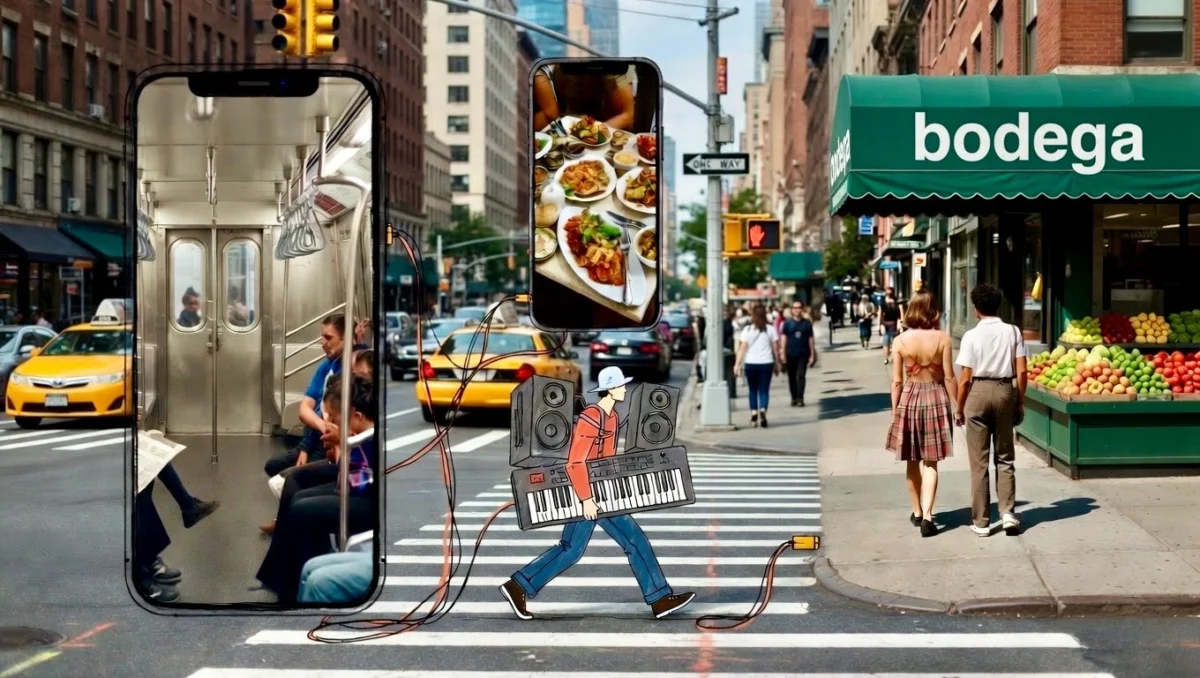
New York City continues to possess a unique, irreplaceable asset that eludes other metropolises: an unparalleled density of strangers who engage, debate, sing, dine, and even fall in love in impromptu moments, forming the very essence of its vibrant social fabric. This organic, unscripted human interaction has emerged as the most compelling argument for urban life, particularly in a post-pandemic era where the future of cities has been intensely scrutinized and debated by governments and corporate entities. While official bodies grappled with the question of whether the "city is back," a groundswell of authentic content creators, operating on subway cars and sidewalks with minimal equipment, has been actively demonstrating the city’s enduring vitality.
The Post-Pandemic Urban Quandary and the Quest for Revival
The global pandemic, beginning in early 2020, instigated an unprecedented exodus from urban centers, particularly in cities like New York. The widespread adoption of remote work models, coupled with public health concerns, led to significantly reduced foot traffic in commercial districts, a sharp decline in public transit ridership, and a palpable shift in the city’s once-relentless rhythm. Office towers stood partially empty, Broadway went dark, and the once-bustling streets often felt eerily quiet. This period sparked a critical discussion among urban planners, economists, and policymakers about the long-term viability and appeal of dense urban living.
City governments, including New York’s, and major corporate landlords invested heavily in campaigns and incentives to coax residents, workers, and tourists back. Initiatives ranged from public safety enhancements and cleanliness drives to economic stimulus packages for small businesses and cultural institutions. For instance, New York City launched campaigns like "It’s Time for NYC," aiming to reignite tourism and foster a sense of return to normalcy. Real estate developers grappled with converting underutilized office spaces into residential units, reflecting a broader acknowledgment that the traditional 9-to-5 office paradigm might not fully recover to pre-pandemic levels. The central question remained: beyond economic opportunities and cultural institutions, what truly distinguishes a city and draws people to its embrace?
NYC’s Unrivaled Social Ecosystem
New York City’s answer, as consistently demonstrated throughout its history, lies in its unparalleled social ecosystem. Unlike cities that might attempt to cultivate a specific "vibe" or "community" through planned events or designated zones, NYC’s social life is largely spontaneous, emergent, and democratic. It thrives on the constant collision of diverse individuals from every corner of the globe, each carrying unique stories, perspectives, and energies. This inherent dynamism creates a fertile ground for unexpected encounters – the casual conversation on a park bench, the shared laughter at a street performer, the passionate debate among strangers on public transport. These moments, often fleeting and unremarked upon, collectively form the rich tapestry of urban experience that defines New York.
Historically, New York has been a beacon for immigrants and dreamers, a place where people arrive to reinvent themselves and engage with a world larger than their own. This constant influx has fostered a culture of tolerance, adaptability, and an unspoken understanding that personal space is a luxury, but shared experience is a given. The city’s design itself, with its dense grid of streets, accessible public transit, and numerous public squares and parks, facilitates these daily interactions. The subway, in particular, serves as a crucial artery, a subterranean microcosm of the city’s diversity, where individuals from vastly different walks of life are brought into close proximity, often for extended periods.
The Emergence of "Subway Takes" and Citizen Storytelling
Amidst this backdrop of urban recovery debates and official efforts, a new form of organic storytelling began to capture the imagination of New Yorkers and a global online audience. This movement, exemplified by content creators like Kareem Rahma and his "Subway Takes" series, has offered an authentic, unfiltered glimpse into the city’s pulsating heart. Rahma, with a simple phone camera and an innate ability to engage strangers, transformed the mundane commute into a stage for unscripted urban theater.
The "Subway Takes" concept is disarmingly simple yet profoundly effective: Rahma approaches random individuals on subway cars and sidewalks, offering them a microphone to share their opinions on various topics, ranging from the profound to the absurd. The series gained significant traction, particularly after an episode featuring then-Assemblyman Zohran Mamdani, who offered a candid critique of Mayor Eric Adams. This specific clip, amplified by social media algorithms, introduced a broader audience to the raw, unpolished charm of "Subway Takes."
However, it was the non-celebrity episodes that truly underscored the series’ unique appeal. Viewers were drawn into candid conversations with ordinary New Yorkers. One memorable instance involved a stranger on the F train passionately defending the controversial position that "pigeons are just rats with better PR," sparking an immediate and equally passionate rebuttal from another passenger. Rahma’s skill lies not just in initiating these conversations, but in holding space for these "beautiful, unhinged democratic arguments" to unfold naturally, showcasing the city’s capacity for spontaneous, often humorous, and always authentic human interaction. These videos, unburdened by corporate budgets or elaborate production, have become a digital testament to the city’s vibrant, opinionated, and endlessly fascinating populace.
Data Supporting NYC’s Resilient Vibrancy
The anecdotal evidence provided by "Subway Takes" is corroborated by various data points illustrating New York City’s robust recovery and enduring appeal.
- Public Transit Ridership: While not fully returned to pre-pandemic peaks, Metropolitan Transportation Authority (MTA) data indicates a significant rebound in subway and bus ridership. As of late 2023 and early 2024, weekday subway ridership frequently exceeds 3.5 million, a substantial increase from pandemic lows, signaling a return to the subway as a primary mode of transportation and a shared public space. This recovery underscores the essential role of public transit in facilitating the very interactions captured by Rahma’s camera.
- Tourism: NYC & Company, the city’s official marketing and tourism organization, reported over 62 million visitors in 2023, recovering approximately 93% of its record 2019 visitation levels. This influx of domestic and international tourists injects billions into the local economy and reinforces the city’s global allure, further enriching the diversity of interactions on its streets.
- Economic Activity: Despite initial fears of a permanent decline, New York City’s economy has shown resilience. Unemployment rates have steadily decreased, and sectors like hospitality, entertainment, and retail have largely rebounded. The city’s dynamic small business ecosystem, a bedrock of its character, continues to innovate and adapt, contributing to the street-level vibrancy.
- Population Stability: While some residents relocated during the pandemic, recent estimates suggest a stabilization or even slight increase in the city’s population, debunking predictions of a sustained urban exodus. This continued population density is crucial for maintaining the critical mass necessary for spontaneous social engagement.
- Digital Content Explosion: The success of "Subway Takes" is part of a broader trend of hyper-local, user-generated content thriving on platforms like YouTube and TikTok. Millions of views for videos showcasing everyday New York life, from street food reviews to candid interviews, demonstrate a strong global appetite for authentic urban narratives. This digital amplification extends the city’s reach and reinforces its image as a place of constant discovery.
Implications for Urban Planning and the Future of Cities
The phenomenon of "Subway Takes" and New York City’s broader post-pandemic trajectory offer significant implications for urban planning and policy worldwide. It suggests that while economic incentives and infrastructure projects are vital, the true enduring strength of a city lies in its capacity to foster genuine human connection and interaction.
- Beyond Economic Metrics: Urban success cannot be solely measured by GDP or corporate headquarters. The "soft infrastructure" of social interaction, community ties, and cultural exchange is equally, if not more, critical for a city’s long-term health and desirability.
- Valuing Public Spaces: The subway, sidewalks, and parks are not merely conduits or recreational areas; they are essential public stages where the city’s narrative unfolds daily. Preserving and enhancing these spaces, ensuring their safety and accessibility, is paramount for nurturing spontaneous social encounters.
- Rethinking "Placemaking": Traditional urban planning often involves top-down "placemaking" initiatives. The "Subway Takes" phenomenon highlights the power of bottom-up, organic placemaking, where residents themselves define and animate spaces through their presence and interactions. Policies should aim to enable, rather than over-regulate, such emergent cultural expressions.
- The Importance of "Weak Ties": Sociologists often speak of "weak ties" – the casual acquaintances and fleeting interactions that form the invisible glue of urban life. These seemingly insignificant encounters contribute to social cohesion, broaden perspectives, and foster a sense of belonging in a diverse metropolis. Content like "Subway Takes" showcases these weak ties in action, emphasizing their profound value.
- Authenticity as a Differentiator: In an increasingly globalized and homogenized world, authenticity becomes a powerful differentiator. New York City’s raw, unvarnished character, as captured by its citizen creators, stands in stark contrast to curated, commercialized urban experiences.
Expert Perspectives and Broader Impact
Urban sociologists like Dr. Emily Smith from New York University suggest that the city’s resilience stems from its fundamental design as a "network of networks." "New York has always been a place of constant friction and fusion," Dr. Smith notes. "The density forces interaction, and the diversity ensures those interactions are rarely dull. The ‘Subway Takes’ phenomenon simply puts a digital frame around what New Yorkers experience every day – the democratic chaos and beauty of shared urban space."
Officials at the MTA, while primarily focused on operational efficiency and safety, acknowledge the subway’s unique role. "The subway is more than just transportation; it’s a cross-section of New York life," an MTA spokesperson stated, emphasizing ongoing efforts to improve passenger experience, which indirectly supports the vibrant social environment.
Cultural critics observe that the appeal of "Subway Takes" lies in its ability to humanize the vast, often intimidating scale of New York. It provides a relatable entry point into the city’s soul, demonstrating that amidst the towering skyscrapers and bustling crowds, individual voices and stories continue to thrive. This type of content reinforces New York’s brand not just as a global financial or cultural capital, but as a living, breathing entity defined by its people.
In conclusion, as cities worldwide continue to navigate the complex aftermath of the pandemic and redefine their identities, New York City offers a compelling case study. Its enduring magnetism is not primarily a function of its economic might or iconic landmarks, but rather its unparalleled capacity to facilitate spontaneous human connection. The "strangers worth talking to, singing with, eating with, arguing with, and falling in love next to" are not just a poetic description; they are the living, breathing, and digitally documented proof of New York’s inimitable spirit. This intrinsic social dynamism, celebrated by organic creators like Kareem Rahma, is an asset that cannot be manufactured or purchased – it is the irreducible core of what makes New York City perpetually vibrant, resilient, and utterly unique.



 Anjar Salim
 Chandra Hamzah
 Budi Mulyono
 Lukman Taruna Persada Ramadan
