Gabriela Annisa
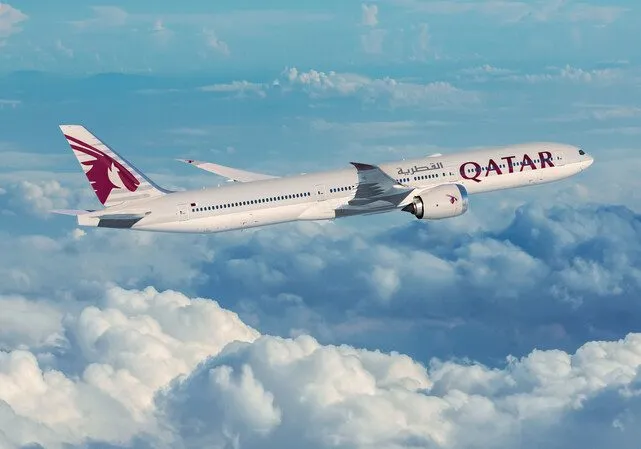
As the global aviation industry navigates a complex period of post-pandemic recovery and shifting geopolitical dynamics, the strategic maneuvers of Middle Eastern carriers have become a focal point for international investors and industry analysts. The upcoming appearance of Qatar Airways’ Chief Executive Officer, Hamad Ali Al-Khater, at the Skift Global Forum in New York serves as a critical juncture for the airline to articulate its long-term vision. Simultaneously, the robust second-quarter financial results reported by Kuwait-based Jazeera Airways underscore a broader narrative of regional growth and operational efficiency among low-cost carriers in the Gulf Cooperation Council (GCC) region.
Qatar Airways: Navigating Global Expansion and Fleet Modernization
Qatar Airways stands at a pivotal moment in its corporate history. As one of the world’s leading network carriers, the airline has spent the last several years aggressively expanding its footprint, leveraging its hub at Hamad International Airport in Doha to bridge East and West. The anticipation surrounding CEO Hamad Ali Al-Khater’s keynote at the Skift Global Forum is driven by industry interest in how the airline plans to balance its ambitious growth strategy with the rising costs of fuel, labor, and new aircraft procurement.
The airline’s current strategy is defined by a heavy investment in next-generation aircraft. Following a long-standing dispute with Airbus regarding the A350 surface degradation, the carrier has pivoted toward a massive order book that includes both Airbus and Boeing wide-body jets. This fleet renewal program is not merely about capacity; it is about maintaining a competitive edge in long-haul luxury travel—a segment where Qatar Airways has consistently secured industry accolades.
Industry analysts expect Al-Khater to address the integration of artificial intelligence in customer service, the expansion of its "Qsuite" product, and the carrier’s continued reliance on its strategic partnership model. Unlike some legacy carriers that prioritize equity stakes in competitors, Qatar Airways has historically favored deep commercial alliances and code-sharing agreements, allowing it to tap into feeder traffic from regional partners without the complexities of cross-border ownership.
The Rise of Jazeera Airways: A Case Study in Low-Cost Success
While Qatar Airways dominates the long-haul narrative, the mid-market and low-cost carrier (LCC) sector in the Middle East is undergoing its own transformation. Kuwait’s Jazeera Airways has recently emerged as a bellwether for the success of the LCC model in a region historically dominated by state-owned national flag carriers. The company’s Q2 financial results, which demonstrate impressive profitability, provide a clear signal that regional demand for short-to-medium-haul point-to-point travel remains exceptionally strong.
Jazeera Airways has carved out a profitable niche by focusing on underserved secondary cities in the Middle East, Central Asia, and the Indian subcontinent. By maintaining a lean operational structure and maximizing aircraft utilization, the airline has managed to hedge against the inflationary pressures that have burdened larger, more capital-intensive airlines. The Q2 performance, characterized by higher passenger load factors and yield management, suggests that travelers in the Gulf are increasingly prioritizing affordability and convenience over the traditional full-service offerings of the larger legacy airlines.
Financial Performance and the Skift Travel 200 (ST200)
The performance of these airlines must be viewed through the lens of the broader aviation sector as tracked by the Skift Travel 200 (ST200). The ST200 index serves as a comprehensive barometer for the travel industry, aggregating the financial performance of nearly 200 companies worth more than a trillion dollars. Year-to-date data indicates a divergence between the recovery trajectories of long-haul network carriers and the more agile, regional low-cost players.
While network carriers are currently grappling with high capital expenditures related to fleet modernization and the rising costs of international route maintenance, the LCC sector has benefited from a more rapid return to pre-pandemic traffic volumes. The ST200 methodology, which incorporates metrics such as total enterprise value, revenue growth, and EBITDA margins, highlights that airline stocks remain sensitive to oil price volatility and geopolitical instability. As the ST200 demonstrates, the ability of an airline to remain profitable in a high-interest-rate environment is a key determinant of its current stock market valuation.
Chronology of Regional Aviation Developments
To understand the current state of the industry, one must look at the timeline of events that have shaped the Middle Eastern aviation landscape:
- 2021-2022: The aviation sector begins a aggressive push for recovery, with Gulf carriers leading in terms of capacity restoration compared to their European and North American counterparts.
- Early 2023: Qatar Airways reaches a comprehensive settlement with Airbus, clearing the path for the delivery of new A350 aircraft and restoring the airline’s expansion capabilities.
- Late 2023: Jazeera Airways announces new routes into the Commonwealth of Independent States (CIS) region, diversifying its network and reducing reliance on traditional GCC feeder routes.
- Mid-2024: Both carriers report strong half-year financial results, with Jazeera Airways showing notable efficiency gains and Qatar Airways preparing for a high-profile leadership presence at the Skift Global Forum.
Official Perspectives and Market Implications
The discourse surrounding these airlines is not merely confined to financial sheets; it reflects a fundamental shift in the global aviation power structure. Official statements from industry leadership suggest a move toward "pragmatic expansion." For Qatar Airways, this means leveraging its status as a premium global hub. For Jazeera Airways, it means dominating the regional connectivity space.
Market analysts suggest that the implications for investors are clear: the aviation sector is moving toward a bifurcated model. On one side, the "super-connectors" like Qatar Airways provide essential infrastructure for global intercontinental travel. On the other, the "regional specialists" like Jazeera Airways capitalize on the massive demographic shifts and increasing disposable income within the GCC and surrounding emerging markets.
Broader Impact: Sustainability and Digital Transformation
Beyond profitability and fleet size, both airlines are under increasing pressure to address sustainability. The aviation industry is currently facing a dual challenge: the requirement to meet net-zero carbon targets by 2050 and the necessity of upgrading aging fleets to more fuel-efficient models.
For Qatar Airways, the challenge is one of scale; as a major global player, its carbon footprint is significant. The airline has been an advocate for Sustainable Aviation Fuel (SAF) and has invested heavily in carbon offset programs. Conversely, Jazeera Airways’ challenge is one of integration; as a smaller carrier, it must find cost-effective ways to implement greener technologies without passing prohibitive costs onto its price-sensitive passenger base.
Furthermore, digital transformation remains a key theme. The industry is moving toward "Retail-as-a-Service" models, where airlines function more like e-commerce platforms. Both Qatar Airways and Jazeera Airways are investing in data analytics to personalize travel experiences, optimize pricing, and enhance the booking process. The upcoming discussions at the Skift Global Forum are expected to highlight these digital initiatives as essential components of long-term survival in an increasingly crowded marketplace.
Conclusion: A Strategic Crossroads
The aviation landscape in the Middle East is currently characterized by a synthesis of traditional luxury and modern efficiency. Qatar Airways continues to lead the region’s long-haul ambitions, setting a standard for service and global connectivity that few others can match. Meanwhile, the success of Jazeera Airways represents the maturation of the regional low-cost sector, proving that there is substantial value to be captured in the short-haul market.
As the industry prepares for the insights to be shared at the Skift Global Forum, it is evident that the coming months will be defined by how well these carriers navigate the twin pressures of global economic volatility and the rising demand for sustainable, digital-first travel experiences. The data provided by the ST200 index suggests that while the road ahead is fraught with risks, the strategic positioning of these Middle Eastern giants remains robust, keeping them at the very heart of the global aviation narrative.




 Lukman Taruna Persada Ramadan

 Tatiana Tantri Indah Sari

 Anjar Salim

 Budi Mulyono