
 Budi Mulyono
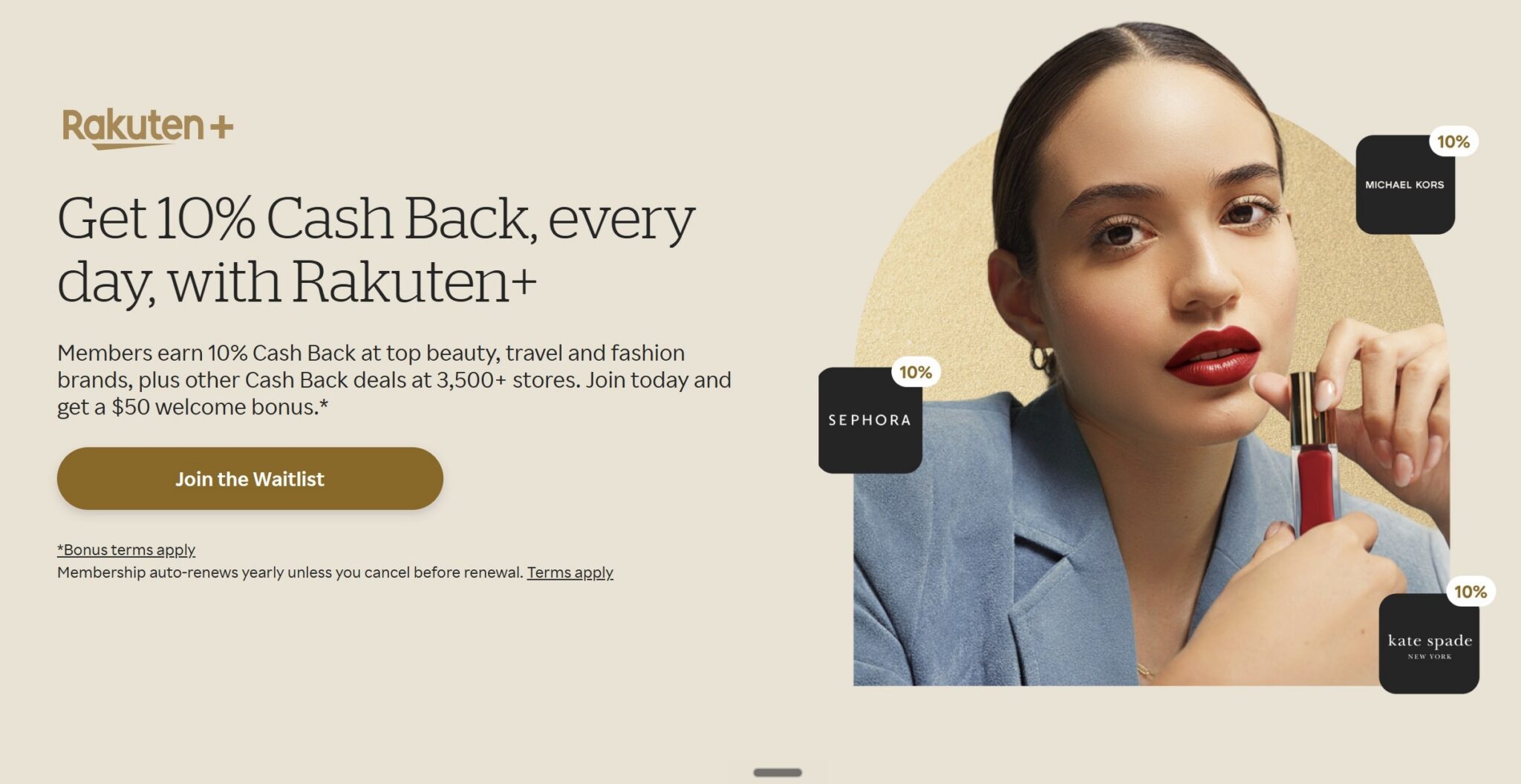
The landscape of digital affiliate marketing and consumer loyalty programs is undergoing a significant shift as Rakuten, one of the world’s largest cash-back shopping platforms, begins testing a premium subscription tier. Identified as Rakuten+, the new service introduces a paid membership model designed to provide consistent, elevated rewards for high-volume shoppers. For an annual fee of $100, subscribers gain access to a guaranteed 10% cash-back rate at a curated selection of partner merchants, alongside a one-time introductory bonus. This move represents a departure from the traditional free-to-use model that has defined the cash-back portal industry for over two decades, signaling a move toward the "premiumization" of loyalty services seen in other sectors of the digital economy.
Core Features and Membership Structure
The Rakuten+ program is currently positioned as an invite-only or waitlist-based service, a strategy often employed by tech companies to manage initial demand and refine user experience before a full-scale public launch. The primary value proposition of the membership is the "Always 10% Back" guarantee. While standard Rakuten users experience fluctuating rates—often ranging from 1% to 15% depending on seasonal promotions and holiday events—Rakuten+ members are promised a stable 10% floor at specific retailers.
Initial reports indicate that the merchant list for Rakuten+ includes high-value travel and retail partners such as Hotels.com and Viator. These additions are particularly noteworthy due to the high average transaction values associated with travel bookings. For instance, a $1,000 hotel stay or tour package would net a subscriber $100 in cash back, effectively recouping the annual membership fee in a single transaction.
To incentivize early adoption, Rakuten has paired the launch with a $50 sign-up bonus. To qualify for this incentive, new members must spend at least $250 at participating Rakuten+ merchants within the first 90 days of their membership. This tiered approach ensures that the program attracts active shoppers rather than passive accounts, providing Rakuten with a more predictable revenue stream through annual dues.
Chronology of Development and Market Context
The discovery of the Rakuten+ program was first brought to light by industry analysts and specialized consumer finance outlets, including Doctor of Credit. While Rakuten has not yet issued a global press release detailing the full extent of the rollout, the appearance of the "Join the Waitlist" landing page indicates that the program is in an advanced stage of pilot testing.
The evolution of Rakuten provides necessary context for this strategic pivot. Founded in Japan in 1997 and significantly expanded through the 2014 acquisition of Ebates for $1 billion, Rakuten has traditionally operated on a commission-sharing model. In this model, retailers pay Rakuten a percentage of every sale referred through the site, and Rakuten shares a portion of that commission with the consumer.
The introduction of a paid tier mirrors successful models implemented by other retail giants. Amazon Prime, launched in 2005, proved that consumers are willing to pay for perceived value and convenience. More recently, Walmart+ and various "delivery pass" services from Uber and DoorDash have reinforced the trend. By adding a subscription layer, Rakuten aims to increase "customer stickiness," ensuring that when a consumer prepares to make a purchase, they prioritize Rakuten-affiliated merchants to maximize the return on their $100 investment.
Economic Analysis and Break-Even Projections
For the average consumer, the decision to enroll in a paid cash-back service requires a calculated analysis of the "break-even" point. At a $100 annual cost, a member must earn at least $100 in cash back specifically from the 10% tier—above what they would have earned on the free tier—to justify the expense.
If a merchant typically offers 2% cash back on the free platform, the Rakuten+ member gains an incremental 8%. To cover the $100 fee with that 8% delta, the user would need to spend approximately $1,250 annually at that specific merchant. However, the inclusion of the $50 sign-up bonus dramatically alters this math for the first year. With the bonus applied, the effective cost of the first year drops to $50, lowering the incremental spend requirement to $625.
Data from the travel industry suggests that these thresholds are easily met by frequent travelers. According to 2023 consumer spending reports, the average American household spends over $2,000 annually on leisure travel. If that spending is funneled through Hotels.com or Viator via Rakuten+, the return on investment becomes clear. Conversely, for sporadic shoppers who do not frequent the specific list of participating merchants, the $100 fee may represent a net loss compared to using free alternative portals.
Competitive Landscape and Industry Reactions
The launch of Rakuten+ occurs in a highly competitive environment. Rakuten’s primary competitors, such as TopCashback and RetailMeNot, currently maintain strictly free models. Furthermore, the rise of browser-based tools like Capital One Shopping has introduced aggressive, AI-driven "targeted offers" that sometimes exceed 15% or 20% for specific users without requiring a subscription fee.
Industry analysts suggest that Rakuten’s move is less about competing on the highest possible percentage and more about competing on reliability. "The challenge with traditional portals is the volatility of rates," notes one digital marketing consultant. "A consumer might check a site today and see 10%, but by the time they are ready to book their flight tomorrow, it has dropped to 2%. Rakuten+ is selling peace of mind and the removal of ‘rate anxiety’ for the power shopper."
Furthermore, Rakuten’s unique partnership with American Express adds a layer of value that competitors cannot easily match. Users who opt to receive their rewards in the form of Membership Rewards points rather than cash can often extract even higher value. If a Rakuten+ member earns 10x points per dollar spent, and those points are valued at 2 cents each when transferred to airline partners, the effective return on spend reaches 20%. This synergy makes Rakuten+ a potentially formidable tool for the "points and miles" community.
Technical Implementation and the Waitlist Strategy
The decision to utilize a waitlist for Rakuten+ serves multiple operational purposes. First, it allows the company to monitor the impact of guaranteed 10% rates on their own profit margins. Because Rakuten must pay out these rewards regardless of the commission they receive from the merchant, there is a risk of "margin squeeze" if a merchant lowers their affiliate payout below 10%.
Second, the waitlist creates a data set of high-intent consumers. By analyzing who signs up for the waitlist, Rakuten can identify which merchant categories (e.g., travel, luxury goods, electronics) are driving the most interest. This data can then be used to negotiate better affiliate contracts with those retailers, using the promise of a dedicated, high-spending subscriber base as leverage.
The user interface for the waitlist suggests a streamlined enrollment process. Prospective members are prompted to log into their existing Rakuten accounts, after which they are placed in a queue. Reports from early testers suggest that invitations are being sent in waves, though the company has not disclosed the specific criteria for selection or the expected timeline for a general public release.
Broader Implications for E-commerce
The introduction of Rakuten+ may signal a broader trend where free internet services begin to bifurcate into "freemium" and "pro" versions. As customer acquisition costs (CAC) rise for online retailers, the value of a loyal, returning customer increases. A subscription model effectively "locks" the consumer into the Rakuten ecosystem.
From the merchant’s perspective, being part of the Rakuten+ "10% Club" is a powerful marketing tool. While the merchant may have to pay a higher commission to support the 10% rate, they gain access to a demographic of consumers who have already demonstrated a willingness to pay for shopping advantages. These are, statistically, higher-lifetime-value (LTV) customers.
However, there are potential risks for the consumer. The success of the program depends entirely on the stability of the merchant list. If a key partner like Hotels.com were to leave the program, the value proposition for many subscribers would collapse. Professional journalistic observation of the terms and conditions will be essential as the program matures to see if Rakuten reserves the right to alter the merchant list or the 10% guarantee during the middle of a subscription year.
Conclusion
Rakuten+ represents a bold experiment in the monetization of loyalty. By pivoting toward a subscription-based model, Rakuten is betting that a segment of its 17 million members will value consistency and premium rates over the traditional, no-cost experience. While the $100 annual fee is a hurdle, the $50 introductory bonus and the high-value nature of travel-related cash back provide a plausible path to profitability for the frequent shopper. As the program moves from a waitlist to a broader rollout, its impact on the wider affiliate marketing industry will be closely watched by competitors and consumers alike. For now, the program remains a niche offering, but it carries the potential to redefine how rewards are earned in the digital age.




 Chandra Hamzah
 Gabriela Annisa
 Tatiana Tantri Indah Sari
 Anjar Salim