
 Tatiana Tantri Indah Sari
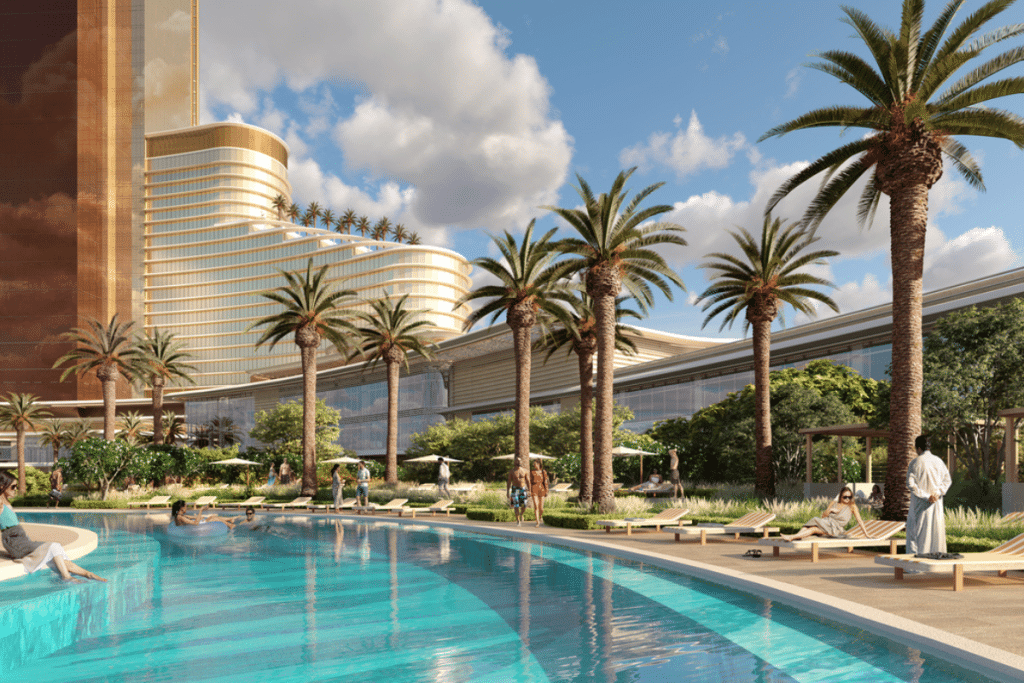
The hospitality landscape in the Emirate of Ras Al Khaimah is undergoing a profound transformation as existing properties rush to upgrade their facilities and recalibrate their business models ahead of the highly anticipated debut of Wynn Al Marjan Island. Scheduled to open its doors in September 2027, the landmark integrated resort—featuring the United Arab Emirates’ first authorized gaming facility—is already exerting a gravitational pull on neighboring hotels. Industry stakeholders, property owners, and asset managers are repositioning their inventories to capture a more affluent demographic, signaling a definitive shift away from the budget-conscious, volume-driven models that have historically characterized parts of the northern emirate’s tourism sector.
According to Alison Grinnell, CEO of Marjan Hospitality, the hospitality arm of master developer Marjan, hotels surrounding the upcoming Wynn development are actively undertaking extensive renovations. Concurrently, these establishments are phasing out or significantly curtailing their reliance on traditional all-inclusive packages. This evolution is designed to align local lodging options with the elevated market standards and pricing power expected to accompany the arrival of Wynn Resorts, a global titan in luxury hospitality and gaming.
A Strategic Evolution Across the Emirate
The impending arrival of Wynn Al Marjan Island has served as a catalyst for capital expenditure across Ras Al Khaimah. Properties that once catered primarily to families seeking predictable, all-inclusive beach holidays are now pivoting toward higher-yield segments. This involves upgrading room stock, revamping food and beverage concepts, and refining service standards to attract international travelers accustomed to luxury urban and resort destinations.
Prominent properties within the immediate vicinity of Al Marjan Island are leading this charge. For instance, the Rixos Al Mairid Ras Al Khaimah is currently executing a comprehensive refurbishment program encompassing 323 guest rooms within its main building. This major capital project is timed to coincide with the property’s transition toward a more premium market positioning slated for December. By elevating its hardware and service offerings, the resort aims to capture the spillover demand generated by affluent visitors drawn to the emirate by the Wynn development.
Similarly, the Pullman Resort Al Marjan Island is undergoing a significant overhaul. The property is currently refurbishing 300 rooms as part of a strategic repositioning that will see it reopen as an adults-only lifestyle resort in the second quarter of 2027. This targeted pivot addresses a distinct niche in the local market, catering to couples, corporate travelers, and leisure guests seeking a more tranquil, sophisticated environment distinct from family-heavy all-inclusive resorts.
Grinnell noted that these infrastructural and operational updates are part of a natural asset lifecycle, which has been accelerated and focused by the mega-project on the horizon. Many of the existing hotels on and around Al Marjan Island are approaching or have surpassed their ten-year operating marks. In the hotel industry, a decade typically necessitates a comprehensive soft and hard-goods renovation to maintain competitiveness.
"When you’ve new, shiny hotels coming into the market, neighboring hotels want to make sure that they have done a normal lifecycle upgrade," Grinnell explained. "We always had a plan to make sure our existing hotels had their renovation process gone through before the Wynn opened."
Chronology of the Transformation: From Quiet Coastline to Global Gaming Hub
To understand the magnitude of the current hotel renovations in Ras Al Khaimah, it is essential to examine the strategic evolution of the emirate’s tourism sector over the past two decades. Long overshadowed by its glamorous neighbor, Dubai, Ras Al Khaimah deliberately cultivated a tourism identity centered on natural landscapes, outdoor adventure, and relaxed beach vacations.
Timeline of Development on Al Marjan Island and Beyond
- 2013: Master developer Marjan completes the reclamation of Al Marjan Island, a cluster of four coral-shaped reclaimed islets stretching 4.5 kilometers into the Arabian Gulf, laying the infrastructure for high-end hospitality development.
- 2014–2019: Several international hotel brands establish a presence on Al Marjan Island and the surrounding coastline, including DoubleTree by Hilton, Rixos, and Pullman, largely adopting volume-driven business models that rely heavily on European charter flights and all-inclusive packages.
- Early 2022: Ras Al Khaimah Tourism Development Authority (RAKTDA) establishes the Department of Entertainment and Gaming Regulation, creating a robust legal and regulatory framework for commercial gaming, signaling a bold pivot toward high-value tourism.
- January 2023: Wynn Resorts officially announces its partnership with Marjan and RAK Hospitality Holding to develop a multibillion-dollar integrated resort on Al Marjan Island, featuring a hotel, extensive dining and entertainment options, and a gaming area.
- Late 2023–2024: Construction of Wynn Al Marjan Island commences in earnest, visibly altering the skyline and prompting neighboring hoteliers to reassess their long-term capital expenditure plans.
- 2024–2027 (Current Phase): Existing properties, such as Rixos Al Mairid and Pullman Resort Al Marjan Island, initiate large-scale renovations, phase out all-inclusive models, and target premium adult or luxury segments ahead of the September 2027 opening.
This timeline illustrates how a secondary destination has systematically transformed itself into a primary focus for international tourism investment. The regulatory greenlight for gaming provided the missing piece of the puzzle, unlocking billions of dollars in foreign direct investment and compelling legacy assets to modernize or risk obsolescence.
Economic Data and Market Dynamics
The strategic shifts observed among Ras Al Khaimah’s hoteliers are underpinned by compelling macroeconomic and tourism data. Prior to the announcement of the Wynn resort, Ras Al Khaimah experienced steady, albeit modest, growth in visitor numbers, relying heavily on regional travelers from the UAE and international markets such as Germany, the United Kingdom, and Russia.
However, the entry of an integrated resort changes the financial equation for hoteliers. According to industry estimates, integrated resorts drive significant increases in average daily rates (ADR) and revenue per available room (RevPAR) across their host destinations. The presence of high-rolling international gamblers and entertainment-seekers typically lifts the entire local hospitality ecosystem, allowing neighboring properties to command higher tariffs.
Financial analysts project that the September 2027 opening of Wynn Al Marjan Island will increase Ras Al Khaimah’s overall hotel room inventory significantly while simultaneously driving up market-wide pricing power. By shedding low-margin, all-inclusive packages—which often limit secondary spending on food, beverage, and retail—hoteliers can capture higher yields from individual guests. This transition mirrors the evolution seen in other gaming and entertainment hubs, where secondary properties adapt to serve the overflow traffic of high-spending visitors.
Furthermore, construction and real estate values on and around Al Marjan Island have experienced exponential appreciation since the Wynn announcement. Land parcels that remained vacant for years have been acquired by regional and international developers eager to build branded residences, luxury boutiques, and upscale dining establishments. This commercial real estate boom creates a synergistic environment where every stakeholder benefits from infrastructural and aesthetic upgrades.
Official Perspectives and Industry Reactions
The leadership at Marjan, RAKTDA, and various hotel management companies view the upcoming market shift not as a disruptive threat, but as an unprecedented opportunity for collective elevation. Publicly, tourism authorities have emphasized that the diversification of Ras Al Khaimah’s hospitality offering is essential to achieving the emirate’s long-term visitor targets.
RAKTDA has consistently stated its ambition to attract over 3 million visitors annually by the end of the decade. Achieving this goal requires a diversified lodging ecosystem that can seamlessly accommodate families, adventure tourists, business travelers, and high-net-worth individuals drawn to gaming and luxury entertainment.
Hotel operators currently undergoing renovations express confidence that shedding the all-inclusive model will pay dividends. By positioning themselves as boutique, wellness-oriented, or adults-only lifestyle properties, these hotels insulate themselves from direct price competition with the ultra-luxury Wynn resort while still benefiting from the destination’s elevated global profile. Instead of competing on price, they are competing on specific experiential pillars—such as seclusion, wellness, culinary focus, or bespoke service.
Investors and institutional asset owners have largely backed these capital allocation decisions. Securing financing for hotel renovations in Ras Al Khaimah has become considerably easier as lenders recognize the transformative potential of the Al Marjan Island master plan. Banks and financial institutions view the pre-2027 upgrade cycle as a necessary de-risking exercise that ensures existing assets remain competitive in a vastly superior market.
Broader Implications for Regional Tourism
The ripple effects of the Wynn Al Marjan Island development extend far beyond the borders of Ras Al Khaimah, influencing tourism strategies across the wider United Arab Emirates and the broader Gulf Cooperation Council (GCC) region.
1. Diversification Beyond Dubai
For years, Dubai has served as the undisputed leisure and business capital of the UAE, capturing the lion’s share of international long-haul travelers and luxury spenders. The introduction of a regulated gaming resort in Ras Al Khaimah creates a compelling secondary leisure destination within the country. This encourages multi-destination itineraries, where international visitors spend a few days experiencing Dubai’s urban attractions before retreating to the tranquil beaches and entertainment-focused environment of Ras Al Khaimah.
2. Paradigm Shift in All-Inclusive Tourism
The conscious departure from all-inclusive packages by multiple hotels in Ras Al Khaimah signals a broader maturation of the UAE’s secondary tourism markets. While all-inclusive models remain popular in certain sun-and-sand destinations, they often cap revenue potential and fail to stimulate the local retail and dining economies. By training the market to expect room-only or breakfast-inclusive rates, hoteliers are fostering a more dynamic, high-spending visitor base that actively explores external dining and entertainment venues.
3. Real Estate and Infrastructure Synergies
The race to renovate existing properties has galvanized municipal authorities to accelerate infrastructure development across Ras Al Khaimah. Road networks connecting Al Marjan Island to the mainland, public beaches, retail promenades, and utility grids are all undergoing concurrent expansions. This public-private synergy ensures that the physical environment matches the elevated standards of the incoming luxury assets.
As September 2027 draws closer, the metamorphosis of Ras Al Khaimah’s hospitality sector will continue to accelerate. The proactive modernization of properties like Rixos Al Mairid and Pullman Resort Al Marjan Island demonstrates that the emirate’s hospitality community is ready to embrace a new era of global tourism prominence—one defined by luxury, sophistication, and diversified economic growth.




 Gabriela Annisa

 Lukman Taruna Persada Ramadan

 Anjar Salim

 Dwi Wanna
