Tatiana Tantri Indah Sari
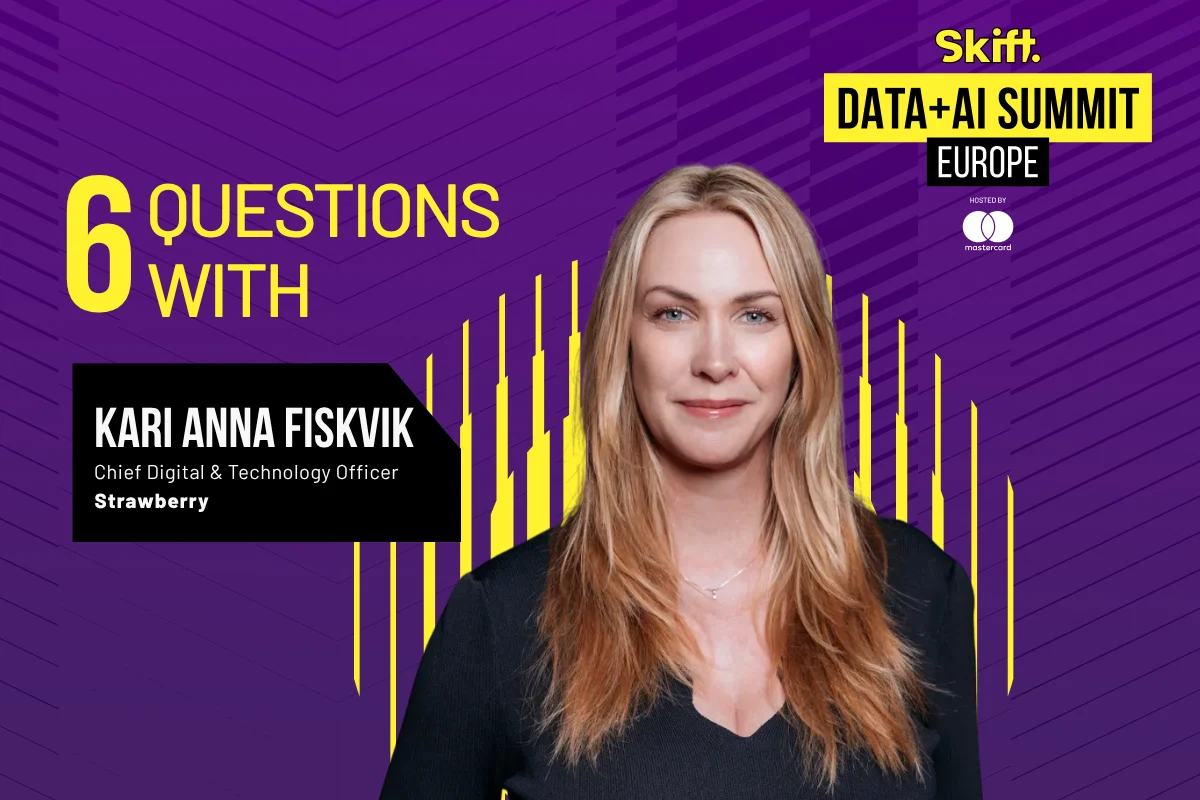
The rapid convergence of artificial intelligence and the hospitality sector has ignited a fierce debate regarding where capital, time, and strategic focus should be directed. As travel organizations across Europe race to integrate generative tools, machine learning, and automated booking assistants into their legacy frameworks, industry leaders are increasingly recognizing that the true bottleneck to digital transformation is not the sophistication of the algorithm, but the integrity of the underlying architecture. Nordic hotel giant Strawberry offers a case study in this operational philosophy. Ahead of her appearance at the upcoming Skift Data + AI Summit Europe—scheduled for October 6, 2026, at Mastercard London—Kari Anna Fiskvik, Chief Digital and Technology Officer at Strawberry, addressed the fundamental realities of deploying technology in a deeply human-centric industry. Her insights challenge prevailing industry narratives, emphasizing that unified data plumbing and human intuition far outweigh the allure of purchasing off-the-shelf AI models or building proprietary systems on fractured foundations.
Main Facts and Operational Realities
At the core of Fiskvik’s strategic outlook is a stark assessment of how enterprise data actually functions. In an ecosystem where a guest’s journey spans multiple touchpoints—from initial web discoverability and loyalty program interactions to property management systems, point-of-sale terminals, and physical housekeeping logs—fragmentation remains the primary obstacle to scale. According to Strawberry’s leadership, AI operates strictly as a force multiplier. When applied to clean, structured, and real-time guest data, machine learning accelerates and refines organizational decision-making. However, when applied to institutional chaos—such as inconsistent guest histories, siloed departmental records, and legacy systems that fail to communicate—AI merely amplifies inefficiencies at an accelerated rate.
This perspective challenges the prevailing notion among many corporate technologists that developing custom AI models guarantees a competitive edge over established global platforms. Even as technology giants like Google integrate direct property booking options into conversational search interfaces, the accommodations that secure prominent visibility are consistently those equipped with robust, structured, and complete data pipelines. In this shifting digital landscape, the model itself is rapidly commoditizing, while the internal data architecture and integration plumbing remain fiercely proprietary and critical to long-term operational success.
Chronology and Crisis Management: The 2021 Ransomware Test
The resilience of an organization’s technological foundation is rarely tested under ideal laboratory conditions; rather, it is revealed during moments of acute crisis. For Strawberry, this ultimate stress test occurred in 2021 at the height of the global COVID-19 pandemic. A coordinated ransomware attack—orchestrated by the Conti cybercrime syndicate—compromised and took down the vast majority of the Nordic hotel group’s critical digital infrastructure.
The timeline of recovery underscored the limits of theoretical compliance and highlighted the irreplaceable value of human operational readiness. Despite the scale of the disruption, Strawberry managed to restore its primary systems and bring its core operations back online within just four days. Reflecting on the incident, Fiskvik noted that the rapid restoration was not achieved through exhaustive compliance documentation or rigid corporate binders, but through the decisive actions of personnel who understood the operational priorities. This historical precedent informs Strawberry’s current skepticism toward purely bureaucratic approaches to technological governance. While modern European regulatory frameworks—such as the European Union’s stringent AI rules—demand rigorous risk assessments, prompt-injection defenses, and mandatory content labeling, leadership argues that excessive paperwork does not inherently equate to heightened cybersecurity or operational safety.
Supporting Data and the Economics of AI Adoption
As European travel operators navigate a crowded vendor marketplace, economic realities are forcing a rigorous appraisal of return on investment. Industry analyses indicate a surge in technology startups pitching generative AI solutions specifically tailored for the hospitality vertical. However, a significant portion of these vendors are primarily focused on venture capital fundraising cycles rather than solving foundational guest journey friction.
Strawberry’s operational metrics demonstrate where automation delivers genuine commercial value. At properties such as Villa Copenhagen, the implementation of an AI concierge named Vivi has redefined the conversion funnel. By enabling prospective guests to inquire about a double room for specific dates and receiving immediate, bookable rates alongside relevant packages within seconds—bypassing traditional "contact us for availability" friction—the property has successfully shortened the distance between inquiry and transaction. This focus on conversion metrics highlights the primary commercial opportunity for AI in travel: transforming passive guest questions into immediate, confirmed reservations.
Broader Impact and Implications for the Workforce
Beyond technical architecture and revenue conversion, the integration of artificial intelligence into European travel operations carries profound societal implications, particularly regarding employment and workforce development. As a company operating under a triple-bottom-line philosophy emphasizing people, planet, and profit, Strawberry has explicitly rejected the wholesale automation of entry-level roles.
The broader travel sector faces a critical demographic and structural challenge: automated systems can rapidly process vast datasets, draft communications, and execute administrative workflows, but they lack lived human context. Furthermore, replacing junior positions with automated agents risks hollowing out the talent pipeline, depriving young professionals of the foundational experiences required to develop industry expertise. Consequently, leadership advocates for a balanced strategy that pairs technological efficiency with a deliberate commitment to workforce sustainability, ensuring that human judgment remains central to the hospitality experience.
Looking Ahead: The Evolving Booking Landscape
Looking toward the next two years, the structural transformation of European travel will likely be driven by agentic booking systems. As digital assistants assume responsibility for complex multi-step tasks—such as comparing cash rates against loyalty point redemptions across multiple airline and hotel platforms simultaneously—the mechanics of digital discoverability are fundamentally shifting. While travelers continue to retain final approval over payment and room selection, AI agents are increasingly executing the foundational research, comparison, and itinerary assembly behind the scenes.
This shift presents distinct strategic challenges for independent hotels and smaller regional groups, who face mounting difficulties in maintaining digital visibility against dominant platforms and online travel agencies. Moreover, emerging ecosystems, such as Meta’s dedicated travel applications, signal a continuous reconfiguration of digital advertising models and customer acquisition channels. For industry executives gathering at Mastercard London for the Skift Data + AI Summit Europe, the central directive remains clear: sustainable technological adoption requires operators to prioritize robust data foundations, maintain a skeptical eye toward vendor hype, and safeguard the human element that underpins authentic hospitality.




 Lukman Taruna Persada Ramadan

 Anjar Salim

 Budi Mulyono