
 Tatiana Tantri Indah Sari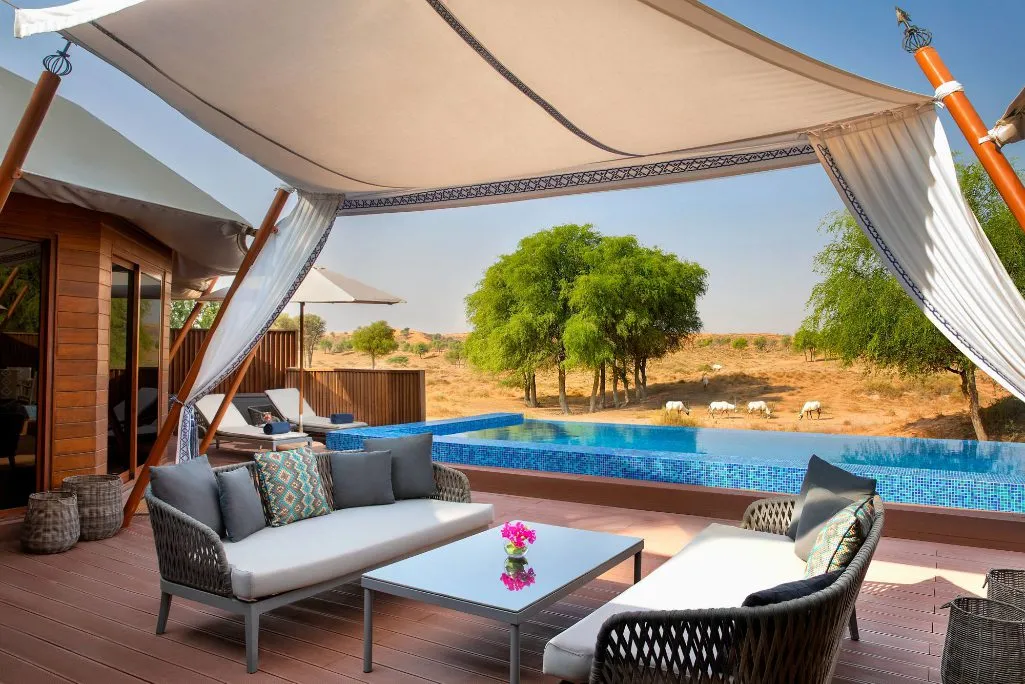
Ras Al Khaimah, the northernmost emirate of the United Arab Emirates, is executing a decisive strategic pivot to reposition itself from a regional value-driven destination into a premier global luxury sanctuary. Driven by aggressive tourism targets and a burgeoning hospitality infrastructure pipeline, the emirate is systematically reshaping its tourism identity. By the end of the decade, local authorities project that the vast majority of the destination’s hotel inventory will cater to affluent global travelers seeking high-end exclusivity, pristine natural landscapes, and world-class integrated entertainment.
The transformation represents a radical departure from the emirate’s historical positioning. For years, Ras Al Khaimah relied heavily on competitive pricing, accessible beach resorts, and niche adventure tourism to carve out a distinct identity relative to its glitzier neighbors, Dubai and Abu Dhabi. However, a surging influx of international capital, combined with a post-pandemic recalibration of luxury travel demand, has catalyzed an unprecedented construction and rebranding boom across the emirate’s coastline, desert dunes, and mountain ranges.
A Paradigm Shift Toward Premium Hospitality
At the heart of this transformation is a comprehensive restructuring of the emirate’s lodging accommodations. According to Phillipa Harrison, CEO of the Ras Al Khaimah Tourism Development Authority (RAKTDA), the destination’s structural profile is undergoing a seismic realignment.
"Around 13.3% of the current hotel inventory is in the luxury five-star category. By 2030, 80% of our keys are going to be premium," Harrison stated, emphasizing the sheer scale of the vision.
To achieve this ambitious benchmark, RAKTDA has laid out a robust development roadmap that will nearly double the emirate’s overall room capacity. Currently, Ras Al Khaimah boasts approximately 8,700 hotel keys. Under the current development framework, the emirate anticipates adding roughly 8,000 new rooms by 2030, swelling the total inventory to approximately 16,000 keys. Crucially, the overwhelming majority of these incoming properties belong to upper-upscale and ultra-luxury segments, effectively rewriting the hospitality landscape of the northern UAE.
Chronology of Development: A Phased Rollout to 2030
The transition from a value proposition to a high-end luxury destination is not a distant concept; it is actively unfolding through a carefully orchestrated timeline of property openings. The roadmap features a diverse array of branded residences, secluded eco-lodges, and massive integrated mega-resorts designed to capture high-spending demographics from Europe, the Americas, Asia, and the wider GCC region.
The rollout began intensifying with regional and lifestyle developments, setting the stage for major global flagships. The hospitality calendar for the coming years highlights a steady cadence of high-profile property launches:
- 2026: The debut of the 258-key Rotana Ras Al Khaimah – The Mangroves marks an important step in expanding upscale eco-conscious hospitality, blending modern luxury with the emirate’s unique coastal ecosystems.
- 2027: The pipeline reaches a monumental milestone with the scheduled September 2027 opening of the highly anticipated Wynn Al Marjan Island. Originally slated for early 2027, the 1,530-key integrated resort represents the single largest hospitality and entertainment investment in Ras Al Khaimah’s history. Alongside the Wynn property, 2027 will also see the introduction of the 70-key Saij Mountain Lodge by Mantis, an exclusive ultra-luxury mountain sanctuary perched high on Jebel Jais, the UAE’s highest peak.
- 2028 and Beyond: A subsequent wave of globally renowned luxury hospitality brands is scheduled to enter the market. This includes high-end flagships such as Nobu, Janu, Fairmont, W Hotels, The Unexpected, and Four Seasons, firmly establishing Ras Al Khaimah within the upper echelon of international luxury travel itineraries.
The Anchor Project: Wynn Al Marjan Island and Its Market Impact
No single development has captured the imagination of the global hospitality and gaming sectors quite like Wynn Al Marjan Island. Situated on a dedicated man-made archipelago, the massive multi-billion-dollar resort is engineered to be a transformative catalyst for the emirate’s tourism economy.
Featuring 1,530 rooms, high-end retail spaces, world-class dining, extensive MICE (Meetings, Incentives, Conferences, and Exhibitions) facilities, and the UAE’s first regulated gaming area, the resort is expected to dramatically alter visitor demographics. While construction timelines have experienced minor adjustments—with the opening target shifting from the initial first quarter of 2027 to September 2027—investors and tourism analysts view the project as a watershed moment for the region.

The presence of the Wynn brand, alongside subsequent ultra-luxury entrants like Janu and Nobu, signals a profound validation of Ras Al Khaimah’s long-term tourism strategy by institutional investors and global hotel operators. These brands do not typically enter secondary or tertiary markets unless rigorous macroeconomic modeling indicates a sustained, high-yield demand base.
Diversification Beyond the Beach: Mountains, Deserts, and Protected Reserves
While coastal developments on Al Marjan Island and beachfront properties command a significant portion of the new pipeline, Ras Al Khaimah’s luxury strategy is uniquely underpinned by its diverse topography. Unlike traditional sun-and-sand destinations, the emirate leverages a dramatic landscape encompassing terracotta deserts, mangrove forests, and the rugged Hajar Mountains.
Properties such as the Ritz-Carlton Ras Al Khaimah, Al Wadi Desert—situated within a 1,235-acre protected nature reserve where guests can experience private desert treks on horseback or camelback—illustrate the destination’s existing strength in experiential luxury.
The upcoming launch of the Saij Mountain Lodge by Mantis on Jebel Jais further underscores this strategy. By placing low-impact, high-luxury accommodations over 1,900 meters above sea level, RAKTDA is tapping into the growing global appetite for wellness-oriented, nature-immersive tourism. Adventure tourism, anchored by the world’s longest zipline and the UAE’s highest restaurant on Jebel Jais, will continue to serve as a complementary driver, ensuring that affluent travelers seeking active itineraries find high-end execution.
Economic Implications and Broader Market Reactions
The strategic pivoting of Ras Al Khaimah carries significant economic implications for the wider United Arab Emirates tourism ecosystem. For decades, Dubai has acted as the undisputed gravitational pull for international arrivals into the region, with Abu Dhabi capturing high-end cultural and business tourism through entities like Saadiyat Island.
By aggressively courting the ultra-luxury segment, Ras Al Khaimah is positioning itself not as a competitor to Dubai, but as a sophisticated complementary extension. Industry analysts note that travelers increasingly seek multi-center vacations within the UAE—combining the urban dynamism of Dubai with the serene coastal and mountain luxury of Ras Al Khaimah.
Furthermore, the shift toward a premium inventory aligns with broader national economic objectives aimed at increasing tourism’s contribution to the UAE’s GDP, creating high-value employment opportunities, and attracting foreign direct investment. Local supply chains, construction sectors, and vocational training institutions are already adapting to meet the rigorous service standards demanded by global luxury brands like Four Seasons and Fairmont.
Challenges and Future Outlook
Despite the overwhelmingly positive trajectory, the transition is not without operational and strategic challenges. Rapidly scaling hotel inventory from 8,700 to 16,000 rooms requires a proportional and sustained increase in global airlift, targeted international marketing, and workforce development. Ensuring that infrastructure—such as transport links between Dubai International Airport and Ras Al Khaimah—remains seamless will be vital to accommodating the anticipated surge in high-net-worth visitors.
Moreover, maintaining pricing power as thousands of new luxury keys flood the market between 2026 and 2030 will require disciplined revenue management and distinct brand differentiation among the competing operators.
Nevertheless, with RAKTDA maintaining strict oversight of the 8,000-key pipeline and securing commitments from the world’s most prestigious hospitality groups, Ras Al Khaimah is well on its way to achieving its ambitious 2030 vision. The emirate’s calculated evolution from a budget-friendly escape into a refined global sanctuary demonstrates a mature, forward-looking approach to destination management, ensuring its place on the map for the world’s most discerning travelers for decades to come.



 Budi Mulyono
 Lukman Taruna Persada Ramadan

 Anjar Salim
 Chandra Hamzah