
 Anjar Salim
The announcement, made on April 14, 2026, marks a significant milestone in the evolution of urban transportation, as Segway continues to transition from its origins in self-balancing personal transporters to a dominant force in the global electric bicycle market. These two new models, the Myon and the MUXI, represent a strategic effort to blend sophisticated software-driven performance with the fundamental ease of use that has defined cycling since the 19th century. By integrating advanced sensor arrays and proprietary algorithms, Segway aims to eliminate the mechanical complexities often associated with high-performance e-bikes, offering instead a "get on and go" experience tailored for both the daily commuter and the utility-focused urbanite.
The Myon: Engineering a Seamless Commute
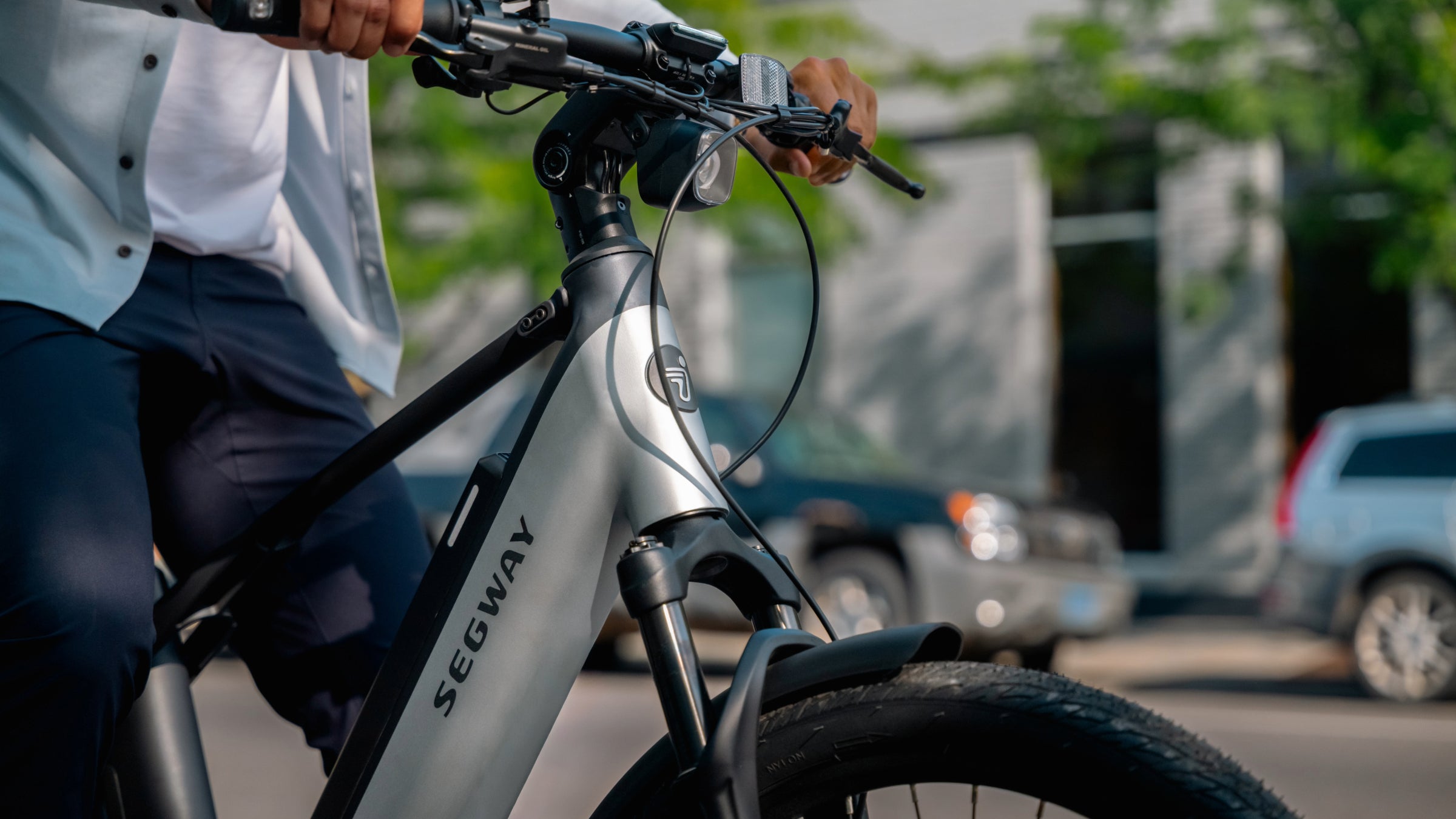
The Myon is positioned as a premium, technology-forward commuter bike designed to navigate the rigors of modern city environments. At the heart of the Myon’s performance is a 500-watt nominal motor capable of producing 85 Newton-meters (Nm) of torque. This torque rating is particularly significant, as it places the Myon in competition with many mid-drive systems known for their climbing ability, yet Segway has achieved this through a refined hub-drive configuration optimized for efficiency.
To ensure the power delivery feels natural rather than robotic, Segway has implemented a "trio-sensor" system. This includes a torque sensor to measure rider input, a cadence sensor to track pedaling speed, and a gyroscope to detect changes in incline. These data points are processed in real-time by Segway’s upgraded Algorithm 2.0 software, part of the company’s "TurboTuned" optimization suite. The result is a ride quality that mimics the sensation of a traditional bicycle but with a significant "tailwind" effect, eliminating the "herky-jerky" acceleration common in entry-level e-bikes.
The Myon also introduces high-end mechanical and electronic integration through the use of the Shimano CUES drivetrain. This 9-speed system is operated via push-button electronic shifting, a feature typically reserved for enthusiast-grade road or mountain bikes. By automating the precision of the shift, Segway reduces mechanical wear and ensures that even riders unfamiliar with gear ratios can maintain an optimal cadence. With a projected range of up to 80 miles on a single charge, the Myon is engineered to handle multiple days of commuting without requiring a recharge, addressing one of the primary concerns of potential e-bike adopters: range anxiety.
The MUXI: Utility Meets Modern Aesthetics
While the Myon focuses on the individual commuter, the MUXI is designed for versatility and cargo capacity. Classified as a "short-tail" e-bike, the MUXI occupies a unique space between a standard bicycle and a full-sized cargo bike. Its design language draws inspiration from both European "bakfiets" (box bikes) and classic American beach cruisers, resulting in a frame that is both functional and approachable.
The MUXI utilizes a 750-watt direct-drive motor, a departure from the geared motors found in many competitors. Direct-drive technology offers several distinct advantages, most notably the ability to implement regenerative braking. This system allows the motor to act as a generator when the rider applies the brakes or descends a hill, capturing kinetic energy and feeding it back into the battery. Furthermore, the MUXI features integrated traction control and descent control—automotive-grade safety features that enhance stability when the bike is carrying heavy loads or navigating slippery surfaces.
One of the MUXI’s most compelling features is its modularity. The optional "Passenger Kit" transforms the rear rack into a secure seat, making it a viable solution for school drop-offs or carrying an adult passenger. Despite its high power output, the MUXI employs a single-speed drivetrain. This choice emphasizes the "simplicity" aspect of Segway’s design philosophy, relying on the motor’s high torque to handle starts and hills, thereby removing the need for the rider to manage gears.
A Chronology of Innovation: Segway’s Path to 2026
The release of the Myon and MUXI is the culmination of a decade-long transformation for the Segway brand. To understand the significance of these models, one must look at the company’s trajectory since the mid-2010s:
- 2015: Segway was acquired by Ninebot, a Beijing-based transportation robotics startup. This merger combined Segway’s extensive patent portfolio with Ninebot’s efficient manufacturing and supply chain capabilities.
- 2017–2020: The company pivoted toward the "last-mile" solution, becoming the primary supplier for the global e-scooter sharing boom. This era allowed Segway to test its battery management systems and motor controllers at an unprecedented scale.
- 2021–2024: Segway entered the consumer e-bike market with the "Xyber" and "Xafari" series, focusing on rugged, off-road performance. These models served as a testing ground for the smart technology now found in the Myon and MUXI.
- 2025: The company announced its "Simply Moving" mission, signaling a shift away from "gadget-heavy" designs toward sleek, integrated transportation solutions that prioritize the user experience.
- April 2026: The launch of the Myon and MUXI represents the most refined iteration of this mission, targeting the mainstream urban market with high-tech features hidden behind an intuitive interface.
Integrated Intelligence and Safety Ecosystems
Both the Myon and the MUXI share a suite of "smart" features that distinguish them from traditional bicycles. Central to this is the 2.4-inch TFT (Thin-Film Transistor) display. Unlike basic LCD screens, this full-color display offers smartphone-like clarity and features an ambient light sensor. When riding through tunnels or as evening approaches, the screen automatically dims to prevent glare; conversely, it boosts brightness in direct sunlight to maintain readability.

Security is another pillar of the new lineup. Both bikes include:
- AirLock: A proximity-based locking system that detects the owner’s smartphone via Bluetooth, automatically unlocking the bike as they approach and locking it as they walk away.
- Apple Find My Integration: This allows users to track their bike’s location using the global Apple network, providing peace of mind in high-theft urban areas.
- Lost Mode: In the event of a theft, owners can remotely disable the motor and electronics through the Segway app, rendering the bike useless to the thief.
Safety is further enhanced by an advanced lighting system. The bikes feature front light bars with customized lenses designed to maximize the beam pattern without blinding oncoming traffic. Integrated turn indicators and automatic brake lights are standard, providing a level of visibility usually associated with motorcycles. For riders seeking maximum protection, Segway offers an optional Rearview Radar accessory. This device integrates with the bike’s display and lighting, providing visual and haptic alerts when vehicles are approaching from behind.
Supporting Data and Market Analysis
The introduction of these models comes at a time when the e-bike market is projected to reach a valuation of over $50 billion by 2030. According to industry data, the "commuter" and "utility" segments are the fastest-growing categories, as urban dwellers increasingly seek alternatives to fossil-fuel-powered vehicles.
Internal testing data from Segway suggests that the Myon’s Algorithm 2.0 increases battery efficiency by approximately 15% compared to previous generations. By fine-tuning how the motor responds to rider input, the system reduces energy waste during the initial "launch" phase—the most power-intensive part of any ride.
Furthermore, the MUXI’s regenerative braking system is estimated to extend battery range by 5% to 8% in hilly environments. While this may seem modest, in an urban context, it translates to several extra miles of travel, potentially making the difference between reaching a destination or running out of power.

Broader Impact and Implications
The release of the Myon and MUXI is expected to have a ripple effect across the micromobility industry. By bringing features like electronic shifting, traction control, and integrated radar to a broader consumer base, Segway is raising the "baseline" of what is expected from a modern e-bike.
From an environmental perspective, the shift toward high-utility e-bikes like the MUXI is significant. Urban planners have long noted that for e-bikes to truly replace cars, they must be able to carry more than just the rider. The MUXI’s 750-watt motor and cargo-ready frame address this need directly, making it a viable tool for grocery runs, deliveries, and local errands.
Industry analysts suggest that Segway’s focus on "simplicity" is a calculated move to attract the "non-cyclist" demographic. "The barrier to entry for e-bikes has often been the perceived complexity of the tech or the maintenance of the gears," says a report from the Micromobility Research Group. "By automating these processes through software, Segway is making the e-bike as accessible as a household appliance."
Conclusion: The Future of Urban Mobility
Segway’s Myon and MUXI are more than just new products; they are a statement of intent regarding the future of how people move through cities. By prioritizing a clean aesthetic and intuitive operation, Segway has managed to hide the immense complexity of its "electronic wizardry" behind a user-friendly curtain.
As cities continue to invest in cycling infrastructure and as the global push for decarbonization intensifies, vehicles like the Myon and MUXI provide a compelling glimpse into a future where transportation is efficient, silent, and, above all, simple. Whether it is the precision-engineered commute of the Myon or the versatile utility of the MUXI, Segway’s latest offerings prove that the most advanced technology is the kind that you don’t have to think about—you just get on and go.




 Chandra Hamzah
 Tatiana Tantri Indah Sari
 Budi Mulyono
 Lukman Taruna Persada Ramadan