
 Budi Mulyono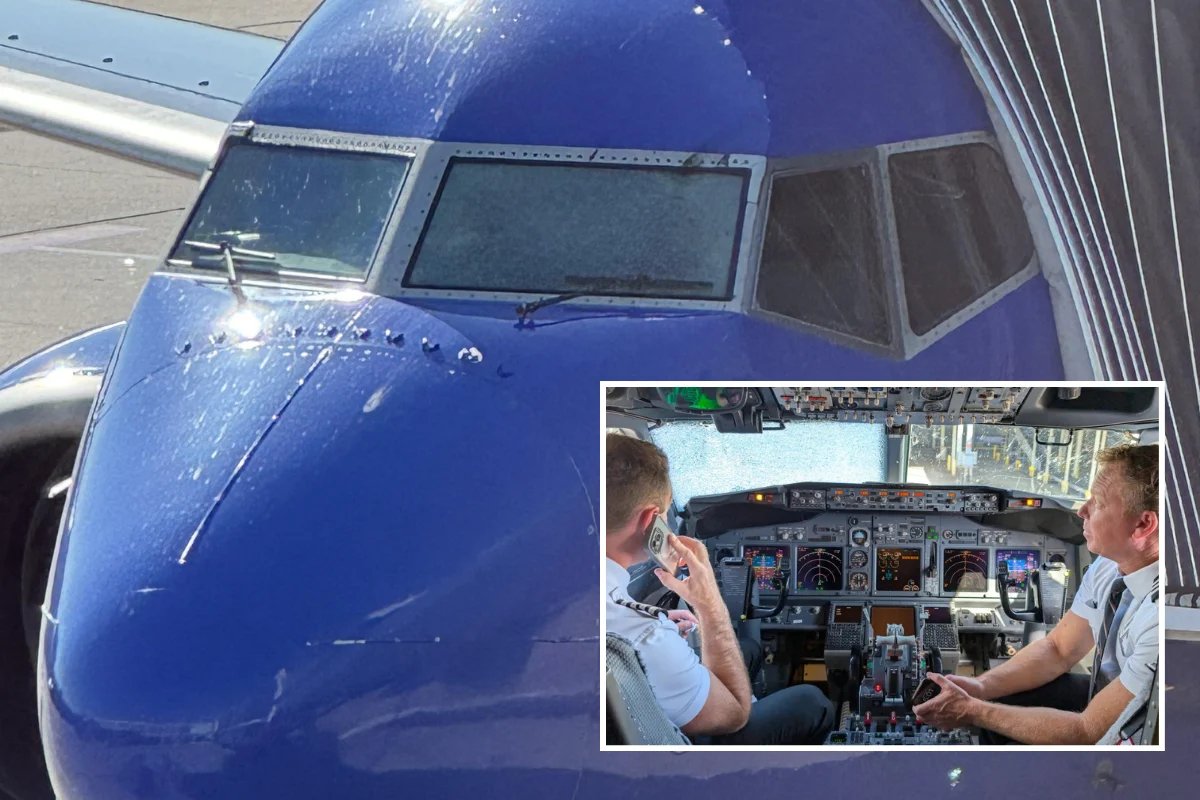
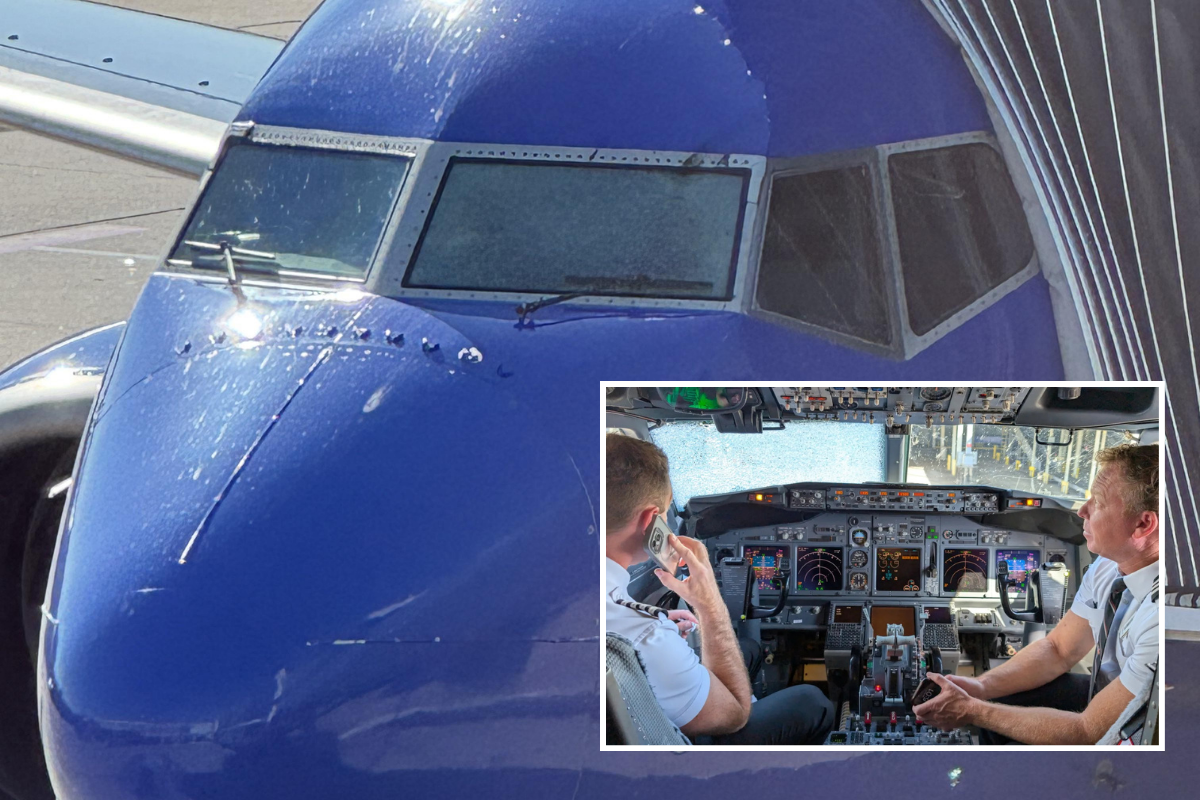
A routine Southwest Airlines flight from Albuquerque, New Mexico, to Baltimore, Maryland, was transformed into a high-altitude emergency on Monday afternoon when the captain’s side windshield of the cockpit suddenly shattered while the aircraft was cruising at 31,000 feet. The incident, which occurred over the state of Oklahoma, forced the flight crew to declare an emergency and initiate an immediate diversion. While cockpit window cracks are not entirely unprecedented in commercial aviation, the severity of this particular failure—which saw the primary glass pane turn opaque and lose structural integrity—presented a significant challenge to the pilots and sparked a rapid response from air traffic control and ground emergency services.
The aircraft involved in the incident was a Boeing 737-700, a workhorse of the Southwest Airlines fleet, registered as operating flight WN-2665. The 19-year-old aircraft departed Albuquerque International Sunport at approximately 10:55 a.m. local time on May 11. For the first hour of the flight, the journey proceeded without incident as the aircraft climbed to its assigned cruising altitude and began its transit across the American Midwest. However, as the plane crossed into Oklahoma airspace, the flight deck environment changed instantly when the left-hand windshield began to fail.
Chronology of the Emergency Diversion
The sequence of events began roughly 60 minutes into the scheduled three-hour flight. At a cruising altitude of 31,000 feet, the pilots noticed the initial appearance of cracks on the captain’s side windshield. According to passenger accounts and flight data, the situation escalated rapidly from a minor hairline fracture to a complete shattering of the outer pane. Passengers reported hearing a sudden sound, followed by an announcement from the flight deck regarding a diversion.
In the cockpit, the pilots were faced with a compromised field of vision. When the outer layer of a multi-pane cockpit window shatters, it often creates a "spiderweb" effect that renders the glass opaque, making it nearly impossible for the pilot on that side to see out of the window. Furthermore, at 31,000 feet, the pressure differential between the pressurized cabin and the thin outside air places immense stress on the remaining layers of the windshield assembly.
Following standard operating procedures for a "Cracked/Shattered Windshield" checklist, the pilots declared an emergency with air traffic control (ATC). They requested an immediate descent to a lower altitude to reduce the pressure differential and began a diversion to the nearest suitable airfield. Tulsa International Airport (TUL) was identified as the optimal diversion point due to its proximity and the availability of emergency services. The aircraft landed safely in Tulsa shortly thereafter, taxied to the gate under its own power, and was met by ground crews. No injuries were reported among the passengers or the crew.
Technical Analysis of Boeing 737 Windshield Construction
To understand the severity of the incident, it is necessary to examine the engineering behind commercial aircraft windows. The cockpit windshield of a Boeing 737 is not a single piece of glass but a highly engineered, multi-layered component designed to withstand bird strikes, hail, and extreme pressure variations.
The assembly typically consists of three distinct layers. The outer layer is made of chemically strengthened glass or tempered glass, which provides a hard, aerodynamic surface. Beneath this is a thick vinyl or urethane interlayer, which acts as a "fail-safe" adhesive. The innermost layer is another pane of structural glass. The primary purpose of the vinyl interlayer is to maintain the cabin’s pressure seal even if the outer or inner glass panes fail.
In the case of Flight WN-2665, the outer pane shattered completely. While the vinyl interlayer and the inner pane held—preventing a catastrophic decompression—the loss of visibility and the potential for the remaining layers to fail necessitated an emergency landing. Investigations into such failures often focus on the window’s heating system. Cockpit windows are equipped with internal electrical heating elements to prevent icing and to keep the glass "pliable" and more resistant to impacts. If an electrical "arc" occurs within the heating element, it can create a localized hot spot that causes the glass to shatter due to thermal stress.
Passenger Experiences and Official Responses
For the passengers on board, the diversion was a jarring interruption to their travel plans. George Gonzales, a passenger on the flight, provided a firsthand account to local news station KRQE. He noted that the pilots informed the passengers that the aircraft had not been struck by an external object. "They mentioned you know nothing struck the aircraft, it was just the windshield started cracking, and then it just exploded," Gonzales said. He praised the flight crew for their composure, adding, "Credit to the pilots for landing the plane and getting us down safely."
Once on the ground in Tulsa, passengers were able to view the damage from the terminal windows, noting the distinct white, shattered appearance of the captain’s side window. Southwest Airlines acted quickly to minimize the disruption, arranging for a replacement aircraft to transport the travelers to their final destination in Baltimore.
A spokesperson for Southwest Airlines released a statement shortly after the event: “Southwest Airlines Flight 2665 diverted safely to Tulsa due to a windshield crack. The flight landed uneventfully and Customers were reaccommodated to Baltimore on another aircraft. We appreciate the professionalism of our Flight Crew. Nothing is more important to Southwest than the Safety of our Customers and Employees.”
Historical Context of Cockpit Window Failures
While the Southwest incident ended safely, history shows that cockpit window failures can have dire consequences if the structural integrity of the entire frame is compromised. Aviation safety experts often point to two landmark cases when discussing windshield failures.
In 1990, British Airways Flight 5390 suffered a catastrophic failure when a poorly installed windshield panel blew out entirely at 17,000 feet. The sudden decompression sucked the captain halfway out of the aircraft. He was held by his ankles by flight attendants for the duration of the emergency descent while the first officer landed the plane. Miraculously, the captain survived. This incident led to a total overhaul of maintenance procedures regarding the bolts used to secure cockpit windows.
More recently, in 2018, a Sichuan Airlines Airbus A319 experienced a total windshield blowout at 31,000 feet—the same altitude as the Southwest flight. In that instance, the co-pilot was partially sucked out of the window, and the cockpit suffered extensive damage to its electronic systems due to the extreme cold and wind. The pilots managed to land the plane in Chengdu, China, in what is considered one of the most remarkable displays of airmanship in modern history.
The Southwest incident, while less severe than these examples, falls into a category of "contained" failures where the structural fail-safes worked as intended, but the risk of a full blowout remained a primary concern for the pilots during the descent.
Implications for Fleet Maintenance and Aging Aircraft
The aircraft involved in the Tulsa diversion was 19 years old. While age itself is not a disqualifier for safe flight, older airframes require more frequent and rigorous inspections of components that are subject to repeated pressurization cycles. The Boeing 737-700 is a robust aircraft, but the incident may prompt Southwest and other operators to review their inspection schedules for cockpit window heating elements and seals.
The Federal Aviation Administration (FAA) typically monitors these incidents through the Service Difficulty Reporting (SDR) system. If a pattern of failures is detected across the fleet, the FAA may issue an Airworthiness Directive (AD), requiring all airlines operating that specific model to perform mandatory inspections or replacements within a set timeframe.
For Southwest Airlines, which operates one of the largest Boeing 737 fleets in the world, maintaining the integrity of these components is a massive logistical undertaking. The airline has a strong safety record, but high-utilization carriers must remain vigilant against the "wear and tear" associated with short-haul, high-frequency flying, which subjects the aircraft to more frequent cycles of heating, cooling, and pressurization.
Conclusion and Future Outlook
The safe landing of Flight WN-2665 in Tulsa is a testament to the redundancy built into modern aircraft and the rigorous training of commercial pilots. Although the sight of a shattered windshield is harrowing for those on board, the outcome demonstrates that aviation safety protocols are effective in managing mid-air mechanical failures.
As the aircraft undergoes repairs in Tulsa, including a full replacement of the window assembly and an inspection of the surrounding airframe for any signs of stress, the aviation industry will look toward the final maintenance report to determine the root cause. Whether caused by a faulty heating element, a manufacturing defect, or long-term fatigue, the data gathered from this incident will contribute to the ongoing effort to make commercial flight the safest mode of transportation in the world. For the passengers of WN-2665, the event serves as a reminder of the critical role that pilot expertise and emergency preparedness play in every flight.




 Anjar Salim
 Chandra Hamzah
 Tatiana Tantri Indah Sari
 Lukman Taruna Persada Ramadan
