
 Tatiana Tantri Indah Sari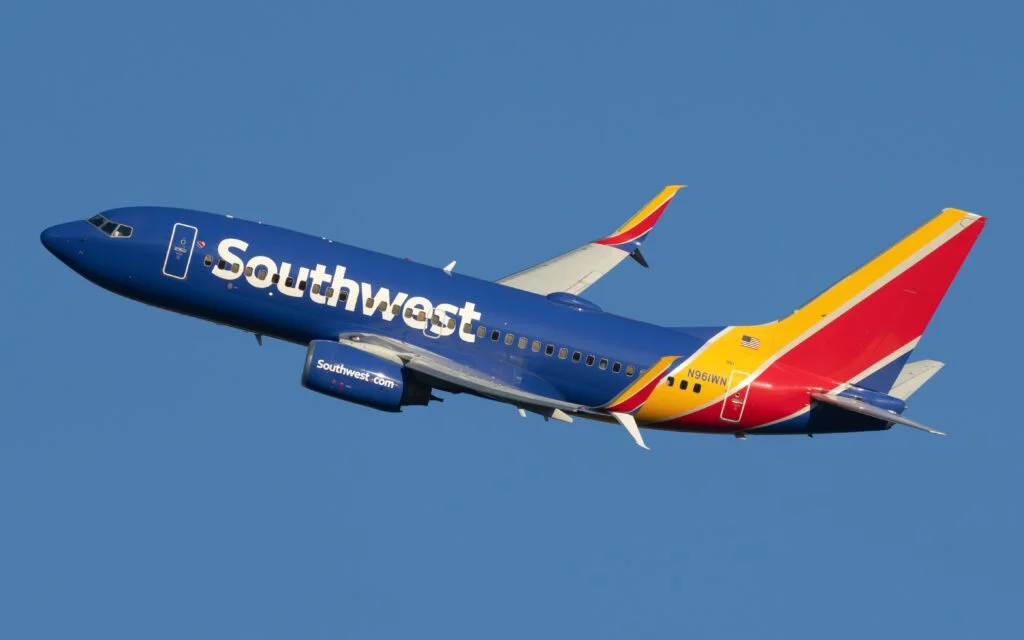
Southwest Airlines, long celebrated for its distinctive low-cost, point-to-point model, is actively exploring significant strategic shifts, including a potential foray into long-haul international flying and the introduction of new customer-facing features. CEO Bob Jordan, speaking at a recent industry conference, provided further clarity on these considerations, confirming that the airline is seriously evaluating an expansion that could redefine its operational scope and market position. This exploration comes even as Jordan reiterated the company’s commitment to its unique identity, asserting that Southwest "doesn’t have to become Delta," a statement reflecting the ongoing tension between maintaining its legacy and adapting to evolving market demands.
Jordan’s remarks indicate a likelihood that Southwest will "delve into long-haul international flying" over an unspecified but implied future period. This revelation follows months of hints and speculation regarding the carrier’s potential expansion beyond its current predominantly domestic and short-to-medium haul international routes. Furthermore, Jordan mentioned the consideration of "other new features," underscoring a broader initiative to meet what he termed "our consumers’ needs" and "offer them the things that we can’t offer" currently. These potential changes represent a pivotal moment for an airline that has historically prided itself on a relatively consistent, no-frills approach, characterized by open seating, two free checked bags, and no change fees.
The Genesis of a Strategic Reevaluation
Southwest Airlines was founded in 1967 and began operations in 1971, pioneering the low-cost carrier (LCC) model in the United States. Its early success was built on operational efficiency, a single aircraft type (Boeing 737), rapid turnarounds, and a focus on underserved routes, often utilizing secondary airports. This strategy allowed it to offer highly competitive fares, attracting a loyal customer base that valued simplicity and affordability. For decades, Southwest meticulously avoided adopting features common among legacy carriers like Delta Air Lines, United Airlines, and American Airlines, such as assigned seating, premium cabins, or complex hub-and-spoke networks. This deliberate differentiation became a cornerstone of its brand identity.
However, the airline industry has undergone significant transformations. Consolidation, technological advancements, and shifting passenger expectations have placed increasing pressure on all carriers to innovate. Southwest, while maintaining profitability and a strong domestic presence, has faced its own set of challenges. The highly publicized operational meltdown during the 2022 holiday season, which resulted in thousands of canceled flights and stranded passengers, highlighted vulnerabilities in its outdated scheduling systems and operational resilience. This event not only cost the airline over $1 billion but also significantly eroded customer trust and prompted an intense internal and external reevaluation of its strategies and infrastructure.
In the aftermath of the December 2022 disruption, CEO Bob Jordan publicly committed to a comprehensive review of the airline’s operations, technology, and customer experience. This ongoing strategic assessment has evidently broadened to include a fundamental reexamination of Southwest’s market offerings and growth trajectory. The discussions around long-haul international routes and new features are direct outcomes of this introspection, signaling a potential pivot from a purely cost-driven model to one that also prioritizes enhanced customer value and expanded market reach.
Operational and Fleet Considerations for Long-Haul Expansion
A move into long-haul international flying presents significant operational and fleet challenges for Southwest. The airline currently operates an all-Boeing 737 fleet, predominantly consisting of 737-700, 737-800, and the newer 737 MAX variants. While the 737 MAX 8 and MAX 7 (once certified) offer improved range over their predecessors, with the MAX 8 capable of flying up to approximately 3,550 nautical miles (6,570 km), true long-haul international routes typically require aircraft with greater endurance and capacity. For comparison, a flight from the East Coast of the U.S. to major European hubs can easily exceed 3,500 nautical miles, pushing the limits of even the MAX’s capabilities and leaving little room for operational flexibility or adverse weather diversions. Trans-Pacific routes would be largely out of reach for the current fleet.
To effectively enter the long-haul market, Southwest would likely need to consider several options:
- Acquire Larger Aircraft: This could mean introducing wide-body aircraft (e.g., Boeing 787 Dreamliner or Airbus A330/A350) into its fleet. This would represent a radical departure from its single-aircraft-type philosophy, which has been a cornerstone of its cost efficiency in maintenance, training, and spare parts. Integrating a new aircraft type would involve substantial capital investment, new pilot training programs, and significant adjustments to ground operations and maintenance infrastructure.
- Utilize Existing Fleet for Niche Long-Haul: Southwest could target specific, shorter long-haul routes that are within the upper range limits of its 737 MAX aircraft. This might include routes to parts of Central or South America, or potentially to closer European destinations from its easternmost hubs, though these would be limited.
- Enhance Existing Fleet for Comfort: Even if the range issue is manageable for certain routes, long-haul flights demand a different passenger experience. The current 737 cabin configuration, designed for shorter domestic hops, may not be suitable for journeys exceeding six or seven hours. This would necessitate reconfiguring cabins to include more comfortable seating, potentially in a multi-class layout (a significant departure from its single-class open seating), and investing in in-flight entertainment systems and enhanced catering options.
These operational adjustments carry substantial financial implications and could fundamentally alter Southwest’s cost structure, potentially eroding its LCC advantage.
The "Delta-fication" Debate and Brand Identity
CEO Bob Jordan’s assertion that Southwest "doesn’t have to become Delta" highlights a crucial internal and external debate surrounding the airline’s strategic direction. Delta Air Lines, along with United and American, represents the traditional legacy carrier model, characterized by extensive global networks, multi-class cabins (First, Business, Premium Economy, Economy), loyalty programs with elite tiers, and a focus on premium services. For Southwest to adopt elements like long-haul international routes or new features often associated with legacy carriers, it risks blurring its distinct brand identity.
Southwest’s brand has historically resonated with passengers seeking value, simplicity, and a somewhat quirky, friendly service culture. Its "transfarency" approach, emphasizing straightforward pricing with few hidden fees, has been a major differentiator. Introducing new features, especially if they come with additional costs or lead to a more complex fare structure (e.g., different tiers for different services), could alienate its loyal customer base who chose Southwest precisely because it wasn’t like the legacy airlines.
Analysts suggest that the challenge for Southwest will be to selectively adopt new offerings that enhance customer value and open new revenue streams without compromising the core tenets of its brand. This could involve "Southwest-izing" new features, perhaps by offering them as optional add-ons rather than embedding them into a complex, multi-tiered fare system. For instance, enhanced in-flight connectivity or entertainment could be offered for a fee, while the two free checked bags policy remains a standard. The key is to avoid a piecemeal approach that eventually makes Southwest indistinguishable from its higher-cost competitors.
Competitive Landscape and Market Implications
The potential entry of Southwest into long-haul international markets would significantly impact the competitive landscape. Legacy carriers, particularly Delta, have invested heavily in building robust international networks, often through joint ventures and alliances. Delta, for example, boasts an extensive global footprint through its SkyTeam alliance and partnerships, offering a seamless travel experience across continents. Southwest’s entry would introduce a new, potentially disruptive, low-cost option into these markets, forcing existing players to re-evaluate their pricing and service strategies.
However, Southwest would also face formidable competition. Airlines like Norwegian Air Shuttle (prior to its long-haul restructuring) and LEVEL have attempted to establish low-cost long-haul models in the past, often encountering significant profitability challenges due to high fuel costs, intense competition, and the complexities of international operations. While Southwest possesses a strong balance sheet and brand recognition, it would be entering a segment where established players have decades of experience and deeply entrenched market positions.
Furthermore, the expansion could open new markets for Southwest, particularly in leisure travel segments where price sensitivity is higher. Imagine a "Southwest experience" to popular European or Central American destinations, leveraging its strong domestic feeder network. This could appeal to a demographic that might typically avoid legacy carriers due to cost or perceive their international offerings as overly complex.
Timeline and Future Outlook
While Bob Jordan did not provide a specific timeline, his use of "over that period of time" suggests that any move into long-haul international flying is likely a medium to long-term strategic objective, rather than an immediate change. The complexity of fleet acquisition or modification, route planning, regulatory approvals, and operational integration means such a shift would take years to fully implement.
In the shorter term, Southwest is more likely to focus on implementing the "other new features" Jordan mentioned. These could include enhancements to in-flight connectivity, improved digital tools for passengers, or potentially more flexible boarding options. The airline has already indicated plans to upgrade its WiFi capabilities across its fleet and is continuously working on its operational technology following the 2022 disruption.
The internal strategic review initiated after the holiday meltdown is a critical precursor to these potential changes. Any decision to pursue long-haul international routes or significant new features will be informed by rigorous analysis of market demand, financial viability, operational feasibility, and potential impact on brand identity. The airline’s leadership, under Jordan, appears to be navigating a delicate balance: acknowledging the need for evolution and growth while striving to preserve the core values that have made Southwest a perennial favorite for millions of travelers. The coming years will reveal whether Southwest can successfully expand its horizons without fundamentally altering the essence of what it means to "fly Southwest."




 Anjar Salim
 Chandra Hamzah
 Budi Mulyono
 Lukman Taruna Persada Ramadan
