
 Budi Mulyono
The 2026 Wild Card Challenge has officially concluded, wrapping up a fast-paced, high-stakes travel itinerary that tested the limits of points and miles budgeting, logistical endurance, and strategic resource allocation. Spanning multiple international borders, the final 48 hours of the competition brought contestants to Melbourne, Australia, following a meticulously planned journey that began weeks prior on September 22, 2026. The unique travel experiment, designed to mirror the complex decision-making processes faced by modern frequent flyers, required participants to navigate their routes using predefined wild-card decks containing selected destinations, credit card portfolios, points budgets, power-ups, and operational obstacles.
Background Context and Challenge Parameters

The Wild Card Challenge operates as a dynamic simulation of real-world award travel, forcing contestants to balance optimal luxury with strict logistical constraints. Participants began the event by drawing from a randomized pool of parameters, establishing their destinations, preferred hotel chains, airline partnerships, and specific financial instruments. For this particular participant, the route spanned from the Western United States to Costa Rica, onward to South Korea, and finally culminating in Melbourne, Australia.
The financial framework of the journey relied heavily on a curated selection of travel rewards credit cards, including the Chase Aeroplan card, the Chase IHG Premier card, the Chase Sapphire Reserve, and the Capital One VentureOne. To simulate the unpredictable nature of commercial aviation and consumer travel, contestants were also assigned randomized obstacles and power-ups. The assigned obstacle, "The Overpacker," mandated that a checked bag be registered on every single flight segment, introducing a persistent friction point in airport logistics. Conversely, a strategic power-up in the form of a "Stay in the Zone" 30% transfer bonus provided essential leverage for maximizing point valuations across international airline alliances.
Chronology of the Final Leg: Tokyo to Sydney and Melbourne

The final phase of the challenge commenced with an overnight flight from Tokyo to Sydney, setting a rapid cadence for the remaining schedule. Upon landing at Sydney Airport, the logistical friction of the "Overpacker" obstacle immediately materialized. While Qantas international-to-domestic transfers allow passengers to recheck bags seamlessly airside, routing through Virgin Australia via Aeroplan redemption points necessitated a manual baggage retrieval. Travelers flying with carriers outside the Qantas alliance must exit security, clear customs, wait for an inter-terminal shuttle bus, and manually re-check luggage at the domestic terminal. This process consumed approximately one hour of valuable layover time, ultimately preempting a planned self-guided harbor tour via Sydney’s public ferry system.
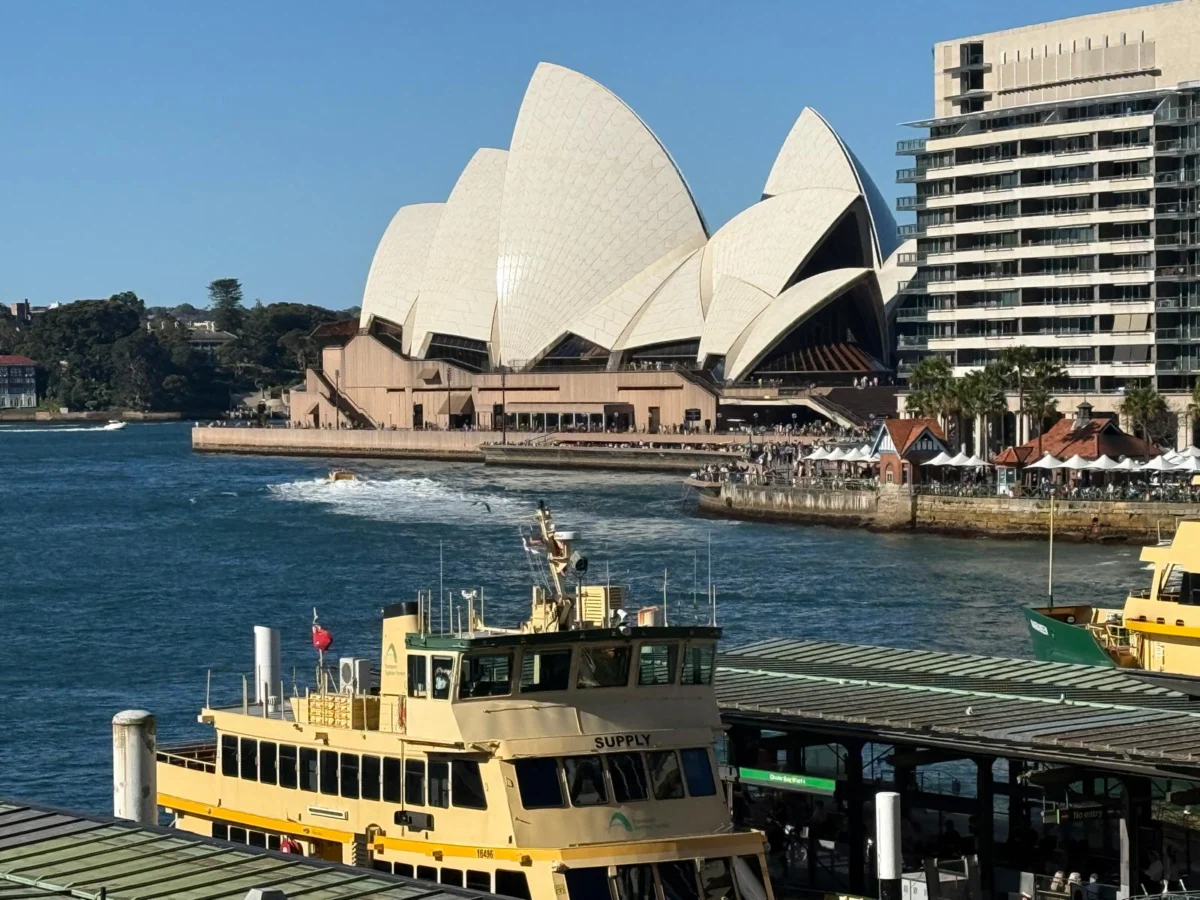
Despite the delay, the itinerary pressed forward with a tightly budgeted cultural excursion to the Sydney Opera House. The visit held profound personal significance, marking the one-year anniversary of the passing of the participant’s father during the previous year’s 100K Vacay challenge. To honor his lifelong passion for classical music and the arts, a matinee performance of the theatrical production My Fair Lady was attended at the historic venue. The choice of venue was particularly resonant, tracing back to childhood memories of viewing the architectural marvel on public television alongside family. Ticket acquisition was secured for approximately $40 USD, fitting comfortably within the rigorous fiscal parameters of the challenge.
Following the Sydney engagement, a multi-leg domestic itinerary facilitated transit to Melbourne, Australia’s cultural and administrative hub. Upon arrival at Melbourne’s Southern Cross station, local tram networks provided direct access to the Park Hyatt Melbourne, situated strategically near the city center.

Accommodation Strategy and Valuation Analysis
Lodging decisions throughout the challenge required a careful mathematical comparison between cash rates, promotional credit card portals, and hotel loyalty points. For the Melbourne stay, the Park Hyatt Melbourne was evaluated alongside the InterContinental Melbourne.
Despite the availability of the InterContinental for approximately 40,000 IHG points per night, financial optimization favored booking the Park Hyatt via Chase Travel’s premium portal, "The Edit." The property was secured for a baseline rate exceeding $600 for a two-night duration during local school holidays. By deploying a remaining $250 Edit credit alongside a 65% points boost—which permitted redemption via Ultimate Rewards points at an advantageous valuation—the net out-of-pocket cost was significantly reduced. Factoring in elite World of Hyatt Globalist benefits combined with The Edit’s proprietary perks, the stay yielded daily property credits, complimentary breakfast, and guaranteed late checkout.

An unexpected operational upgrade further elevated the lodging experience. Rather than receiving a standard room upgrade, the hotel combined elite loyalty status with portal benefits to assign the contestant "The Ambassador Suite." Spanning a vast footprint, the accommodation featured a dedicated office space, gas fireplace, walk-through wardrobe, and panoramic views of St. Patrick’s Cathedral and the downtown Melbourne skyline.
Group Activities and Culinary Exploration
The final days in Melbourne featured collaborative programming shared with fellow contestants. The itinerary highlighted regional culinary traditions and recreational activities designed to appeal to diverse demographics.

The culinary segment involved an exploration of traditional Australian comfort foods, featuring "Jaffles"—a regional variant combining elements of grilled cheese sandwiches and hot pockets—as well as classic "Lamingtons," traditional sponge cakes coated in chocolate frosting and desiccated coconut. These tastings offered a cross-cultural educational component, contrasting modern plant-based adaptations with historic recipes.
Recreational activities culminated in an immersive team-building exercise at "123 Boom!," an interactive physical gaming experience situated in Melbourne. The attraction required participants to navigate real-world obstacle courses modeled after classic video game mechanics, including laser evasion grids, floor-is-lava platform challenges, and a simulated tactical bomb-defusing scenario utilizing paint projectiles. The activity demonstrated how family-oriented travel itineraries can incorporate high-engagement physical challenges without alienating adult participants.
Implications and Broader Impact of the Challenge

The conclusion of the 2026 Wild Card Challenge underscores the shifting paradigm of modern reward travel. Observers and industry analysts note that the event successfully bridges the gap between theoretical points-and-miles accumulation and the practical realities of execution. By forcing participants to adapt to unexpected flight delays, restrictive baggage policies, and fluctuating award availability, the challenge provides actionable insights for consumers navigating complex loyalty ecosystems.
The integration of premium credit card perks—such as Chase Travel’s The Edit and targeted transfer bonuses—demonstrates the tangible value of retaining diversified financial instruments. As airlines and hotel chains continue to adjust dynamic pricing models, strategic flexibility remains the primary determinant of high-value redemption success.
With the Melbourne destination livestream scheduled for conclusion, contestants and organizers have marked the official end of the live travel window. Detailed breakdowns of expenditures, point balances, and final scores are slated for publication via official channels, offering a comprehensive retrospective for followers of the frequent flyer community.


 Diana Nuri Rohmawati

 Gabriela Annisa

 Lukman Taruna Persada Ramadan

 Tatiana Tantri Indah Sari

 Anjar Salim

