
 Budi Mulyono
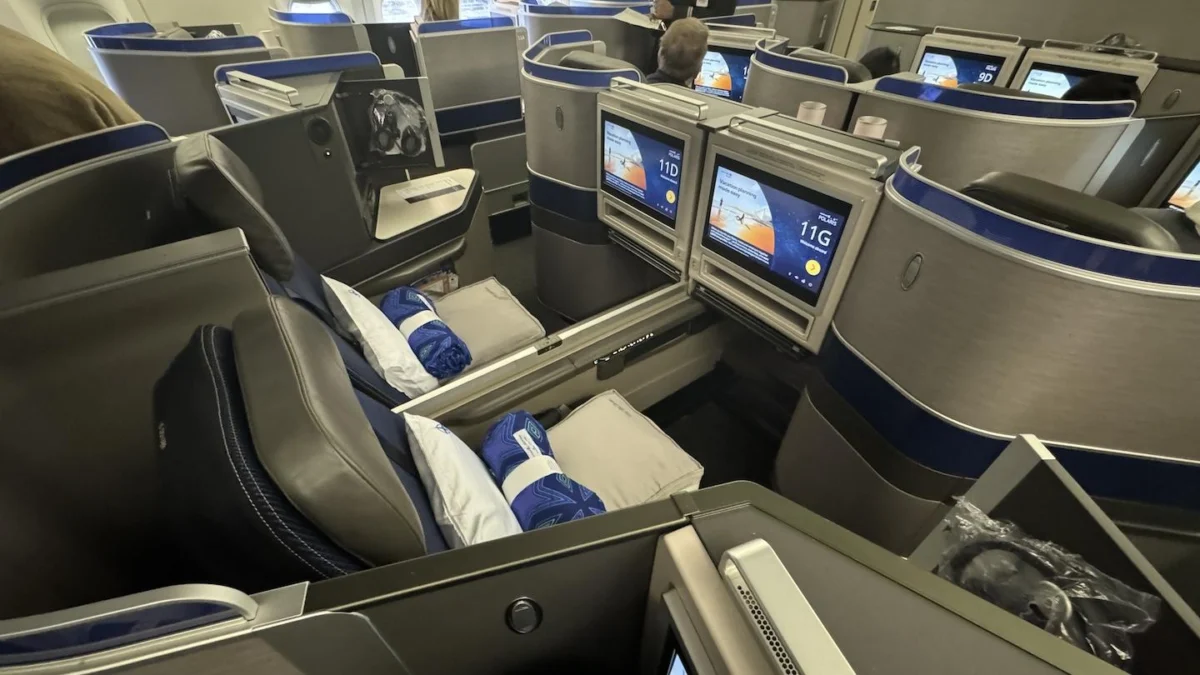
The architecture of domestic commercial aviation in the United States is traditionally dominated by narrowbody aircraft. Single-aisle workhorses such as the Boeing 737 family and the Airbus A320 series handle the vast majority of short- and medium-haul city pairs. However, a persistent operational reality creates a unique window of opportunity for observant travelers: major network carriers routinely operate widebody aircraft—planes typically reserved for intercontinental or long-haul international missions—on domestic segments within the continental United States.
For travelers willing to look beyond standard booking interfaces, securing a seat on a widebody aircraft for a domestic flight provides an upgraded travel experience at a fraction of the cost associated with international travel. By utilizing airline cargo flight schedules as an informational roadmap, passengers can identify precisely when and where these high-capacity international jets will be deployed on domestic routes.
Understanding the Mechanics of Domestic Widebody Deployment

To comprehend why widebody aircraft appear on domestic itineraries, one must examine airline network management and fleet scheduling. Major network carriers such as American Airlines, United Airlines, Delta Air Lines, and Alaska Airlines operate complex hub-and-spoke systems. Aircraft must constantly be repositioned between primary and secondary hubs to meet international departure banks, undergo heavy maintenance, or balance capacity fluctuations driven by seasonal demand.
While transcontinental corridors—specifically routes connecting major coastal hubs like Los Angeles (LAX) and San Francisco (SFO) to New York (JFK/EWR), Boston (BOS), Washington (IAD/DCA), and Miami (MIA)—frequently feature lie-flat business class configurations as a standard product offering, widebody aircraft also appear on shorter domestic hops. Common repositioning corridors include flights between Dallas/Fort Worth (DFW) and Chicago (ORD), Atlanta (ATL) and various southern hubs, or Charlotte (CLT) and Miami (MIA).
Airlines maintain commercial cargo divisions that transport freight, mail, and high-value goods in the bellies of passenger aircraft. Because cargo capacity is a major revenue stream, commercial cargo divisions publish comprehensive flight schedules detailing the exact aircraft type—ranging from Boeing 777s and 787 Dreamliners to Airbus A350s—assigned to specific flight numbers weeks or months in advance. Savvy frequent flyers have long utilized these cargo schedules as a logistical workaround to pinpoint widebody domestic service.
Navigating Carrier-Specific Cargo and Domestic Schedules

Major United States air carriers provide varying degrees of public transparency regarding their domestic widebody operations, often routing schedule disclosures through dedicated cargo portals or specific itinerary planning documents.
United Airlines maintains structured resource sections specifically highlighting domestic US routes serviced by widebody aircraft. Because United relies heavily on a diverse long-haul fleet featuring Boeing 767s, 777s, and 787s, the carrier frequently utilizes these aircraft between domestic hubs to manage peak passenger loads and maintain crew currency.
American Airlines publishes dedicated operational documentation and PDF schedules outlining specific calendar dates for domestic widebody flights. These documents allow travelers to cross-reference flight numbers against passenger booking engines to ensure their chosen itinerary features a widebody frame rather than a standard narrowbody swap.
Delta Air Lines and its regional partners release updated monthly domestic flight schedules via Delta Cargo portals. These resources list flight numbers, operating days, and aircraft variants, providing a reliable tracking mechanism for travelers aiming to experience Delta’s widebody premium products domestically.

Similarly, Alaska Airlines—following its integration and coordination pathways with Hawaiian Airlines—provides network documentation identifying high-capacity routes utilized across domestic and near-international sectors.
Cost Analysis and Pricing Dynamics for Domestic Widebody Travel
A common misconception among consumers is that flying on a widebody aircraft domestically carries a prohibitive financial premium. In practice, ticket pricing for widebody domestic flights depends heavily on yield management algorithms, overall market demand, and the specific booking class selected.
In many instances, airlines price domestic segments based on origin and destination pairs rather than the physical hardware operating the flight. Consequently, a passenger booking an economy ticket on an American Airlines flight from Charlotte (CLT) to Miami (MIA) operated by a Boeing 777-200 may pay the exact same base fare as a neighboring flight operated by an Airbus A321neo.

Furthermore, upgrading to a lie-flat business class product on a domestic widebody route can occasionally present exceptional value. Historical pricing data across multiple carriers indicates that cash upgrade fees or fare differentials for domestic widebody business class can be marginally higher than standard domestic first class—sometimes requiring an incremental cost of roughly $75 to $150 over standard economy fares, depending on the route and booking window.
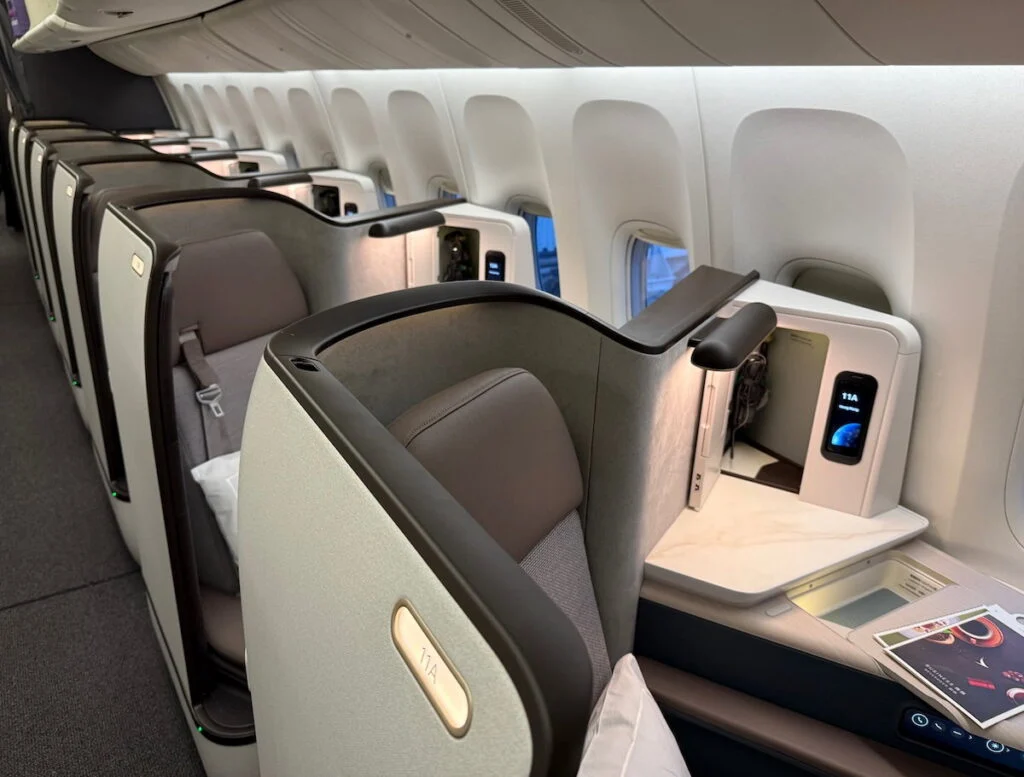
Beyond financial cost, the passenger experience differential is substantial. Widebody aircraft feature multi-aisle configurations, significantly larger overhead bin capacities, advanced cabin air filtration systems, and widebody-specific amenities. In economy cabins, passengers benefit from wider seat pitches, enhanced recline mechanisms, and larger lavatory facilities. In premium cabins, travelers experience true long-haul international lie-flat seats, providing an uncompromised flat-bed experience on a flight lasting merely two to three hours.
Strategic Implications and Credit Card Ecosystems for Travel Enthusiasts
The strategic utilization of cargo schedules to secure domestic widebody flights aligns with broader trends in the travel rewards and credit card ecosystems. As consumers seek maximum value from transferable points currencies, optimizing domestic flight redemptions for premium hard products represents an efficient use of hard-earned miles.

Travelers frequently leverage flexible rewards credit cards—such as the Chase Sapphire Preferred® Card—to accumulate transferable points that can be moved directly to airline and hotel loyalty programs. The Chase Sapphire Preferred® Card, which underwent a significant structural refresh introducing expanded bonus categories, enhanced travel protections, and tailored statement credits, remains a foundational asset for consumers seeking to fund both domestic and international travel itineraries.
Earning transferable Ultimate Rewards points allows cardholders to transfer balances across a diverse portfolio of airline and hotel partners, including United Airlines and Southwest Airlines. When combined with everyday spend portfolios or paired with companion cashback products such as the Chase Freedom Flex® and Chase Freedom Unlimited®, or business equivalents like the Chase Ink Business Cash® and Chase Ink Business Unlimited®, consumers can consolidate points into a single primary account to redeem for premium cabin travel.
While credit card issuers and banking institutions maintain strict separation from commercial airline scheduling decisions, the availability of versatile points currencies empowers travelers to book these unique domestic widebody itineraries without relying on fixed-value cash fares.
Broader Industry Context and Operational Realities

While utilizing cargo schedules offers a reliable methodology for identifying widebody aircraft, travelers must remain cognizant of the dynamic nature of airline fleet management. Commercial aviation is subject to unexpected operational disruptions, mechanical swaps, weather delays, and network adjustments.
An airline retains the contractual right to substitute aircraft equipment at any point prior to departure. A passenger who books a specific flight based on a cargo schedule listing a Boeing 787 Dreamliner may occasionally experience an aircraft swap to a Boeing 737 due to unexpected maintenance requirements or schedule optimization. Consequently, while cargo schedules serve as a highly accurate predictive tool, they do not constitute a permanent operational guarantee.
For aviation enthusiasts, frequent flyers, and pragmatic travelers alike, integrating cargo schedule analysis into travel planning transforms a routine domestic journey into an upgraded aviation experience. By understanding the intersection of freight logistics, fleet rotation, and network management, passengers can consistently access international-grade cabins on short-haul domestic itineraries.



 Gabriela Annisa

 Lukman Taruna Persada Ramadan

 Tatiana Tantri Indah Sari

 Anjar Salim


 Dwi Wanna
