
 Tatiana Tantri Indah Sari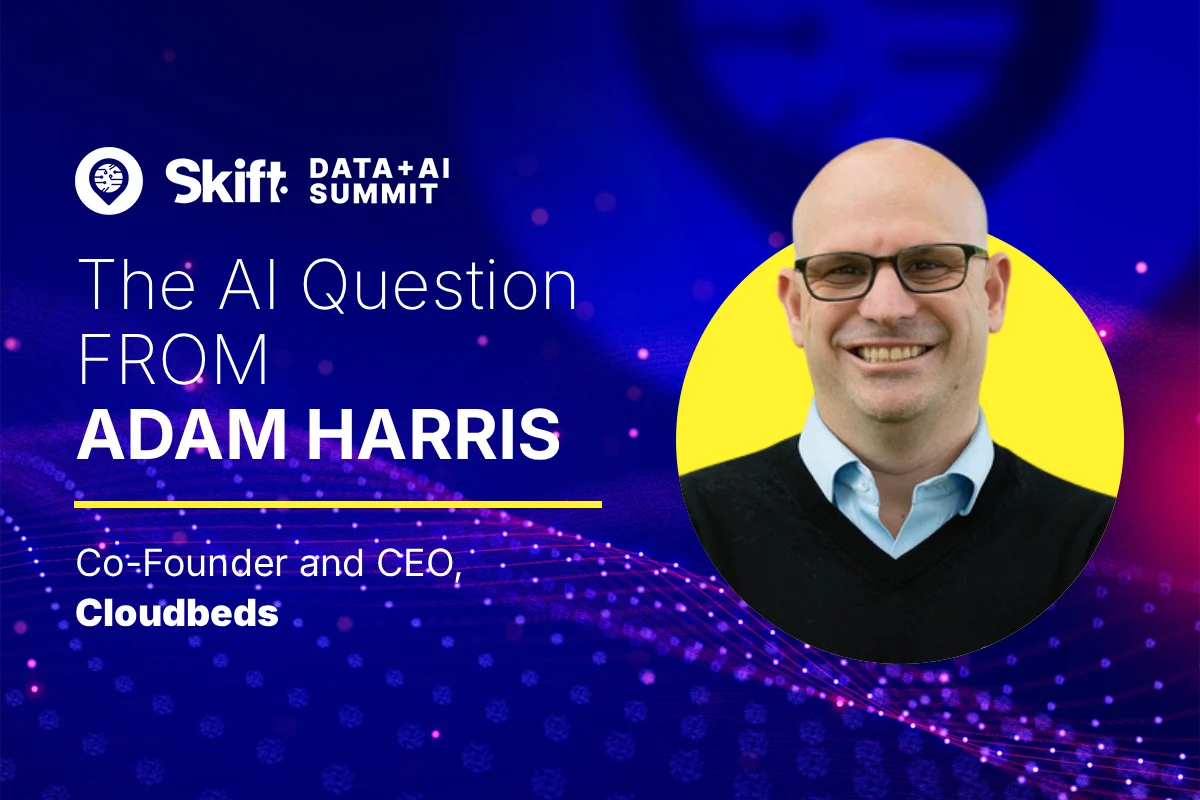
Adam Harris, CEO of Cloudbeds, is poised to deliver a provocative argument at the upcoming Skift Data + AI Summit 2026, challenging the prevailing wisdom on artificial intelligence adoption within the hospitality sector. Harris posits a stark distinction between AI systems that merely impress in demonstrations and those capable of robustly managing complex hotel operations, such as handling a late-night guest request or processing a refund without error. His core thesis suggests that the majority of AI solutions currently being procured by hotel leaders are fundamentally ill-suited for the operational rigor required, predicting that these probabilistic systems will be rendered obsolete, akin to "fax machines," by 2029. This bold forecast carries severe implications for investment strategies, technological architecture, and the competitive landscape of the global hotel industry.
The Skift Data + AI Summit, a premier gathering for travel industry executives, technologists, and innovators, serves as a crucial platform for discussing the transformative power and potential pitfalls of AI. In an era where AI promises unprecedented efficiency and personalization, Harris’s argument cuts directly against the grain of rapid, often undifferentiated, AI procurement. He contends that the current wave of AI tools, largely probabilistic in nature, excels at answering questions, generating content, and making educated guesses. While impressive in a demo environment, these capabilities fall short when confronted with the imperative for absolute certainty in operational tasks—where a wrong answer translates directly into financial loss, guest dissatisfaction, or reputational damage, such as a chargeback or a scathing online review.
The Looming Obsolescence: A 2029 Deadline
Harris’s "fax machine by 2029" analogy underscores the urgency of his message. He argues that hotel CEOs signing multi-year platform contracts in 2026, swayed by the allure of probabilistic AI demos, are effectively committing to an architectural dead end. These systems, designed for inference and prediction rather than definitive action, will prove expensive to replace and impede the adoption of truly effective, operational AI. The global hospitality technology market, valued at approximately $20 billion in 2023 and projected to grow significantly, represents a massive arena for both innovation and potential misdirection. Poor procurement decisions made today could lock hotels into technologically inferior positions, hindering their ability to compete and adapt in a rapidly evolving digital landscape.
This isn’t merely speculative rhetoric from Harris; it’s a working framework that informs Cloudbeds’ own strategic technological bets. He aims to equip hotel operators with the critical discernment needed to evaluate AI solutions, pushing for a paradigm shift from "AI that answers questions" to "AI that takes action." The distinction, he emphasizes, is the difference between a flashy presentation and a tool that genuinely accelerates business. "Probabilistic AI answers questions. Deterministic AI takes action," Harris states. "One is a solid demo. The other is what accelerates your business."
Differentiating AI Architectures: Probabilistic vs. Deterministic
At the core of Harris’s argument is the fundamental architectural divergence between probabilistic and deterministic AI. Probabilistic AI, often powered by large language models (LLMs) and machine learning algorithms, operates on statistical likelihoods. It’s excellent for tasks like generating marketing copy, summarizing guest reviews, recommending upsells based on patterns, or powering conversational chatbots. However, its inherent uncertainty makes it unsuitable for critical operations where precision is paramount. For example, a probabilistic system might suggest a dynamic room rate, but without deterministic logic, it cannot guarantee that rate is correctly applied across all channels, adheres to contractual obligations, or avoids overbooking.
Deterministic AI, by contrast, is rule-based and logic-driven, designed to perform specific actions with absolute certainty. This is the AI required for tasks such as repricing a room at 2 a.m. based on predefined criteria, issuing a refund accurately, or seamlessly moving a reservation without human intervention. When a probabilistic AI "breaks," the outcome might be a merely incorrect or suboptimal answer. When a deterministic AI is incorrectly built or fails, the consequences are far more severe: a chargeback, a lost booking, a data breach, or a damaged brand reputation. This stark difference necessitates distinct architectures, data layers, and, crucially, different vendor profiles, demanding providers with a proven track record in high-stakes operational reliability.
The Rise of Agent-on-Agent Commerce: A New Disintermediation Threat
Beyond internal operations, Harris highlights "Agent-on-Agent Commerce" as the next major disintermediation event in travel, for which most operators are critically unprepared. Currently, hotels are heavily investing in AI to optimize their side of the transaction: dynamic pricing, inventory management, personalized upsells, and automated customer service. However, guests are rapidly gaining access to sophisticated AI tools on the buyer side. These consumer-grade AIs can perform real-time price comparisons, aggregate and analyze vast quantities of reviews, flag value extraction points, and even generate counter-offers during booking negotiations.
The scenario Harris envisions is one where two intelligent agents—one representing the hotel, the other the guest—negotiate in real-time. This dynamic fundamentally shifts the power balance. If a hotel’s AI is solely focused on capturing value, it risks being outmaneuvered by a guest’s AI specifically optimized to extract value. The next two years, Harris warns, will reveal whether current hotel AI architectures can withstand this challenge. Companies that have only planned for operator-side AI risk being blindsided by the sophistication of buyer-side AI, potentially leading to significant erosion of revenue and direct booking advantages. The implications for online travel agencies (OTAs), metasearch engines, and even direct booking strategies are profound, suggesting a future where the most advanced AI wins the negotiation.
The Grading Line: Redefining Human-AI Collaboration
Harris also introduces "The Grading Line" as a framework for optimizing human-AI collaboration, moving beyond the simplistic "how much human in the loop" question. Instead, he urges operators to ask: "What are you grading your humans on?" This reframe posits that tasks falling below this "grading line" are ripe for automation, handled efficiently and reliably by deterministic AI. These are the routine, repetitive, or rule-bound tasks that consume valuable human time without requiring complex judgment.
Above the line, however, lies the domain of irreplaceable human judgment, creativity, emotional intelligence, and strategic decision-making. These are the aspects of hospitality that truly differentiate a guest experience—handling unique complaints with empathy, designing bespoke offerings, fostering team culture, or navigating complex market shifts. By clearly defining this line, hotels can strategically deploy AI to offload mundane burdens, freeing their human staff to focus on high-value activities where their unique skills are indispensable. This approach not only enhances operational efficiency but also elevates the role of human employees, transforming them from task-doers to experience-makers and strategic thinkers.
Anticipated Scrutiny and the Cloudbeds Challenge
Harris’s pointed argument, while intellectually rigorous, also carries commercial implications for Cloudbeds. By drawing a clear line between probabilistic and deterministic AI, he positions most existing platform vendors on the "wrong" side, implicitly placing Cloudbeds on the "right." This creates an editorial pressure point that Skift will undoubtedly explore during the Summit.
The critical question for Harris will be: "Cloudbeds is one of the platforms hotel CEOs are signing right now. What specific tests should those CEOs apply to your platform—and every other vendor—to validate the deterministic claim before committing?" The room will demand specifics. How does a CEO conduct due diligence? What architectural characteristics signal a truly deterministic data layer? How can an operator distinguish a vendor that merely markets deterministic language from one that actually ships robust, action-oriented infrastructure? Harris’s credibility at the Summit will hinge on his ability to provide actionable, transparent answers that include Cloudbeds in the scrutiny, rather than exempting it. This open challenge will likely set a new standard for vendor accountability in the AI space.
Industry Reactions and Future Trajectories
The Skift Data + AI Summit 2026 will serve as a crucial barometer for the industry’s readiness to embrace Harris’s vision. Three key signals will indicate whether the conversation is truly shifting:
-
Operator Reaction to the "Fax Machine" Framing: If the hotel operators in attendance treat the "fax machine" analogy with urgency, initiating deep architectural questions to other platform vendors, it will signify a fundamental shift in procurement priorities. Conversely, if it is received as merely theoretical, the industry may not yet be prepared to grapple with the complex architectural decisions Harris is advocating. The financial commitment to hospitality tech is substantial, and a delayed realization of technological obsolescence could have profound financial consequences.
-
Engagement from Other Platform CEOs: How other platform CEOs on the agenda engage with or sidestep Harris’s deterministic claim will be highly informative. Direct engagement suggests the framework is being adopted into the industry’s working lexicon, potentially leading to a re-evaluation of product roadmaps and marketing strategies. Sidestepping the issue, however, would indicate that platform marketing remains focused on probabilistic capabilities, even as operators increasingly demand deterministic solutions. This divergence would highlight a growing disconnect between vendor offerings and evolving operator needs.
-
Adoption of the Agent-on-Agent Commerce Thesis: If Harris’s framing of buyer-side AI gains traction among other speakers and influences panel discussions, it suggests the industry is moving past a one-sided view of AI’s impact. A broader acknowledgment of AI’s dual role—on both the operator and guest sides—is crucial for developing comprehensive, future-proof strategies. If this concept is largely ignored, it implies the industry is still addressing only half of the problem, leaving itself vulnerable to future disintermediation.
Ultimately, Harris’s presentation at the Skift Data + AI Summit 2026 is poised to be a watershed moment for the hospitality industry’s approach to artificial intelligence. By forcing a critical re-evaluation of current AI procurement strategies and highlighting the impending obsolescence of probabilistic systems for core operations, he aims to steer the sector towards more robust, action-oriented, and future-proof technological investments. The outcome of these discussions will not only shape the future of hotel technology but also redefine the competitive landscape for years to come.
Only a limited number of seats remain for Skift Data + AI Summit 2026 as travel companies prepare for the next phase of AI adoption.
Register Now
- Plans not final? Reassign tickets later.
- Invoice or wire needed? [email protected]
FOR TEAMS ATTENDING TOGETHER
Group Tickets
FOR ONE ATTENDEE
Solo Ticket
For single-ticket purchases only.
$995




 Anjar Salim
 Chandra Hamzah
 Budi Mulyono
 Lukman Taruna Persada Ramadan
