
 Tatiana Tantri Indah Sari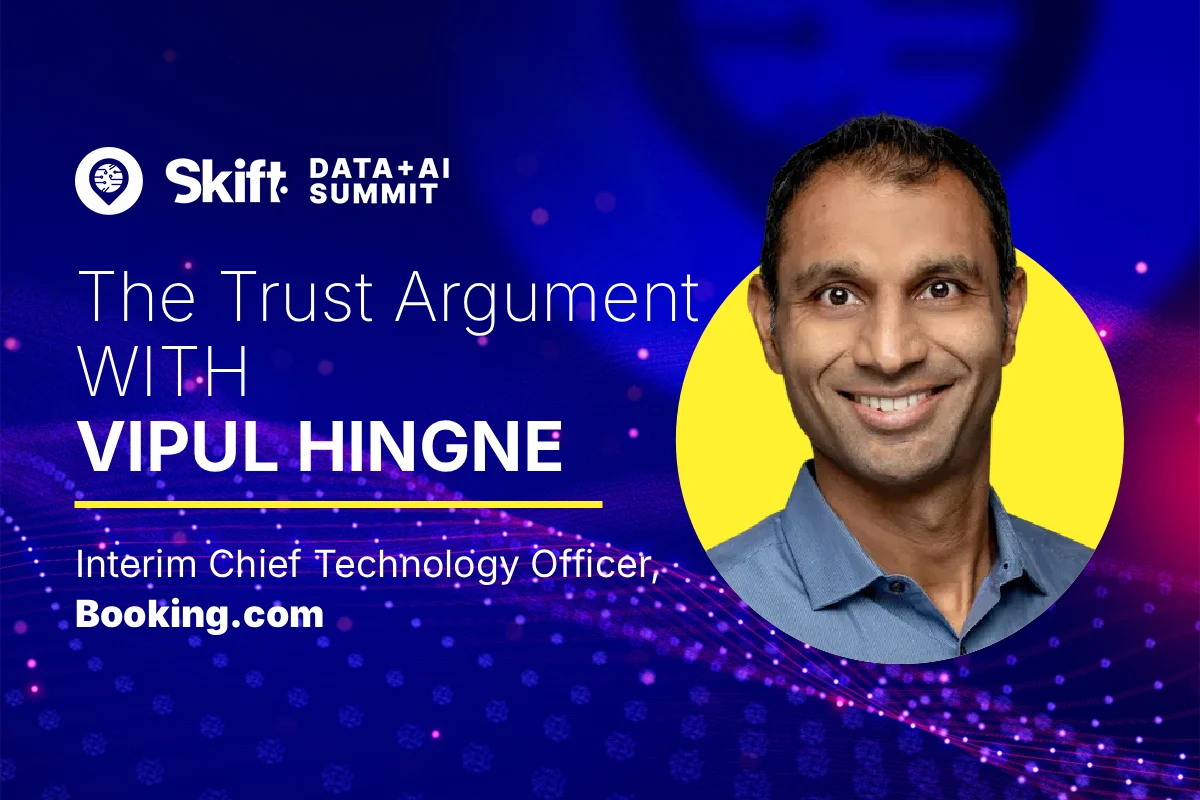
The landscape of artificial intelligence in the travel industry has undergone a significant transformation over the past two years, moving from initial hype and a race for technological supremacy to a more nuanced understanding of what truly drives adoption and success. While many companies have poured resources into developing the most sophisticated AI models, a new paradigm is emerging, championed by industry leaders like Vipul Hingne, Interim Chief Technology Officer at Booking.com. Hingne argues that the ultimate determinant of success in travel AI is not the complexity or innovation of the underlying models, but rather the profound level of trust customers place in the product to act on their behalf. This critical insight is set to be a focal point at the upcoming Skift Data + AI Summit 2026, where Hingne will present a compelling case for recalibrating industry investment and strategy.
The Evolution of AI in Travel: A Shift from Capability to Trust
For nearly two years, the travel sector has witnessed an intense competition to build and deploy advanced AI solutions. Early efforts often centered on demonstrating raw computational power, innovative algorithms, and novel applications of machine learning, particularly large language models (LLMs). Companies vied to showcase the "best" chatbot, the most predictive recommendation engine, or the most comprehensive trip planner. However, as Hingne pointsely observes, this initial competitive advantage based on model sophistication is rapidly commoditizing. What was once a cutting-edge capability 18 months ago has quickly become table stakes, accessible to a broader range of players through open-source developments, cloud-based AI services, and increasingly standardized frameworks.
This rapid commoditization means that the battleground for differentiation is shifting. With foundational AI capabilities becoming more ubiquitous, the true scarcity lies elsewhere: in the customer’s willingness to delegate significant travel decisions and financial transactions to an AI system. This willingness, or lack thereof, directly impacts whether a traveler completes a booking, makes a payment through a platform, or even trusts an AI agent to manage complex itinerary changes. As Hingne succinctly puts it, "Success will not be determined by who has the best model or most radical innovations, but by who has the most trusted product."
The stakes in travel transactions are uniquely high, carrying both significant financial weight and considerable emotional investment. Unlike many e-commerce purchases, travel bookings often involve substantial sums of money, non-refundable commitments, and the anticipation of deeply personal experiences—be it a long-awaited vacation, a crucial business trip, or a visit to loved ones. The potential for error, inconvenience, or misjudgment by an AI system can have far-reaching consequences, amplifying the need for unwavering trust.
This imperative becomes even more pronounced in use cases involving agentic AI and payments. When AI is empowered to independently select flights, secure non-refundable accommodations, or handle financial transfers on behalf of the traveler, trust ceases to be a mere desirable attribute; it becomes an essential operational gate. Without this foundational trust, such advanced, agentic AI functionalities, despite their potential for efficiency and personalization, will simply not be adopted at scale. Companies that continue to optimize primarily for model quality risk investing in a variable that is converging across the industry, while those prioritizing the cultivation of trust are building a far more resilient and difficult-to-replicate competitive advantage.
Skift Data + AI Summit 2026: A Platform for Strategic Redefinition
The Skift Data + AI Summit has established itself as a pivotal event for leaders, technologists, and strategists across the global travel industry. Serving as a crucial forum for discussing emerging trends, technological advancements, and strategic imperatives, the summit consistently shapes the discourse around the future of travel. The inclusion of Vipul Hingne as a key speaker, particularly on a topic as transformative as the role of trust in AI, underscores the industry’s evolving understanding of artificial intelligence. His participation highlights Booking.com’s proactive stance in navigating this new competitive landscape and signals a broader industry recognition that AI’s impact extends far beyond mere technical prowess. Attendees, comprising a diverse group of CEOs, CTOs, product managers, and investors, will gather to dissect these ideas, challenging conventional wisdom and forging new pathways for innovation and growth.
Two Frameworks for Building Trust: Invisible AI and the Workforce Test
To operationalize the concept of trust, Hingne introduces two crucial frameworks that offer a strategic roadmap for travel companies:
1. The Invisible AI Standard:
Much of the current investment in travel AI is justified by what customers will visibly experience – branded virtual assistants, conspicuous chatbots, or AI-labeled features designed for marketing. Hingne argues for an inverse approach, contending that the most valuable AI in travel operates silently, seamlessly, and often imperceptibly. This "invisible AI" focuses on enhancing the core user experience without explicitly announcing its presence.
Consider the contrast:
-
Visible AI: This category encompasses AI functionalities that customers are explicitly aware of, often marketed as direct "AI features." Examples include branded AI assistants positioned as the company’s AI product, agentic booking flows explicitly marketing AI’s role in booking on a traveler’s behalf, search results explicitly framed as "AI-powered," conversational trip planning interfaces that prompt user input, AI-produced trip itineraries presented as deliverables, and AI concierge services that upsell recommendations. While these features can be impressive demonstrations of capability, they often compete for user attention and can sometimes introduce an additional layer of interaction that users may or may not desire.
-
Invisible AI: This is where the profound impact lies. Invisible AI quietly but powerfully improves the user experience by operating in the background. It manifests in sophisticated ranking and relevance algorithms that surface the most appropriate options first, tailored to individual traveler preferences. It optimizes booking flows by pre-filling fields, suggesting smart defaults, and streamlining payment processes, thereby removing friction. It underpins robust fraud and risk filtering mechanisms that run silently behind every transaction, protecting both the customer and the platform. In customer support, invisible AI triages issues, scores priority, and assists human agents before they even engage, leading to faster, more effective resolutions. It drives pricing and availability predictions, making inventory and rate decisions without requiring traveler input. Post-booking, it continues to personalize the experience through property recommendations, timely nudges, and content adjustments throughout the trip.
The essence of invisible AI is that it compounds trust over time by consistently delivering a smooth, efficient, and reliable experience. It anticipates needs, resolves problems before they escalate, and removes barriers, all without the user necessarily realizing that AI is at work. This understated effectiveness fosters a deeper sense of reliability and confidence in the platform, proving that AI’s greatest value may lie in its ability to disappear into the fabric of an exceptional user journey.
2. The Workforce Test:
Hingne’s second framework challenges the conventional approach to AI deployment within organizations. Many companies treat AI as a specialized domain, something engineers build primarily for other engineers or as customer-facing features. Hingne advocates for an enterprise-wide AI deployment model, where AI is deeply embedded across all internal functions, from HR and finance to collaboration tools and training programs.
This perspective posits that AI productivity is fundamentally a workforce question before it is a purely technical one. When AI is integrated into the daily workflows of non-technical staff—automating routine tasks, providing intelligent insights, or streamlining internal processes—its impact on overall organizational efficiency and effectiveness is dramatically amplified. Companies that confine AI development and deployment to engineering teams, expecting the rest of the organization to merely consume these tools, are likely tapping into only a fraction of AI’s potential upside. A truly "AI-powered" organization leverages AI to empower every employee, fostering a culture of innovation and efficiency that permeates the entire enterprise. This holistic integration not only boosts productivity but also cultivates an internal understanding and trust in AI, which can then be reflected in the external customer experience.
From Deployment to Operation: A Critical Distinction
Hingne’s arguments about trust and invisible AI lead directly to a crucial distinction: the difference between merely "deploying" AI and truly "operating" AI as a foundational system. Most operators in the industry might claim to be "operating AI," yet what they often mean is that they have shipped AI-powered features, run pilot programs in production environments, or integrated models into existing workflows. This, in Hingne’s framework, constitutes deployment.
Operating AI, on the other hand, implies a much deeper integration. It means that the AI system is so intrinsically woven into the core business processes that its removal would cause the entire system to visibly break, not merely lose a feature. It signifies that AI is not an add-on but a fundamental pillar upon which the business runs. For example, if a travel platform’s core search ranking, fraud detection, or pricing algorithms are so reliant on AI that their absence would render the platform dysfunctional, then AI is truly being operated as a system.
The question Hingne will likely be pressed on at the summit is how much of what currently passes for "AI strategy" across the travel industry is, in fact, deployment dressed as operation. Transitioning from isolated AI projects and features to a fully integrated AI system requires substantial investment not only in models but also in robust MLOps (Machine Learning Operations), continuous monitoring, data governance, security protocols, and organizational change management. It demands a shift in mindset from building individual tools to cultivating an intelligent ecosystem. The journey to fully operationalizing AI, where trust compounds through consistent, seamless performance, is complex and challenging, but it is precisely this journey that will define the winners in the next era of travel technology.
Broader Implications and the Road Ahead
Hingne’s perspective has profound implications for how travel companies should strategize their AI investments and development efforts. It suggests a recalibration away from a singular focus on achieving "state-of-the-art" model performance, which often entails significant R&D costs with diminishing returns as the technology commoditizes. Instead, it advocates for prioritizing investments in areas that directly contribute to building and reinforcing customer trust and seamless experience.
For established players like Booking.com, with vast datasets and extensive user bases, the opportunity to implement invisible AI at scale is immense. Their existing infrastructure and customer touchpoints provide fertile ground for embedding AI in ways that quietly enhance every interaction. For startups and smaller players, this might mean focusing on niche applications where trust can be built quickly and demonstrably, or leveraging off-the-shelf AI components to concentrate resources on user experience and reliability rather than model development from scratch.
Furthermore, the emphasis on trust brings ethical considerations to the forefront. Transparency, data privacy, and algorithmic fairness are intrinsically linked to customer trust. As AI becomes more agentic, companies will face increasing scrutiny over how these systems make decisions, manage personal data, and ensure equitable outcomes. Building trust will necessitate clear communication, robust privacy policies, and demonstrable commitments to ethical AI practices. Regulatory bodies globally are also beginning to grapple with these issues, and proactive industry leaders who prioritize trust will be better positioned to navigate evolving compliance landscapes.
The Skift Data + AI Summit 2026, scheduled for just two days away, offers an unparalleled opportunity for industry leaders to engage with these transformative ideas. Vipul Hingne’s session with Seth Borko, Skift’s Head of Research, promises a deep dive into the practicalities of moving AI from discrete projects to foundational systems that truly power a business. This discussion is not merely academic; it is a vital blueprint for future success in an increasingly competitive and AI-driven travel market. Companies that embrace this shift—understanding that trust, built through invisible AI and pervasive operational integration, is the ultimate differentiator—will be those best positioned to thrive.
The insights shared at the summit will be crucial for any organization looking to cement its competitive edge in the travel sector. The conversation will move beyond the superficial metrics of AI capability to the deeper, more impactful measure of customer confidence and loyalty. Attendees will gain actionable strategies for developing AI that not only performs brilliantly but also earns and sustains the trust essential for truly transformative adoption.
For those eager to redefine their AI strategy and understand what it takes to move AI from a project to the core system that drives their business, attending the Skift Data + AI Summit 2026 is imperative. The summit will feature a range of discussions and workshops designed to equip participants with the knowledge and tools needed to implement these advanced strategies effectively. Whether seeking individual insights or comprehensive team development, the event provides invaluable resources for navigating the complex future of AI in travel.
Register Now
- Plans not final? Reassign tickets later.
- Invoice or wire needed? [email protected]
For Teams Attending Together
Group Tickets
For One Attendee
Solo Ticket
For single-ticket purchases only.
$995




 Budi Mulyono
 Anjar Salim
 Chandra Hamzah

 Lukman Taruna Persada Ramadan