
 Budi Mulyono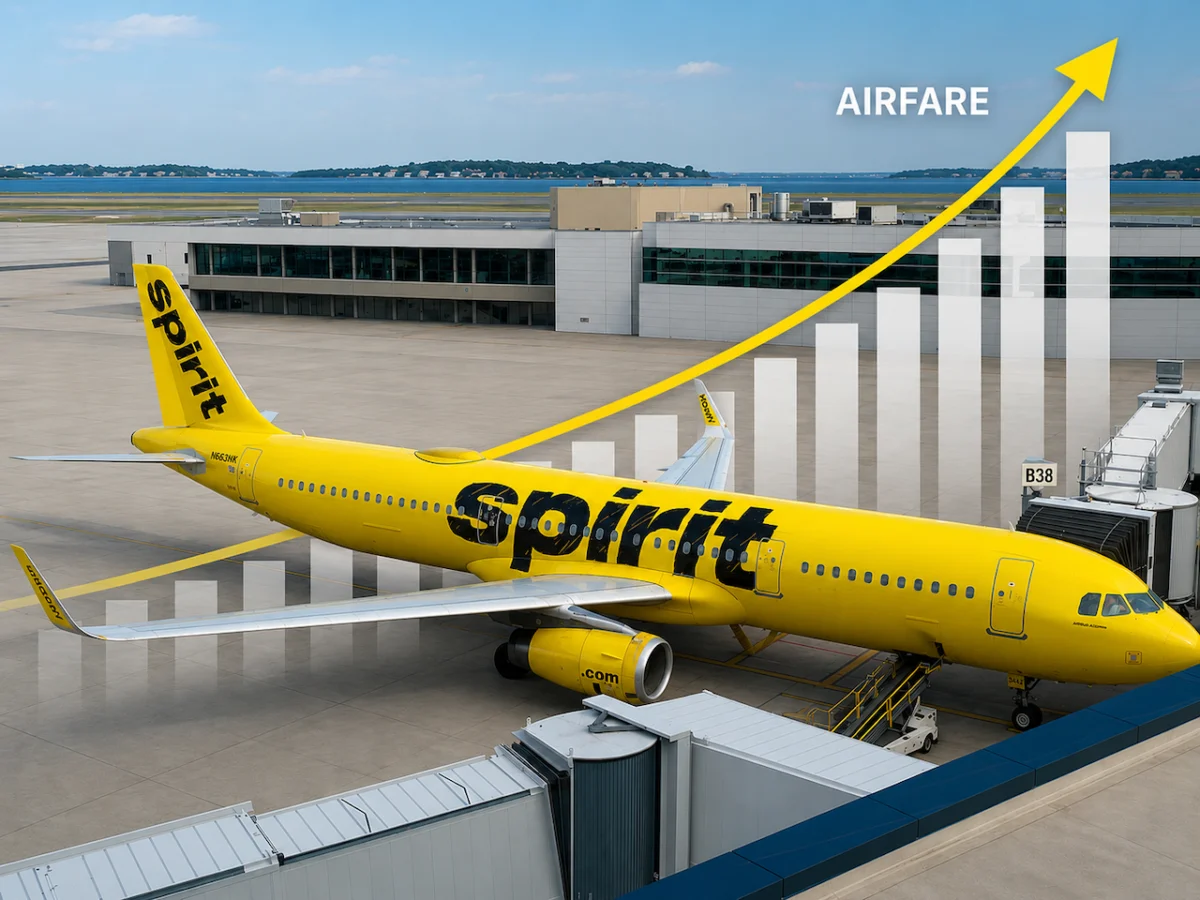
The cessation of Spirit Airlines operations at 3:00 AM Eastern Time on May 2, 2026, marked a seismic shift in the United States domestic aviation market, leading to an immediate and unprecedented surge in airfares across the carrier’s former strongholds. By removing 1.8 million seats from the May travel calendar with only 48 hours of notice, the liquidation triggered a price reaction that analysts describe as the steepest single-week domestic fare movement in over a decade. While initial spikes on major trunk routes reached as high as 218% within the first 48 hours, the long-term structural impact appears to be a sustained price increase of 15% to 25% on routes where Spirit previously maintained a significant market share. This transition signals the end of an era of ultra-low-cost travel that once forced legacy carriers to keep their basic economy fares in check.
Chronology of a Liquidation: From Operation to Grounding
The timeline of Spirit Airlines’ exit was remarkably condensed, leaving both travelers and competitors scrambling to adjust. On Friday, May 1, 2026, Spirit was still operating a full schedule, offering its signature low-cost fares. For example, a one-way ticket from Fort Lauderdale-Hollywood International Airport (FLL) to Dallas-Fort Worth (DFW) was priced as low as $39. However, as the clock struck 3:00 AM on May 2, the airline officially wound down its operations.
By Sunday night, May 3, the vacuum left by Spirit’s departure was filled by legacy and mid-tier carriers, but at a significantly higher price point. That same FLL-to-DFW route, which cost $39 just two days prior, had jumped to $124 on the legacy carriers stepping into the gap. This 218% increase represented a "panic pricing" phase as the market recalibrated to the sudden loss of capacity. In the two weeks following the liquidation, the market began to bifurcate: routes where competitors like Frontier Airlines aggressively moved in saw prices moderate, while routes left underserved remained significantly more expensive than the historical average.
Statistical Analysis of Fare Surges and Market Stabilization
Data provided by 24/7 Wall St and Marketplace, supplemented by real-time tracking from Cirium and Kayak, highlights the "Spirit Effect"—a phenomenon where the mere presence of an ultra-low-cost carrier (ULCC) depresses the fares of all other airlines on the same route. With Spirit removed, the floor for airfare has risen across the board.
The initial 218% spike was a localized peak on Spirit’s busiest routes, but broader data from Going.com and Kayak suggests a more permanent "new normal." Across every route where Spirit held a double-digit market share, fares have seen a sustained increase of 15% to 25%. This is particularly evident in Spirit’s primary hubs: Fort Lauderdale (FLL), Orlando (MCO), and Las Vegas (LAS).
The case of the Fort Lauderdale to Atlanta (ATL) route serves as a prime example of market competition at work. Because Frontier, JetBlue, and Delta all maintain a presence on this route, competition for Spirit’s vacated slots has been fierce. Consequently, fares have moderated back to the $20–$28 range for nonstop travel. Conversely, on the FLL-to-DFW route, where the backfill was less aggressive, the new floor has settled at approximately $43 to $47—a 10% to 20% increase over Spirit’s baseline.
Competitive Response: The Scramble for Market Share
The liquidation of Spirit Airlines created a land grab for domestic air slots, with Frontier Airlines emerging as the most aggressive "rescue" carrier. Within 48 hours of Spirit’s grounding, Frontier launched a series of discounted rescue fares and introduced a $199 GoWild Summer Pass to capture displaced Spirit customers. Frontier has since moved to serve more than 100 former Spirit routes, attempting to replicate the pricing pressure that Spirit once provided.
Other carriers have also moved to capitalize on the vacancy:
- JetBlue: The carrier added 11 new destinations from Fort Lauderdale and offered $99 rescue fares to assist stranded passengers. However, data indicates that JetBlue’s standard fares have risen approximately 20% on routes where it no longer competes with Spirit.
- Breeze Airways: The startup carrier focused on regional gaps, specifically targeting Atlantic City to maintain connectivity for leisure travelers.
- Legacy Carriers (American, Delta, United): While these airlines have not significantly lowered their base fares, they have seen increased load factors. In some instances, legacy carriers remained flat in pricing initially but saw indirect increases as their "Basic Economy" tiers sold out faster, forcing consumers into higher-priced fare buckets.
The Geopolitical Factor: Jet Fuel and the Strait of Hormuz
While the loss of Spirit is the primary driver of fare increases on specific routes, a broader economic factor is exerting upward pressure on the entire industry. Since January 2026, jet fuel prices have surged by 84%. This increase is largely attributed to the ongoing conflict in the Middle East, specifically the hostilities involving Iran that have nearly halted shipping through the Strait of Hormuz.
The Strait of Hormuz is a critical global chokepoint, facilitating the movement of approximately one-fifth of the world’s oil supply. The disruption has created a global fuel shortage, forcing every airline—regardless of their business model—to raise fares to cover operating costs.
Aviation analysts note that it is difficult to isolate the "Spirit effect" from the "fuel effect" entirely. However, the geography of the price hikes provides a clear indicator. Fuel-driven inflation is uniform across all routes, whereas Spirit-driven inflation is concentrated in specific leisure hubs. Hub-level capacity data from Cirium shows "red zones" in FLL, MCO, and LAS, confirming that the absence of competition is the dominant factor in those markets, layered on top of the rising cost of fuel.
The Consumer Impact: Higher Costs and Fee Inflation
The departure of Spirit Airlines has not only affected base ticket prices but has also influenced the cost of ancillary services. Travelers who never flew Spirit are now feeling the impact as competing carriers like JetBlue and American Airlines no longer face downward pressure on their "value" offerings.
Industry observers have noted significant increases in the cost of seat assignments and extra-legroom options. For instance, on routes like West Palm Beach (PBI) to LaGuardia (LGA), JetBlue has been observed charging $179 for "Even More Space" seat assignments on top of a $239 base fare. When Spirit was operational, the availability of its "Big Front Seat" at a lower price point often kept these legacy upcharge costs in check.
Furthermore, travelers in secondary markets, such as Pittsburgh (PIT) to South Florida, have seen their options narrow. Historically, Spirit offered roundtrip fares between PIT and FLL for $100 or less. Without Spirit, JetBlue’s mid-tier pricing of $250 has become the new entry point, while legacy carriers like American Airlines often price the same route at $500 or more. The "middle ground" of value-based travel has effectively shifted higher.
Strategic Recommendations for Travelers
In light of the reduced competition and increased fuel costs, travel experts recommend several shifts in booking strategy for the summer 2026 season:
- Extended Booking Windows: While the traditional advice suggested booking domestic flights 23 to 32 days in advance, the volatility in Spirit-heavy hubs like FLL, MCO, and LAS necessitates a longer lead time. Travelers are advised to book at least 60 days in advance to secure seats before lower fare buckets are exhausted by the displaced ULCC passenger base.
- Secondary Airport Utilization: Travelers should consider flying into secondary or alternative airports to find better competition. If fares to FLL are prohibitive, checking Miami (MIA) or West Palm Beach (PBI) may yield results as carriers redistribute their fleets.
- Aggressive Use of Loyalty Points: The value of credit card points and frequent flyer miles often increases during periods of cash fare spikes. Because award charts do not always fluctuate as rapidly as cash prices, the "cents per point" value has improved significantly since April 2026. Travelers are encouraged to use award redemptions to buffer against the 20% to 218% cash price increases.
Implications for the U.S. Aviation Landscape
The liquidation of Spirit Airlines marks a turning point in the deregulation era of American aviation. For over a decade, Spirit served as a "price disciplinarian," a role that forced even the largest global airlines to offer low-cost basic economy options to remain competitive for leisure travelers. With Spirit’s exit, the market is moving toward a more consolidated structure where price-sensitive families and budget-conscious travelers have fewer alternatives.
While Frontier Airlines and JetBlue have stepped in to fill some of the void, the initial data suggests that the "Spirit Effect" cannot be fully replicated by rescue fares alone. The structural loss of 1.8 million monthly seats has created a demand-supply imbalance that will likely persist through the end of the 2026 travel year. As the industry grapples with both the loss of its largest budget carrier and the geopolitical pressures on fuel, the era of the $39 cross-country flight may have reached its definitive conclusion. Travelers who once avoided Spirit are now finding that the airline’s absence is felt most acutely in their own wallets, as the entire market moves toward a higher price floor.




 Anjar Salim
 Chandra Hamzah
 Tatiana Tantri Indah Sari
 Lukman Taruna Persada Ramadan
